
Victorian Marquetry Pier Cabinet
When you search for a Victorian marquetry pier cabinet, you enter a world of glazed display cases built to sit flush against the drawing room wall.
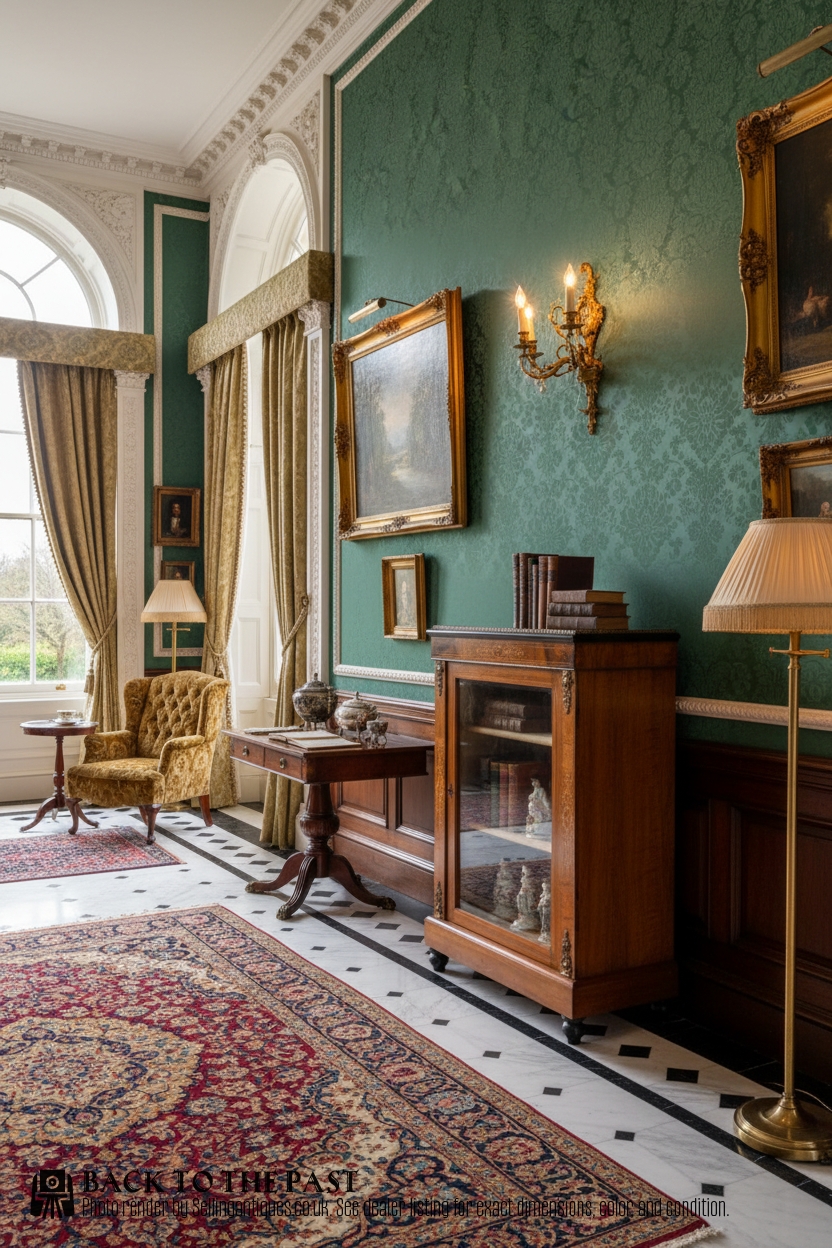
Victorian Marquetry Pier Cabinet
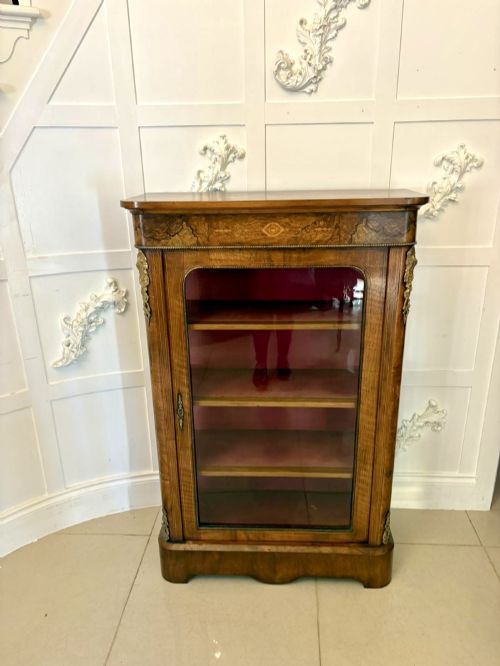
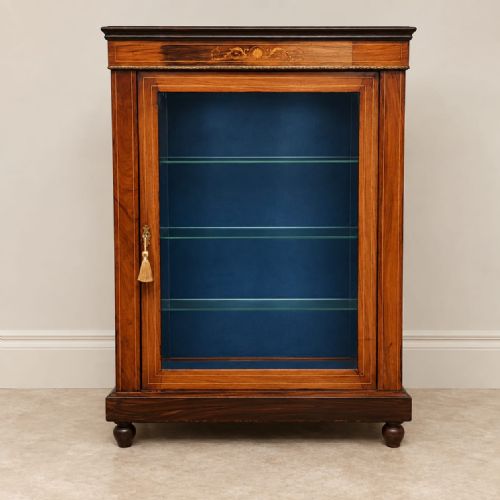
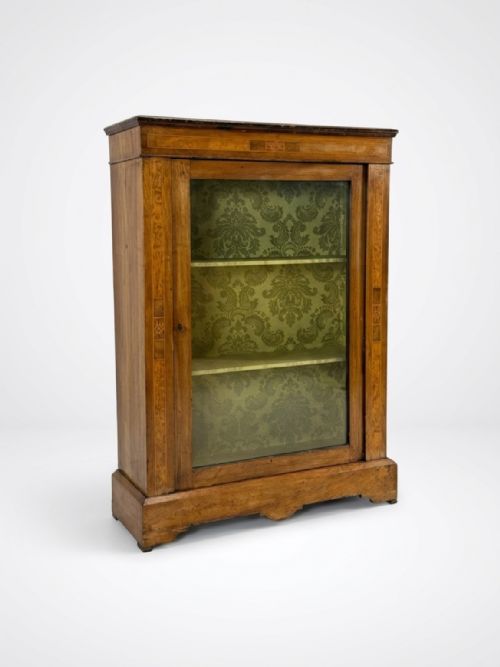
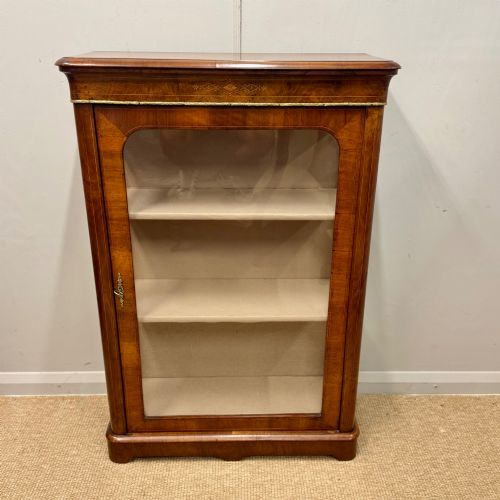
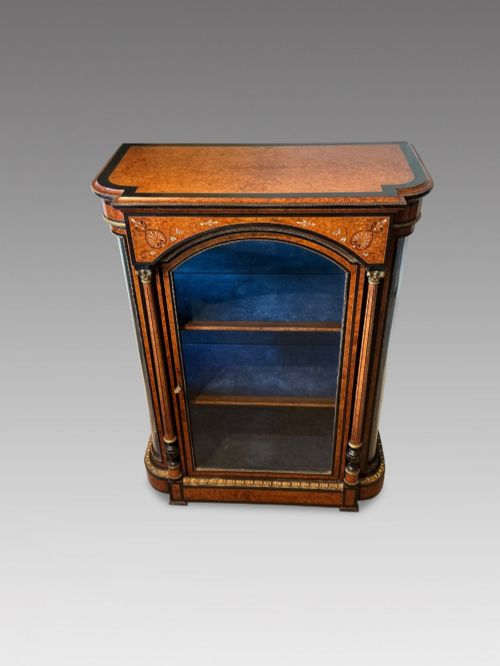
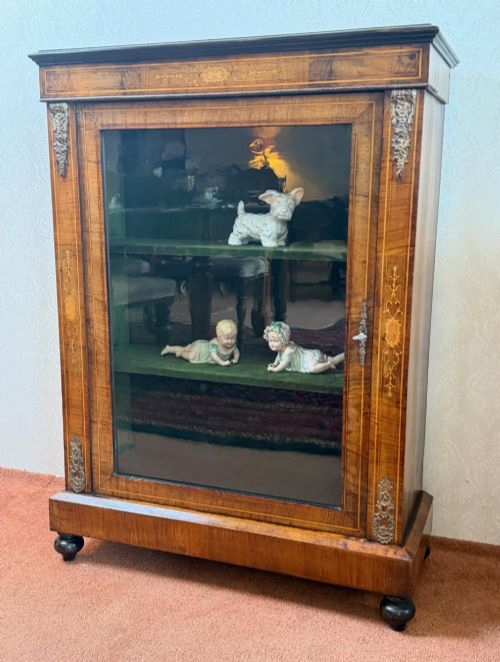
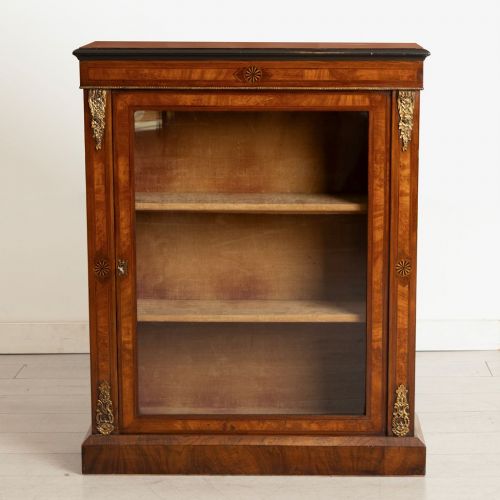
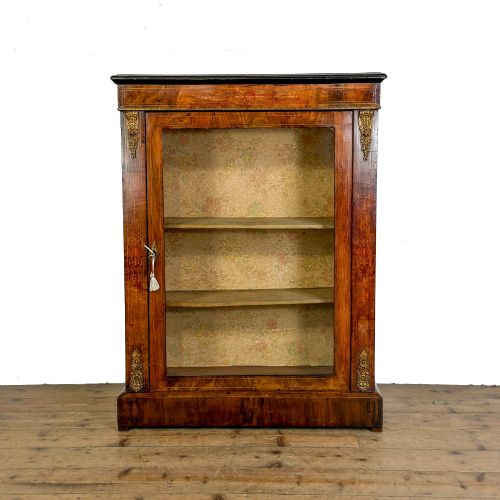
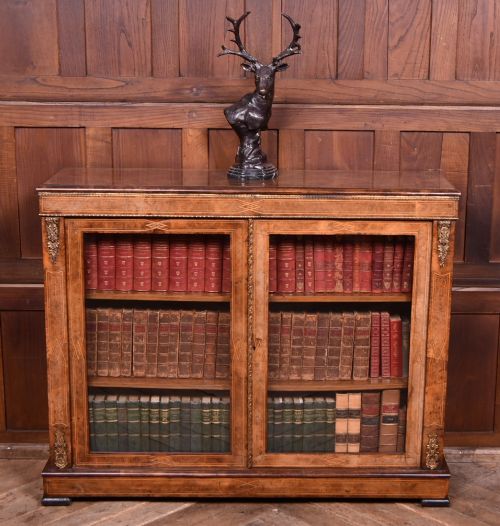
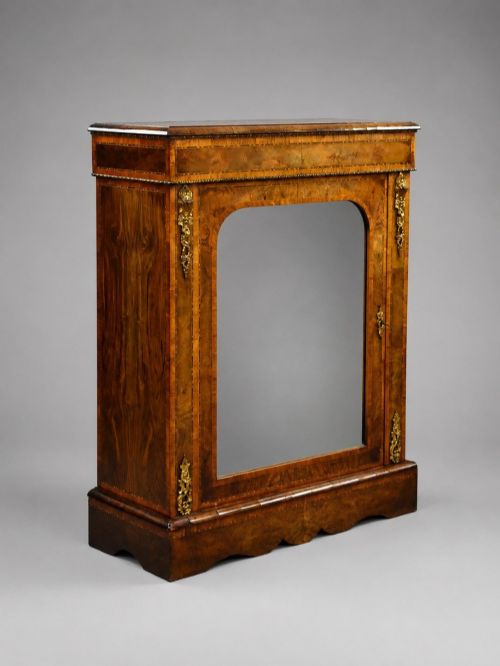
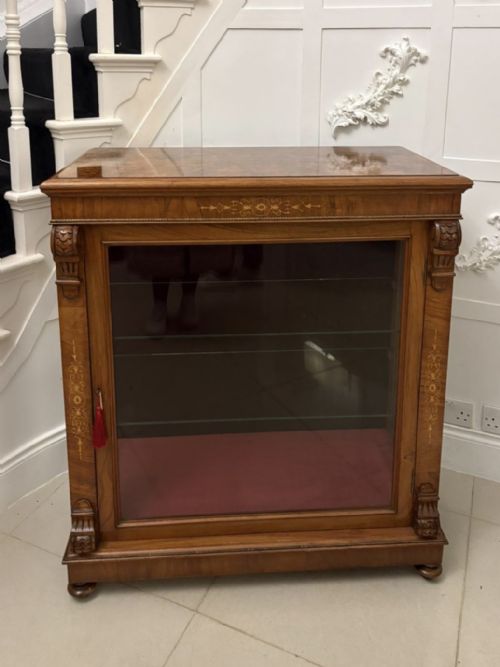
A Victorian marquetry pier cabinet is a narrow display case designed specifically for the architectural pier space between drawing room windows. These pieces usually feature a single glazed door flanked by rounded or flat uprights, standing on a low plinth base.
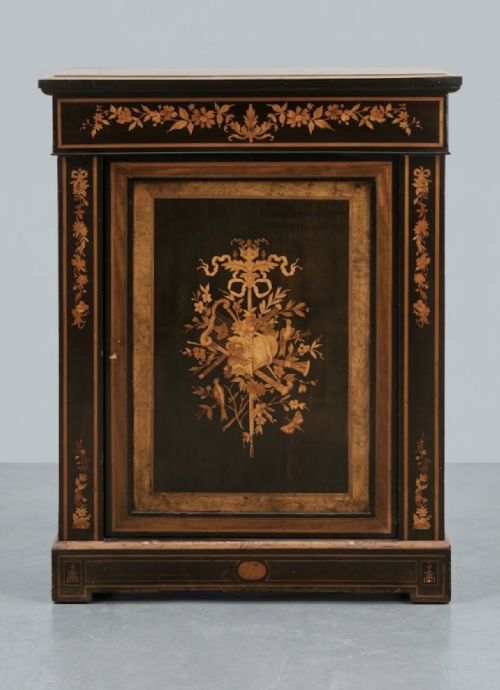
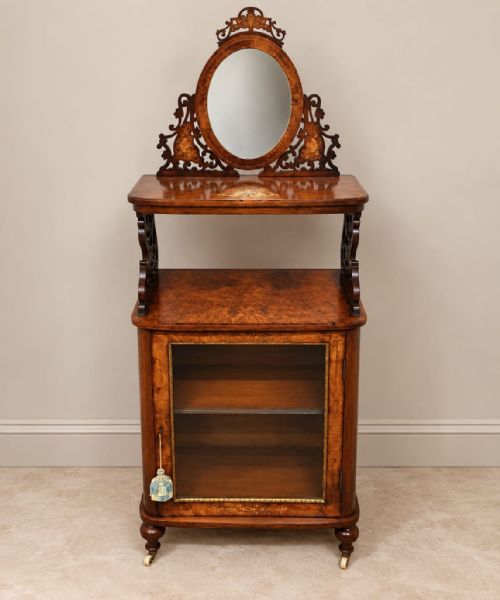
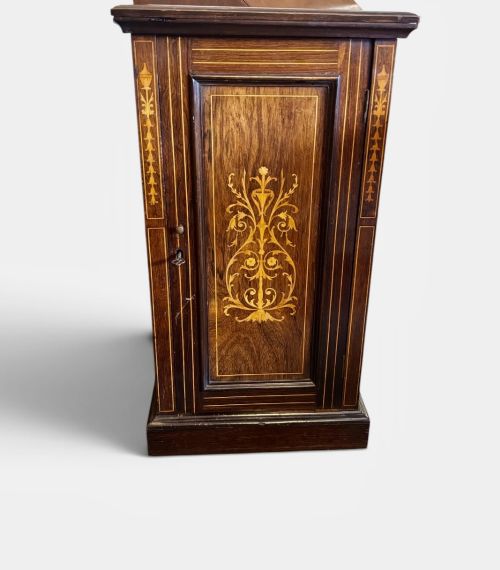
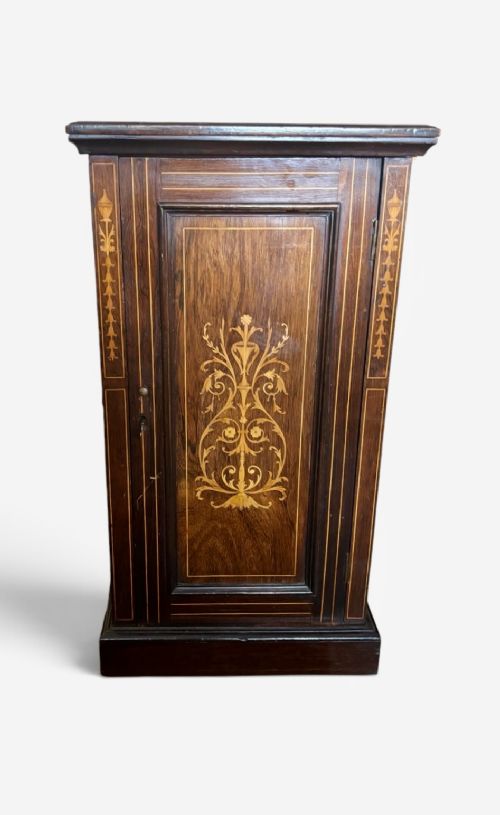
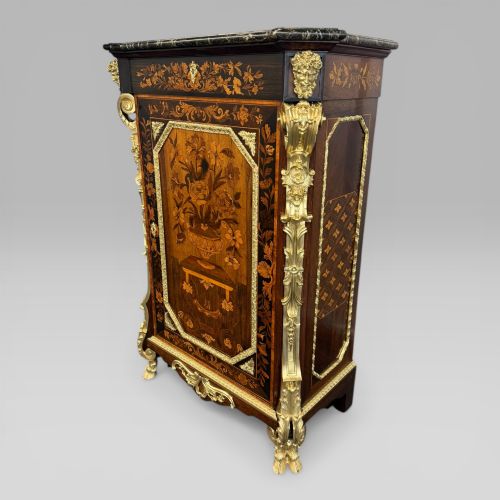
Most examples seen here are fashioned from figured walnut or burr walnut, enriched with delicate floral marquetry and satinwood or ebony stringing. Alongside standard walnut versions, the record shows French Napoleon III ebonised pieces and occasional rosewood or mahogany variants.
Makers built these cabinets primarily to display ceramics, small bronzes, or precious collectibles behind glass, protecting them while catching the light of the room. They serve today as compact display furniture that fits easily into modern living spaces.
How they were made
Cabinet makers applied fine veneers of burr walnut, rosewood, or kingwood over stable pine or oak carcases, often adding intricate marquetry panels cut from contrasting woods such as satinwood and boxwood. These decorative veneers required careful hand-laying and polishing to bring out the natural grain patterns.
Cast or chased ormolu mounts, gilt metal, and brass stringing frequently accent the corners, borders, and glazing frames, adding structural definition to the curving woodwork. Ebonised finishes and tortoiseshell veneer appear in the French Revival pieces recorded here.
Glass panels were hand-set into the single or double doors, and velvet linings often padded the internal shelves where delicate objects sat.
Victorian Marquetry Pier Cabinet Retail Price Guide 2026
Typical asking prices for victorian marquetry pier cabinet among the pieces listed under this phrase on Sellingantiques today, from the lower quarter to the upper quarter. They describe what is for sale here now, not the wider market.
Recorded listings show walnut and burr walnut as the dominant woods, accompanied by rosewood, mahogany, and ebonised finishes.
What varies in quality
The fineness of the marquetry cutting determines the upper tier of the range, where floral details appear crisp and varied rather than stamped or repetitive. Superior examples employ richly figured burr walnut with matching symmetrical veneer grains across the entire front.
The weight and detail of the ormolu mounts separate exceptional cabinets from standard production; heavy, finely chased gilt bronze outclasses thin brass plating. Interior fitted velvet and the tightness of the door closure also mark the standard of the workshop.
Edward Holmes Baldock
The Victorian Marquetry Pier Cabinet Glossary
- Marquetry
- The art of forming decorative patterns by fitting together small pieces of veneer of different woods, metals, or shells. Craftsmen arrange these pieces meticulously onto the cabinet carcase.
- Burr walnut
- A highly prized wood grain featuring swirling patterns caused by growth deformities on walnut trees. It creates a rich, mottled surface texture on furniture panels.
- Ormolu
- Gilded bronze used for decorative mounts and feet on cabinet furniture. It provides a bright metallic contrast to dark woods.
- Ebonised
- Wood treated with a dark stain or finish to imitate ebony. This technique creates a dense, uniform black surface.
Victorian Marquetry Pier Cabinet: Frequently Asked Questions
Where did these cabinets sit in a Victorian home?
These cabinets stood against the architectural pier wall situated between two tall drawing room windows. This placement allowed natural light to strike the glazed panels and illuminate the items kept inside.
Because nineteenth-century rooms featured high ceilings and narrow wall segments between windows, standard sideboards would not fit. The pier cabinet solved this spatial problem while offering display space for porcelain and curiosities.
What can I display inside a pier cabinet?
Owners use these glazed enclosures to showcase small ceramics, glass figurines, antique books, or delicate ornaments. The enclosed glass keeps dust away from fragile items.
Original velvet linings on the internal shelves provide a soft base for delicate porcelain and small bronzes. The narrow footprint keeps collections visible without dominating the room.
How do I distinguish French styles from English Victorian ones?
French Napoleon III and revival pieces often utilise ebonised wood, tortoiseshell, and extensive ormolu mounts in the Boulle manner. English versions rely more heavily on burr walnut veneer and floral marquetry.
English cabinets tend to present straight architectural lines with restrained gilt highlights, whereas French examples embrace curved contours and elaborate bronze decorations.
Are the shelves inside usually adjustable?
Most period examples feature fixed wooden shelves lined with fabric, though surviving configurations vary. Makers built them for specific display arrangements.
When examining the interior, you will typically find two or three wooden tiers covered in velvet or matching wood veneer. Alterations to shelving often happen during later restorations.