

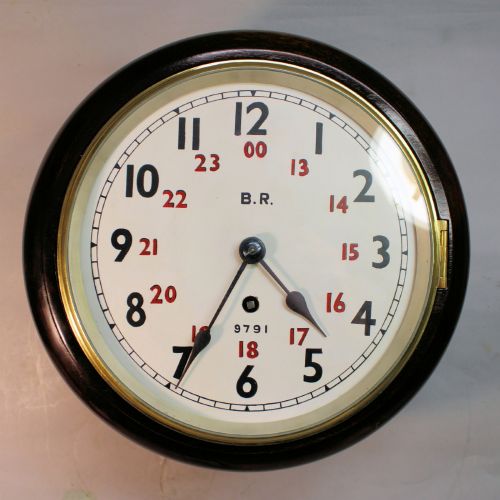


Victorian Mahogany Wall Clock
When you choose a victorian mahogany wall clock, you bring home a precise timekeeper built for station platforms, offices and parlours during the nineteenth century.
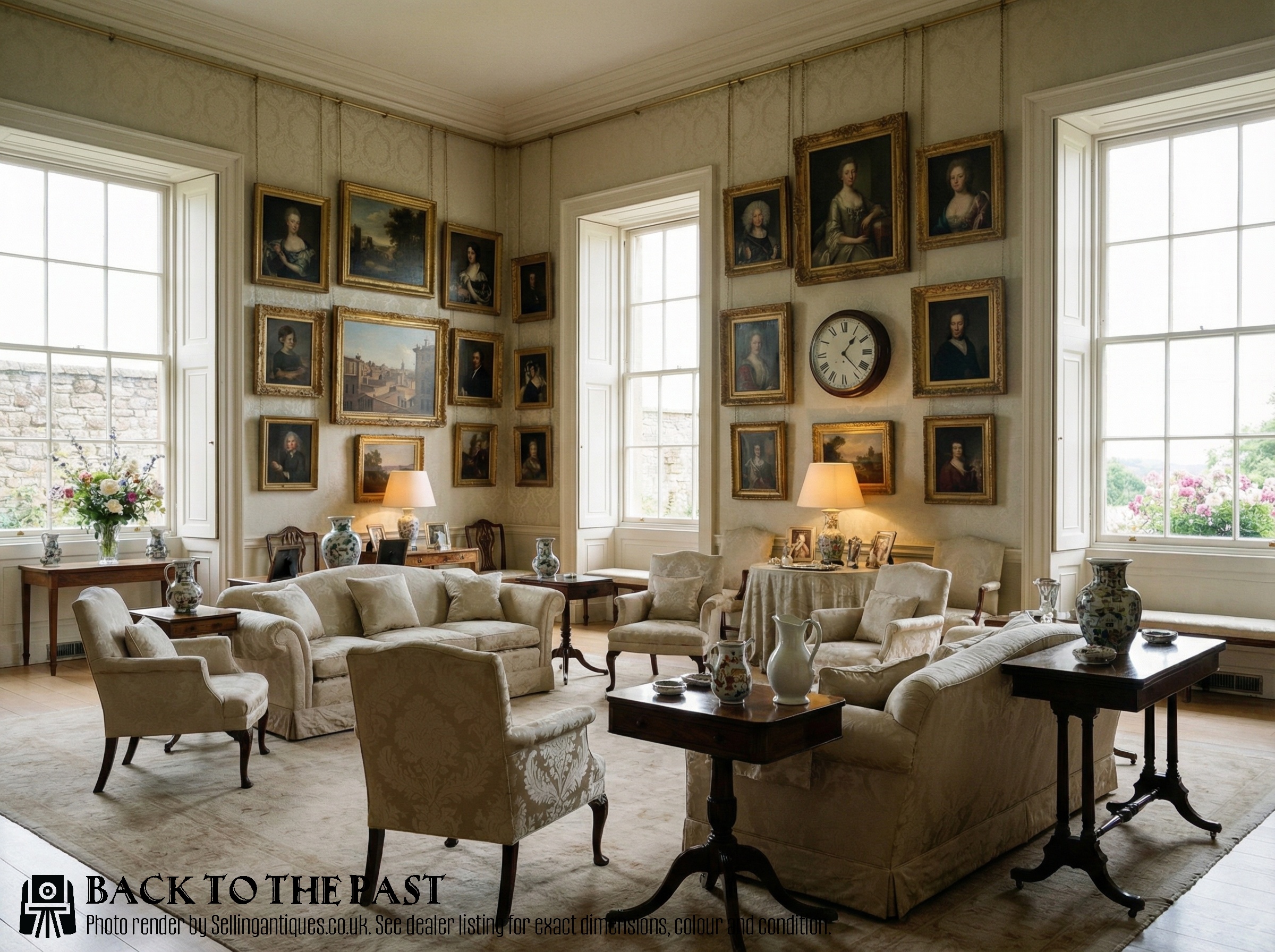
Victorian Mahogany Wall Clock
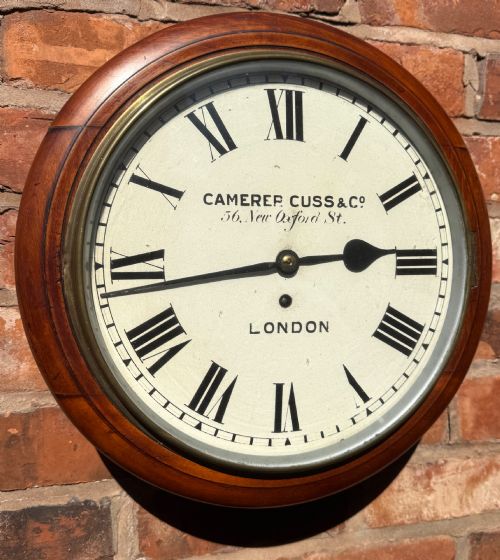
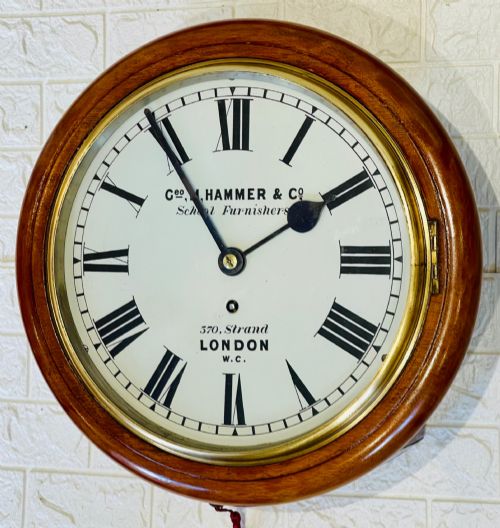
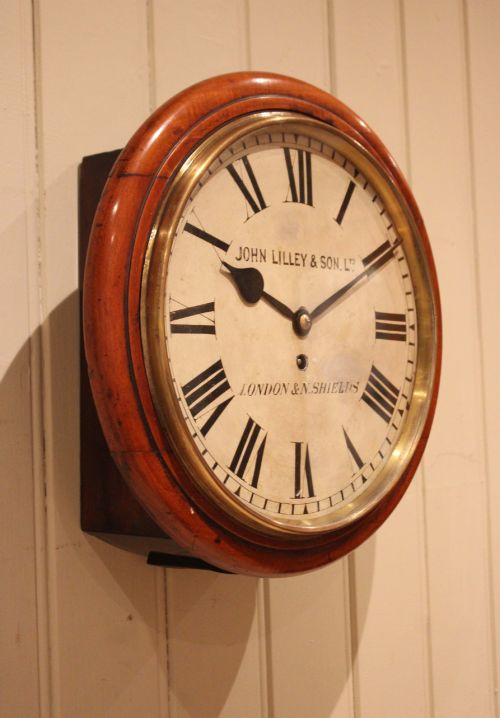
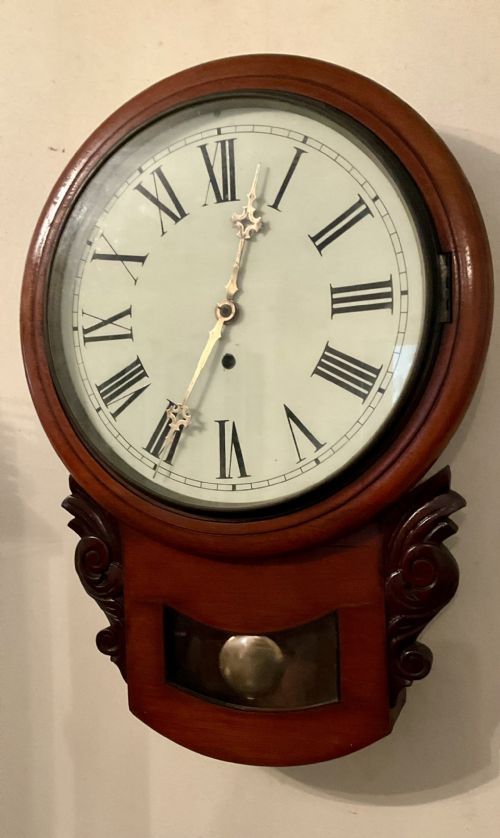
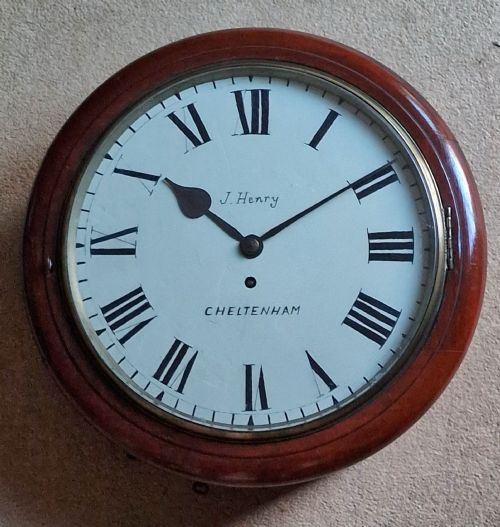
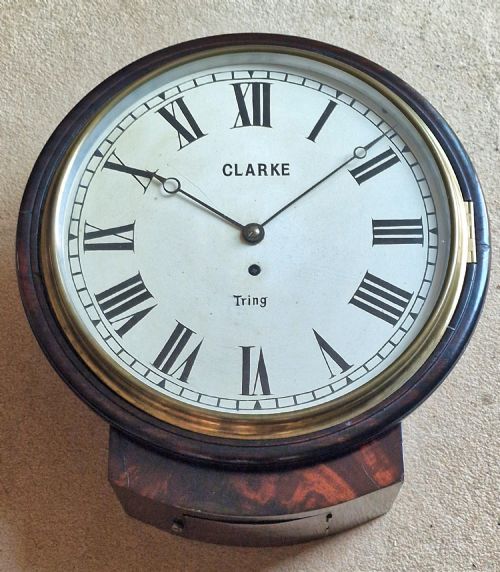
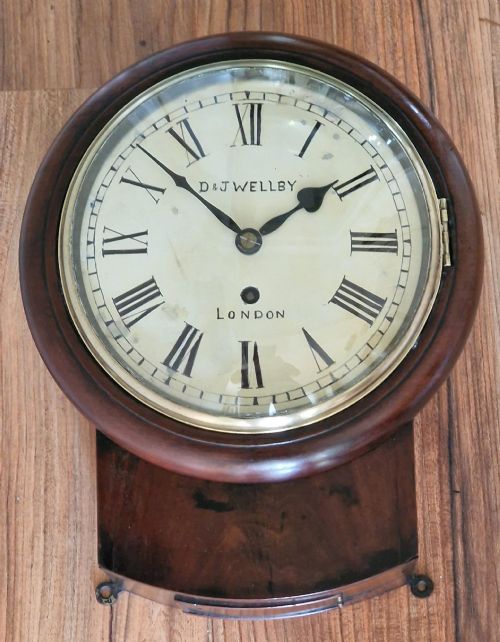
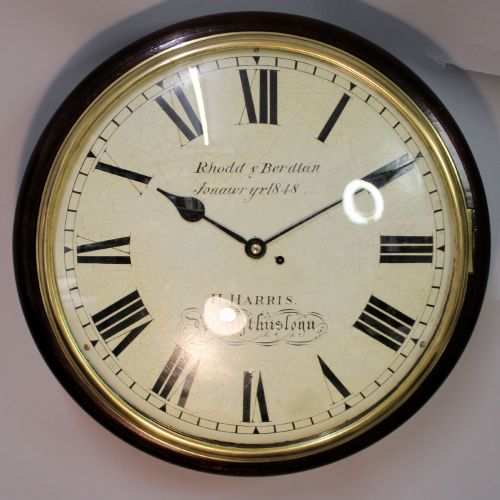
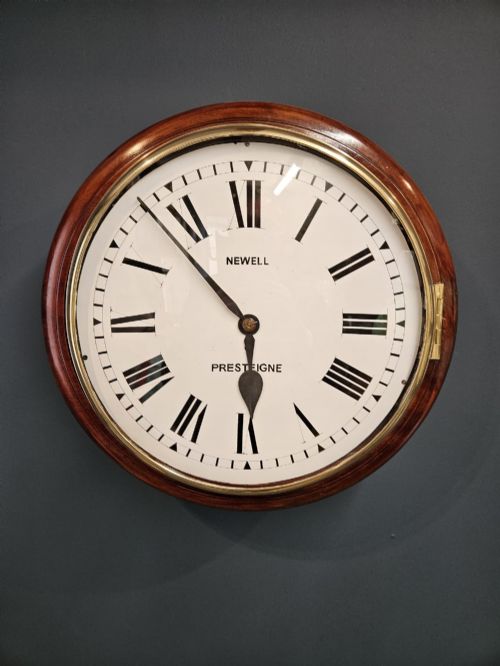
A victorian mahogany wall clock typically takes the form of a round dial clock or a drop dial case designed to hang securely in public spaces and domestic rooms. These pieces originate primarily from nineteenth-century makers working across British towns, railway companies and London workshops.
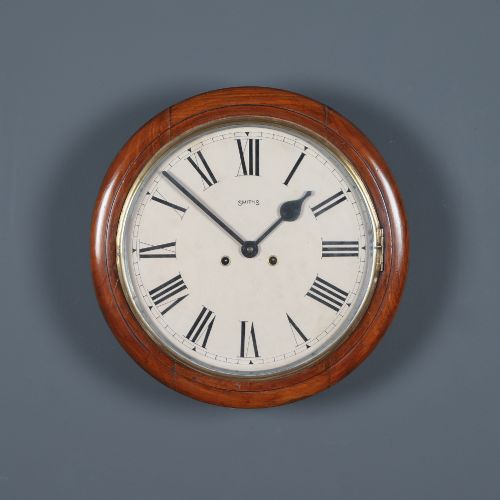
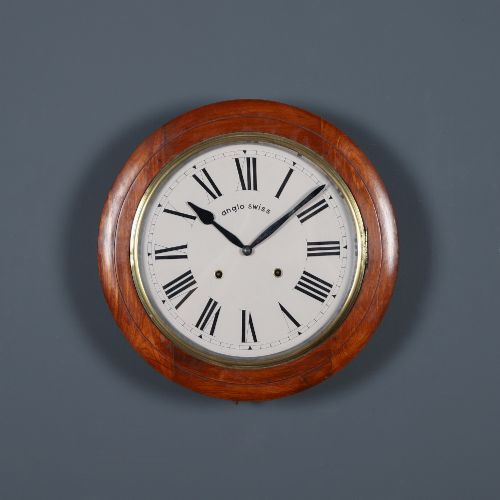
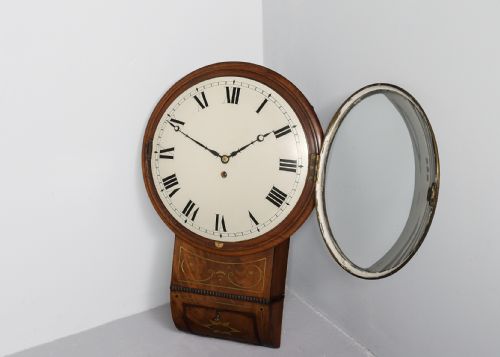
The most common version met on this page is the single chain fusee wall clock, featuring a robust mahogany surround and a clear painted iron dial. Variations include railway station round dials, drop-dial wall clocks with lower wooden trunk cases, and double fusee striking regulators.
Regional examples often display the station or town name directly on the dial face, linking the timepiece directly to the Great Western Railway, London and North Western Railway, or local civic buildings. The aesthetic remains grounded in utilitarian readability combined with warm timber grain.
Materials and Technique
The construction relies on solid mahogany timber cases, frequently turned on a lathe for round bezels or joined with box-like lower trunks for drop-dial movements. Selected pieces incorporate brass inlay, mother of pearl accents or rosewood banding to enrich the timber surface.
The mechanical heart is typically a fusee movement, designed to maintain even tension on the gear train as the mainspring unwinds, paired with a heavy brass pendulum and a convex glass door set in a cast brass bezel. Dials are constructed from painted iron or enamel, featuring bold Roman numerals for rapid reading from a distance.
Several railway station clocks carry silent witness marks of platform life, from old inventory numbers painted on the timber to historic station names.
The Range of Quality
Quality in a victorian mahogany wall clock rests upon the crispness of the dial signwriting, the weight and finish of the cast brass bezel, and the structural integrity of the mahogany case construction. Finer examples display meticulous hand-cut gear teeth and signed dial plates from recognised regional or London makers rather than anonymous factory output.
At the upper end of the range, movements feature robust chain fusee mechanisms with precise deadbeat escapements, housed in substantial timber cases with well-fitted side doors and secure locking latches. Lesser examples show simplified spring-driven movements without fusee cones or replacement painted dials lacking original maker inscriptions.
Camerer Cuss And Co·D And J Wellby·Henry Harris·Joseph Bird·John Walker·Joseph Mansfield·James Bennett·William Burch
The Victorian Mahogany Wall Clock Glossary
- Fusee
- A conical pulley connected to the mainspring by a chain or cord, designed to equalise the torque as the spring unwinds. This mechanism ensures consistent force is delivered to the escapement for accurate timekeeping.
- Drop dial
- A clock case featuring a round upper dial frame attached to an extended lower wooden trunk that houses the pendulum. This form became standard for offices, schools and railway stations.
- Chain fusee
- A fusee movement utilising a delicate steel chain rather than gut or wire to link the spring barrel to the cone. It represents a sturdier and more durable method of power transmission.
- Convex dial
- A clock face curved outward toward the viewer to reduce glare from interior lighting and improve legibility from acute angles. These dials are usually painted iron.
- Regulator
- A high-precision clock designed to keep exceptionally accurate time, often featuring a heavy gridiron or wood rod pendulum and a double fusee or weight-driven movement.
Victorian Mahogany Wall Clock: Frequently Asked Questions
What is a fusee movement?
A fusee movement uses a conical pulley and chain to ensure the clock receives even power as the mainspring winds down.
This clever mechanical design corrects for the dropping tension of the spring, helping the timepiece maintain steady accuracy over its running period.
How do railway clocks differ?
Railway clocks were built for intense public utility, featuring robust mahogany cases, clear painted iron dials, and reliable fusee movements.
Many bear company initials or station names directly on the dial face to mark their specific operational deployment.
How do I wind the clock?
Winding is performed by inserting a matching winding key into the small aperture on the painted iron dial face.
Carefully turn the key until you feel natural resistance, taking care not to overwind the chain fusee mechanism.
Where should I hang it?
These clocks require a secure wall fixing attached directly to a solid stud or masonry wall to support the substantial weight of the mahogany case and brass movement.
Hanging it level ensures the pendulum swings evenly and the clock keeps reliable time without stopping.