
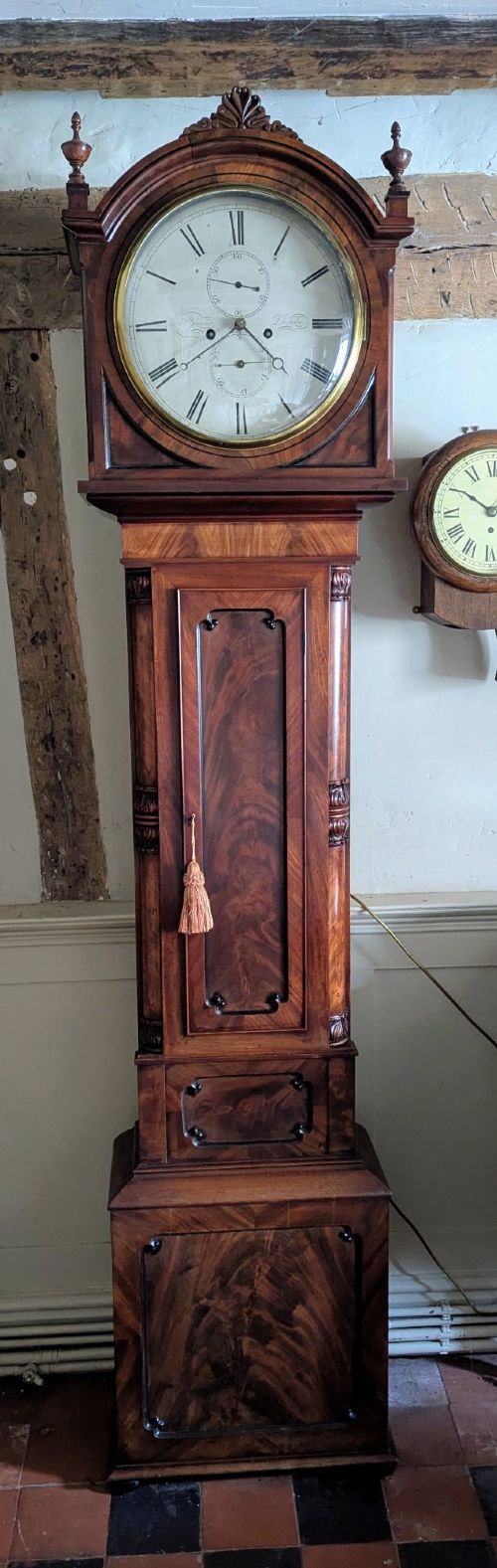


Victorian Mahogany Timekeeper
These Victorian mahogany timekeepers are traditional pendulum and spring-driven instruments that bring dependable mid-nineteenth-century precision and rich timber cases into your interior.

Victorian Mahogany Timekeeper
A victorian mahogany timekeeper encompasses a range of horological forms, from substantial longcase grandfather clocks and wall-hung dial clocks to compact mantel, desk and bracket clocks. The pieces you encounter most frequently on this page are wall-mounted dial clocks and mantel clocks housed in rich, dark timber cases.
The evidence spans the nineteenth century alongside related examples from the Regency and Edwardian periods, demonstrating how cabinetmakers adapted timber housings for domestic, public and commercial spaces. Wall clocks often feature distinct circular faces protected by glass bezels, designed to hang securely in hallways, offices and parlours.
Mantel and bracket clocks sit lower and narrower, frequently taking architectural or balloon shapes that anchor a fireplace or sideboard. Each object relies on a mechanical movement, whether driven by a swinging pendulum or a wound spring, marking hours and minutes with enduring physical rhythm.
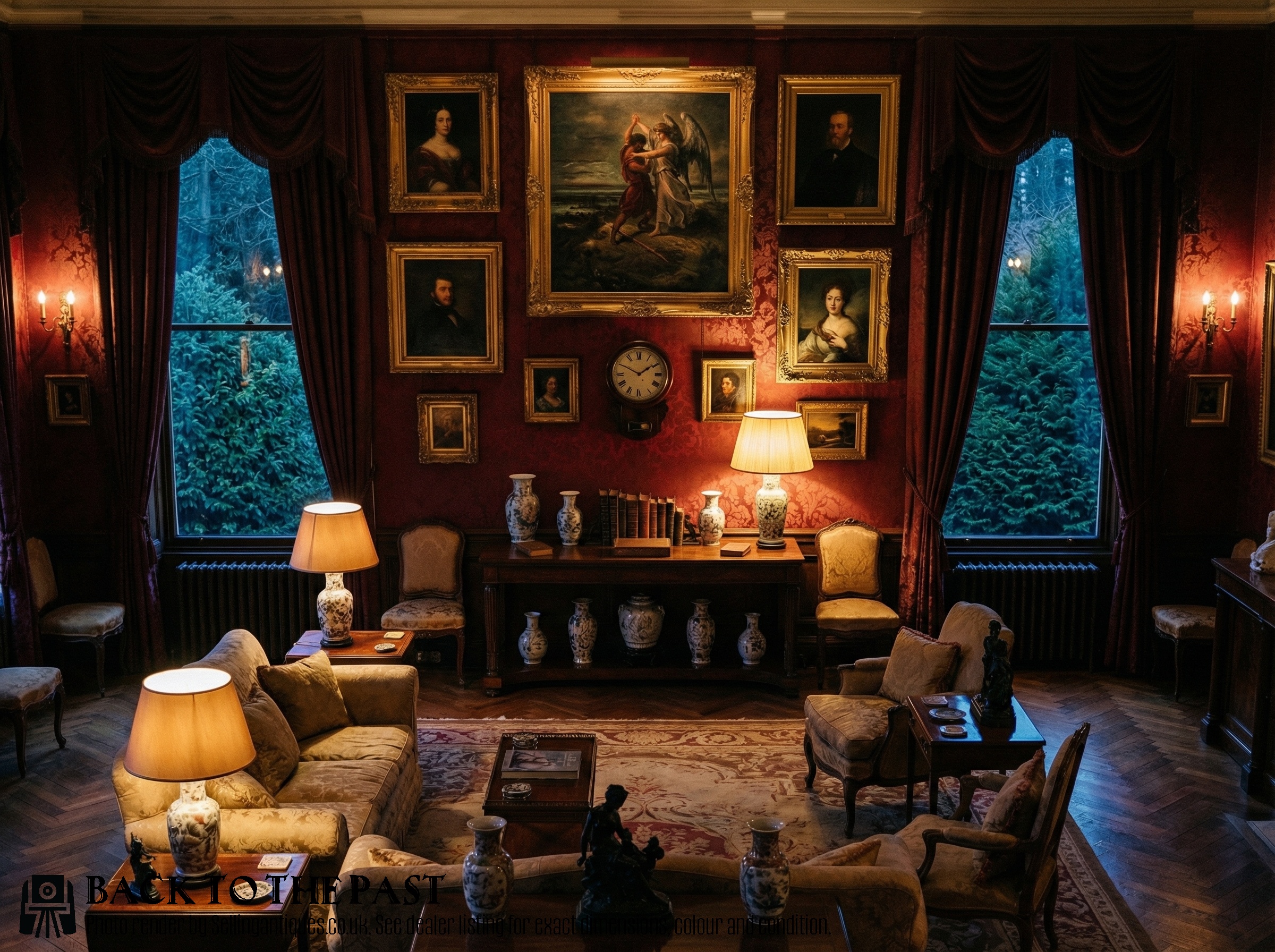
Materials and construction
Cabinetmakers built these clock housings primarily using solid mahogany, selected for its deep grain and stability, sometimes enhanced with brass inlay or delicate carved detailing. The timber frames enclose mechanical movements constructed from brass gears, steel pinions and iron components.
Faces are typically protected by convex or flat glass fitted within hinged bezels, while dials display enamelled numerals or painted metal markers. Where wall clocks require strong mounting, the wooden backboxes and side doors allow easy access to the pendulum and fusee mechanism within.
Listings feature mahogany timekeepers spanning the nineteenth century, including Regency, Victorian and Edwardian periods, alongside brass, glass and enamel components.
Assessing craftsmanship and execution
Quality reveals itself in the crispness of the timber carving, the tightness of the case joints and the precision of any brass inlay work. Better workshops employed heavier brass movements and cleaner enamel dials that resisted yellowing over decades of daily winding.
Proportion and dial legibility also distinguish finer examples, where the scale of the bezel matches the depth of the mahogany housing harmoniously. Signed movements by established makers often reflect higher standards of gear cutting and overall mechanical refinement.
Piggin Norwich·Dent of London·Pearce and Sons Leicester
The Victorian Mahogany Timekeeper Glossary
- Fusee
- A conical pulley connected to the mainspring by a cord or chain, designed to equalize the driving force as the spring unwinds. This mechanism ensures more consistent timekeeping throughout the winding cycle.
- Dial clock
- A wall-mounted clock featuring a prominent circular face, usually surrounded by a wooden rim and a glazed door. These were common in offices, railway stations and domestic hallways.
- Mantel clock
- A portable clock designed to sit on a fireplace mantelpiece or shelf, often enclosed in an architectural or decorative wooden case. They rely on spring-driven movements rather than hanging weights.
- Bracket clock
- A portable timekeeper originally built to sit on a wall bracket or shelf, though many later sat directly on furniture. They frequently house single or double fusee movements.
- Longcase clock
- A tall pendulum clock enclosed in a wooden case that rests on the floor, also known as a grandfather clock. The heavy weights hang freely within the trunk to drive the movement.
Victorian Mahogany Timekeeper: Frequently Asked Questions
Where should I hang a wall clock?
Choose an interior wall that is free from excessive vibration, dampness and direct sunlight, which can fade the mahogany timber and discolour the dial over time. Solid masonry walls provide the most stable support for heavier mechanical movements.
Ensure the clock hangs at a comfortable eye level so you can easily read the dial and access the side or bottom door for regular winding.
How do I keep time accurate?
Adjust the small regulating nut located on the pendulum bob up to speed the clock up or down to slow it down. Make very small adjustments and wait twenty-four hours to observe the result before making further changes.
Environmental changes like seasonal temperature shifts in your room can affect the metal and wood components, requiring occasional minor regulation.
What is a single fusee movement?
A single fusee movement uses one conical pulley and chain to regulate the power delivered from the mainspring to the gear train. This configuration focuses solely on keeping time without powering additional strike or chime trains.
These movements are prized for their reliability and mechanical simplicity, making them common in wall dial clocks and small mantel timepieces.