




Traditional Wood Wall Clock
A traditional wood wall clock brings mechanical timekeeping into a room through carved walnut, rich mahogany and exposed brass dials.
Traditional Wood Wall Clock
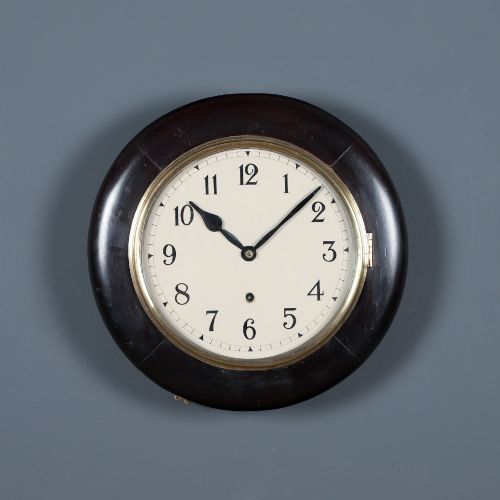
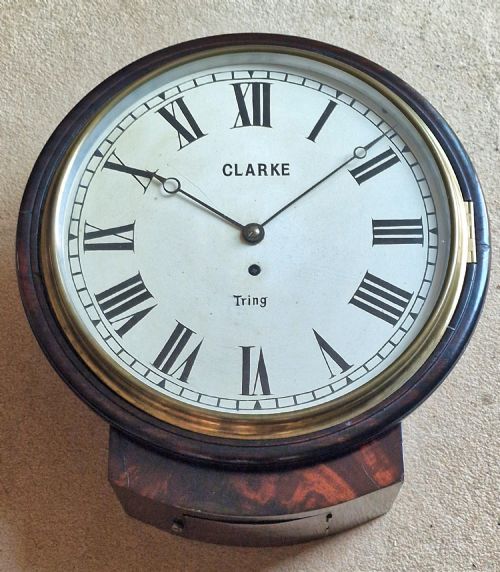
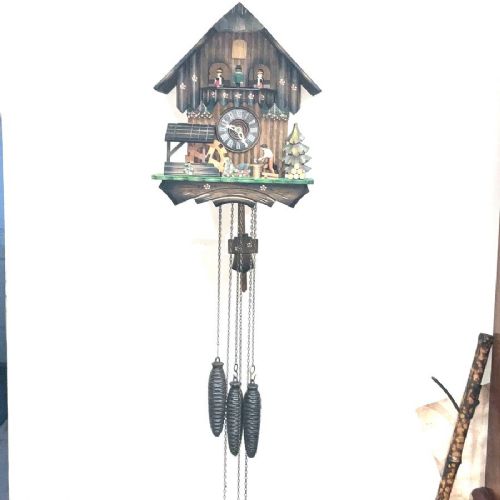
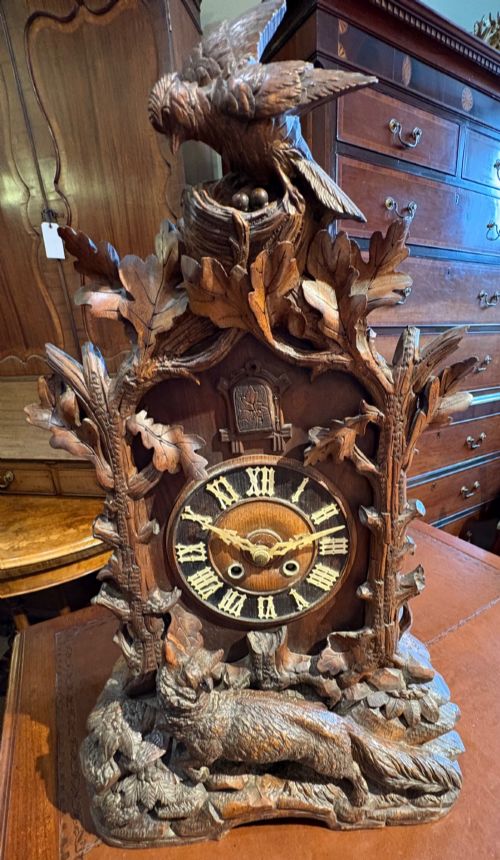
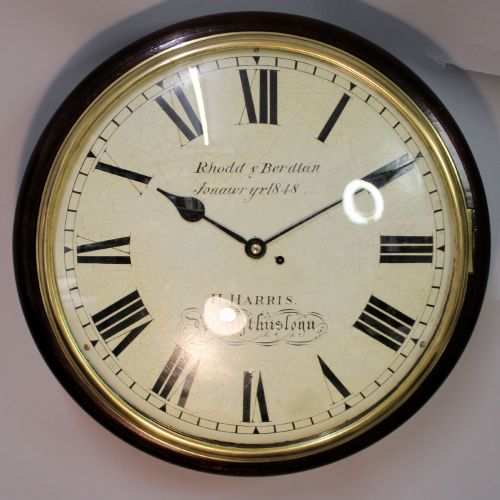
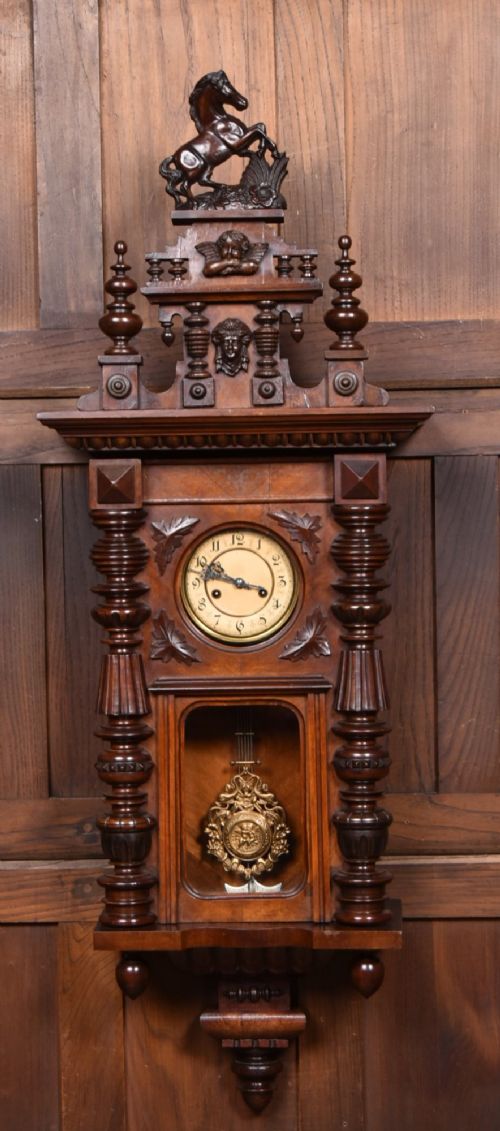
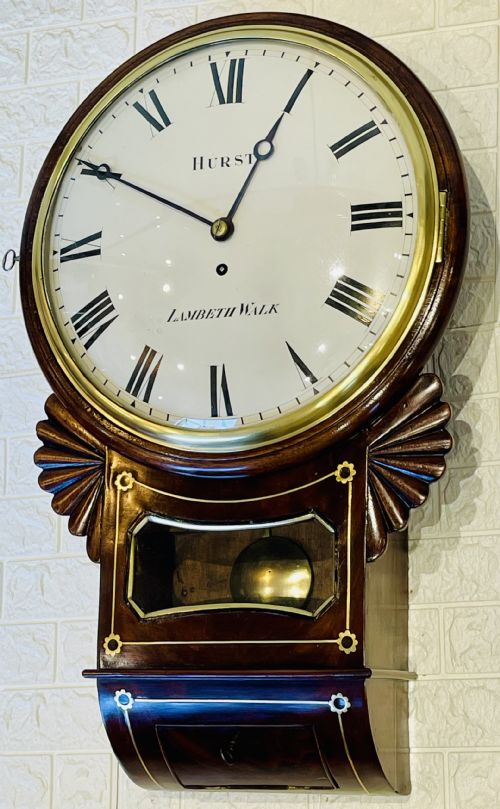
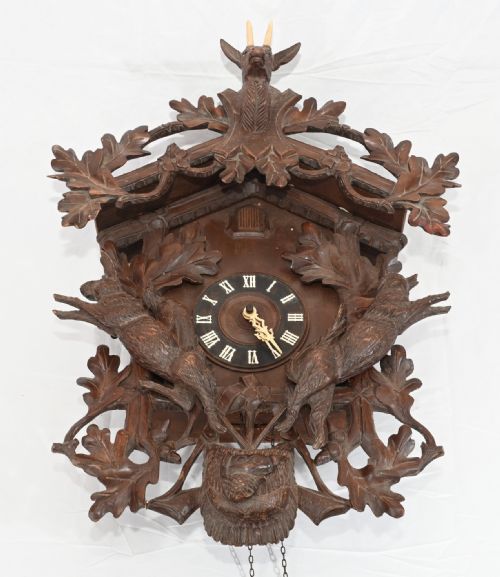
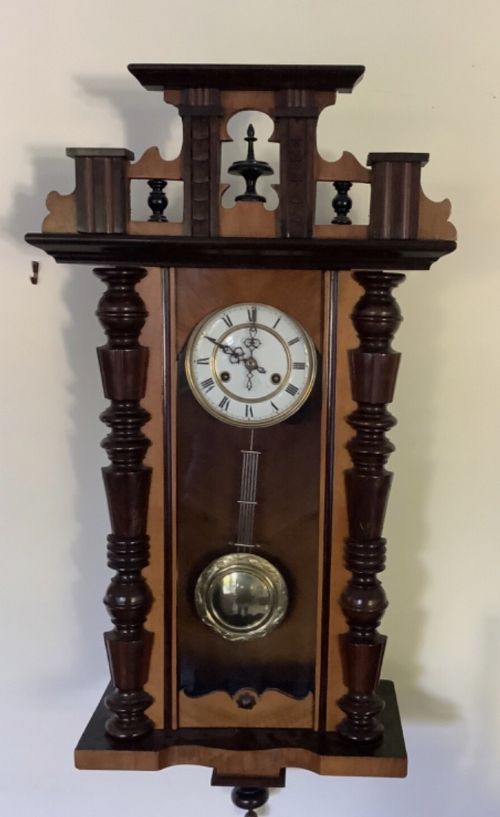
A traditional wood wall clock encompasses dial clocks, drop-dial fusee timepieces, Vienna regulators and Black Forest cuckoo clocks dating from the nineteenth century onwards. Buyers searching this phrase look for functional wall timepieces housed in wooden cases, most frequently encountered in Victorian mahogany or walnut finishes.
The selection ranges from school and railway station round dial clocks to heavily carved German examples and Dutch staart clocks. These pieces combine utility with cabinetry, utilising timber frames to display white enamel dials, glass bezels and swinging pendulums.
Many specimens originate from British makers working in London or provincial towns, alongside continental European workshops from the Black Forest and Austria. The forms vary from simple octagonal bezels to long drop cases designed to accommodate weight-driven movements.
Materials and construction
Cases are constructed from hardwoods such as mahogany, walnut, oak and rosewood, often shaped into circular bezels or elaborate carved panels. Cabinetmakers utilised veneers alongside solid timber, applying polished finishes that highlighted the natural grain.
Movements rely on brass gear trains, fusee cones to maintain even tension, and steel pinions driven by hanging weights or internal mainsprings. Dials combine painted wood, metal or enamel surfaces with iron hands and protective glass faceplates set within brass bezels.
Certain Black Forest wall clocks incorporate mechanical musical automatons that animate carved figures alongside the striking of the hour.
Judging execution and finish
The distinction between ordinary and superior pieces rests on the precision of the movement, the crispness of the wood carving, and the originality of the dial. Fine examples retain their matching fusee movements, original wooden cases, and unblemished enamel or painted dials.
Subtleties in cabinetwork, such as hand-cut dovetails, sound structural joinery, and well-proportioned bezels, separate standard production items from workshop pieces bearing maker signatures on the dial plate.
Henry Harris of Monythusloyn·Johann Baptist Beha·Edward Hannam London·J Beckett of London·George Clarke Tring
The Traditional Wood Wall Clock Glossary
- Fusee
- A conical pulley used in spring-driven clocks to equalise the torque of the mainspring as it unwinds. This mechanism ensures consistent timekeeping power throughout the duration of the wind.
- Dial clock
- A wall clock featuring a prominent circular face mounted on a wooden trunk or backbox. These were commonly used in public buildings, railway stations and schools.
- Drop dial
- A clock case where the circular dial sits above an extended wooden box or trunk that houses the pendulum. The drop portion is frequently veneered in mahogany or walnut.
- Vienna regulator
- A precision pendulum wall clock developed in Austria during the nineteenth century. These clocks are known for their elegant glazed cases and weight-driven movements.
- Staart clock
- A traditional Dutch wall clock featuring an exposed pendulum bob hanging below a wooden case. The design often incorporates painted wooden dials and brass ornamentation.
Traditional Wood Wall Clock: Frequently Asked Questions
How do fusee movements work?
A fusee movement uses a spiral-grooved cone connected to the mainspring by a cord or chain. As the spring loses tension, the chain pulls on a wider part of the cone to maintain steady power.
This clever mechanical arrangement helps the clock maintain accurate time until the next wind.
Where should I hang a wall clock?
Select an interior wall away from direct sunlight, heating vents and damp areas. Solid walls provide the most stable support for weight-driven and pendulum mechanisms.
Ensure the hanging bracket is securely fixed so the case remains entirely plumb for proper pendulum beat.
How do I wind an antique clock?
Insert the winding key into the dial arbor and turn it gently until you feel resistance. Do not force the mechanism past its stopping point.
Take care to support the case or bezel with your free hand while operating the key.
What is the difference between a timepiece and a clock?
In horological terms, a timepiece measures and displays the hours and minutes without a striking mechanism. A clock includes an audible bell or gong to sound the hours.
Many traditional wall pieces feature twin fusee trains to handle both timekeeping and striking functions.