
Victorian Mahogany Tilt Table
When you search for a victorian mahogany tilt table, you are looking for a versatile piece designed to save space when folded.
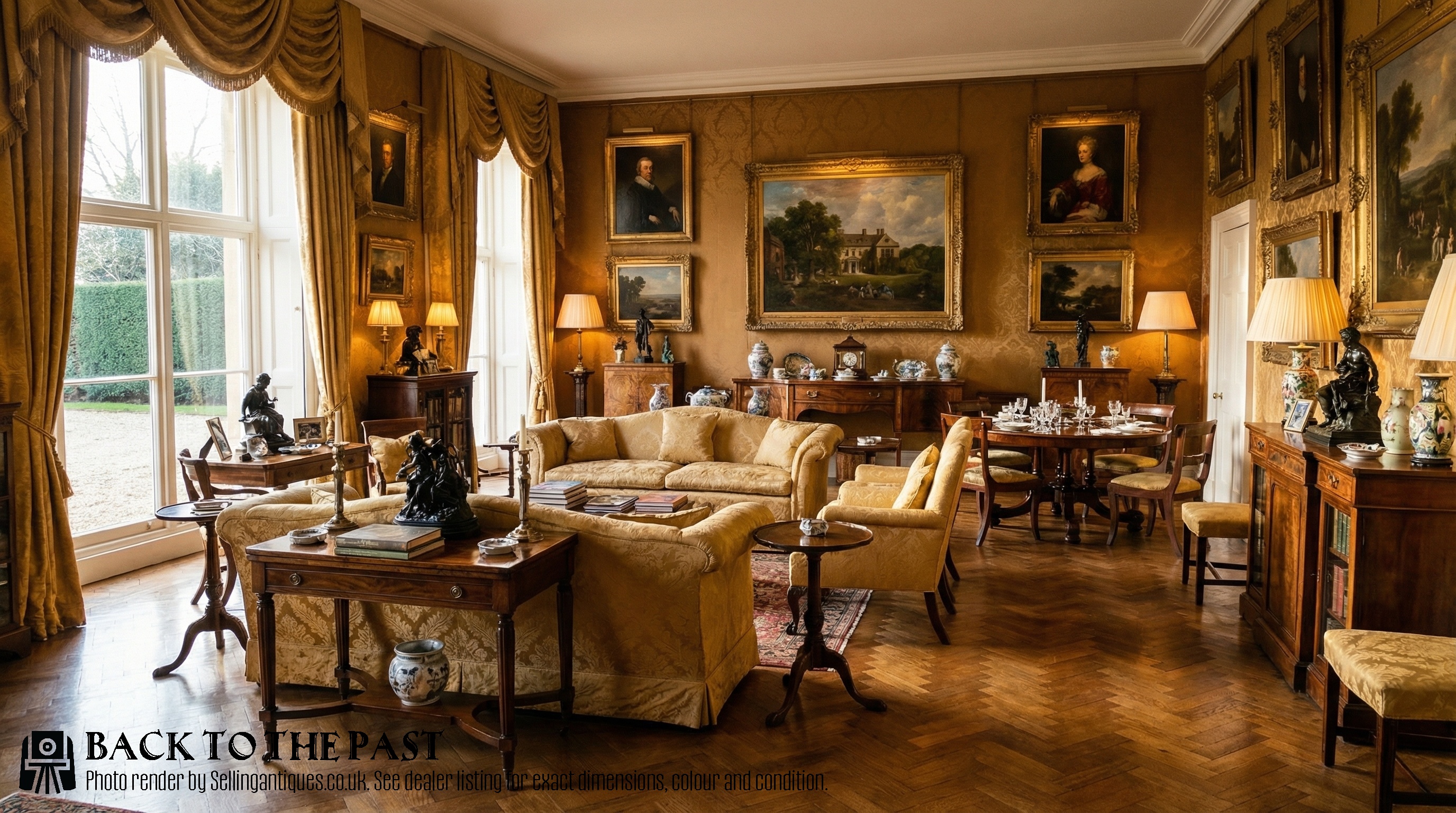
Victorian Mahogany Tilt Table
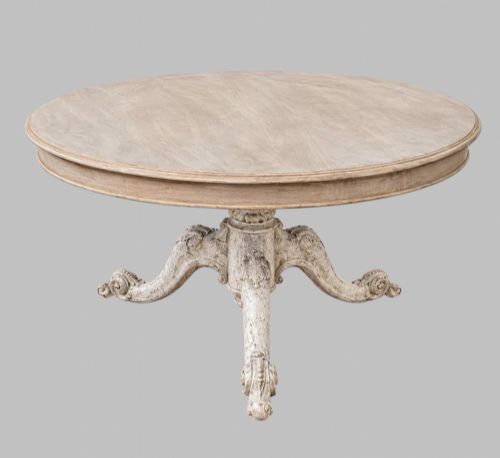
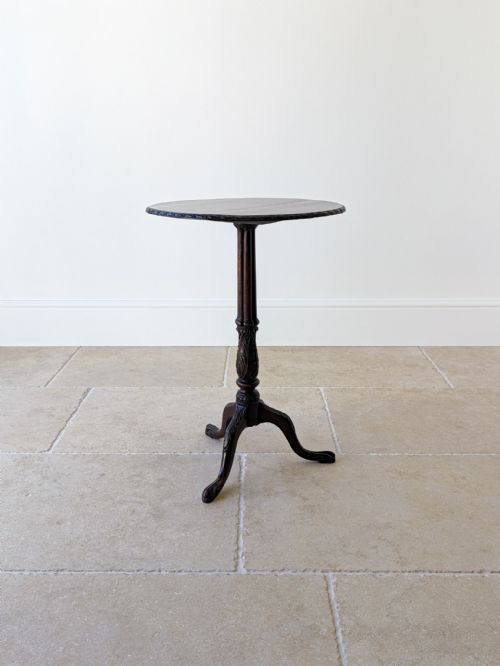
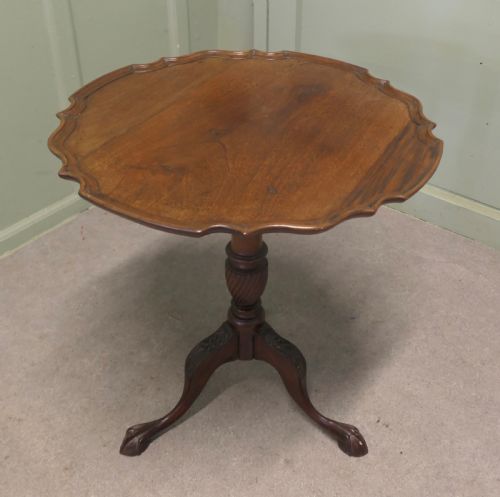
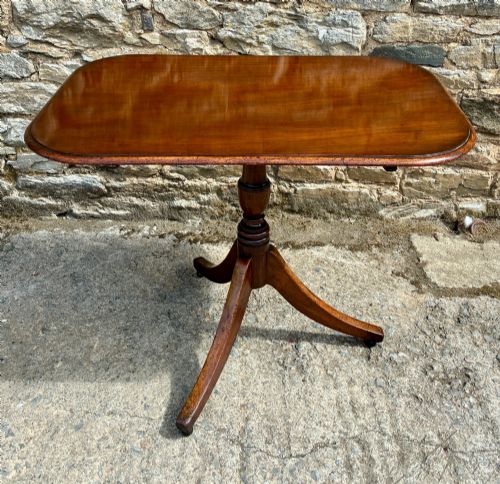
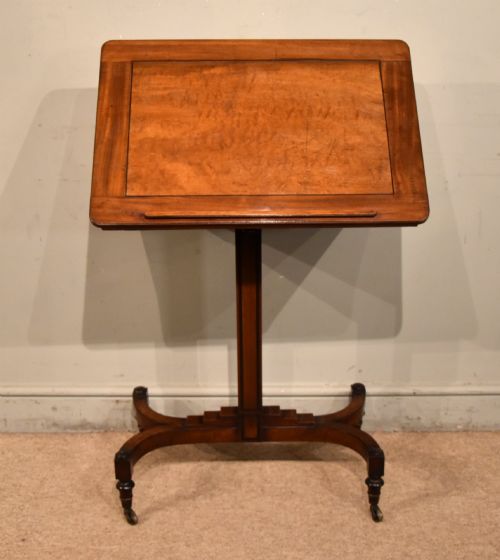
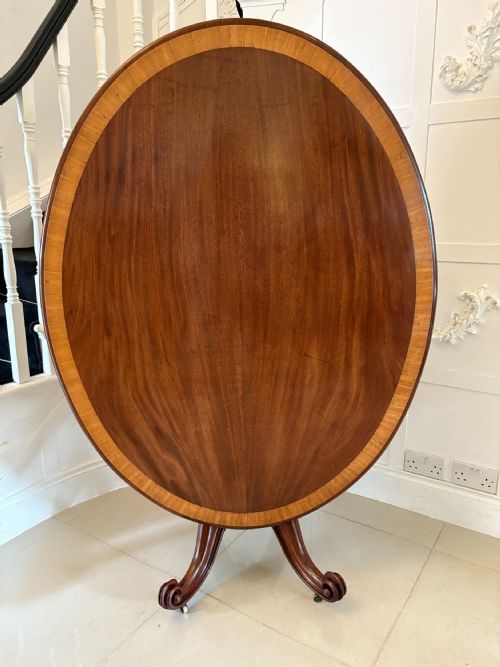
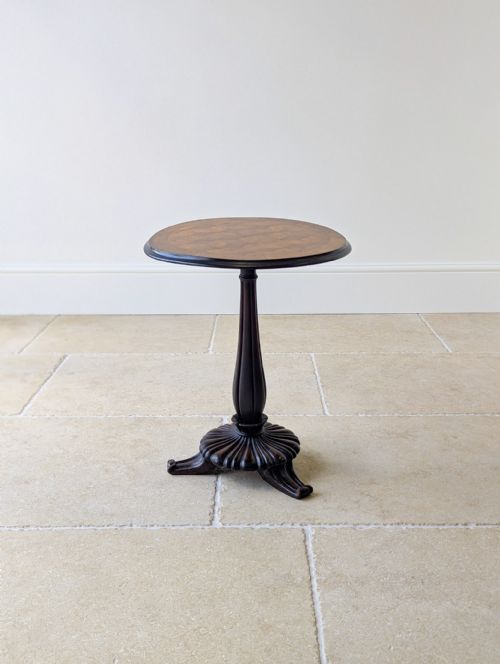
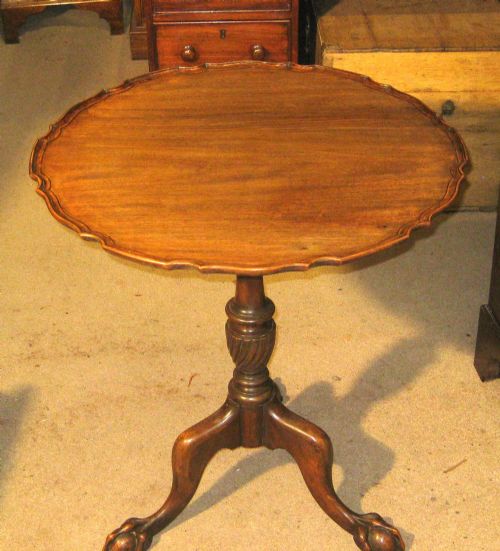
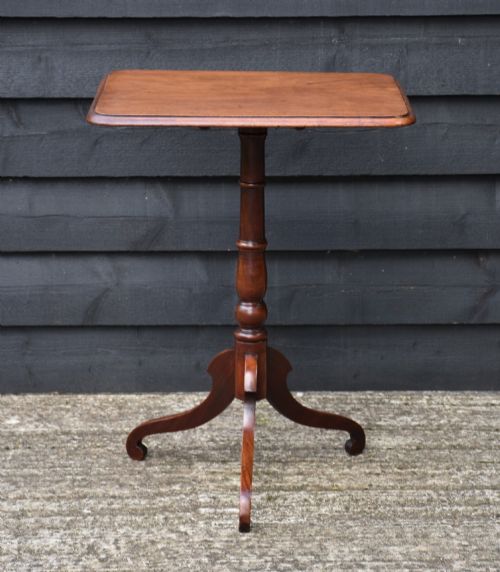
A victorian mahogany tilt table serves multiple domestic functions, appearing as small wine tables on tripod bases alongside large breakfast and dining formats designed for central placement in a room.
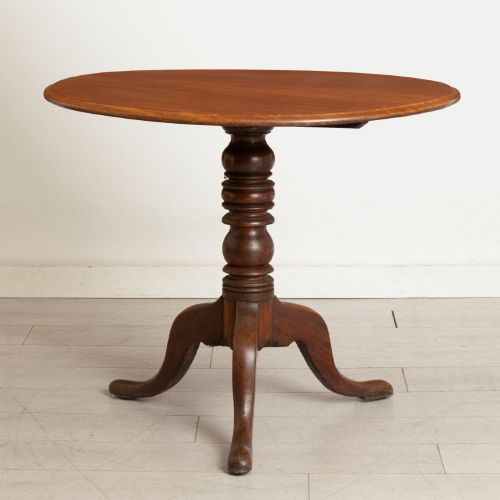
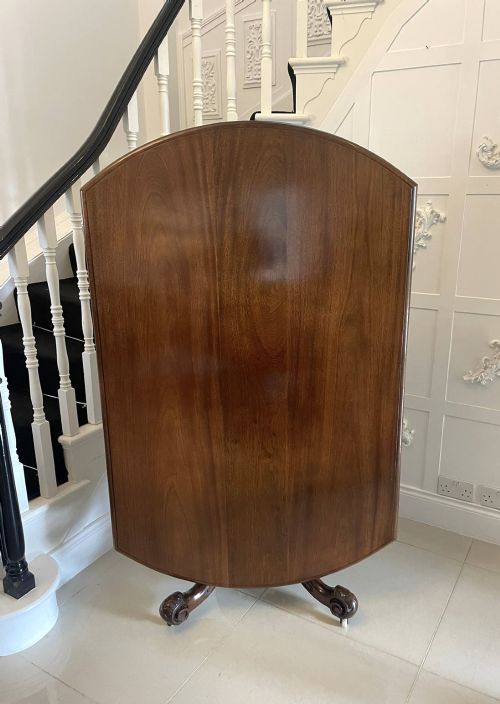
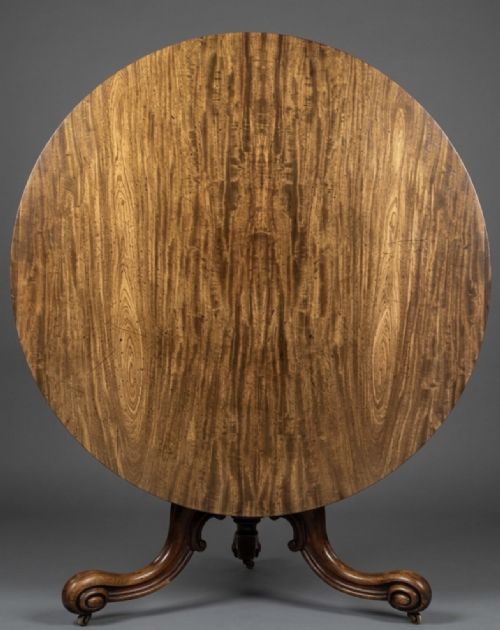
The inventory shows a strong prevalence of circular and oval tops resting on central pedestals, alongside smaller tripod versions intended for occasional use.
Origins stretch from the early nineteenth century through the Victorian era, encompassing styles such as Regency and Chippendale Revival alongside standard Victorian production.
Materials and Construction
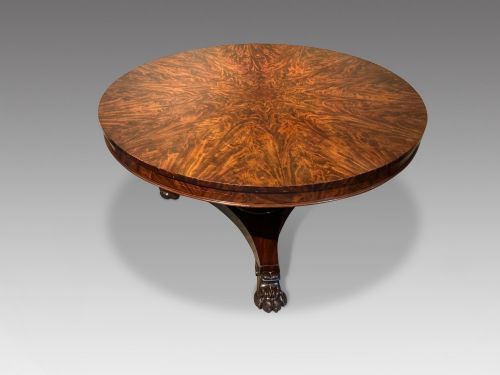
Makers utilised solid mahogany and flame mahogany veneer, often supported by secondary timbers like oak, while incorporating brass fittings and occasionally walnut or rosewood elements.
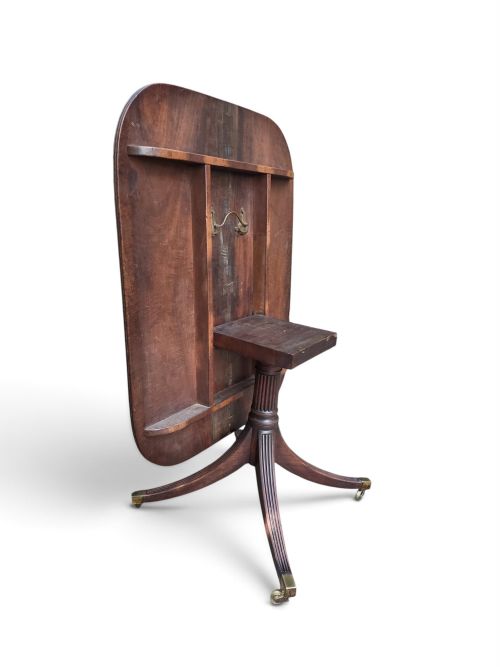
Construction relies on a clever mechanical pivot mechanism, known as a snap top or tilt top, which allows the surface to lock horizontally for use or fold vertically against the pedestal when not in use.
Materials recorded across the inventory include solid mahogany, flame mahogany veneer, brass, walnut, oak, rosewood, and specimen wood.
Judging Quality
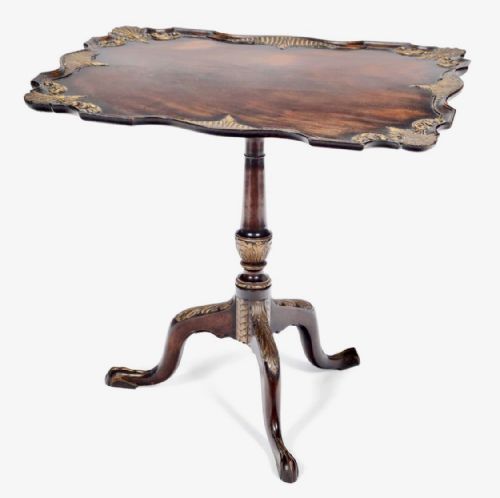
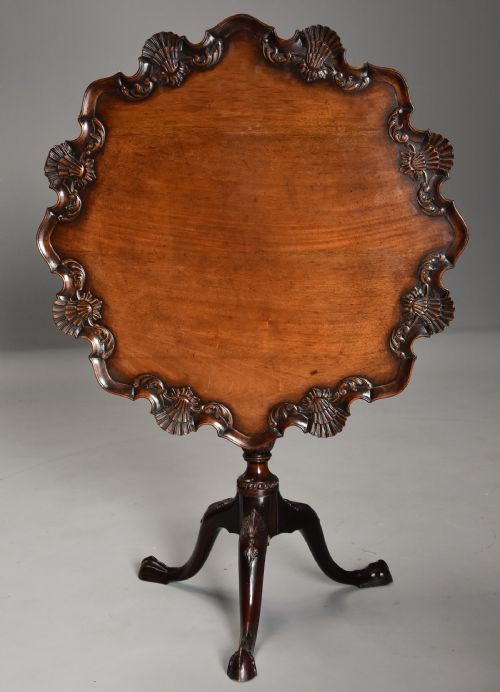
Quality rests in the figure of the mahogany timber and the crispness of any carved details on the pedestal base or table edge, such as piecrust borders.
The mechanical action itself marks the difference between standard utility items and finer workshop production, ensuring the top locks securely into place without wobble.
The Victorian Mahogany Tilt Table Glossary
- Tilt top
- A tabletop mounted on a hinge mechanism that allows the surface to rotate vertically for storage. This clever space-saving design defines the category.
- Tripod base
- A pedestal support featuring three curving legs radiating from a central column. It provides steady footing on uneven floors.
- Flame mahogany
- A distinctive wood veneer cut from the fork of the tree where branches meet the trunk. It creates a fiery, rippling grain pattern.
- Piecrust edge
- A raised, decoratively carved rim around the perimeter of a circular tabletop. The undulating edge resembles pastry work.
- Snap top
- A spring-loaded brass catch beneath the table that locks the tilting surface in a horizontal position. It prevents accidental tipping during use.
Victorian Mahogany Tilt Table: Frequently Asked Questions
What is a tilt table used for?
These tables served as adaptable furniture in nineteenth-century homes, functioning as intimate dining spots, breakfast surfaces, or occasional wine stands.
When not in use, the top folded flat so the piece could stand compactly against a wall.
How do you operate the tilt mechanism?
A brass catch or spring latch beneath the top releases the mechanism, allowing the heavy wooden surface to pivot upward on its central axis.
Gravity and a secure lock hold it flat when you push it back down for use.
Are these tables solid mahogany?
Many examples feature solid mahogany construction, particularly on smaller tripod wine tables and turned pedestals.
Larger breakfast tables frequently employ dense mahogany veneers, including highly figured flame mahogany applied over sturdy secondary timbers.
How do I spot a Regency style table?
Regency and Regency Revival pieces often display classical restraint, featuring bold pedestals, reeded columns, and substantial brass paw feet.
They emphasise clean architectural lines rather than the heavy carved ornamentation seen on later Victorian examples.