


Scroll Leg Dining Table
A scroll leg dining table brings substantial presence to a room through curved timber supports and rich cabinet timbers.
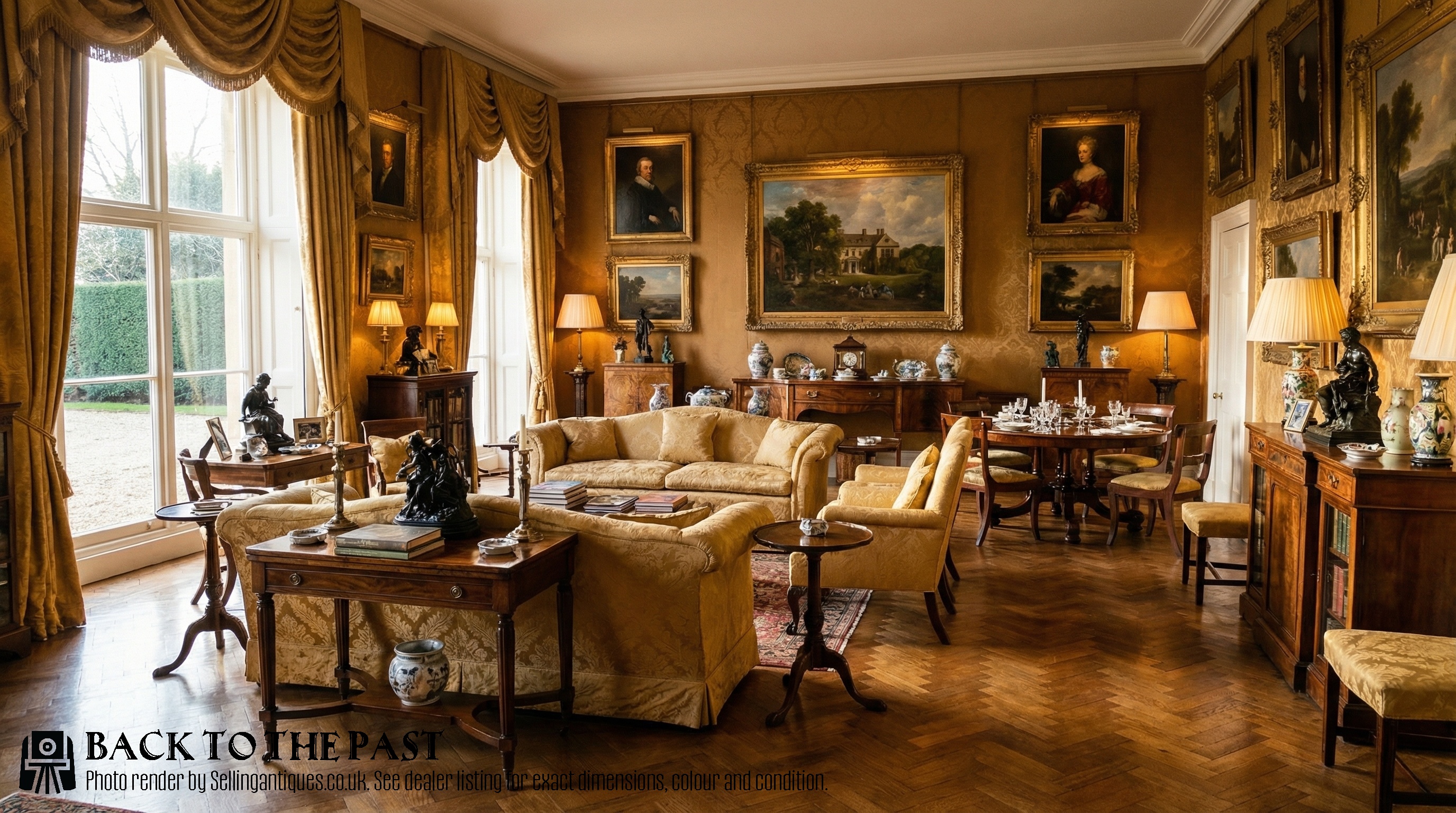
Scroll Leg Dining Table
A scroll leg dining table is defined by solid timber supports that curve inward or outward at the foot, anchoring large reception rooms. The pieces grouped under this search phrase encompass formal dining tables, breakfast tables, and related serving furniture from the Georgian, Regency, and Victorian eras.
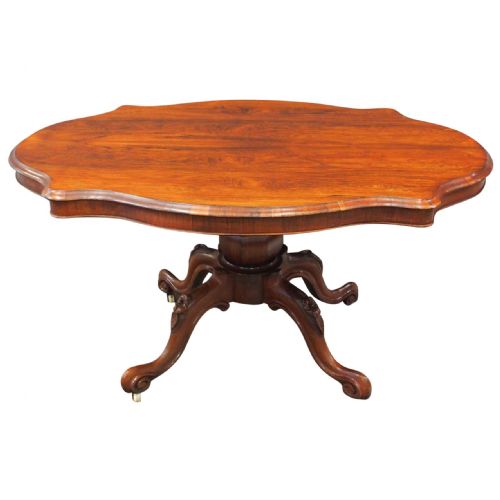
Most examples seen here are constructed from rich timbers like mahogany or walnut, reflecting the grand domestic interiors of the nineteenth century. While the listings include various large tables and table bases, buyers frequently encounter circular breakfast tables and extending dining boards sharing these characteristic carved terminals.
Materials and construction
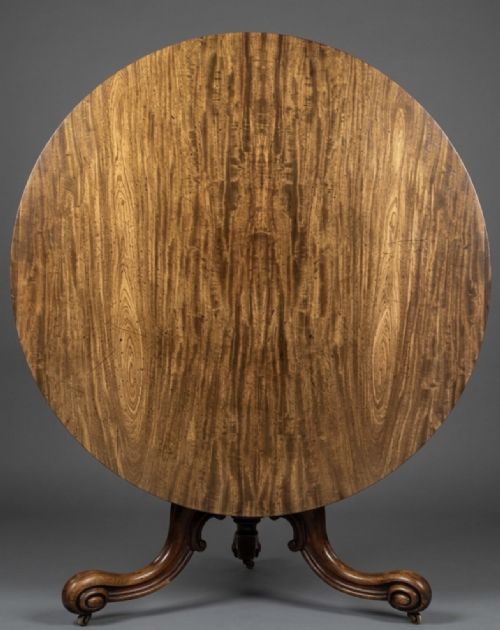
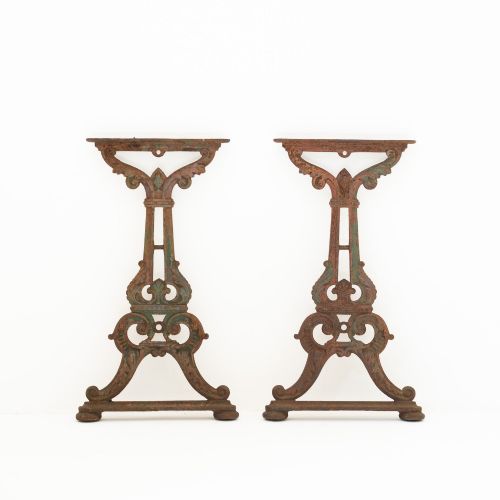
Makers utilised dense timbers such as solid mahogany, flame mahogany veneer, and French walnut, often selecting figured stock for table tops to create striking visual patterns. Supporting structures relied on heavy turned and carved timber columns, sometimes paired with cast iron elements for stability.
Advanced cabinet-making techniques of the period involved laying fine veneers over stable secondary woods and incorporating brass fittings to reinforce joints and castors. Surface finishes were hand-applied using traditional polishing methods to bring out the natural depth of the grain.
Listings under this search span the Georgian, Regency, and Victorian periods, featuring mahogany, walnut, rosewood, and cast iron.
Judging quality in scroll leg tables
Quality rests upon the crispness of the carving on the scroll terminals and the selection of timber for the top. Finer examples display deeply undercut wooden scrolls and unbroken expanses of figured flame mahogany or burr walnut.
Construction integrity separates standard workshop pieces from superior examples, particularly in how the central column meets the platform base and legs. Well-executed pieces maintain rigid stability without excessive modern reinforcement, retaining their original brass castors and structural harmony.
The Scroll Leg Dining Table Glossary
- Flame mahogany
- A veneer cut from the branch forks of the mahogany tree, producing a distinctive flickering flame pattern across the surface. Cabinet-makers reserved this timber for prominent tabletops.
- Breakfast table
- A nineteenth-century dining table designed for informal morning meals, typically featuring a circular tilt-top supported on a central pillar and scroll feet. These versatile forms saved space when not in use.
- Centre table
- A freestanding table finished on all sides, intended to stand in the middle of a room rather than against a wall. They frequently employ heavy pedestal bases with scroll supports.
- Regency
- An English design period spanning the early nineteenth century, characterised by classical revival motifs and darker timbers. Furniture from this era often incorporates bold architectural lines alongside delicate brass inlay.
Scroll Leg Dining Table: Frequently Asked Questions
Can I use a breakfast table for daily dining?
These circular pedestal tables function well for everyday meals, offering comfortable seating arrangements without corner legs obstructing chairs. Their sturdy pillar bases provide dependable support for daily household use.
Consider the diameter of the top against your dining space and chair dimensions to ensure adequate legroom. Many historical examples were built to withstand robust daily activity.
How do I distinguish Regency from Victorian tables?
Regency tables generally display cleaner classical lines, restraint in ornament, and often incorporate brass stringing or lion-paw feet. The timber choice leans toward rich brown mahogany with subtle grain patterns.
Victorian pieces tend to be heavier in proportion, featuring bolder carving, darker finishes, and sometimes more exuberant flourishes like burr walnut veneers. Base designs on Victorian examples frequently scale up to support larger central columns.
What is a tilt-top table mechanism?
A tilt-top mechanism allows the central tabletop to pivot into a vertical position by releasing a brass catch beneath the surface. This functional design enabled tables to be stored flat against a wall when the room was needed for other purposes.
Craftsmen engineered these pivot blocks to lock securely in the horizontal position during use, maintaining a stable dining surface. The hinge mechanism itself is a key point of historical joinery.