


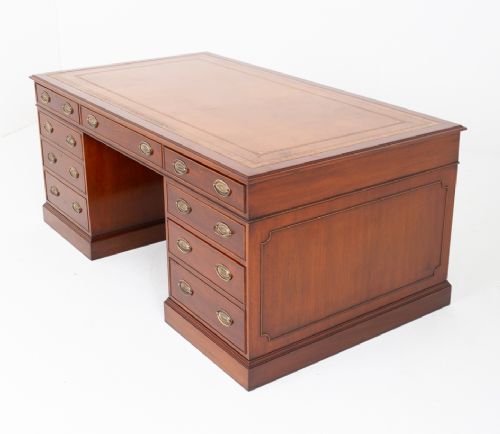
Brown Leather Top Table
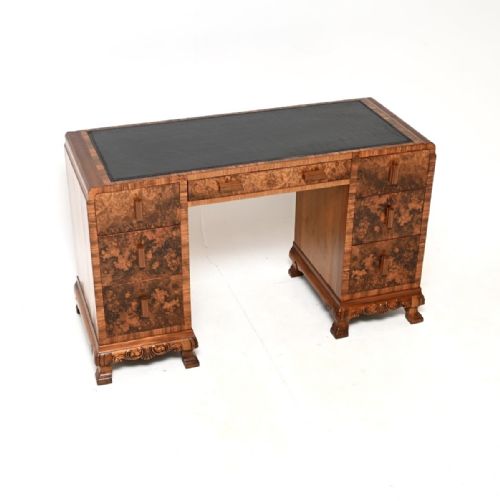
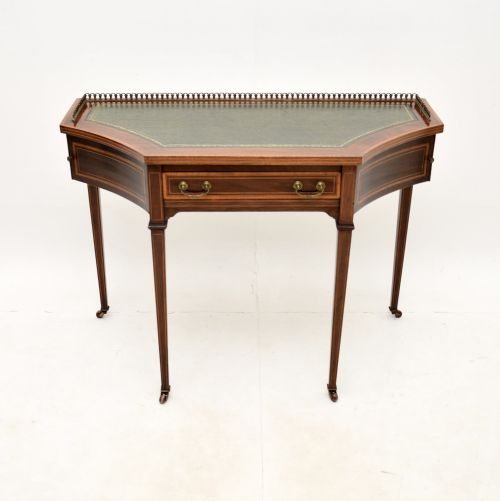
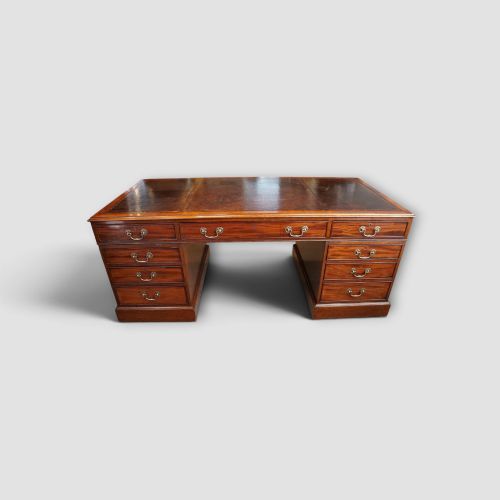
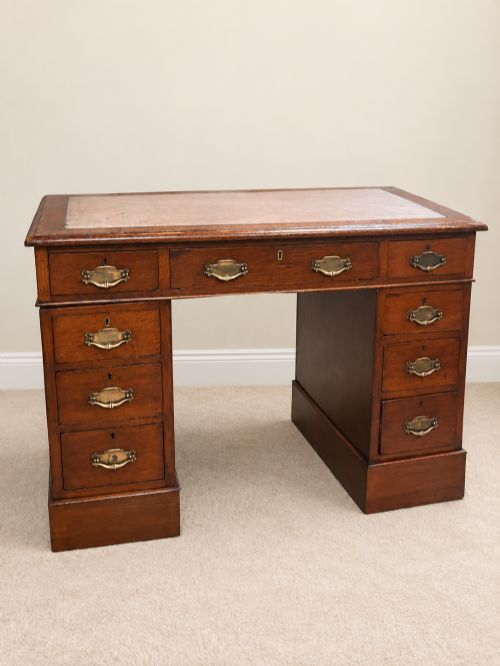
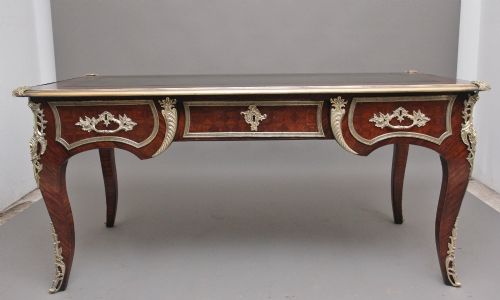
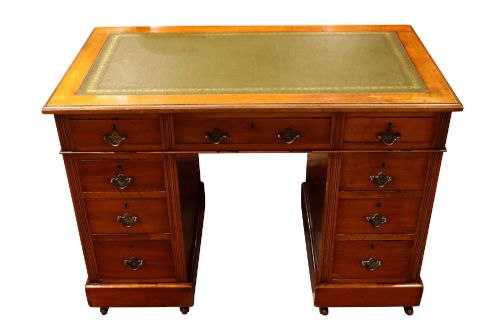
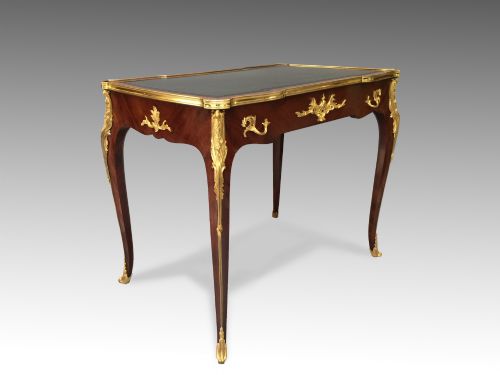
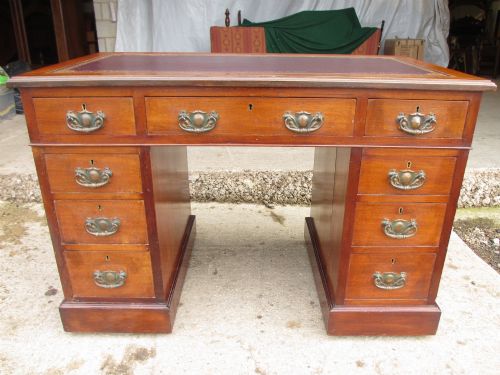
These brown leather top table pieces bring handsome period utility to a room, offering sturdy wood surfaces paired with tactile hide.
What these pieces are
When you search for a brown leather top table, you encounter practical surfaces designed for writing, reading, and central room placement. The selection spans distinct eras including Georgian, Victorian, and Regency periods.
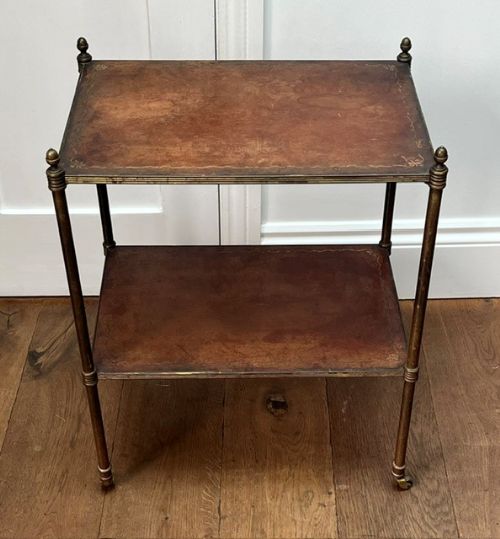
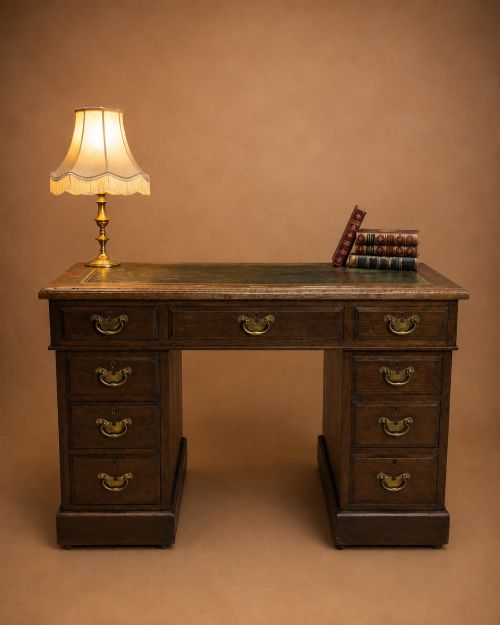
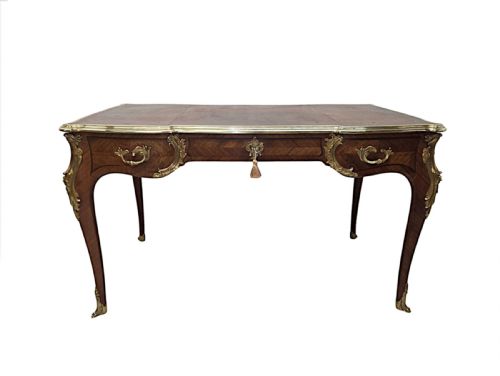
You meet various forms on this page such as side tables, centre tables, two-tier tables, drum tables, and larger library tables. Mahogany serves as the principal timber across these examples.
The objects originate from workshop traditions of the eighteenth and nineteenth centuries, alongside later twentieth-century interpretations in the Regency style. Each form serves a specific functional role within a traditional interior.
How they were made
Joiners and cabinet makers constructed these tables primarily from solid and veneered mahogany, incorporating brass elements in some designs. The writing surfaces incorporate inset leather panels, occasionally finished with blind tooling.
Construction techniques involve traditional framing and turning to create robust side, drum, and centre table forms. Timbers were selected for grain pattern and figure, then polished to a deep finish.
Retail Price Guide 2026
Typical UK retail prices for brown leather top table, calculated from the Sellingantiques database of over a million retail prices indexed since 2003. This retail price guide relies exclusively on Sellingantiques data; no external sources or auction records are used, so the figures do not describe the wider market.
Listings feature mahogany, walnut, and brass across Georgian, Victorian, and Regency style periods.
What varies in quality
The distinction between ordinary and superior examples lies in the selection of timber and the finesse of the joinery. Tables featuring well-figured mahogany and finely turned pedestals or legs command greater attention.
The execution of the inset leather top and any associated tooling marks the difference between standard utilitarian output and finer cabinet work. Originality of components and surface patination further define the standing of each piece.
The Brown Leather Top Table Glossary
- Mahogany
- A durable tropical hardwood imported for high-end British cabinet making. It provides a stable and rich reddish-brown base for traditional tables.
- Drum table
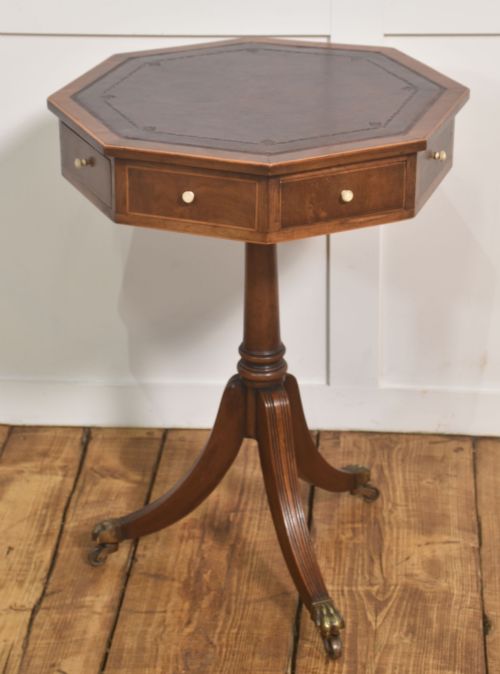
- A circular library or writing table with a deep frieze resembling a drum. These pieces often feature numerous drawers around the circumference.
- Centre table
- A freestanding table designed to be viewed from all sides rather than pushed against a wall. They sit prominently in the middle of principal rooms.
- Regency style
- A design aesthetic reflecting the Regency era, revived in later periods such as nineteen thirty. It favours classical restraint, sabre legs, and dark timbers.
Frequently Asked Questions
Where did people use a brown leather top table?
These tables served primarily in libraries, studies, and principal reception rooms as writing or general utility surfaces.
Their sturdy construction suited daily administrative tasks and the handling of heavy volumes.
How do I care for the leather top?
The leather surface benefits from gentle dusting and occasional specialist wax or balsam feeding to prevent drying.
Avoid placing damp items directly onto the hide to preserve the tone and any blind tooling.
What is a drum table?
A drum table is a circular form featuring a deep frieze that typically incorporates small drawers.
They stand on a central pillar with spreading legs, offering stability and compact storage.
How do I distinguish Georgian from Victorian tables?
Georgian examples date from the eighteenth and early nineteenth centuries, displaying refined proportions and restrained classical details.
Victorian pieces often exhibit heavier scaling, bolder timber selection, and distinct nineteenth-century turning conventions.