


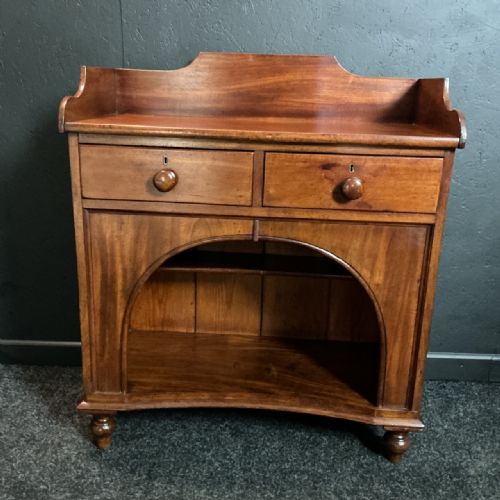
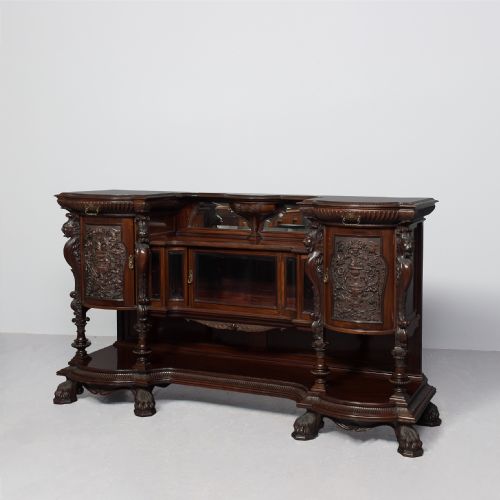
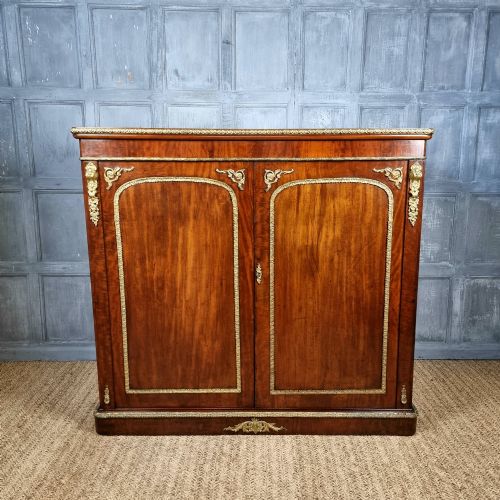
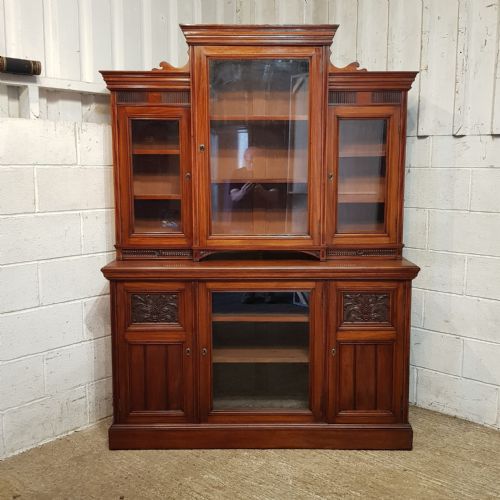
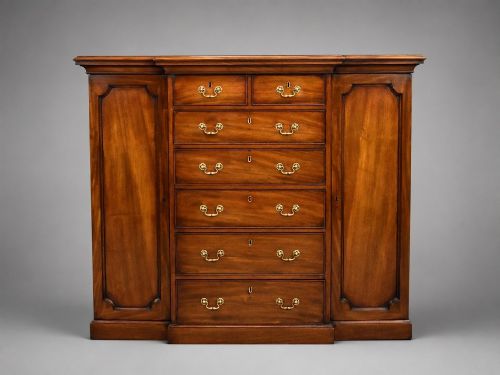
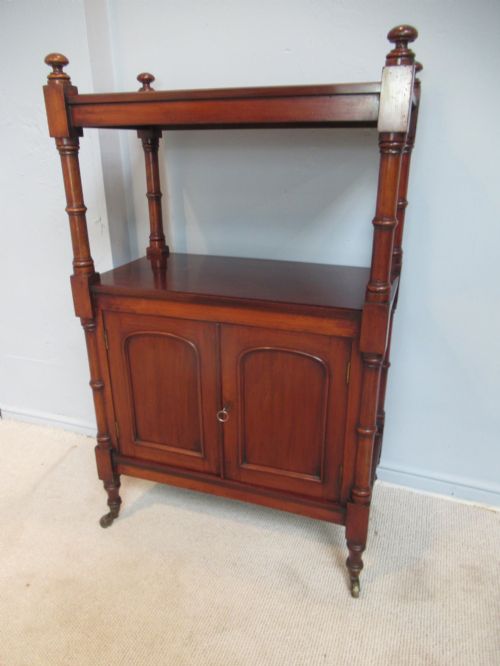
Victorian Mahogany Sideboard Cupboard
A victorian mahogany sideboard cupboard anchors a dining room with rich timber and practical storage, offering sturdy shelving and generous proportions.
Victorian Mahogany Sideboard Cupboard
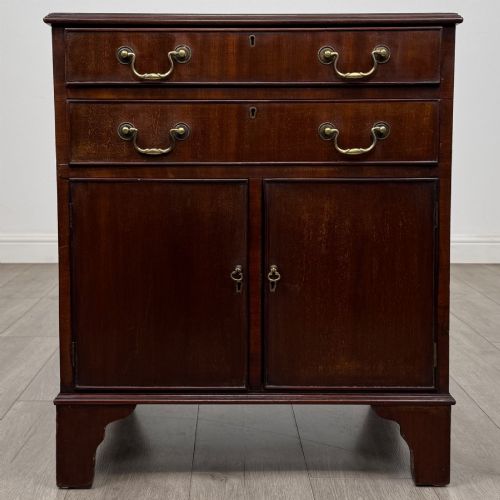
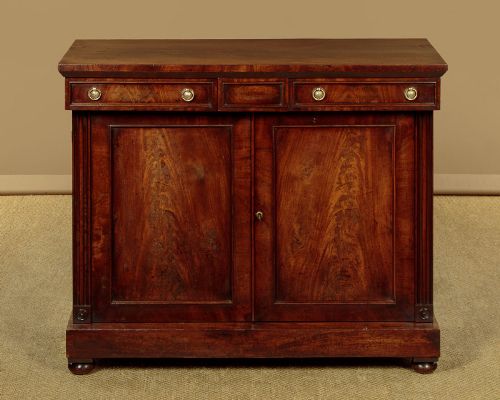
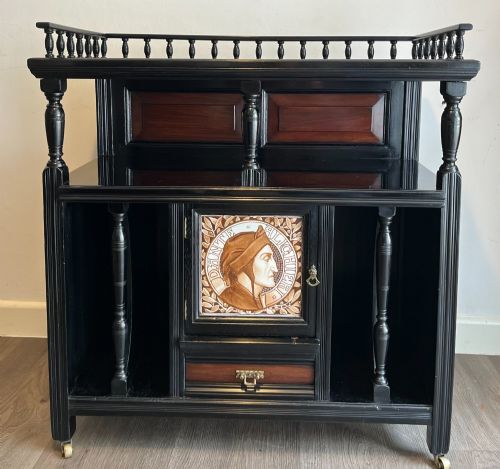
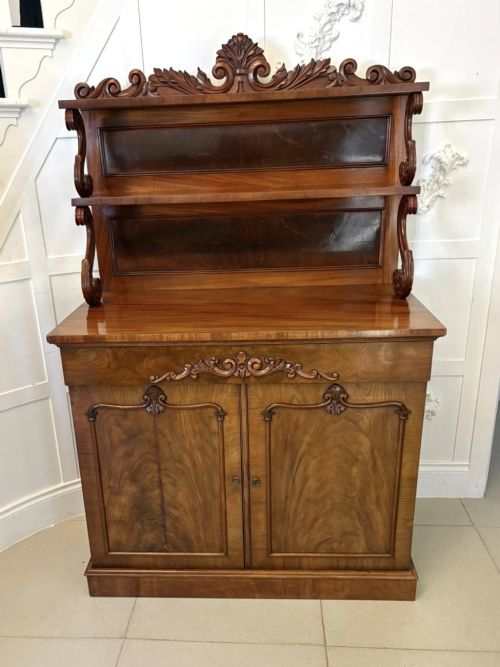
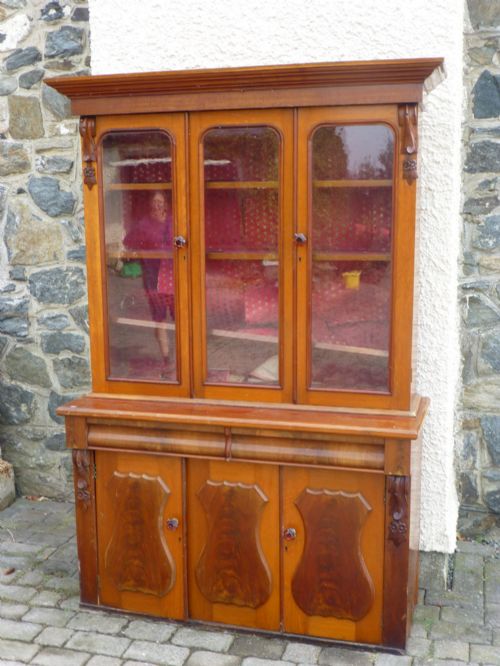
A victorian mahogany sideboard cupboard combines a heavy timber server base with enclosed cabinet storage, designed primarily for dining rooms and large hallways during the nineteenth century. These pieces appear in various configurations, ranging from multi-door pedestals to tiered chiffoniers and glazed display cabinets.
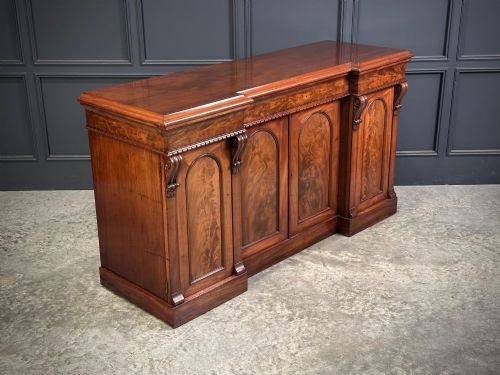
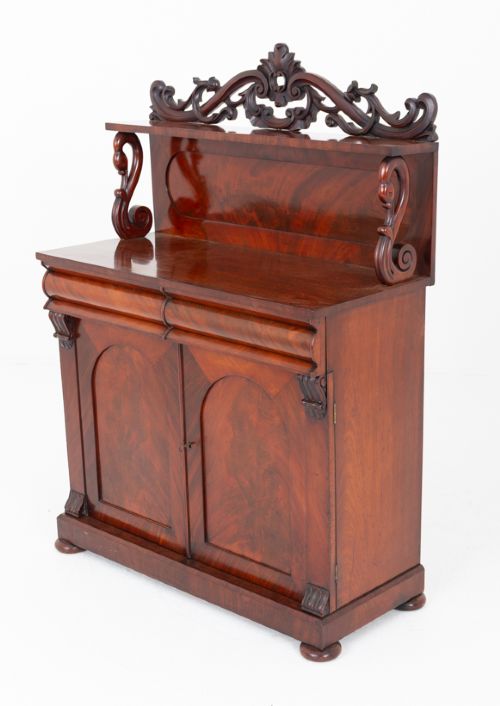
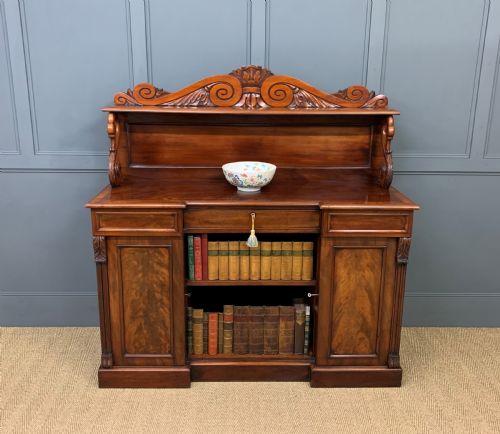
The version most commonly encountered on this page is the Victorian mahogany sideboard or chiffonier, frequently featuring solid timber construction alongside figured veneers. Makers of the period drew upon Regency, William IV, and Sheraton Revival styles, incorporating practical drawers, shelved cupboards, and sometimes mirrored backs.
How They Were Made
Cabinet makers utilised solid mahogany and flame mahogany veneer applied over secondary timbers, often accentuating the grain pattern on primary door panels and drawer fronts. Brass hardware, glass panes, and occasional satinwood or marquetry inlays completed the decorative scheme.
Construction relied on traditional joinery methods, housing heavy timber panels within sturdy frames to support the weight of crockery, linen, and glassware. Carved details and turned columns were shaped by hand before being polished to a deep lustre.
Listings feature mahogany, flame mahogany veneer, and satinwood across Victorian, Regency, and Sheraton Revival styles.
What Varies in Quality
Quality rests upon the choice of timber and the dexterity of the grain matching, particularly where flame mahogany veneer is employed across large cupboard doors. Superior examples display consistent figure and deep natural colour without heavy artificial staining.
The precision of the cabinetwork and the subtlety of carved or applied ornament distinguish workshop standards. Finer pieces demonstrate careful attention to internal fittings, drawer construction, and structural integrity that survives intact through decades of domestic use.
Edwards & Roberts·Gillows·Heals·Maple & Co.
The Victorian Mahogany Sideboard Cupboard Glossary
- Flame mahogany
- A veneer cut from timber where the branch meets the trunk, creating a distinctive flamelike pattern. This decorative grain was highly prized for prominent cupboard doors and drawer fronts.
- Chiffonier
- A compact sideboard, often featuring a raised shelf or small bookcase back above enclosed lower cupboards. These pieces served versatile storage roles in Victorian reception rooms.
- Breakfront
- A piece of furniture where the central section projects forward from the flanking cabinets. This architectural arrangement creates depth and visual interest in larger sideboards.
- Pedestal
- A structural support forming the lower sides of a sideboard, typically housing internal shelving and a single access door. They provide the substantial foundation characteristic of nineteenth-century dining furniture.
- Satinwood
- A pale, fine-grained timber utilised for contrasting inlay work and stringing on later revival pieces. It provides a bright visual accent against the darker mahogany body.
Victorian Mahogany Sideboard Cupboard: Frequently Asked Questions
What is a victorian mahogany sideboard cupboard used for?
These pieces served as dining room servers for storing heavy tableware, cutlery, and linens during large Victorian meals. The flat top surface also provided a convenient platform for displaying silver or serving dishes.
In modern homes, they function well as credenzas in living spaces or large hallways, offering substantial enclosed storage for everyday household items while anchoring a room with period character.
How do I identify a Victorian piece?
Look for the characteristic deep reddish-brown tones of solid mahogany and flame mahogany veneers, often accompanied by hand-cut dovetail joints in the drawers. Styles commonly reflect nineteenth-century revivals such as Sheraton, William IV, or robust Victorian vernacular.
Hardware and construction details, including turned feet, recessed panel doors, and occasionally maker stamps, help confirm the nineteenth-century origin of the cabinet.
Are chiffoniers and sideboards the same thing?
A chiffonier is generally a smaller, more compact version of a sideboard, frequently featuring a raised shelf or mirror superstructure above lower cupboards. They were designed for smaller reception rooms where a full dining sideboard would overwhelm the floor space.
Traditional sideboards are wider, heavier pieces built with multiple doors and central drawers, intended specifically for larger dining rooms and extensive service storage.
How should I care for mahogany furniture?
Keep mahogany furniture away from direct sunlight and strong heat sources like radiators to prevent the timber from drying out and the veneer from lifting. Regular dusting with a soft, dry cloth maintains the finish without needing heavy chemical polishes.
Applying a traditional beeswax polish occasionally helps nourish the wood and preserves the deep lustre characteristic of nineteenth-century surfaces.