




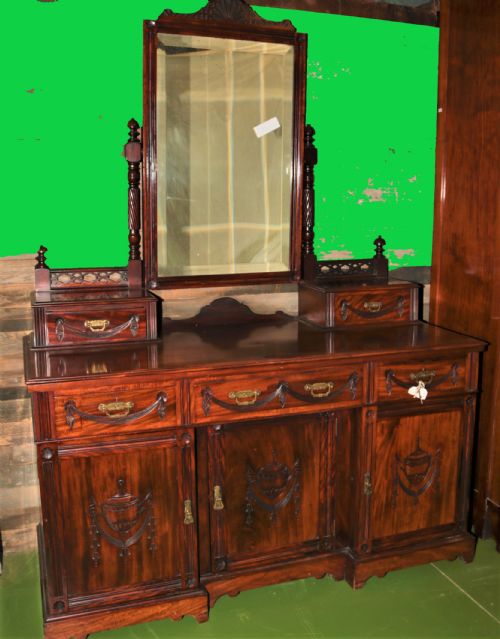

Dark Wood Vanity Unit
A dark wood vanity unit brings rich timber and period utility to a bedroom, combining practical surfaces with traditional craftsmanship.
Dark Wood Vanity Unit
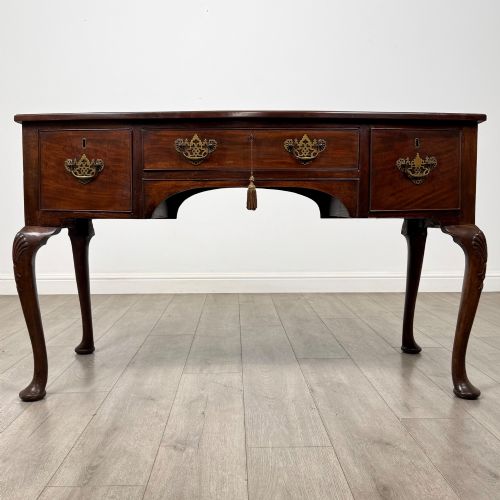
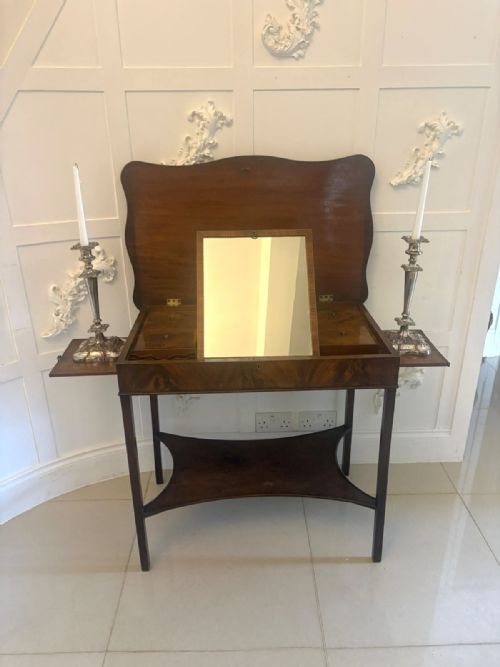
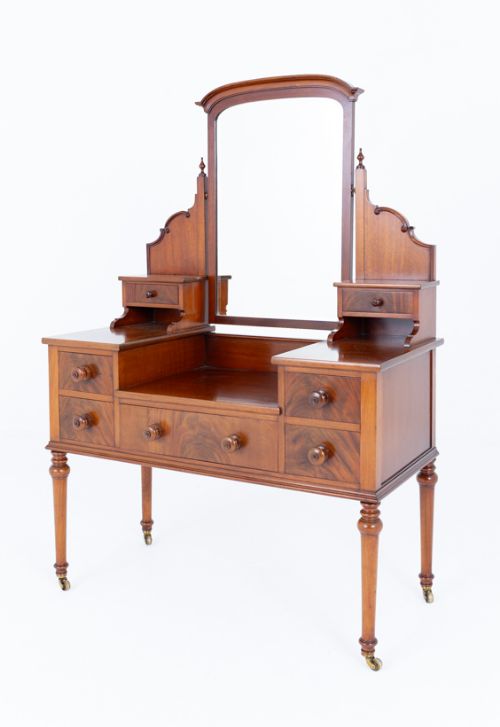
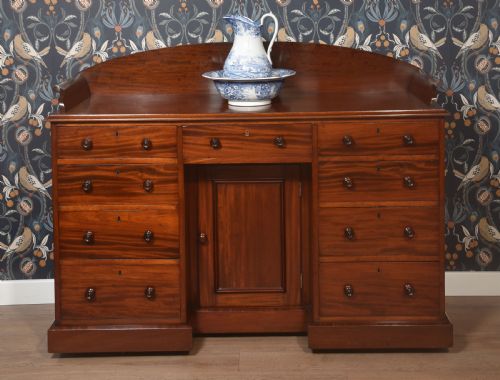
When buyers search for a dark wood vanity unit, they are usually looking at antique dressing tables, washstands, and dressing chests from the Georgian, Victorian, and Edwardian eras. These pieces serve as functional bedroom furniture while introducing deep wood tones to an interior.
How they were made
Cabinet makers utilised dense timbers such as mahogany, rosewood, and oak to construct these pieces, ensuring structural durability alongside a rich visual grain. Solid wood and sturdy construction methods define the build quality of these historical items.
Functional details were integrated using brass fixtures, ceramic components, and inset glass mirrors. Marble tops were also fitted to specific washstand variants to provide a durable, water-resistant surface for daily use.
The listings span multiple centuries, incorporating Georgian, Victorian, and Edwardian pieces alongside specific revival styles like Chippendale.
What varies in quality
The distinction between standard examples and finer pieces often lies in the selection of timber figures and the subtlety of period revival styling, such as Chippendale influences. Superior items display careful matching of wood grains and harmonious proportions across drawers and mirrors.
Hardware choice and secondary materials also indicate grade, with heavy brass fittings and genuine marble slabs elevating the standard of construction well above simpler utilitarian counterparts.
The Dark Wood Vanity Unit Glossary
- Mahogany
- A dense, reddish-brown tropical hardwood favoured by cabinet makers for its stability and rich grain. It appears frequently across Georgian and Victorian furniture.
- Washstand
- A utilitarian piece of bedroom furniture designed to hold a basin and pitcher, often fitted with a marble top for water resistance. Many double as vanity units in modern interiors.
- Campaign washstand
- A portable washstand designed for travel, typically featuring collapsible frames and brass corners. These pieces prioritise robust practicality without sacrificing proportion.
- Dressing chest
- A hybrid form combining the drawers of a chest with the mirror and surface of a dressing table. They became particularly popular during the Edwardian period.
Dark Wood Vanity Unit: Frequently Asked Questions
What is a dark wood vanity unit?
A dark wood vanity unit encompasses antique dressing tables, washstands, and dressing chests made from timbers like mahogany and oak. These pieces date primarily from the Georgian, Victorian, and Edwardian eras.
They provide functional surface areas and storage while adding traditional character and deep wood tones to a bedroom or dressing room.
How were antique washstands used?
Historical washstands were designed for personal hygiene before indoor plumbing was common in bedrooms. They typically held a ceramic basin, water pitcher, and related washing accessories.
Today, surviving examples function well as decorative vanity units or washbasin supports in modern bathrooms and bedrooms.
What woods are used in these pieces?
Listings feature furniture predominantly constructed from mahogany and oak, alongside occasional examples in rosewood. These dense timbers were chosen for their strength and attractive grain patterns.
Secondary materials such as marble, brass, and glass frequently accompany the wood structures on tabletops and mirrors.
How do I date a dressing table?
Dressing tables can be dated by observing their overarching style, construction techniques, and hardware. Pieces span from the 18th-century Georgian era through the Victorian and Edwardian periods.
Stylistic cues such as Chippendale revival details or plain campaign frames help narrow down the specific decade of manufacture.
Can I use a washstand daily?
Many antique washstands and dressing tables remain robust enough for daily use in contemporary homes. Marble-topped variants are particularly well-suited to handling modern moisture and toiletries.
Care should be taken to protect antique wood surfaces from standing water and heat to preserve their historical finish.