






Carved Mahogany Dressing Chest
These carved mahogany dressing chest pieces combine storage and surface space in rich timber, offering a practical centrepiece for a bedroom.
Carved Mahogany Dressing Chest
A carved mahogany dressing chest provides a solid timber surface for grooming and drawers for storage, often incorporating mirrors or compartments designed for daily use. These pieces bridge the gap between a chest of drawers and a dressing table, reflecting the practical needs of past interiors.
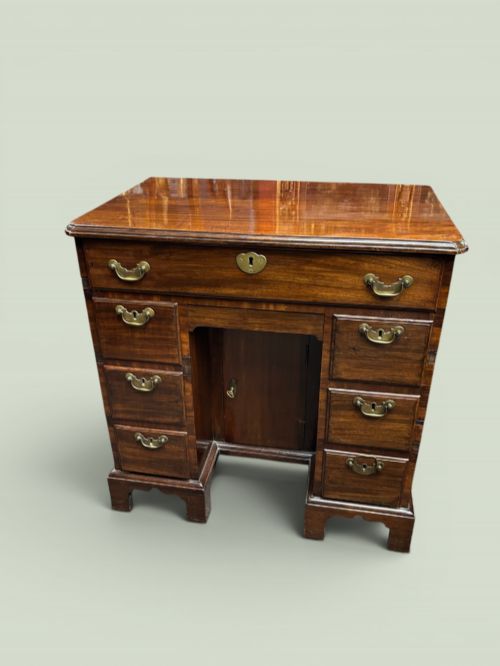
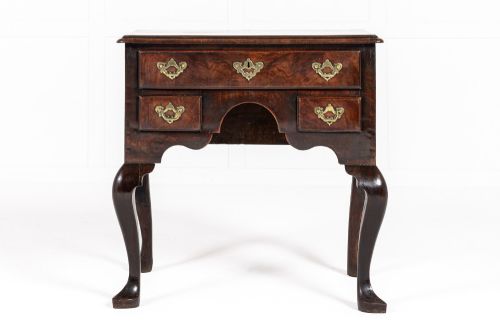
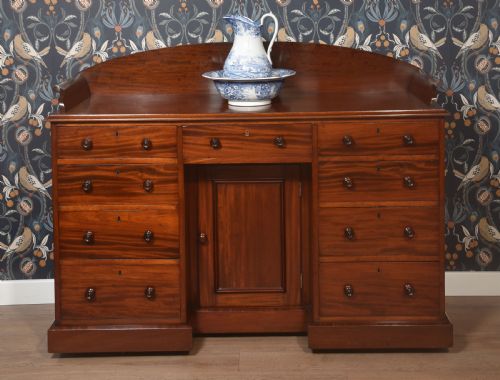
The versions most likely to be met on this page span several distinct periods, including Georgian craftsmanship, 19th-century interpretations, and later Edwardian or Victorian revivals. Makers of these eras applied carved details to mahogany surfaces, producing forms that range from straightforward dressing tables to elaborate lowboys and kneehole desks.
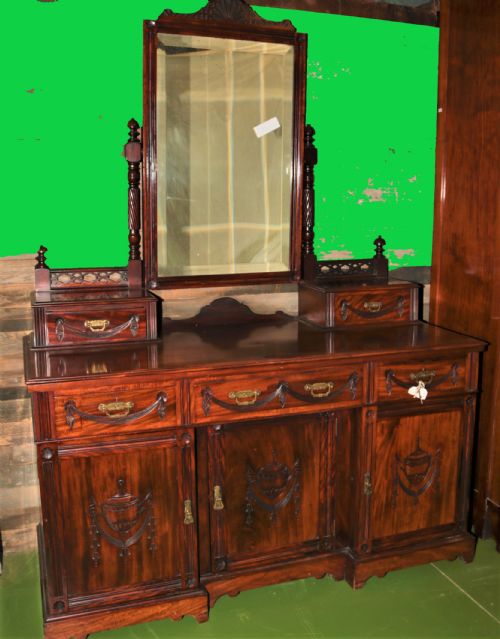
Examples often show stylistic influences such as George II design, Chippendale Revival, and French Rococo Revival, incorporating elements like marble tops, brass hardware, and glass components. Each piece demonstrates how cabinet makers adapted the core dressing chest form to suit changing tastes across the 18th, 19th, and early 20th centuries.
How they were made
Makers constructed these pieces primarily from solid mahogany and mahogany veneers, selected for deep grain patterns and durability. Timber boards were joined using traditional cabinet-making techniques to form the main carcass and drawers.
Secondary materials such as brass for handles and locks, glass for mirrors, and inset marble for tabletops appear across various examples. Carved ornamentation was applied by hand directly to the mahogany framework, defining the style of the piece.
Some dressing chests include hidden slides designed for secret correspondence away from prying eyes.
What varies in quality
The refinement of the carved ornament separates more ambitious work from standard production, as skilled hands achieved sharper relief and greater depth in the mahogany. Finer pieces display balanced proportions where decorative carving enhances rather than overpowers the structural lines.
The selection of the timber grain and the precision of the drawer construction also indicate the standard of the workshop. Superior examples utilise well-figured mahogany veneers and solid drawer linings that operate smoothly within the frame.
Muirhead Moffat & Co
The Carved Mahogany Dressing Chest Glossary
- Mahogany
- A durable hardwood prized for its reddish-brown colour and stability. It accepts fine carving and polished finishes exceptionally well.
- Lowboy
- A small table with drawers, typically standing on four legs, often used as a dressing table or side table in the 18th century.
- Kneehole desk
- A desk or dressing chest featuring a central recessed space for the legs, flanked by pedestals of small drawers.
- Chippendale Revival
- A late 19th and early 20th-century style inspired by the designs of Thomas Chippendale, featuring elaborate carving and classical motifs.
- Serpentine
- A curved line that undulates outward and inward, frequently seen on the front edges of tabletops and drawer chests.
Carved Mahogany Dressing Chest: Frequently Asked Questions
How were these dressing chests used?
These chests were used in bedrooms for personal grooming, storing clothing, and keeping smaller valuables secure in integrated drawers. The surface provided space for mirrors, brushes, and cosmetic containers.
Over time, their role evolved from utilitarian dressing furniture into decorative focal points that also functioned as writing surfaces or small desks in period homes.
How do I live with a dressing chest?
Living with a carved mahogany dressing chest involves placing it in a bedroom or hallway where its timber tones and carved details can be appreciated. The surface accommodates lamps or decorative objects while the drawers offer practical storage.
Maintenance requires keeping the mahogany away from direct heat sources and sunlight to preserve the finish, applying occasional wax polish to maintain the timber's natural lustre.
How can I tell different periods apart?
Distinguishing between periods relies on examining the structural proportions, hardware types, and specific carved motifs present on the mahogany framework. Georgian and George II pieces often display restrained classical carving and solid bracket feet.
Later Victorian and Edwardian revival examples tend to incorporate heavier proportions, mixed materials like marble and glass, or more exuberant decorative styles such as French Rococo Revival.