




Edwardian Duchess Dressing Table
An Edwardian duchess dressing table brings grand proportions and large tilting mirrors into the bedroom.
Edwardian Duchess Dressing Table
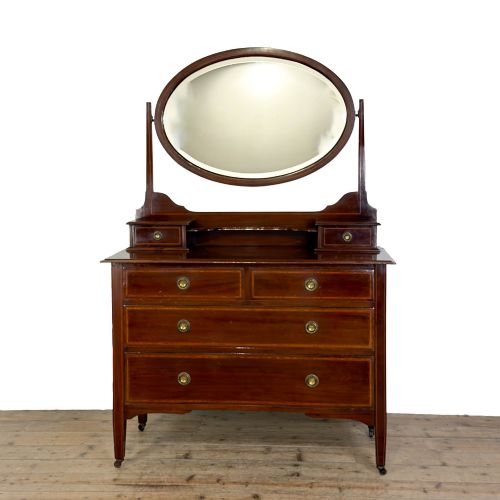
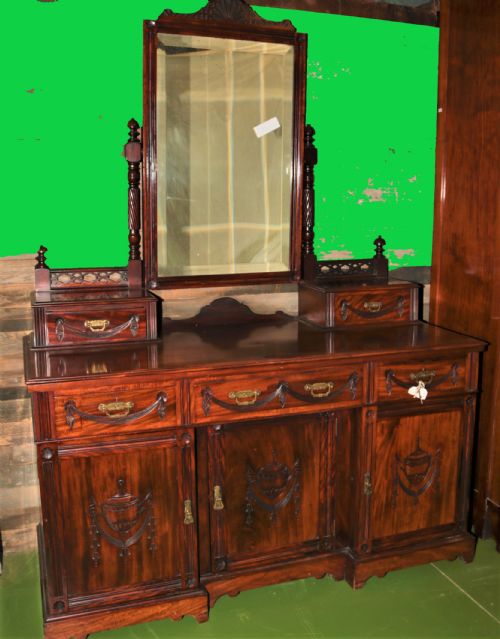
The edwardian duchess dressing table centres on a large, often arched swing glass supported by scrolling arms above a tiered surface and central storage. These grand pieces combine the low drawers of a chest with the dedicated surface of a vanity, providing a focal point for period bedrooms.
While the name points to the Edwardian era, the listings show these pieces bridging multiple periods, including the Victorian era and the late nineteenth century. Alongside pieces carrying the specific duchess designation, buyers encounter related forms including standard dressing tables and dressing chests.
Construction spans a range of timber choices recorded across the inventory, with mahogany and burr walnut appearing alongside satinwood, oak, pine, and scumble-glazed surfaces. Some examples feature marquetry inlay, whilst others rely on the natural grain of the wood or painted finishes for decorative impact.
How they were made
Cabinet makers utilised dense hardwoods such as mahogany and walnut, frequently selecting burr veneers for the primary display surfaces to showcase dramatic grain patterns. These timbers were worked by hand and joined to secondary woods like pine in drawer construction.
Glass production supplied heavy, bevelled mirrors that tilted within adjustable brass or wooden frames, mounted firmly to the upper superstructure. Surface decoration involved fine marquetry inlay and polished finishes that brought out the natural warmth of satinwood and mahogany.
The listings show dressing tables spanning from the Victorian era through the Edwardian period, utilising mahogany, burr walnut, satinwood, and oak.
What varies in quality
Quality reveals itself in the choice of timber and the ambition of the construction, moving from simple pine and scumble-glazed surfaces up to finely figured burr walnut and satinwood. The presence of marquetry inlay and substantial brass hardware distinguishes more prestigious workshops from utilitarian pieces.
The sophistication of the mirror frame and the proportion of the upper tier alter the architectural balance of the piece. Finer examples integrate the supporting scrolls and jewellery drawers with seamless carpentry, whereas simpler items rely on more straightforward box forms.
John Taylor of Edinburgh
The Edwardian Duchess Dressing Table Glossary
- Duchess dressing table
- A grand vanity style featuring a large swing mirror flanked by small drawers, sitting above a lower table base. This form became popular in the nineteenth century for bedroom use.
- Burr walnut
- Timber taken from the warted growths on walnut trees, yielding complex swirling grain patterns. Cabinet makers prized this wood for high-status veneering.
- Satinwood
- A pale, hard timber from tropical trees that takes a high polish and provides a golden yellow surface. It frequently appears in fine inlaid Edwardian furniture.
- Scumble glaze
- A decorative paint technique mimicking wood grain or texture on a simpler base wood like pine. This finish allowed makers to produce affordable pieces with the appearance of richer timbers.
- Marquetry
- The art of applying small pieces of veneer to form decorative pictures or geometric patterns. Makers used contrasting timbers to create detailed surface ornamentation.
Edwardian Duchess Dressing Table: Frequently Asked Questions
What is an edwardian duchess dressing table?
An edwardian duchess dressing table is a large bedroom vanity featuring a prominent central mirror supported by smaller drawers or trinket boxes above a main writing or display surface.
These pieces emerged from nineteenth-century furniture traditions and provide substantial storage through built-in drawer configurations.
How do I style a duchess dressing table?
Position the dressing table against a bedroom wall where the large mirror can reflect natural light and anchor the room's proportions.
Keep the tiered surface uncluttered to allow the mahogany, walnut, or satinwood grain to remain the visual focus.
What woods were used for these dressing tables?
Makers constructed these tables from a variety of timbers including mahogany, burr walnut, satinwood, oak, and pine.
Finer examples utilise highly figured veneers and decorative inlay, while utilitarian pieces often feature painted or scumble-glazed pine.
How do I date an antique dressing table?
Dating relies on observing the timber selection, construction methods, hardware, and overall stylistic details recorded in the design.
Victorian and Edwardian examples show shifts from heavy mahogany forms to lighter satinwood surfaces and inlaid decoration.