
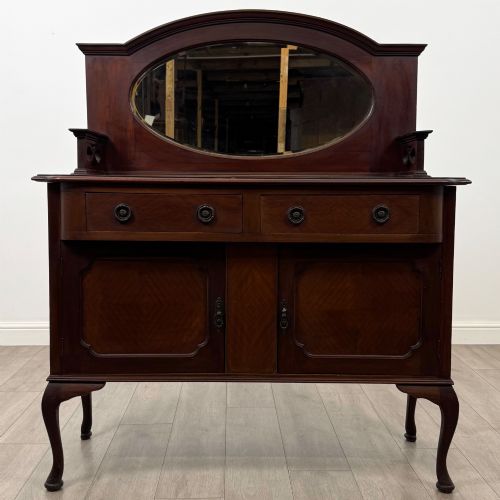
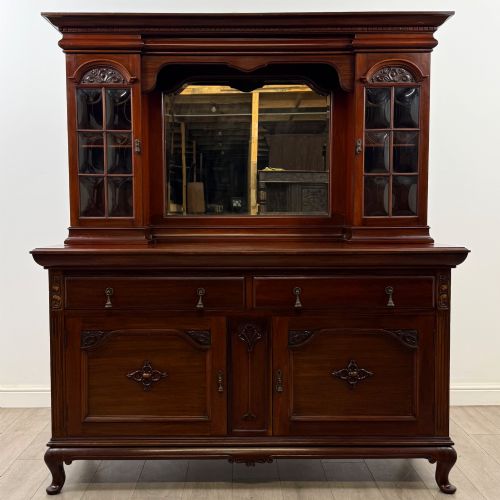
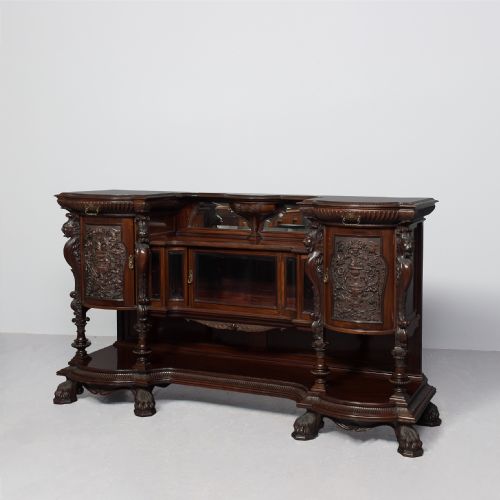
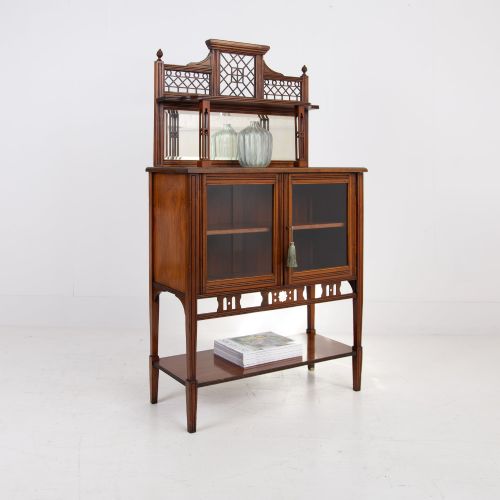


Mahogany Mirror Sideboard
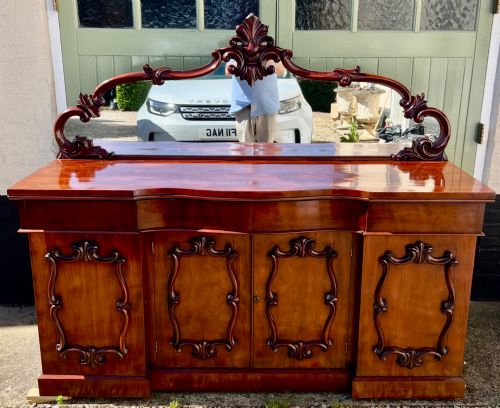
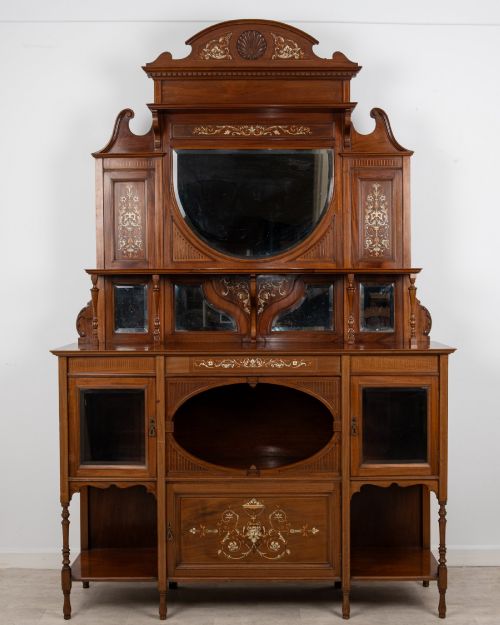
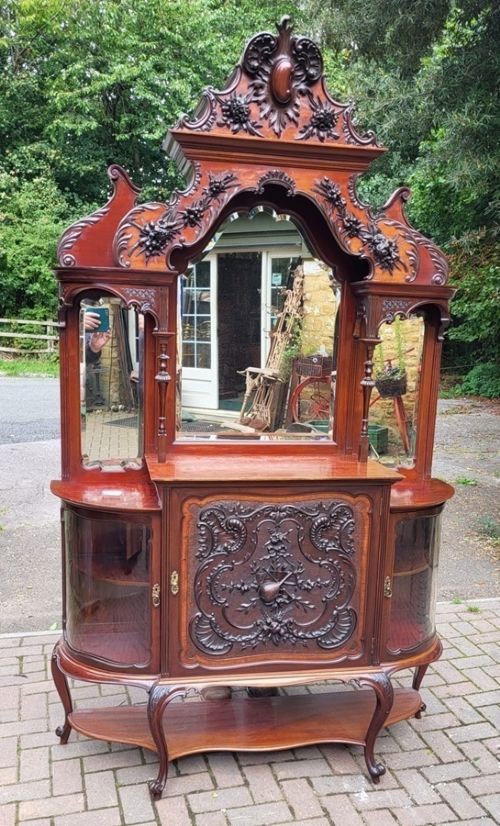
When you search for a mahogany mirror sideboard, you are exploring a substantial nineteenth- and early-twentieth-century dining room or hall piece designed to reflect light and display plate.
Mahogany Mirror Sideboard
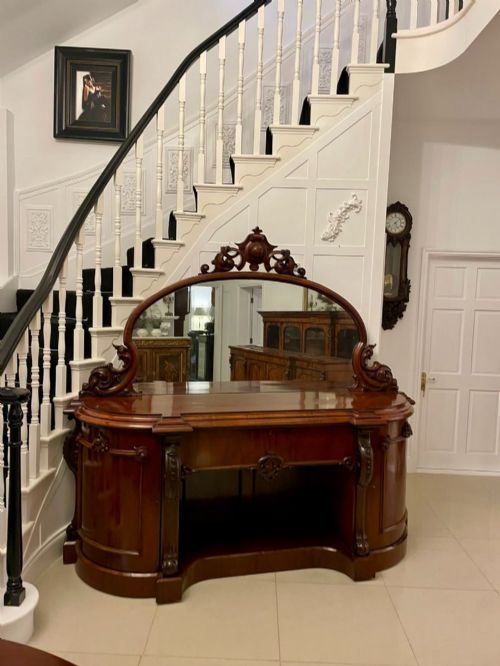
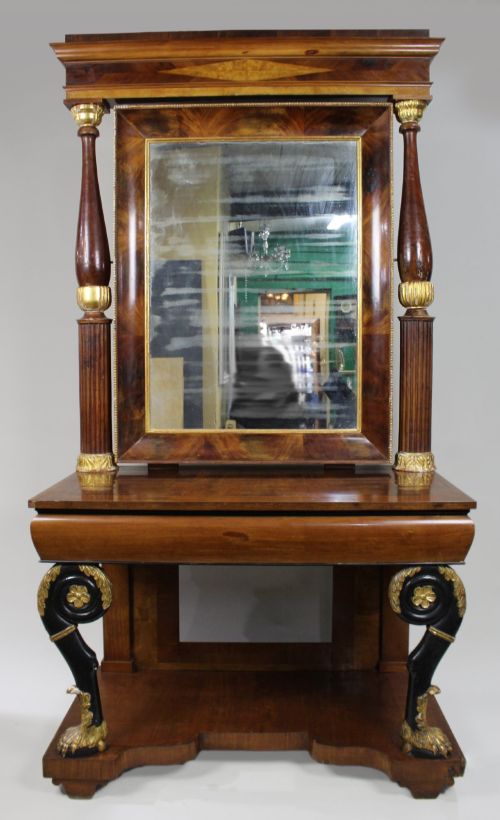
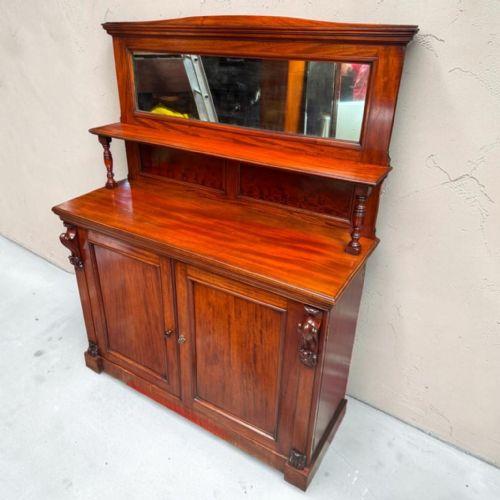
A mahogany mirror sideboard combines a capacious base of cupboards and drawers with an upright back frame holding a glass mirror. These forms appear predominantly across Victorian, Edwardian, and late nineteenth-century periods, alongside related console tables and chiffoniers.
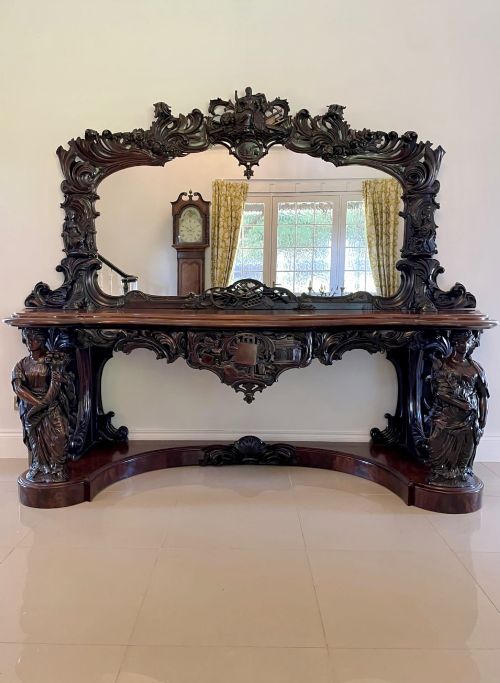
The most common versions met on this page are Victorian and Edwardian examples featuring carved wooden frames, pedestal bases, or breakfront configurations. They served as both storage for dining ware and decorative focal points within the domestic interior.
How they were made
Cabinet makers utilised solid mahogany and flame mahogany veneers applied over secondary timbers, often accentuating the grain patterns with polished finishes. Structural stability relied on traditional joinery, while brass handles and hardware added functional detail.
The incorporated mirror glass required specialised bevelling and silvering techniques to fit securely into carved or parcel-gilded wooden upstands. Marble tops also appeared on select console and cabinet variations, providing durable preparation or display surfaces.
Listings span the Victorian, Edwardian, and Regency periods, utilising solid mahogany, flame mahogany veneer, marble, and brass.
What varies in quality
The standard of carving and the selection of timber dictate the distinction between ordinary utility pieces and exhibition-quality items. Dense flame mahogany veneer matched symmetrically across drawer fronts signals superior workshop attention.
The integration of the mirror back into the base structure reflects the design ambition of the maker. Substantial cornices, intricate hand-carved ornamentation, and original brass work elevate certain examples above standard production.
Shapland & Petter·Gillows·Lamb of Manchester
The Mahogany Mirror Sideboard Glossary
- Breakfront
- A piece of furniture where the central section projects forward from the flanking sections. This configuration creates visual depth and breaks up the linear expanse of large sideboards.
- Chiffonier
- A low sideboard or cabinet featuring cupboards beneath, sometimes surmounted by a shelf or mirror back. Originating in France, the form became common in nineteenth-century British dining rooms.
- Flame mahogany
- A veneer cut from the fork of the mahogany tree where the branches join the trunk. This produces a distinctive flickering, flame-like pattern highly prized by cabinet makers.
- Upstand
- The vertical wooden superstructure rising above the main surface of a sideboard or cabinet. It frequently houses the mirror glass and decorative carving.
- Parcel gilt
- The technique of applying thin gold leaf or gilt paint to specific carved details on a wooden surface. This highlights particular ornamental motifs against the dark mahogany background.
Mahogany Mirror Sideboard: Frequently Asked Questions
What is a mirror sideboard?
A mirror sideboard is a large storage furniture piece combining a lower cabinet base with an attached upright mirror back.
These pieces were traditionally positioned in dining rooms to store tableware while brightening the interior by reflecting natural light.
How do I date a sideboard?
Dating relies on observing stylistic markers such as Victorian carving, Edwardian inlay, or Regency proportions, alongside construction methods.
Changes in handle styles, timber preparation, and edge bevels on the mirror glass also provide clear chronological clues.
How do I care for mahogany?
Mahogany surfaces respond best to regular dusting with a soft dry cloth and occasional applications of traditional beeswax.
Keeping these pieces away from direct heat sources and strong sunlight prevents the timber and veneer from drying out.
Where should I place it?
These sideboards suit dining rooms, large hallways, or spacious living areas where their considerable depth and height fit comfortably.
Positioning them opposite a window allows the mirror glass to maximise natural light reflection across the room.