
Victorian Mahogany Display Unit
A victorian mahogany display unit brings practical shelving and rich timber grain to a room, ranging from compact corner pieces to tall bookcases.
Victorian Mahogany Display Unit
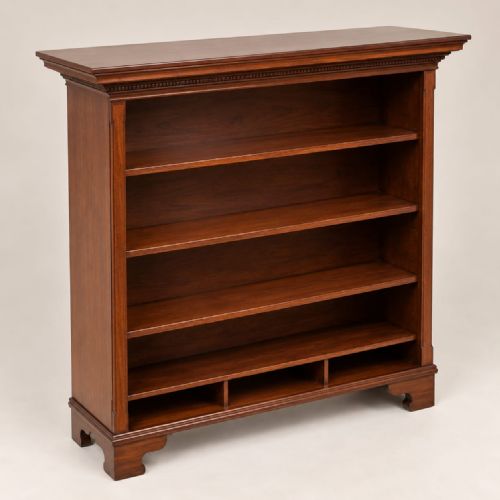
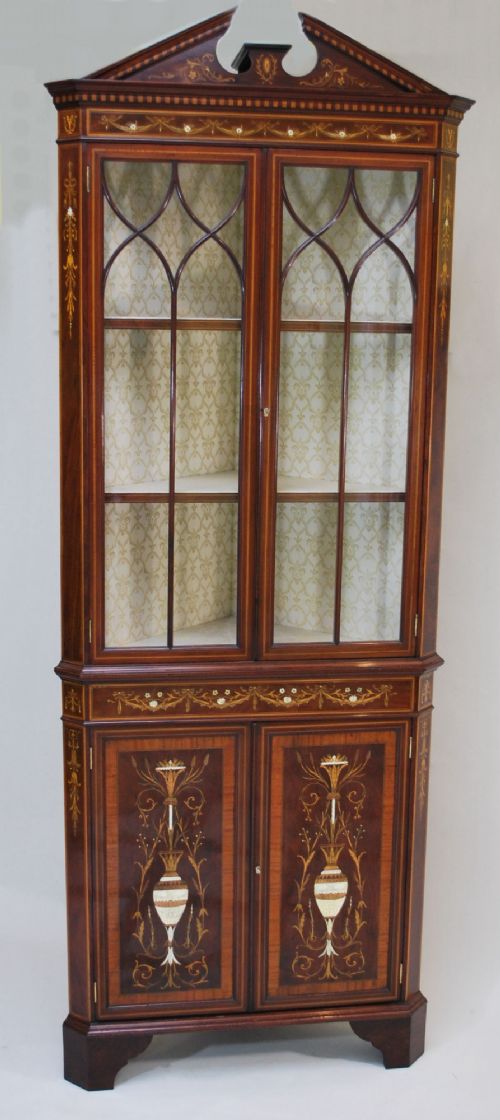
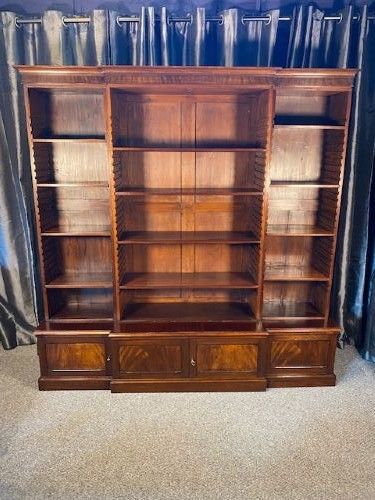
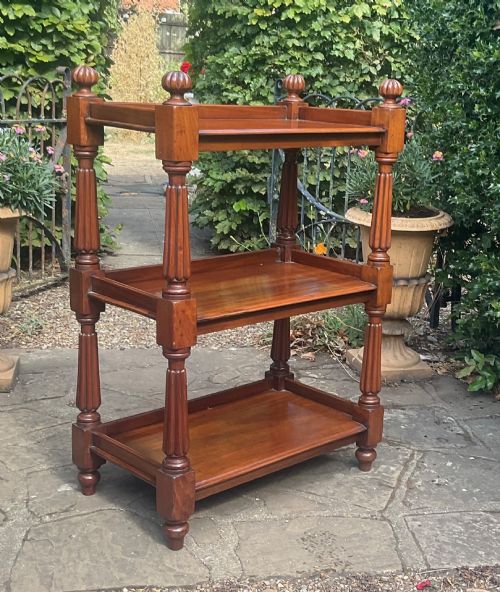
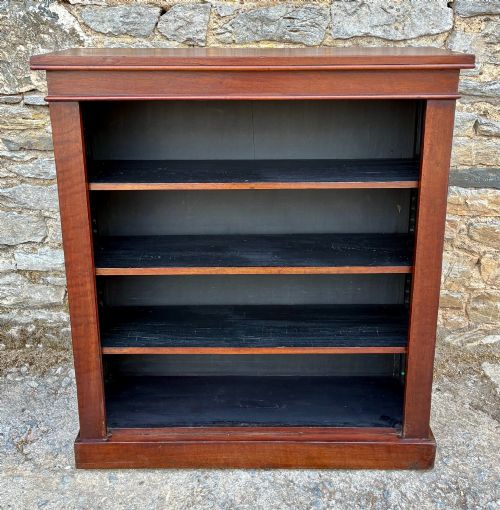
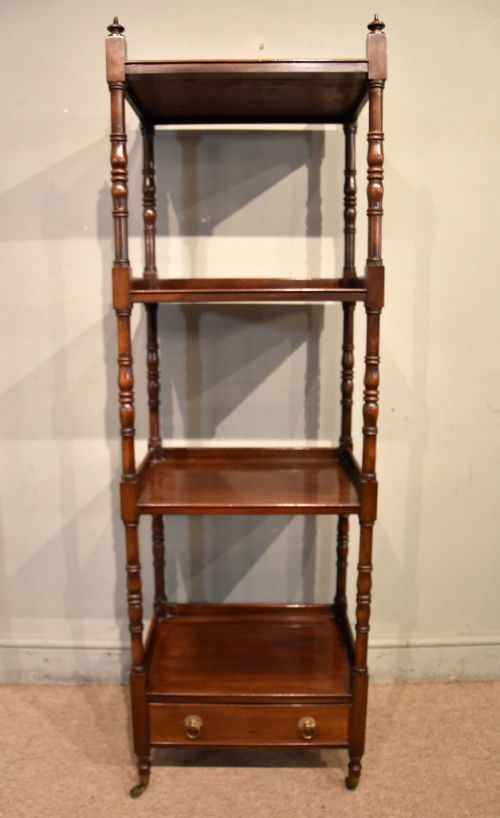
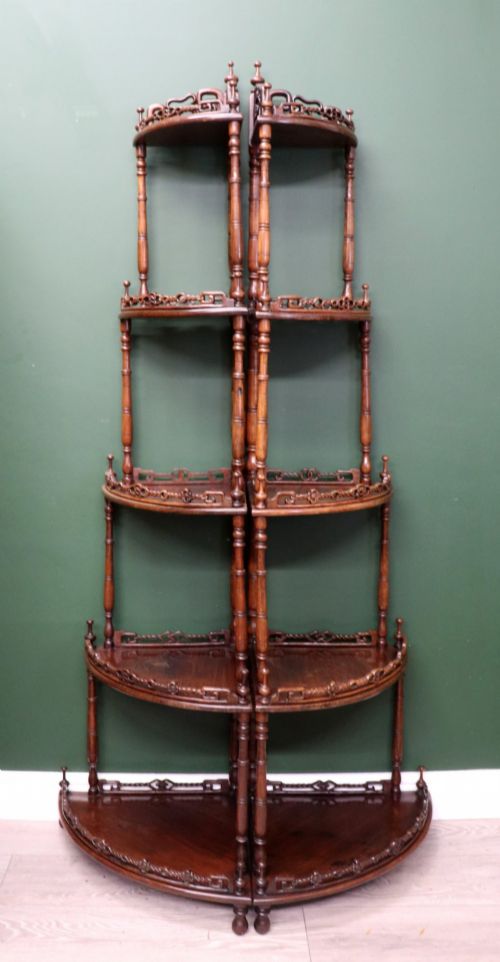
A victorian mahogany display unit encompasses open bookcases, tiered whatnots, wall shelves, and corner cabinets created during the nineteenth century. Buyers searching this phrase typically encounter tall open shelving, multi-tiered etagere stands, and glazed or open corner cupboards originating from the Victorian and Edwardian eras.
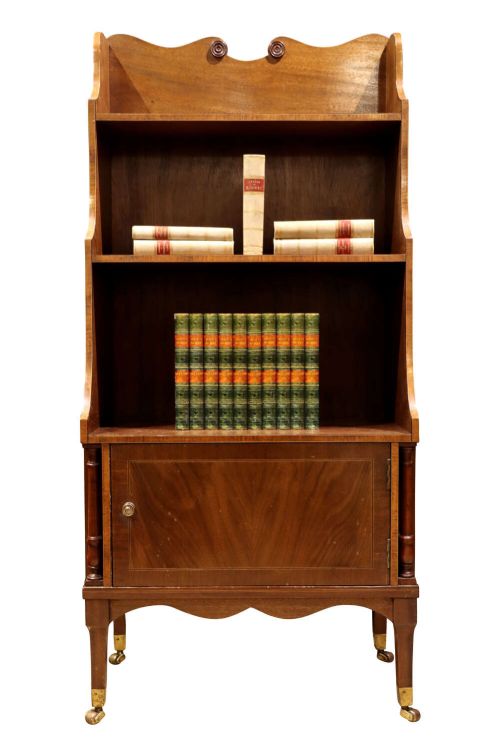
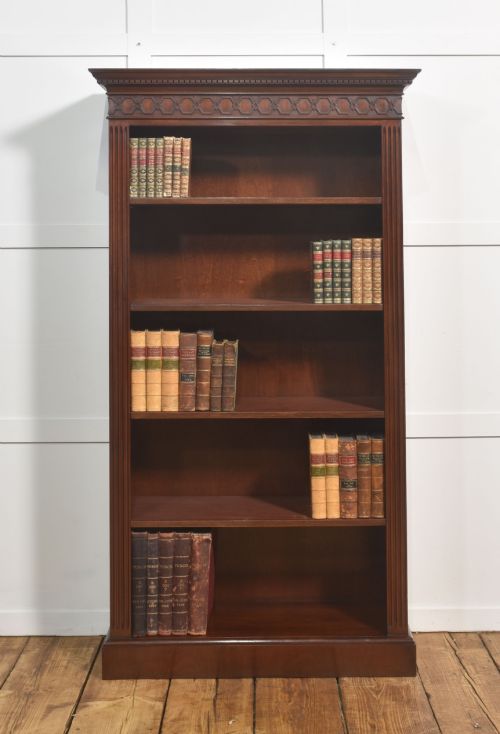
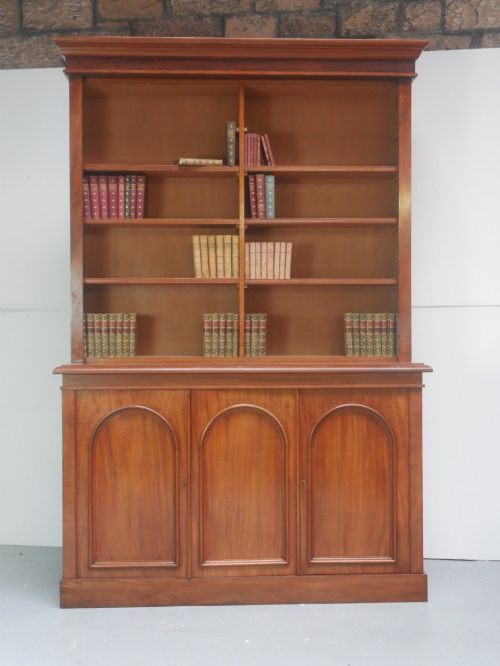
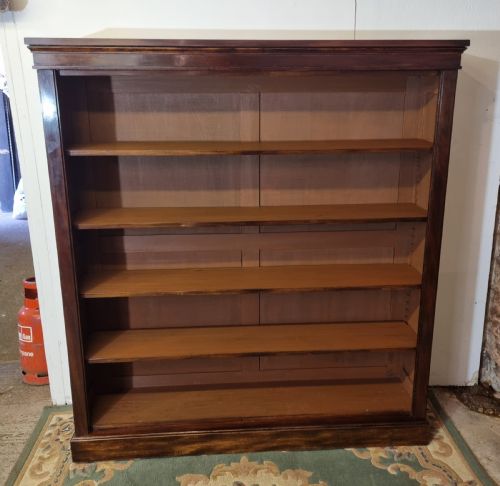
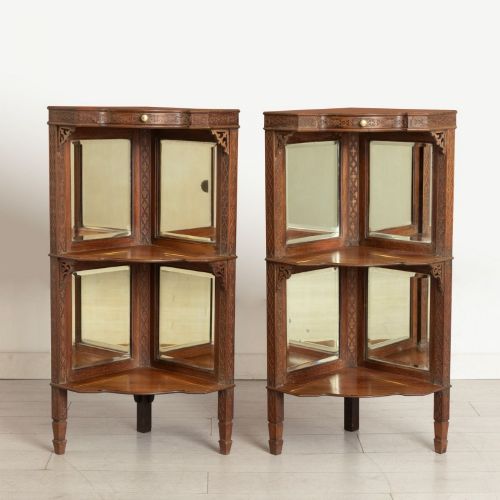
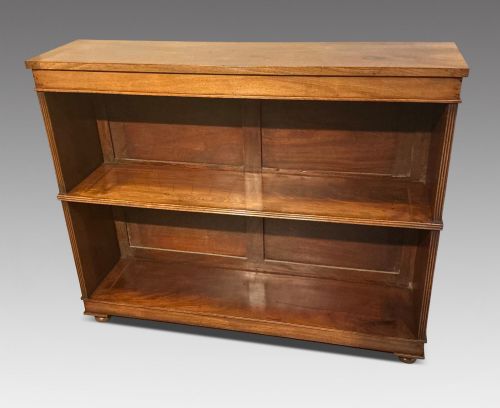
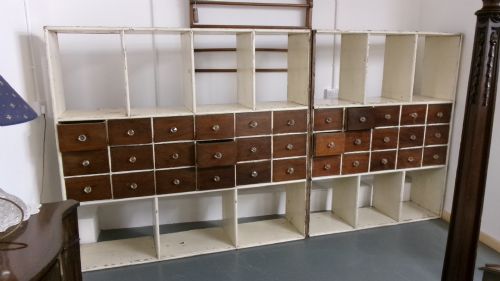
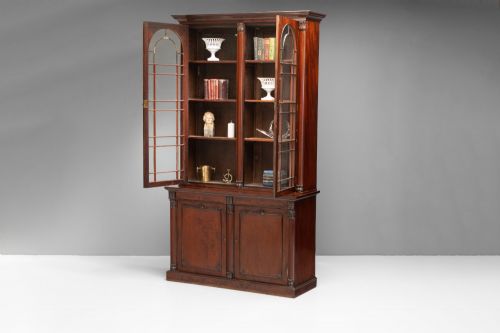
The selection on this page demonstrates the diverse forms these furnishings took in homes and specialist interiors, stretching from simple adjustable book furniture to elaborate mirror-backed cabinets fitted with drawers and brass castors.
How they were made
Cabinet makers constructed these units primarily using solid mahogany and flame mahogany veneer, supported by secondary timbers like pine and softwood for internal partitions. Decorative details frequently incorporated satinwood inlay, while functional components relied on brass castors and copper elements.
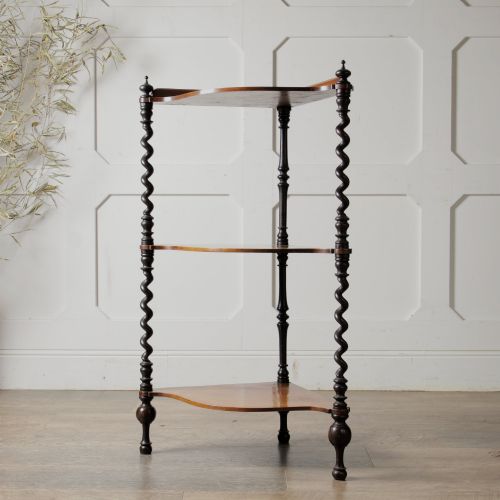
Joinery methods varied according to the specific form, utilising sturdy shelving supports, barley twist turned uprights, and delicate tiered platforms that required precise woodworking to maintain stability under weight.
Listings feature 19th-century and Edwardian pieces constructed from mahogany, brass, glass, pine, and satinwood inlay.
What varies in quality
The distinction between standard utility furniture and superior examples lies in the selection of timber figures, such as the richness of flame mahogany veneer, and the crispness of turned details like barley twist columns. Finer pieces demonstrate careful attention to proportion, integration of complementary satinwood inlay, and the inclusion of original hardware.
Structural integrity and the quality of secondary woods also separate workshops, where superior items maintain smooth operation in adjustable shelving systems, drawers, and brass castors without losing their overall balance.
Edwards & Roberts·Robert Strahan·Goodhall, Lamb and Heighway
The Victorian Mahogany Display Unit Glossary
- Whatnot
- A piece of furniture consisting of open shelves for displaying small objects or books. These tiers are typically supported by turned columns or uprights.
- Etagere
- A set of open shelves for displaying ornaments or small articles. The form emphasises vertical display across multiple tiers.
- Waterfall bookcase
- A standing set of open shelves where each successive tier steps back from the one below. This creates a cascading silhouette reminiscent of a waterfall.
- Breakfront
- A cabinet or bookcase whose central section projects forward from the flanking sections. This architectural arrangement adds depth and visual rhythm to large furniture.
Victorian Mahogany Display Unit: Frequently Asked Questions
How do I spot a true Victorian piece?
Examine the timber selection, construction methods, and secondary woods used in the carcase and backboards. Nineteenth-century examples often display hand-cut joinery and signs of age consistent with the period.
Look closely at the hardware, such as brass castors or locks, which frequently match the manufacturing techniques of the eighteen-hundreds.
Where should I place a corner cabinet?
A corner cabinet fits neatly into unused room angles, making it practical for smaller spaces or transitional hallways. They draw the eye upward and utilise vertical wall areas effectively.
Ensure the corner angle of the furniture matches the interior corner of your room for a flush fit.
Can adjustable shelves hold heavy books?
Many open bookcases feature adjustable wooden shelving designed to support standard book collections. Solid timber construction provides natural strength for everyday library use.
Check the condition of the shelf supports and inner cabinet walls to ensure they remain secure.
How do I care for mahogany veneer?
Keep mahogany furniture away from direct sunlight and extreme temperature fluctuations to prevent the veneer from drying or cracking. Regular dusting with a soft, dry cloth preserves the polished surface.
Avoid silicone-based polishes, opting instead for traditional beeswax applied sparingly.