
Victorian Mahogany Clothes Press
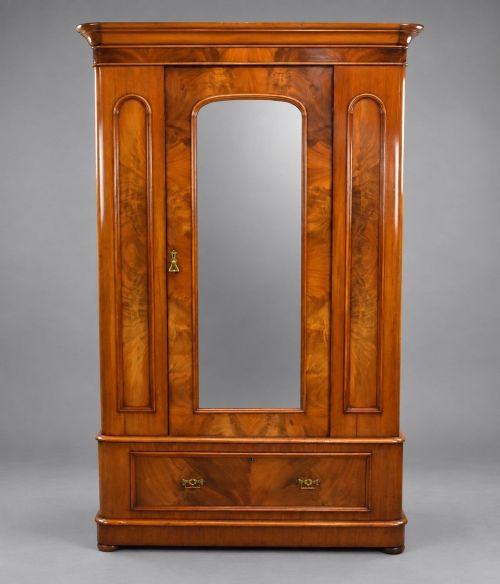
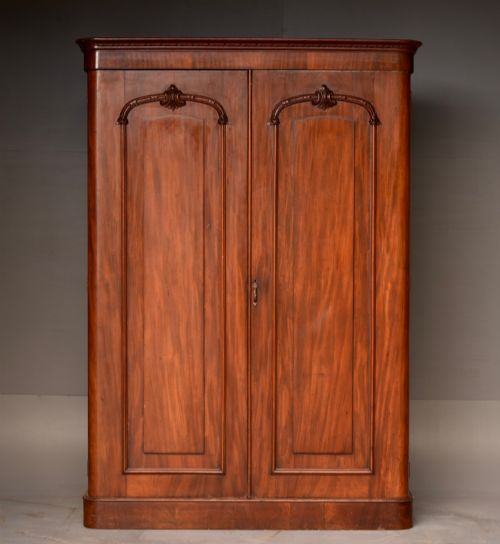
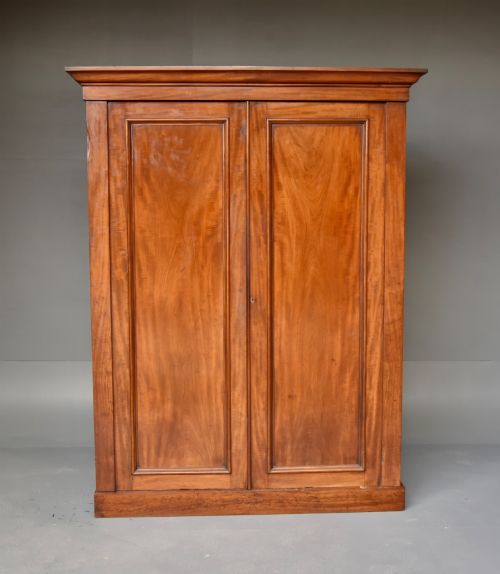
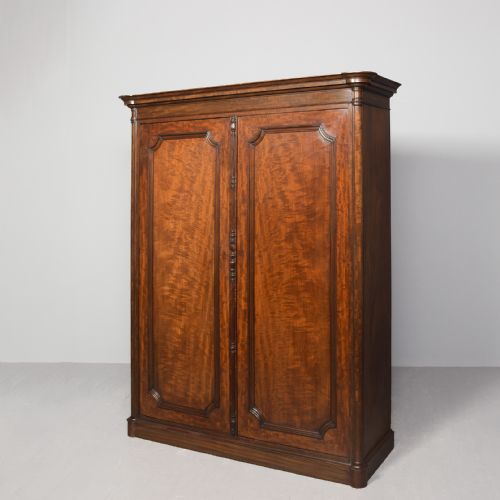
A victorian mahogany clothes press offers deep architectural storage in richly figured timber, designed to house folded textiles and hanging garments.

Victorian Mahogany Clothes Press
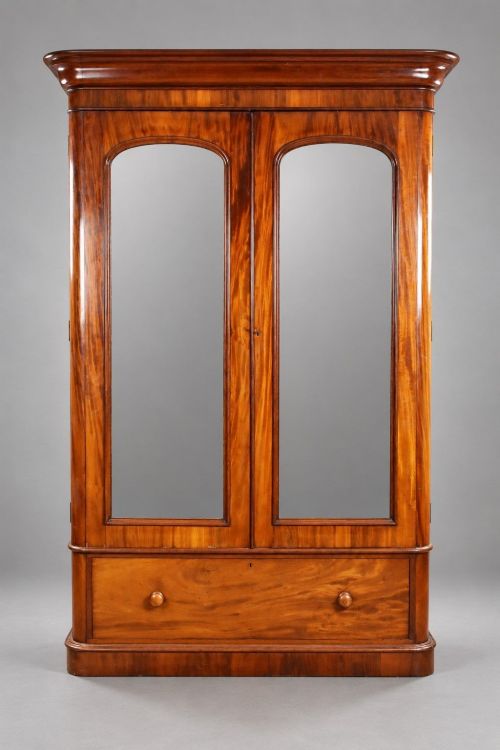
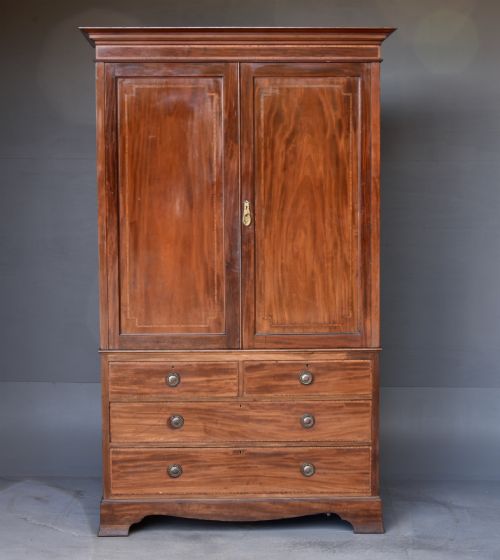
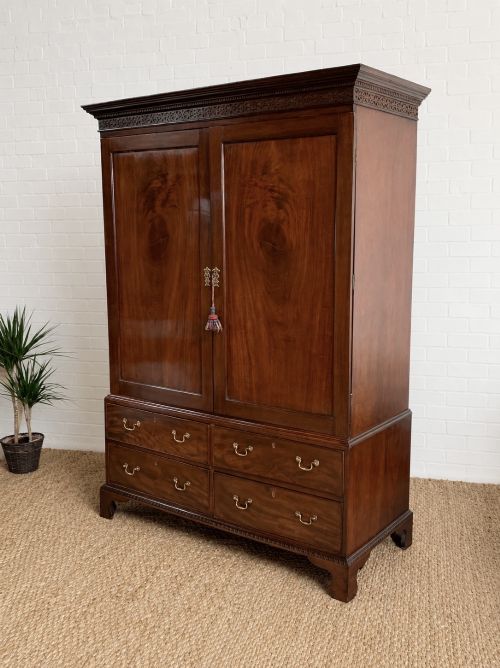
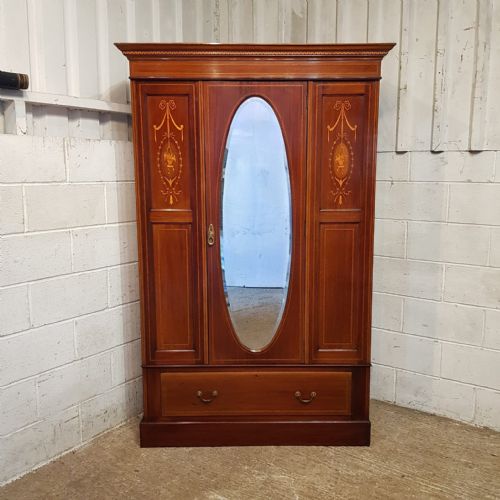
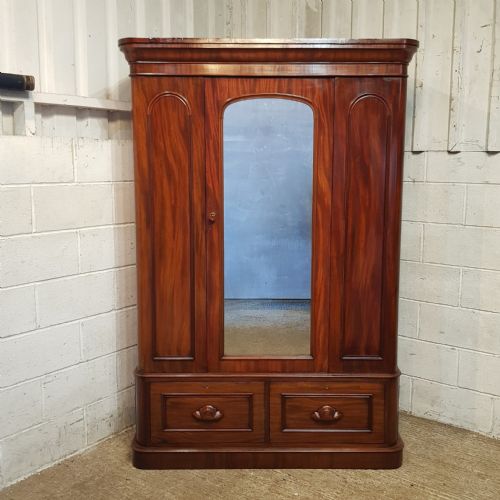
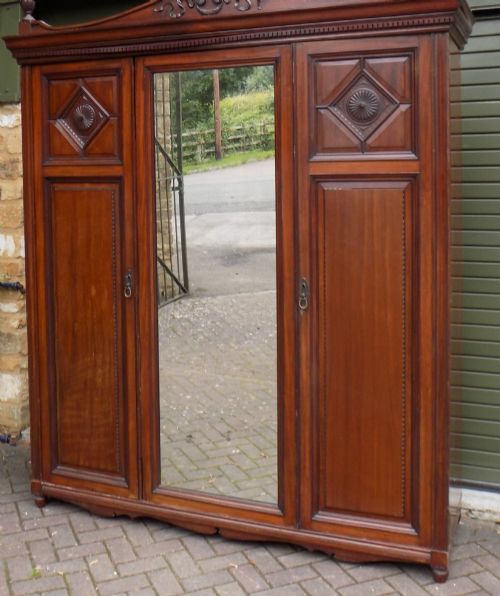
A victorian mahogany clothes press combines upper linen storage with lower drawer capacity, emerging most frequently in double and triple configurations from the nineteenth century. These pieces span the Victorian and Edwardian eras, alongside related George III revival and William IV examples.
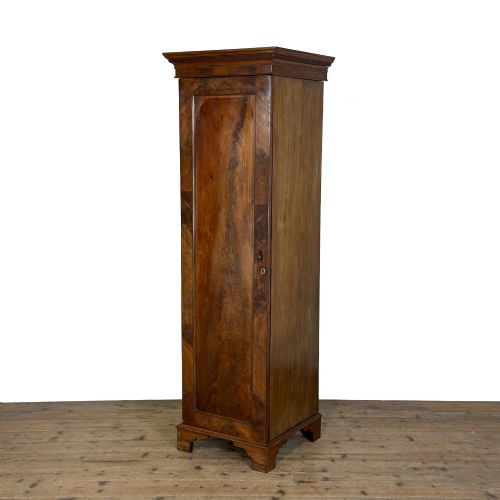
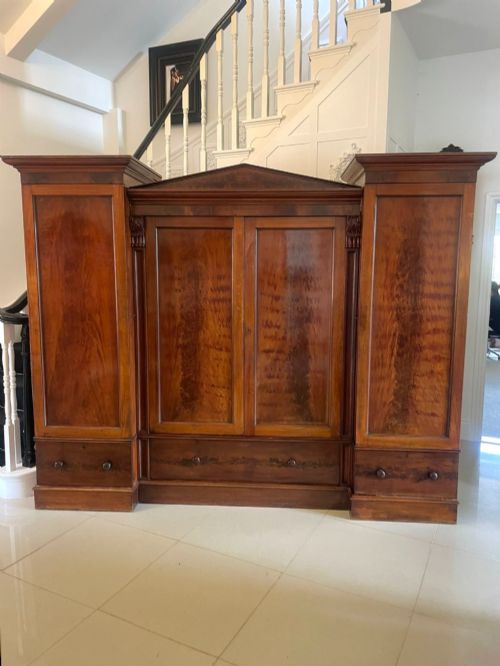
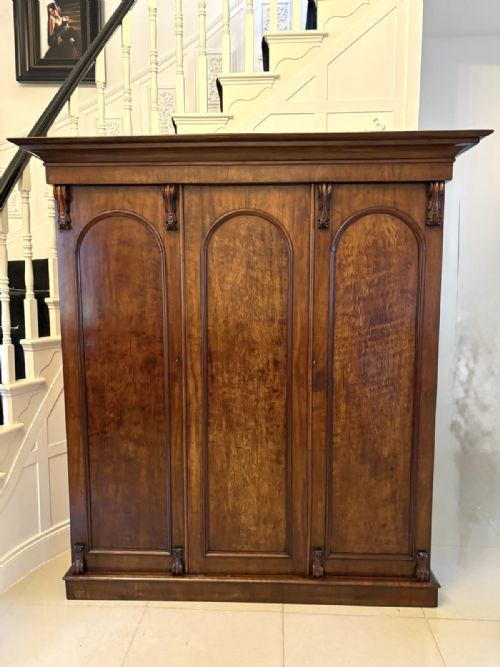
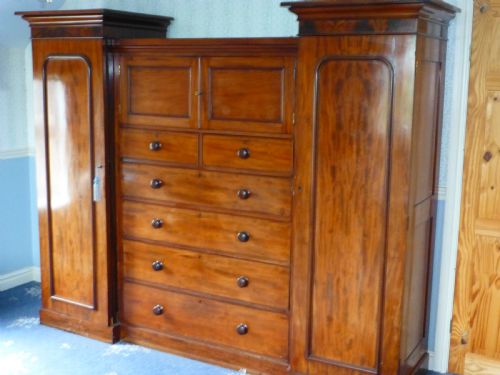
Makers utilised dense timber to build substantial bedroom furniture, ranging from compact single door cupboards to large breakfront combination compactums. Buyers encounter regional variations including Scottish and Irish formats, as well as Channel Island hall wardrobes.
The form bridges the traditional linen press and the modern wardrobe, often incorporating internal sliding trays behind panelled doors above a chest base.
Materials and construction methods
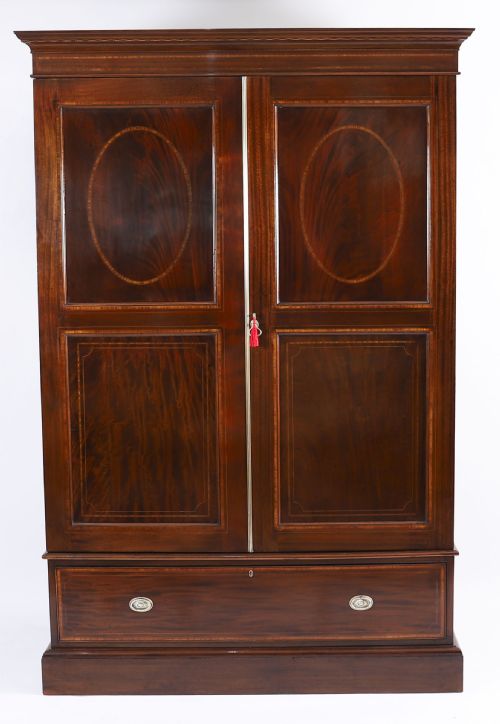
Craftsmen built carcass structures using solid mahogany and secondary pine, applying flame mahogany and figured mahogany veneers to principal surfaces to display striking grain patterns.
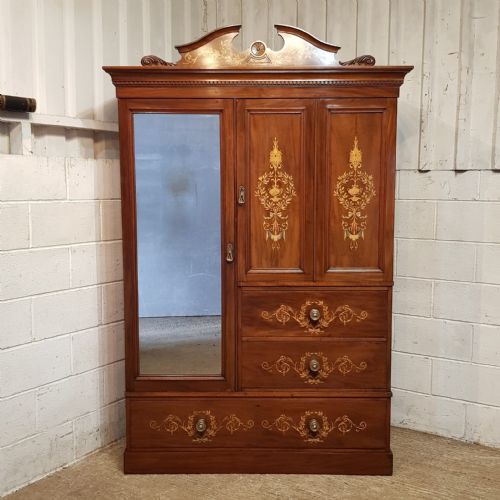
Detailing relied on brass hardware, glass panels in mirror doors, and contrasting inlay such as satinwood, complemented by carved elements like blind fretwork cornices.
Listings feature solid mahogany, flame mahogany veneer, figured mahogany veneer, brass, glass, satinwood, and pine across Victorian and Edwardian periods.
Distinguishing quality across the range
The depth of figure in the mahogany veneer and the precision of matched grains across large door panels separate standard utilitarian pieces from exceptional cabinet work.
Internal configuration dictates utility, where fitted linen slides, compartmentalised drawers, and original brass fittings elevate the interior design.
maples & co·Gillows·S & H Jewell·Heals·Robert Strahan·Edwards & Roberts
The Victorian Mahogany Clothes Press Glossary
- Clothes press
- A tall piece of bedroom furniture designed for storing folded garments and linen, typically featuring sliding trays enclosed by upper doors above a chest of drawers.
- Compactum
- A multi-compartment wardrobe that combines hanging space, drawer banks, and linen slides within a single unified structure.
- Flame mahogany
- A veneer cut from the branch junctions of the tree, producing a distinctive flickering flame-like pattern across the timber surface.
- Breakfront
- A cabinet design where the central section projects forward from the flanking outer wings, adding architectural depth to large wardrobes.
- Blind fretwork
- Carved ornamentation applied to a solid background without piercing the wood right through, seen frequently on cornice mouldings.
Victorian Mahogany Clothes Press: Frequently Asked Questions
How do I use a clothes press today?
The interior sliding trays provide ideal storage for folded knitwear, bed linen, and textiles, while the hanging sections accommodate full-length garments.
Lower drawer stacks offer additional space for smaller items, making these pieces practical focal points in modern bedrooms.
What is the difference between a wardrobe and a clothes press?
A traditional wardrobe focuses primarily on vertical hanging space behind full-length doors, whereas a clothes press divides its storage between sliding internal trays and lower drawers.
Many Victorian hybrid examples combine both systems within multi-door configurations.
How do I date a Victorian mahogany piece?
Dating relies on observing construction characteristics, timber choice, and stylistic revival influences spanning from the early Victorian decades through the late nineteenth century.
Cabinetmaker stamps and signatures occasionally provide precise historical markers.
Will a large breakfront wardrobe fit in a modern room?
These substantial pieces require careful measurement of ceiling height and floor space, as multi-door breakfront and compactum models arrive in large proportions.
Many antique designs dismantle into smaller modular sections for easier transport and installation.