
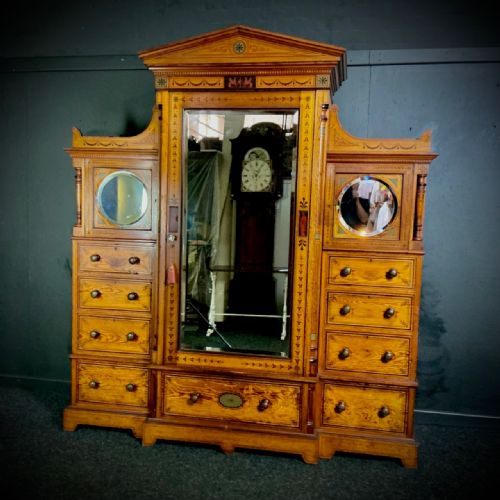
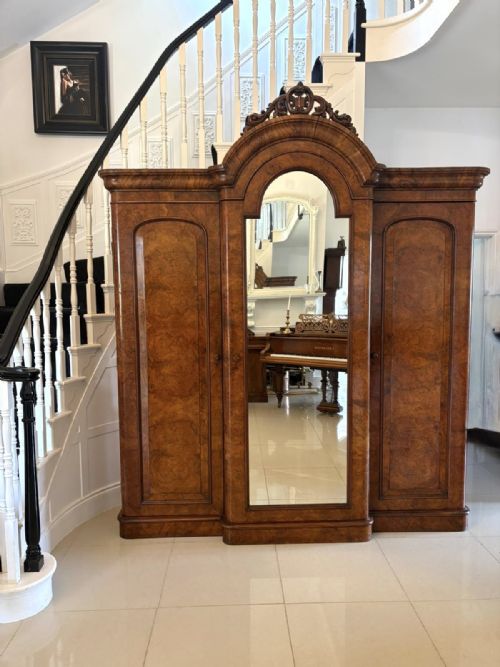


Victorian Breakfront Armoire
A victorian breakfront armoire provides substantial bedroom storage through grand proportions and architectural timber facades.
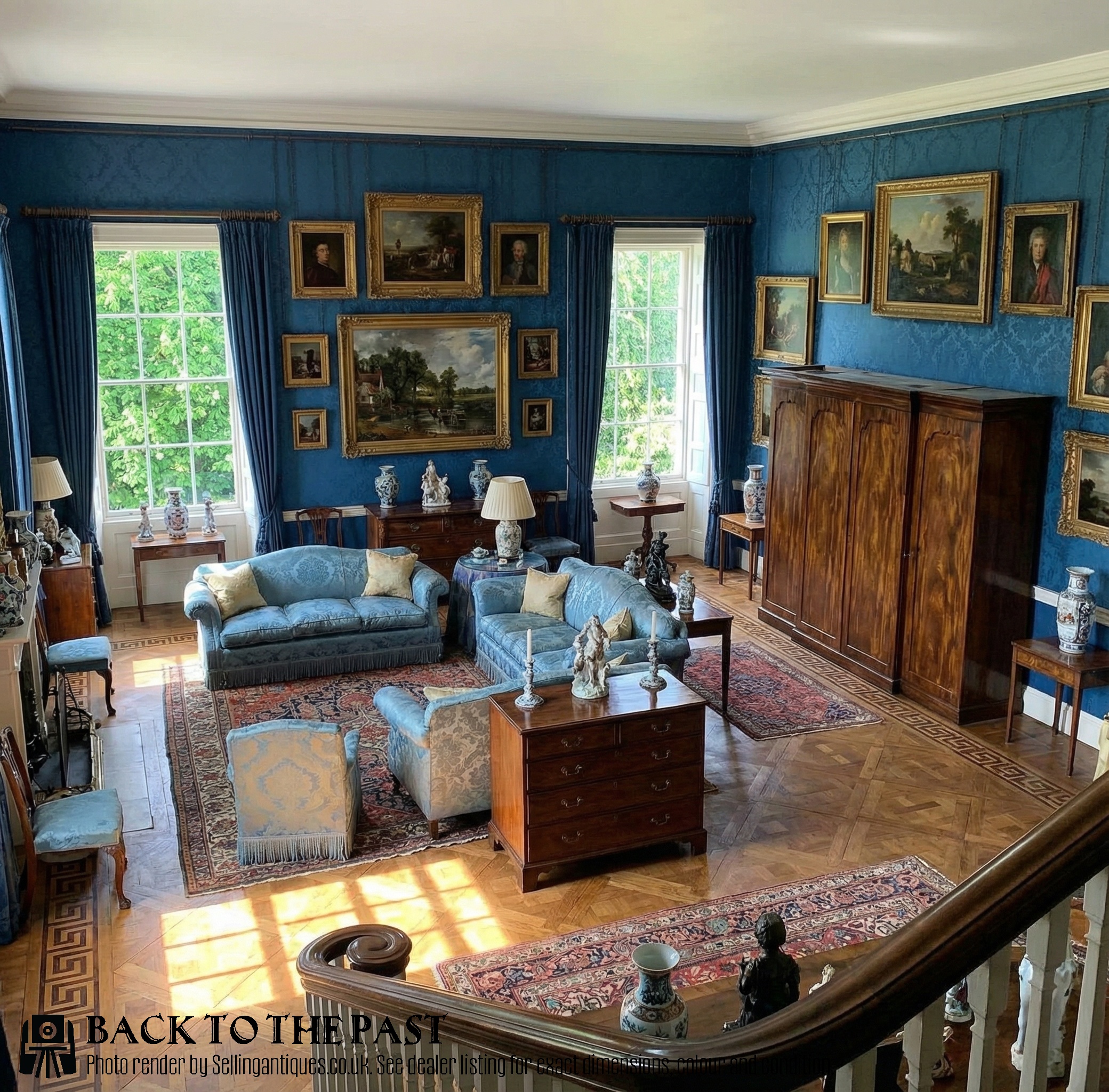
Victorian Breakfront Armoire
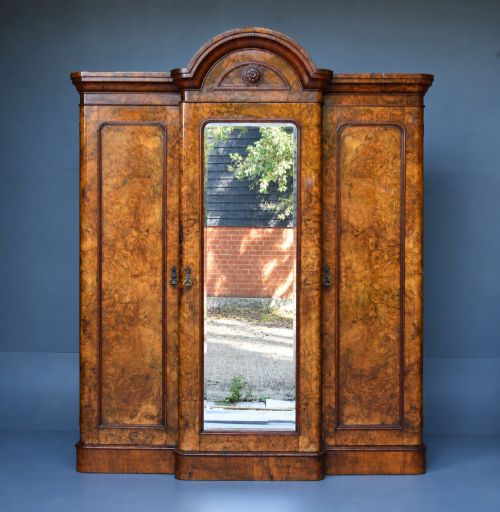
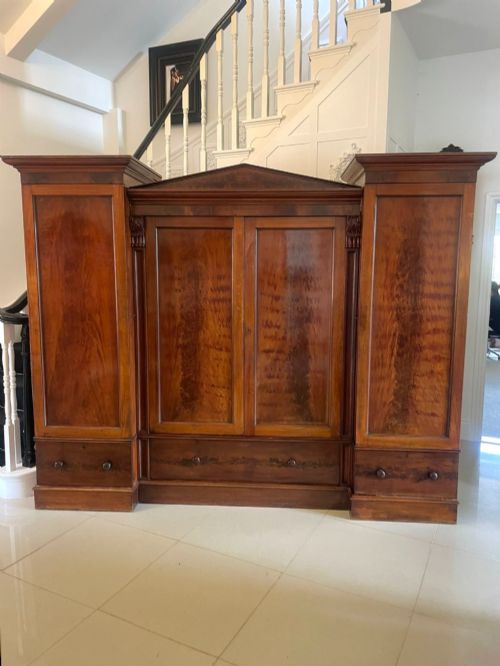
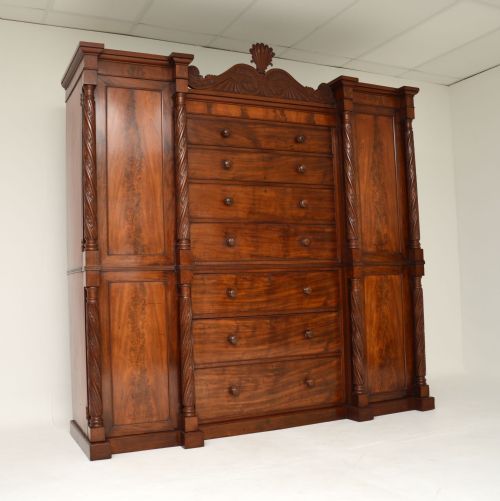
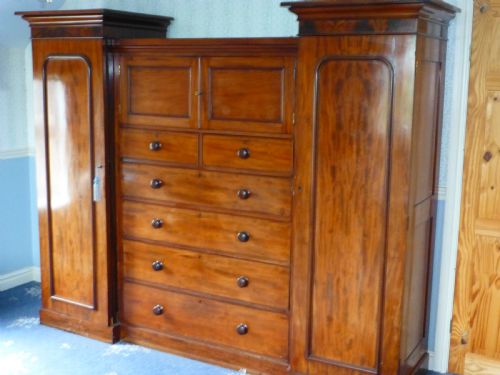
A victorian breakfront armoire forms a commanding presence in a bedroom, characterised by a projecting central section flanked by recessed wings. These large pieces of furniture offer extensive hanging space and interior shelving, frequently arranged as compactums or multi-door wardrobes.
Makers of the nineteenth century built these large wardrobes in sections to allow manoeuvrability within domestic rooms. Pine, oak, and deal provide the internal carcase construction, whilst superior timbers face the exterior.
The aesthetic vocabulary spans simple English country pieces to elaborate Gothic Revival and Sheraton Revival designs. Surviving examples incorporate various woods including flame mahogany, burr walnut, rosewood, and pollard oak.
Buyers encounter triple and quadruple door formats alongside combination units featuring central linen presses and drawers. Mirror glass doors and inlaid panels frequently enrich the primary facade.
Materials and construction techniques
Cabinet makers applied fine veneers of flame mahogany, burr walnut, and satinwood over stable secondary timbers like pine and mahogany. Crossbanding and stringing in contrasting woods defined the architectural panels of the breakfront facade.
The carcase typically separates into cornices, plinths, and individual wardrobe towers held together by concealed bolts and tenon joints. Brass fittings secure the large panelled doors, whilst internal linen slides and drawers utilise traditional dovetail joinery.
Several armoires arrive with secret interior compartments originally designed for hiding valuables beneath seemingly fixed linen drawers.
Evaluating design and craftsmanship
The refinement of the timber selection dictates the visual impact, from plain native pines to highly figured burr walnut and flame mahogany veneers matched symmetrically across multiple doors. Carved mouldings, boxwood inlay, and marquetry demonstrate the skill invested by the original cabinet maker.
Structural integrity depends on the precision of the modular dismantling system and the stability of the large panel doors. Pieces retaining original bevelled mirror glass, brass hardware, and internal configuration command greater consideration.
Gillows·Robert Strahan of Dublin·Edwards and Roberts·Ayton Castle
The Victorian Breakfront Armoire Glossary
- Breakfront
- An architectural furniture format where the central section projects forward from the flanking wings. This tripartite division creates depth and visual rhythm across large wardrobes.
- Compactum
- A multi-functional wardrobe combining hanging compartments with linen slides, drawers, and shoe racks. These fitted interiors maximise storage efficiency within a single cabinet.
- Flame mahogany
- A distinct mahogany veneer figure resembling flickering flames, cut from the bough junction of the tree. Cabinet makers arranged these veneers symmetrically to create striking patterns.
- Cornice
- The decorative moulded projection finishing the top of the wardrobe. It conceals the joinery where the upper carcase meets the ceiling line.
Victorian Breakfront Armoire: Frequently Asked Questions
How do I dismantle a breakfront armoire for moving?
Most large Victorian wardrobes separate into distinct components including the heavy cornice, the central tower, the side sections, and the plinth base. Internal bolts and wooden pins hold the modular parts together.
Mark each section during disassembly to ensure correct realignment. Assistance is essential due to the substantial weight of solid timber and mirrored doors.
What is the difference between an armoire and a compactum?
An armoire traditionally designates a large cupboard primarily intended for hanging garments behind full-length doors. The term often applies interchangeably to large Victorian wardrobes.
A compactum integrates multiple storage formats within one footprint, incorporating banks of drawers, sliding linen trays, and small cupboards alongside hanging space.
Will a Victorian wardrobe fit in a modern bedroom?
These imposing cabinets require significant wall space and high ceilings to accommodate their grand proportions. Measuring both the total assembled width and the height of the room remains essential before purchase.
Because original houses featured generous ceiling clearances, checking the cornice height against modern doorways prevents installation difficulties.
How should I care for antique mahogany and walnut surfaces?
Maintain timber surfaces by applying microcrystalline wax sparingly to nourish the grain and protect the polish. Avoid placing furniture near direct heat sources or strong sunlight to prevent veneer splitting.
Dust regularly with a soft dry cloth and avoid silicone-based sprays that degrade traditional finishes over time.