




Mahogany Breakfront Compactum
A mahogany breakfront compactum provides substantial wardrobe storage through a multi-section architectural format designed for grand bedroom interiors.
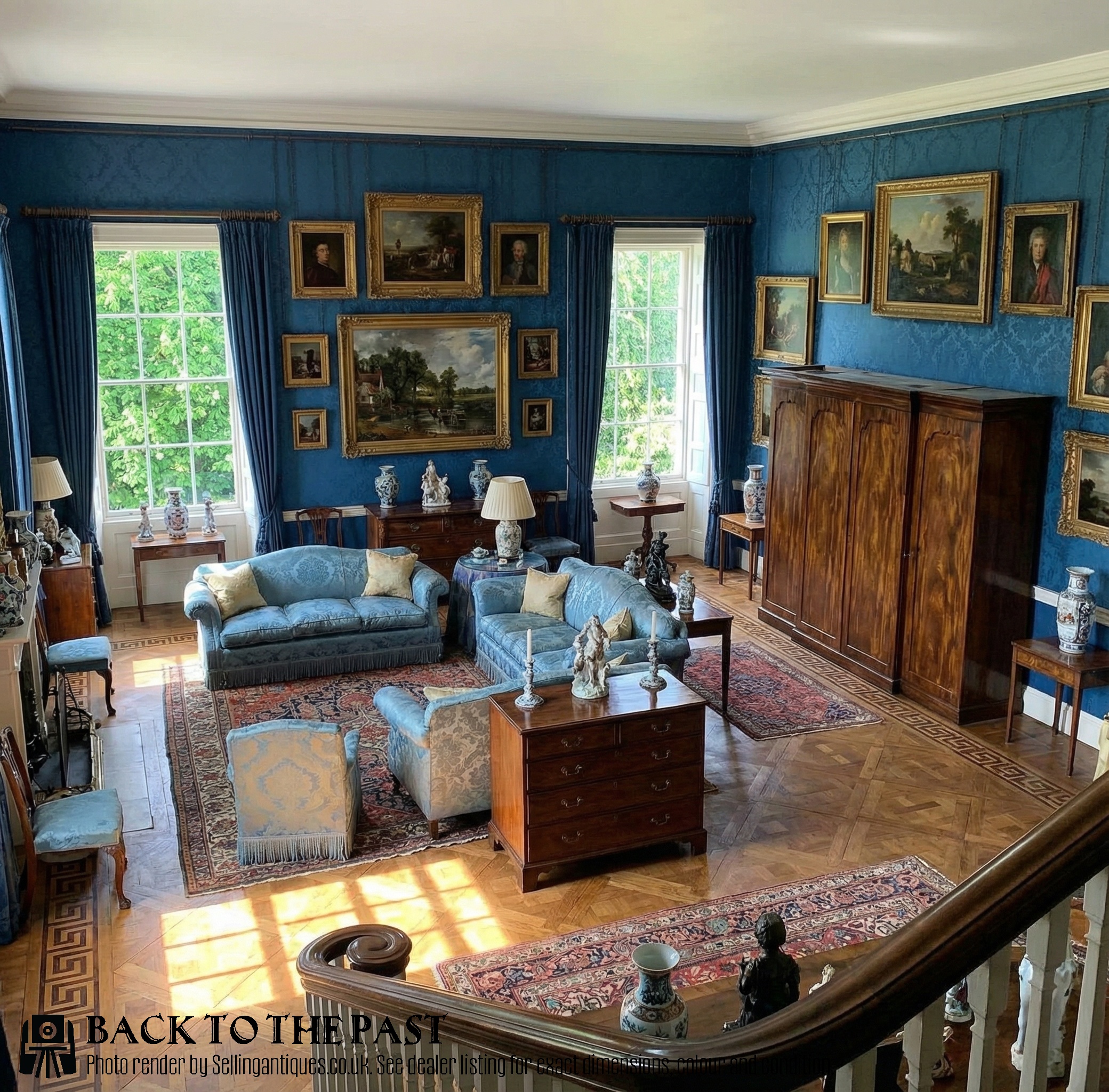
Mahogany Breakfront Compactum
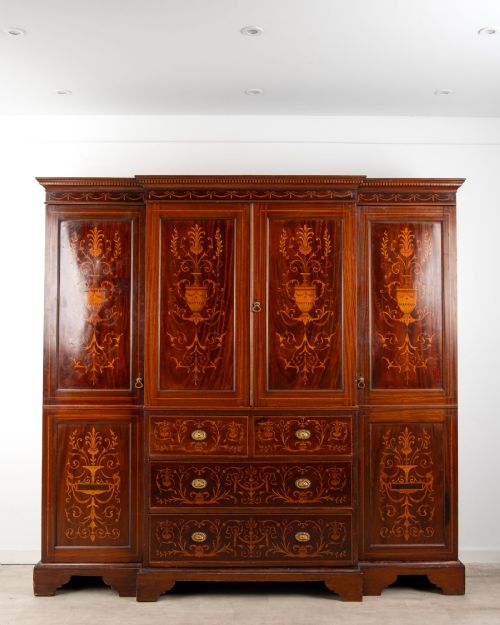
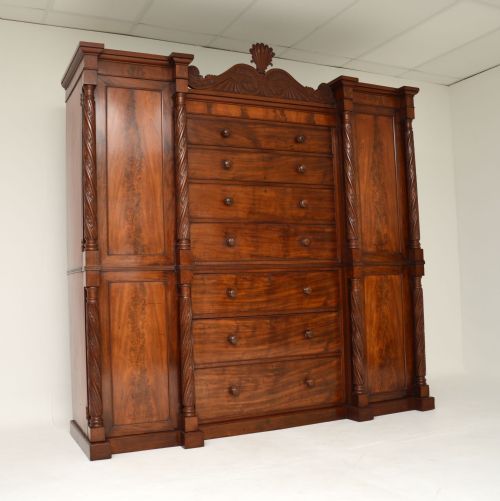
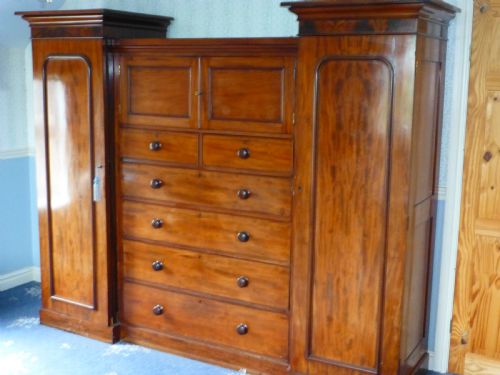
A mahogany breakfront compactum is a large architectural wardrobe featuring a central section that projects forward from flanking wings, combining hanging space with internal drawers and trays. These monumental pieces date predominantly from the Georgian, William IV, Victorian, and Edwardian periods.
The version most commonly encountered on this page is the Victorian triple or four-door wardrobe in figured or flame mahogany. Such examples often incorporate internal linen presses, sliding trays, and drawers alongside full-length hanging compartments.
Originating as multipurpose clothes presses, these large items reflect the changing domestic requirements of the nineteenth and early twentieth centuries. Surviving pieces demonstrate the evolution of fitted bedroom furniture from Georgian craftsmanship through to Edwardian inlaid revival styles.
What Varies in Quality
The distinction between standard production and exceptional quality rests upon the selection of timber veneers and the precision of the carcase joinery. Master cabinet makers matched flame mahogany panels symmetrically across multiple doors to create a cohesive facade.
Internal configuration and original modular fittings dictate practical distinction within the range. Pieces retaining untouched sliding linen trays, modular drawers, and makers' signatures represent the upper echelon of surviving examples.
Many Victorian compactums still contain hidden compartments once reserved for private ledgers and jewellery.
Gillows·Edwards & Roberts·Maples & Co
The Mahogany Breakfront Compactum Glossary
- Breakfront
- An architectural furniture format where the central section projects forward from the flanking outer wings. This configuration adds visual depth and allows for internal zoning.
- Compactum
- A multi-functional wardrobe combining hanging space with linen presses, sliding trays, and internal drawers. These units offered comprehensive storage for nineteenth-century attire.
- Flame Mahogany
- A veneer cut from the fork of the mahogany tree where the branches join the trunk. This method yields a distinctive, fiery pattern utilised on principal doors.
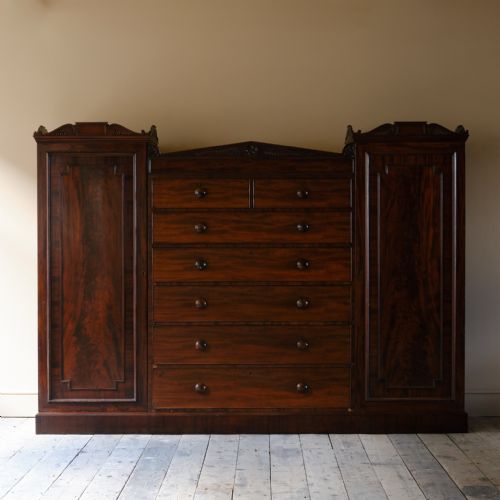
- Inverted Breakfront
- A variation where the central section recedes rather than projects forward from the wings. This rarer arrangement creates an alternative facade rhythm.
- Marquetry
- The art of applying decorative veneer pieces to a structural surface to form pictorial or geometric patterns. Makers utilised contrasting woods like satinwood and ebony for this detail.
Mahogany Breakfront Compactum: Frequently Asked Questions
How do I assemble a breakfront compactum?
These large wardrobes are constructed from modular sections including a projecting central carcase, two side wings, a heavy plinth base, and a projecting cornice. Dismantling the piece into component parts is essential for transportation and repositioning within a room.
Professional installation ensures the heavy doors hang truly within their frames and the structural alignment remains stable on uneven historic flooring.
How do I date a mahogany compactum?
Stylistic indicators such as Georgian glazing bars, William IV architectural scrolls, Victorian flame veneers, or Edwardian satinwood inlay provide primary dating evidence. Construction methods, drawer linings, and secondary timbers offer further confirmation of the period.
Makers' stamps or paper labels pasted inside drawer boxes occasionally supply specific workshop attribution and manufacturing decades.
Will a large breakfront wardrobe fit in a modern bedroom?
These pieces possess substantial dimensions in height, width, and depth, requiring high ceilings and wide wall space to sit comfortably within a modern interior. Measuring access routes, stairwells, and ceiling clearance is critical before introducing a multi-door carcase to a home.
The breakfront design inherently commands visual space, functioning as a primary architectural anchor for the room.