



Victorian Lion Ornament
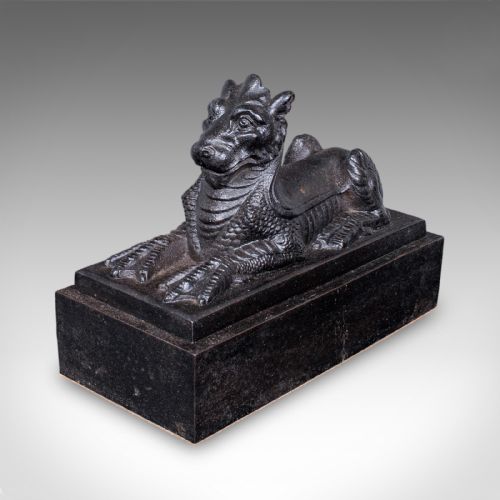
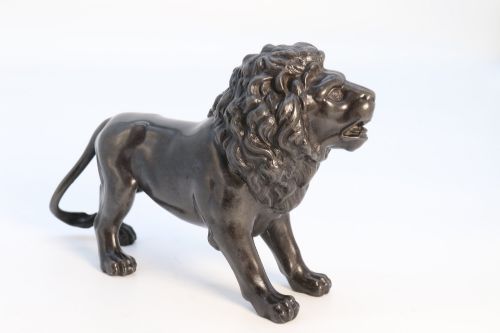
These Victorian lion ornament examples combine nineteenth-century weight and presence, appearing as heavy doorstops, garden statuary and ceramic fireside figures.
Victorian Lion Ornament
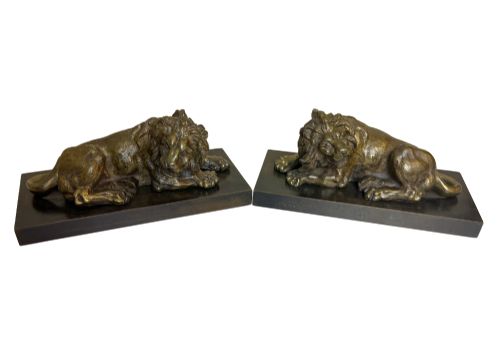
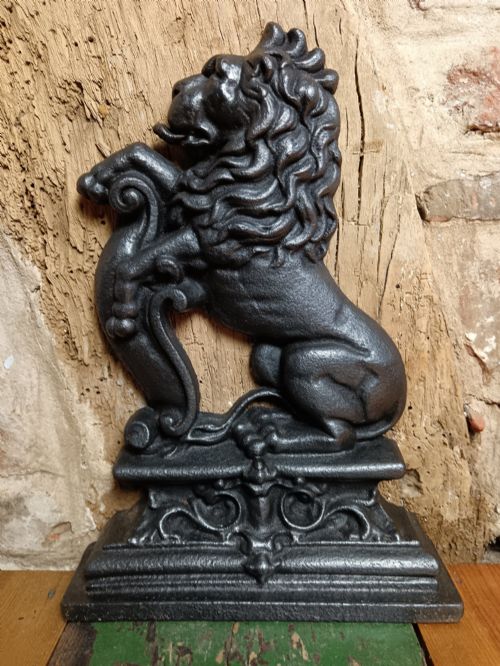
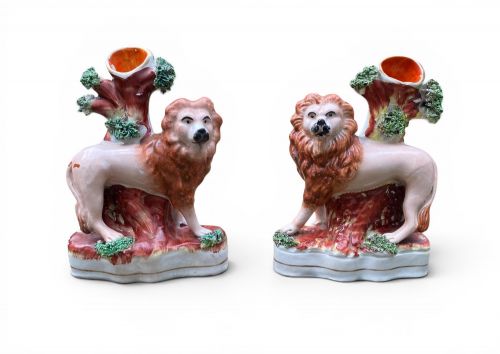
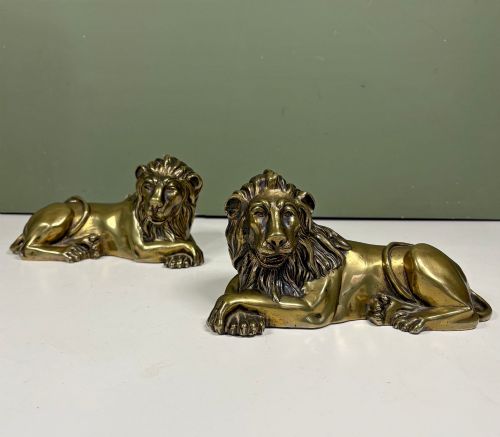
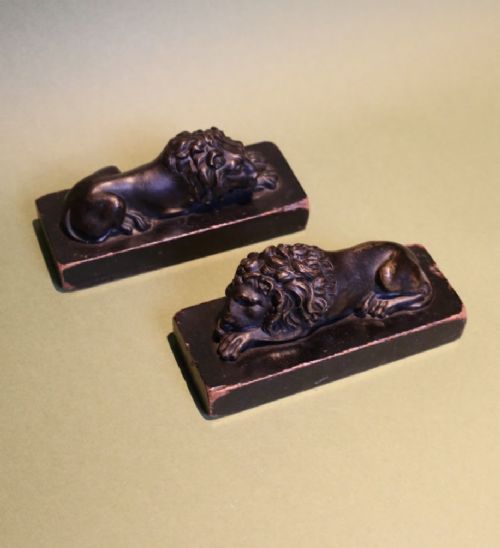
A victorian lion ornament takes many forms across this selection, appearing primarily as cast iron doorstops, heavy terracotta garden statues, and Staffordshire pottery figures. The pieces range from recumbent guardians and rampant beasts to classical studies and spill vases.
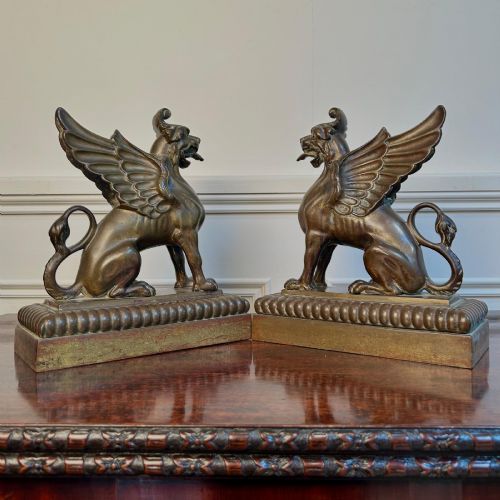
Most items on this page date from the nineteenth century, including specific decades such as the eighteen-fifties and eighteen-eighties. Buyers frequently encounter pairs designed for hearths, gates, or bookcases alongside individual decorative sculptures.
How they were made
Foundries shaped heavy metals through casting, producing cast iron, bronze, brass, and pewter objects that often received black paint, bronzed finishes, or simple patination. Iron and brass examples frequently function as functional door porters and hearth furnishings.
Potters utilised earthenware, terracotta, and ceramic bodies, finishing many pieces with treacle glaze, copper lustre, salt glaze, or hand-applied paint. Staffordshire potteries shaped figures by hand or in moulds, whilst larger garden ornaments relied on robust terracotta and salt-glazed stoneware.
Listings span earthenware, cast iron, bronze, terracotta, and salt glaze.
What varies in quality
Original surface treatments dictate value and desirability across both ceramics and metals. Intact historic glazes, honest patination on bronzes, and well-preserved early paint layers hold greater appeal than modern overpainting.
Lancaster and Sons of Hanley·Rockingham Pottery·Hurlford Kilmarnock
The Victorian Lion Ornament Glossary
- Recumbent
- Lying down with the head raised, a common posture for large stone, terracotta, and ceramic lion sculptures intended for hearths or gardens.
- Rampant
- Standing on one hind leg with the forelegs raised, a heraldic posture frequently seen on heavy cast iron doorstops.
- Treacle glaze
- A rich, dark brown translucent lead glaze used extensively on nineteenth-century Staffordshire pottery and earthenware figures.
- Medici lion
- A classical marble sculpture type depicting a majestic lion resting a paw on a sphere, frequently replicated in bronze, iron, and ceramic.
- Spill vase
- A hollow ceramic figure incorporating an attached vertical cylinder designed to hold wooden spills for lighting pipes or fires.
Victorian Lion Ornament: Frequently Asked Questions
What rooms suit a cast iron lion doorstop?
Heavy cast iron doorstops function well in hallways and studies where their substantial weight keeps heavy doors open securely.
Their dark metal finishes also pair naturally with traditional fireplaces and hearth settings.
How do I care for terracotta garden lions?
Terracotta garden statues benefit from shelter during freezing winter weather to prevent frost damage to the porous clay body.
Routine cleaning requires only a soft brush to remove debris without disturbing the surface.
Where were Staffordshire lion figures displayed?
Staffordshire pottery lions traditionally sat in pairs upon nineteenth-century mantelpieces, flanking clocks or other garniture pieces.
Victorian households also placed them on side tables and within cabinet displays.
What is the difference between a doorstop and a bookend?
Doorstops are cast with heavy bases and handles or integrated loops to allow easy lifting between heavy interior doors.
Bookends are generally produced as matched pairs with flat vertical inner faces designed to support heavy volumes.