


Victorian Ceramic Lion
A victorian ceramic lion brings domestic shelf display and garden display together through robust earthenware and terracotta forms.
Victorian Ceramic Lion
The victorian ceramic lion encompasses figures, vessels, and architectural ornaments modelled across the nineteenth century. Buyers encounter garden statues, spill vases, bookends, and jelly moulds within this group.
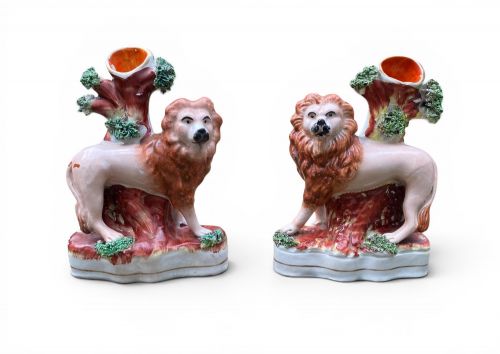
Staffordshire potteries dominate the domestic shelf forms, while larger terracotta and salt-glazed examples serve outdoor settings. The Medici lion model appears alongside recumbent poses and pair arrangements.
Production spans earthenware and terracotta, finished with lead glazes, treacle glazes, or copper lustre. Certain models incorporate functional elements such as planters and sugar bowls with mask handles.
Materials and production
Potters shaped these figures using earthenware and terracotta, applying glazes including lead, salt, and treacle finishes. Paint and copper lustre provide surface decoration on specific figures.
Moulds formed the bodies of these lions, allowing workshops to produce paired figures for mantelpieces and gardens. Subsequent firing set the clay before glazes added colour and sheen.
Victorian kitchen shelves once hid fierce ceramic lions inside jelly moulds, waiting to leap forth as blancmange.
Assessing quality
Scale and presence separate smaller shelf ornaments from monumental garden statuary in terracotta or salt-glazed pottery. Pairs matched in scale and glaze consistency carry greater visual weight than assembled single figures.
Rockingham Pottery·Minton·Lancaster and Sons of Hanley·Hurlford Kilmarnock
The Victorian Ceramic Lion Glossary
- Terracotta
- Fired clay containing iron oxide, ranging in colour from buff to reddish brown. This porous material suits large garden sculptures and architectural ornaments.
- Spill vase
- A hollow vertical holder attached to a figure, designed to hold taper spills for lighting candles and fires. These paired pottery pieces sit on nineteenth-century mantelpieces.
- Treacle glaze
- A dark brown, lustrous lead glaze used extensively on nineteenth-century Staffordshire pottery. It gives earthenware an intense, glossy finish.
- Medici lion
- A classical sculptural type depicting a majestic lion with one paw resting on a sphere, derived from the antique marble sculptures in Florence. British potteries adapted this form for pairs of ceramic figures and garden statues.
- Jelly mould
- A kitchen ceramic vessel featuring an intaglio design on the interior, transferring a moulded motif onto moulded food. Lion designs formed popular jelly mould subjects.
Victorian Ceramic Lion: Frequently Asked Questions
What is a victorian ceramic lion?
A victorian ceramic lion is a nineteenth-century figure or vessel modelled in earthenware, terracotta, or salt-glazed pottery. These range from small Staffordshire shelf ornaments to large garden statues.
Potters produced them in various forms, including bookends, jelly moulds, spill vases, and jardinieres, often finished with treacle glazes or copper lustre.
Where were these ceramic lions placed?
Smaller pairs of glazed ceramic lions typically stood on nineteenth-century mantelpieces, flanking clocks or serving as spill vases and bookends. Kitchens utilised lion jelly moulds for shaped desserts.
Large terracotta and salt-glazed pottery lions occupied gardens, terraces, and entranceways, displayed on bases to anchor their scale in outdoor environments.
How do I identify a Staffordshire lion?
Staffordshire lions usually appear as earthenware figures covered in a lead or treacle glaze, often modelled as seated pairs for domestic display. They feature moulded manes and painted details.
Kitchen jelly moulds and sugar bowls with lion mask handles also originate from these nineteenth-century Staffordshire traditions.
Are terracotta lions intended for the garden?
Large terracotta lions and salt-glazed pottery examples were built for outdoor placement in gardens and on terraces. Their heavy scale and robust clay body suited exterior conditions.
Collectors should consider frost exposure when housing antique terracotta pieces outdoors during winter months.