



Staffordshire Ceramic Lion
A Staffordshire ceramic lion brings sculptural character to a mantelpiece, offering the enduring charm of nineteenth-century earthenware figures.
Staffordshire Ceramic Lion
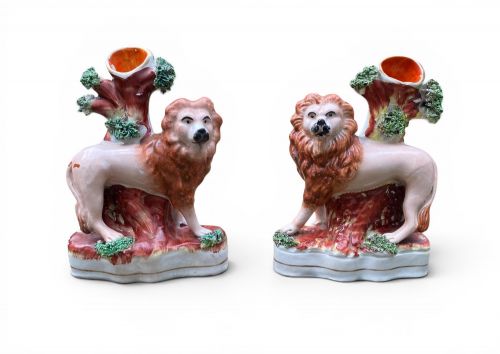
When you search for a Staffordshire ceramic lion, you find figures and decorative objects shaped as the animal across the nineteenth century, including the Victorian period. The pieces on this page appear as figurines, spill vases, bookends, and jelly moulds, with several examples modelled as pairs of lions.
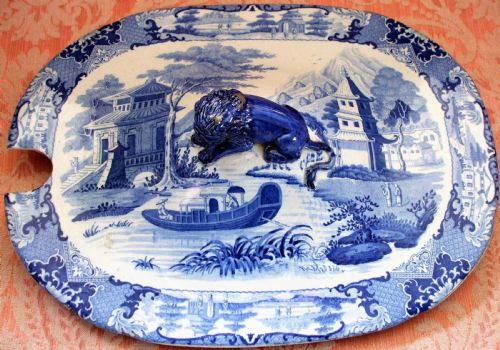
The designs draw on classical forms such as the Medici lion, alongside domestic interpretations and historical subjects like the death of the lion queen. Makers also produced lions combined with heraldic animals, such as the lion and unicorn figures, or incorporated lion masks onto tableware like covered sugar bowls and tureen covers.
Originating largely from English potteries, these earthenware pieces span creamware, pearlware, and standard ceramic bodies finished with various glazes. They reflect the decorative output of Staffordshire workshops from the Georgian era through to the early twentieth century.
Materials and methods
Potters shaped these figures using ceramic earthenware bodies, including creamware and pearlware, which provided a pale ground for subsequent decoration. Moulds formed the three-dimensional shapes of the lions, spill vases, and bookends.
The listings on this page include earthenware, creamware, pearlware, and ceramic bodies finished with lead, treacle, and blue and white glazes.
Judgement of quality
The definition of the modelling separates simpler domestic items from more ambitious sculptural pairs, particularly in the rendering of facial expressions and manes. Sharpness in moulded details like paws and bases indicates a cleaner cast.
The application of glaze and underglaze colour affects the visual presence of the piece, with even treacle glazes or crisp transfer prints achieving a stronger aesthetic result. Hand-painted highlights and gilding show varying degrees of precision.
Robert Hamilton·Rockingham Pottery·Lancaster and Sons of Hanley·Rogers
The Staffordshire Ceramic Lion Glossary
- Pearlware
- A refined earthenware developed in the late eighteenth century with a bluish-tinted glaze that pooled in recesses. It provided a whiter surface than standard creamware.
- Treacle glaze
- A dark, lustrous brown glaze rich in manganese, commonly used on nineteenth-century earthenware figures to create a deep, glossy finish.
- Spill vase
- A hollow figurine incorporating a small cylindrical holder designed to store wooden spills used for lighting candles or fires. These vessels combined domestic utility with mantelpiece decoration.
- Medici lion
- A classical sculptural type depicting a recumbent lion with its paw resting upon a ball, copied extensively by Staffordshire potters from antique marble prototypes.
- Transfer printing
- A decoration technique that applied monochrome or coloured patterns to pottery from a copperplate via tissue paper. It allowed complex scenes and borders to be reproduced consistently across tableware.
Staffordshire Ceramic Lion: Frequently Asked Questions
What is a Staffordshire ceramic lion?
A Staffordshire ceramic lion is an earthenware figure, vase, or bookend produced by English potteries during the nineteenth century. These ornaments typically depict recumbent or seated lions with decorative glazes and painted details.
Potters drew inspiration from classical antiquities and contemporary tastes, creating display pieces designed for nineteenth-century domestic interiors.
How were these lion figures used?
Most Staffordshire lions served as decorative ornaments, placed on mantelpieces, sideboards, or bookshelves in Victorian homes. Some functional variants, such as spill vases, held wooden tapers for lighting fires.
Other ceramic pieces incorporated lion motifs into practical household items, including jelly moulds, tureen covers, and sugar bowl handles.
What styles do these lions appear in?
The listings show pieces spanning Georgian, Victorian, and Victorian Decorative styles. Forms range from classical Medici lions to recumbent bookends and heraldic figures paired with unicorns.
Glazes also define the visual style, varying from blue and white transfer print to rich treacle glazes and creamware finishes.
How do you date a ceramic lion?
Dating relies on the ceramic body type, glaze characteristics, and subject matter recorded in the evidence. Creamware and pearlware point towards earlier nineteenth-century manufacture, while Victorian registry marks or specific glaze types help narrow down the period.
Comparative forms such as spill vases and bookends further contextualise the production era within the 1800s or early 1900s.