



Victorian Leather Chest
When you search for a victorian leather chest, you are looking at substantial luggage, campaign furniture and storage trunks built to travel or furnish country houses.
Victorian Leather Chest
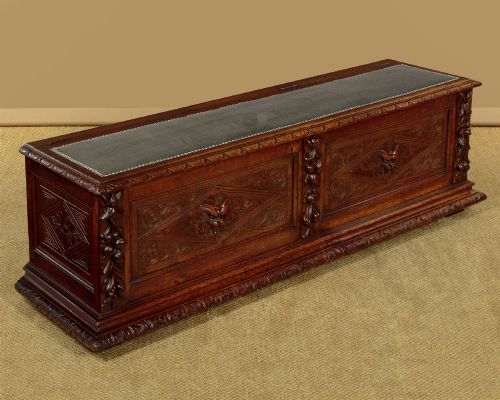
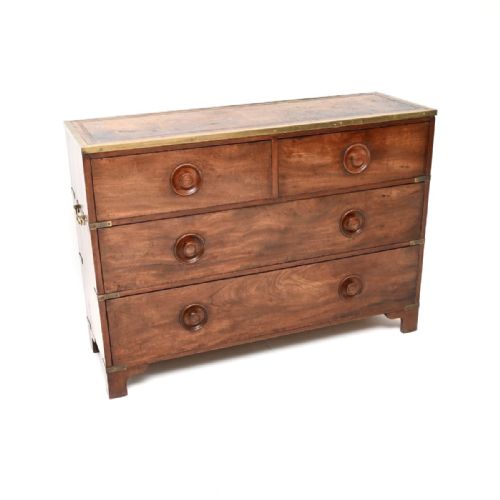
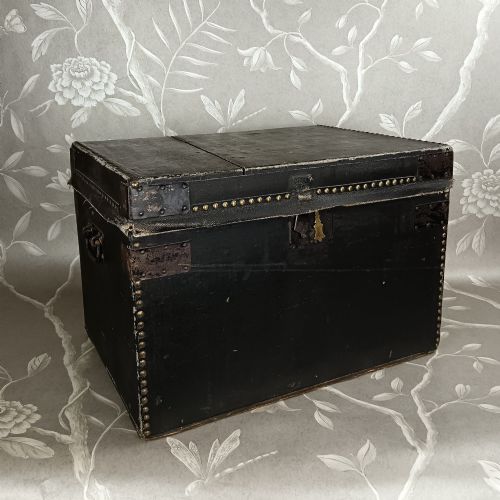
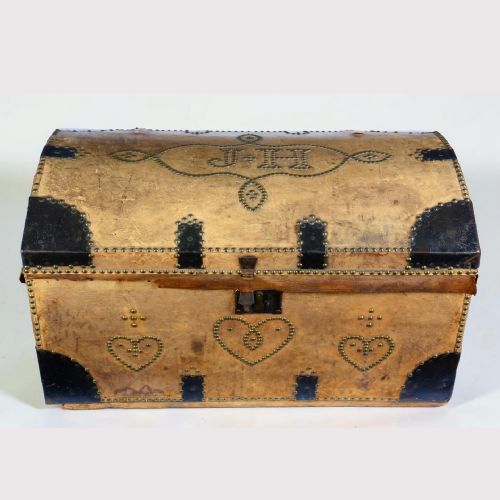
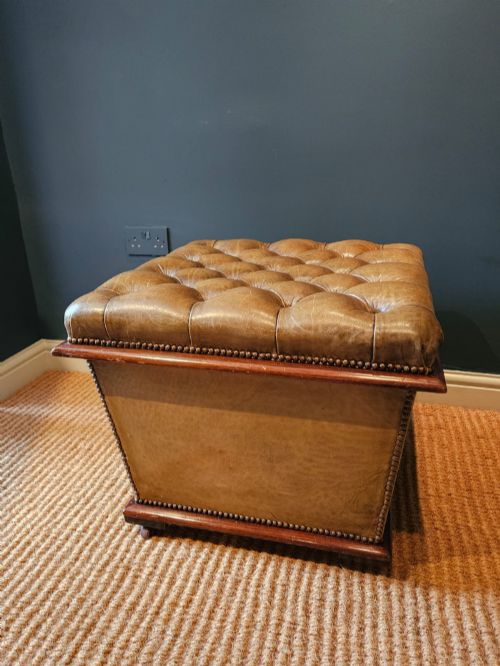
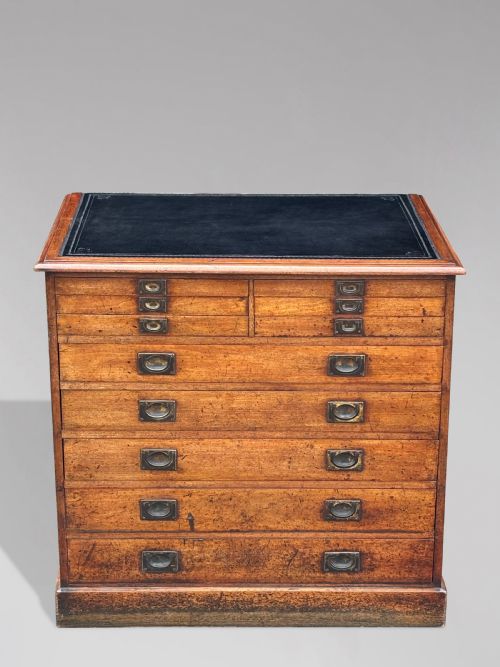
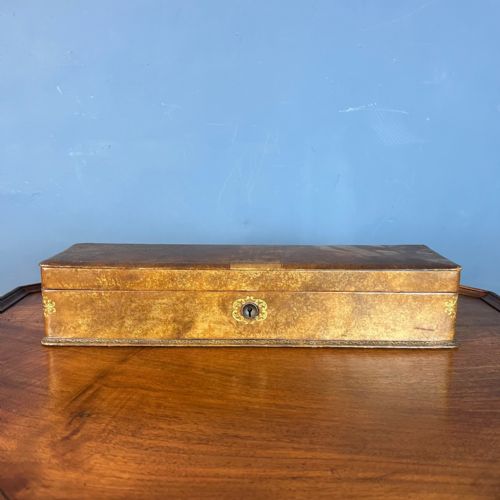
A victorian leather chest covers a surprisingly wide range of domestic and travel forms, from domed travel trunks and sturdy campaign chests of drawers to large country house ottomans. The examples you encounter on this page span the nineteenth century and into the early twentieth, reflecting an era when durable storage had to withstand serious journeys by coach, rail or ship.
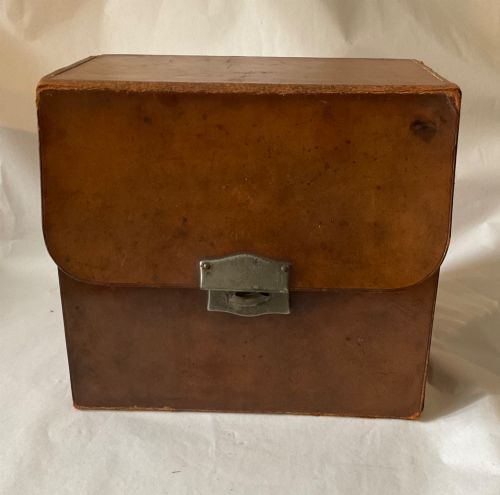
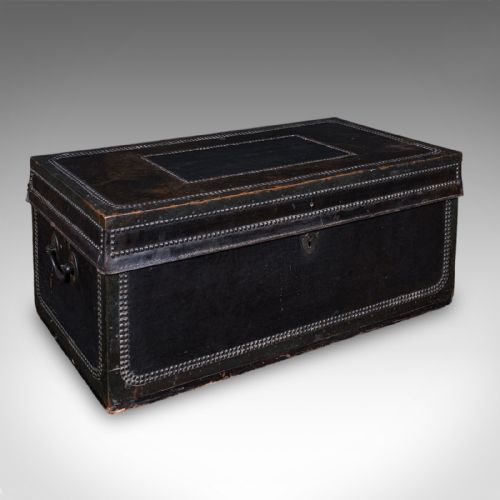
Many of these pieces combine timber carcases of mahogany, oak, camphorwood or pine with tough leather coverings, often augmented by brass studwork, corner brackets and iron hardware. You will also find specialised variants like travelling apothecary cases, Wellington chests and blanket boxes designed for specific household or transit needs.
How they were made
The construction of these items relies on solid timber foundations, utilising woods such as mahogany, oak, camphorwood, birch and pine to build rigid internal frames and carcases. Makers then applied heavy-gauge leather over the wood, securing the hides with thousands of individual brass studs, iron bands and metal reinforcements to protect vulnerable edges during transit.
Hardware played an integral structural role, incorporating flush brass drop handles, locking mechanisms and robust corner plates designed to withstand rough handling. Interiors were frequently lined with marbled paper, textiles or fitted compartments tailored to hold documents, clothing, bottles or personal valuables securely.
Several trunks still retain their original travelling labels, hinting at Victorian railway journeys across Britain.
What varies in quality
Quality in these trunks and chests is largely determined by the integrity of the original materials and the sophistication of the hardware. Pieces commissioned from known makers or high-end retailers exhibit heavier gauge brasswork, superior locking mechanisms, and finer secondary timbers like camphorwood or solid mahogany beneath the leather.
The degree of original survival also dictates standing, particularly the condition of the leather hide, the presence of matching fitted interior compartments, and legible maker's stamps or brass plaques. Retaining all original brass studs, working locks and authentic handles separates utilitarian utility items from exceptional examples.
Wm. Insall of Bristol·Arthur Wannop·Drew & Sons·Druce & Co.·Robertson & Coleman Ltd
The Victorian Leather Chest Glossary
- Campaign chest
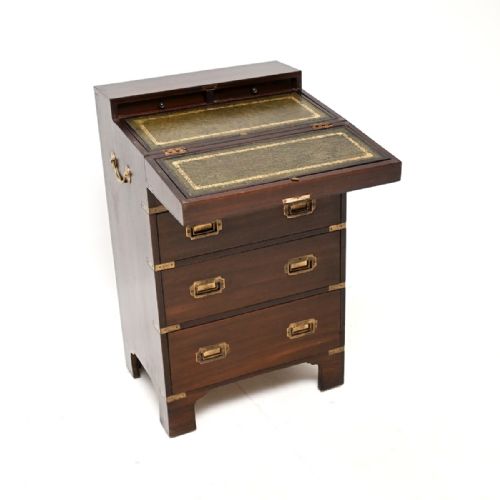
- A modular chest of drawers built in two or more sections with inset brass handles, designed to dismantle easily for military transport.
- Camphorwood
- An aromatic wood frequently used for the internal linings of trunks and chests because its natural scent repelled insects and protected stored textiles.
- Studwork
- The decorative and reinforcing use of brass or iron nails driven closely along the edges and seams of leather-covered trunks.
- Wellington chest
- A tall, slender chest of drawers secured by a hinged locking side-bar that fastens over the drawer edges with a padlock.
- Ottoman
- A low upholstered box seat or bench with a hinged lid, offering concealed storage within the main body of the furniture.
Victorian Leather Chest: Frequently Asked Questions
What were leather trunks used for?
These trunks served as durable luggage for Victorian travellers moving belongings across long distances by coach, train or ship.
They protected clothing, documents and personal possessions against dust, moisture and rough handling during transit.
How do I care for antique leather?
Keep the leather clean with a soft, dry cloth and avoid placing the chest in direct sunlight or near heat sources that could dry out the hide.
Applying a specialist leather conditioner periodically helps maintain suppleness and prevents cracking over time.
Are these chests suitable for modern storage?
Their robust internal dimensions make them practical for storing blankets, bedding, shoes or household items in living spaces.
Many pieces also double as coffee tables, benches or footstools while providing concealed storage.
How can I identify a campaign chest?
Campaign chests are typically built in stacked sections with flush brass handles rather than protruding knobs so they do not catch during transport.
Look for reinforced brass corners, recessed side carrying handles and sturdy timber construction designed for rapid disassembly.