


Victorian Lacquered Side Table
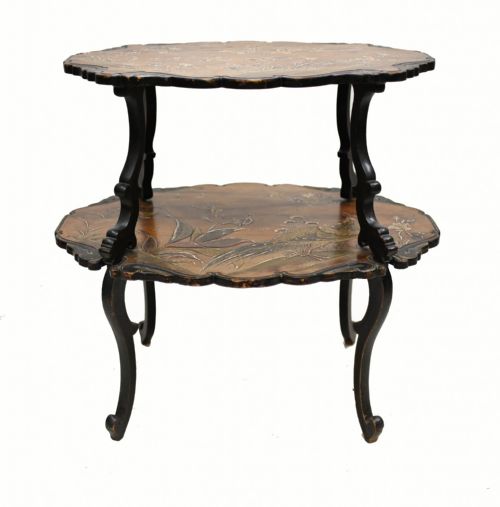
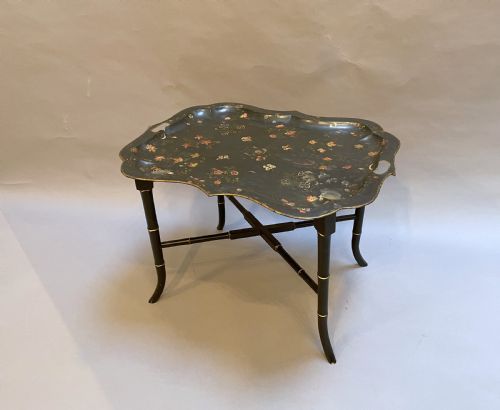
A victorian lacquered side table brings rich black finishes, gilded ornament, and exotic hand-painted scenes directly from nineteenth-century parlours into modern rooms.
Victorian Lacquered Side Table
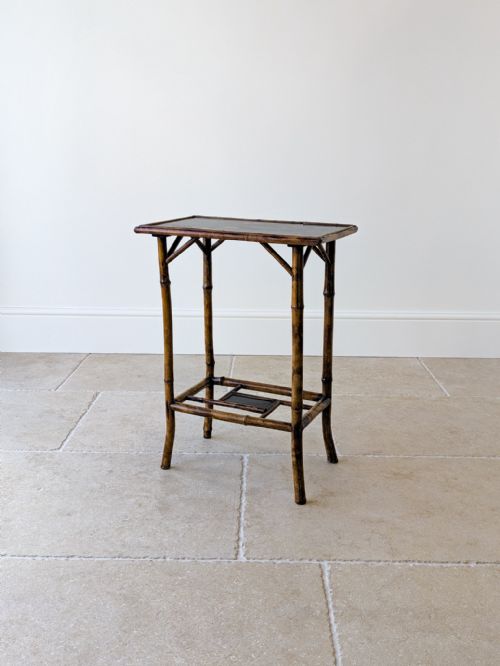
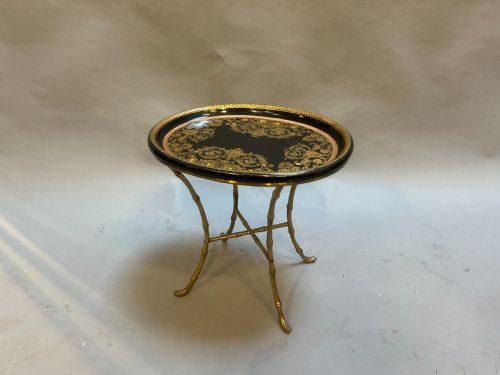
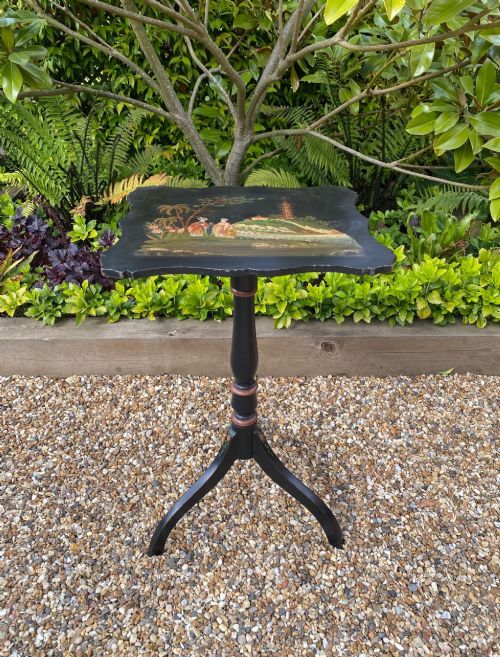
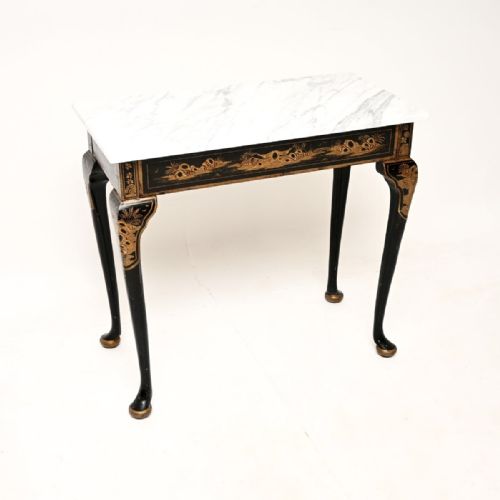
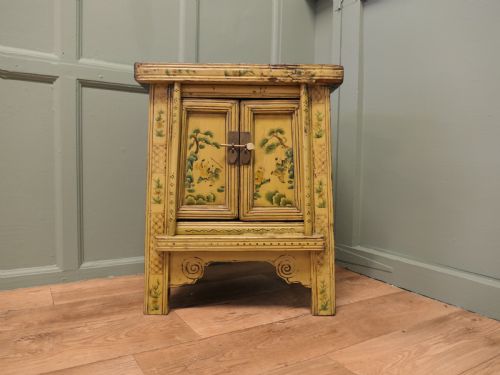
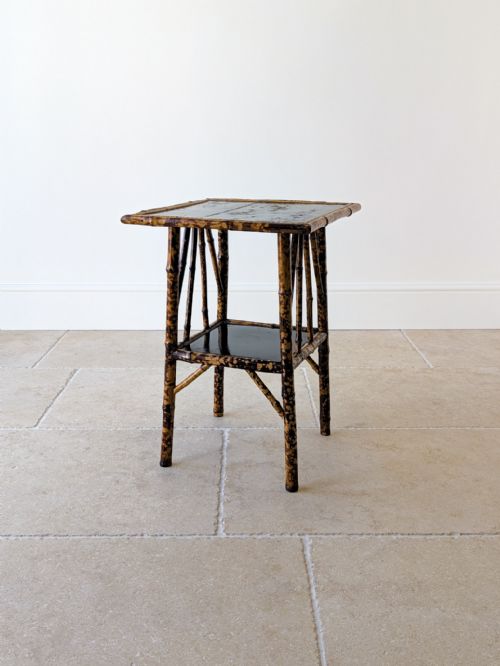
A victorian lacquered side table encompasses a variety of surface-decorated occasional furniture produced during the nineteenth century, drawing heavily on Eastern motifs. Buyers frequently encounter pieces finished in deep black or cream lacquer, often taking the form of tripod tables, tray tables on stands, or bamboo frames.
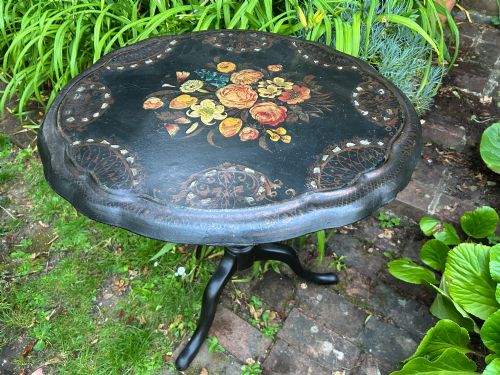
The selection ranges from papier-mâché wine tables and tilt-top surfaces to structured bamboo two-tier tables and nests of four. Many items integrate distinct Chinoiserie landscapes, floral patterns, or Japanese Meiji influences into domestic British interiors.
Originating predominantly from the Victorian period, these tables served practical household functions for serving drinks, holding books, or displaying ornaments. They combine utility with decorative ambition, reflecting the period's fascination with global trade and exotic design.
Materials and Construction
Makers built these tables using wood, papier-mâché, or tiger bamboo frameworks, applying layers of lacquer to create smooth, durable surfaces. Papier-mâché panels provided a rigid, lightweight base for intricate hand-painted designs and mother-of-pearl inlay.
Decoration relied on paint, gold leaf, and gilt to render detailed Chinoiserie figures, architectural scenes, and foliage against dark backgrounds. Brass fittings and iron or wooden stands provided structural support for tabletops and removable serving trays.
Listings feature materials including papier-mâché, bamboo, and brass, spanning the Victorian period and the Aesthetic Movement.
Distinctions in Quality
Quality rests upon the depth of the lacquer finish and the precision of the hand-painted or inlaid decoration. Superior examples display crisp detail in the gold leaf and gilt work, maintaining integrity across complex multi-layered surfaces.
Structural stability also separates standard production from finer pieces, particularly in the joinery of bamboo frames and the balance of tilt-top mechanisms. Original stands paired correctly with period papier-mâché trays hold greater integrity than later replacements.
The Victorian Lacquered Side Table Glossary
- Papier-mâché
- A composite material made from paper pulp or layers of paper bound with glue, pressed into moulds, and dried to form a hard surface suitable for heavy decoration.
- Japonisme
- The influence of Japanese art on Western culture during the late nineteenth century. This movement introduced asymmetrical compositions and natural motifs to British furniture design.
- Tilt-top table
- A table featuring a hinge mechanism that allows the surface to rotate vertically when not in use. It saved valuable floor space in nineteenth-century drawing rooms.
- Canterbury
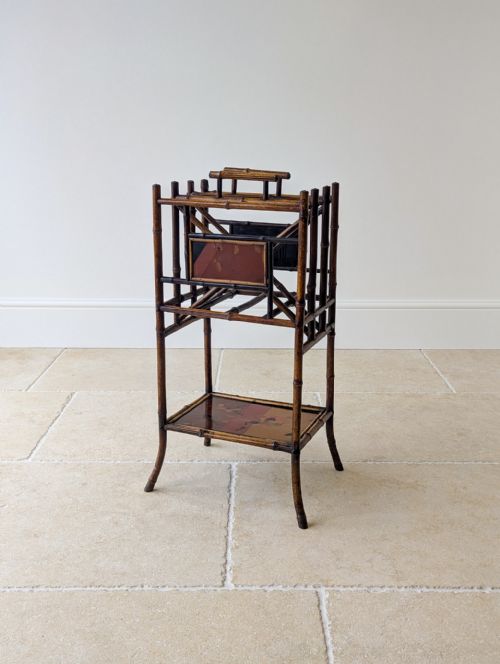
- A small multi-tiered stand originally designed for holding sheet music or books. Victorian variations often incorporated bamboo frames and lacquered panels.
Victorian Lacquered Side Table: Frequently Asked Questions
What is a papier-mâché table?
A papier-mâché table utilises a dense, compressed paper pulp core treated with varnish and lacquer to form a sturdy surface. These tables frequently feature hand-painted scenes and mother-of-pearl inlay.
Craftsmen often mounted these decorated surfaces onto wooden tilt-top pedestals or independent metal and wood stands. They provided lightweight yet resilient furniture for nineteenth-century entertaining.
How do I care for lacquer?
Lacquer requires gentle dusting with a soft, dry cloth to prevent scratching the polished surface. Avoid placing these tables near direct heat sources or in strong sunlight.
Moisture and harsh chemical cleaners damage the delicate finish and underlying paint layers. Maintaining a stable indoor climate preserves both the wood and the decorative elements.
Are bamboo tables Victorian?
Many bamboo tables date from the late nineteenth century during the height of the Aesthetic Movement. British makers embraced bamboo for its exotic appearance and lightweight structural qualities.
These pieces frequently incorporate lacquered panels or ceramic tiles into the design. They reflect the period's enthusiasm for Japanese and global aesthetic influences.
What is a tray table?
A tray table consists of a removable serving tray resting upon a folding or fixed folding stand. Victorians utilised them for serving refreshments before placing the tray back onto the stand for display.
Many examples feature deep edges and painted Chinoiserie decoration. The dual-purpose design offered flexibility in drawing rooms and parlours.