




Black Chinoiserie Tea Tray
A black chinoiserie tea tray brings hand-painted oriental scenes and deep dark finishes to a room, offering a functional surface steeped in historical style.
Black Chinoiserie Tea Tray
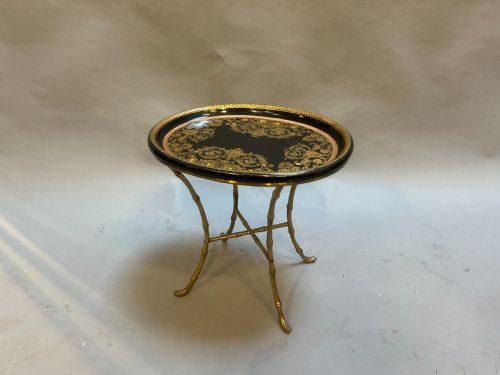
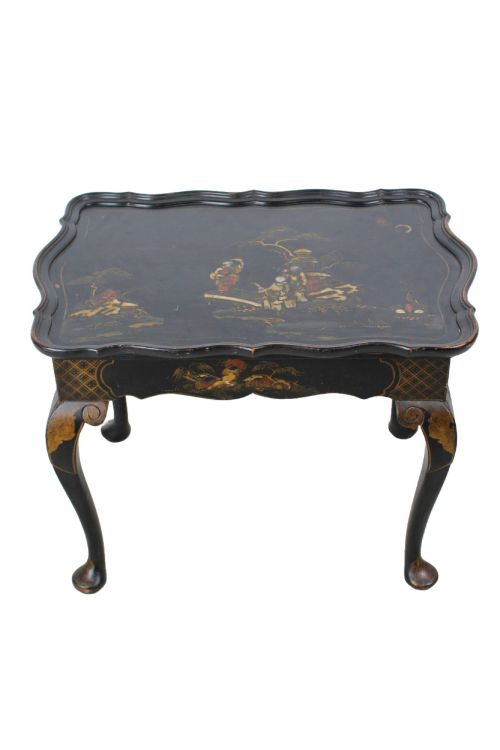
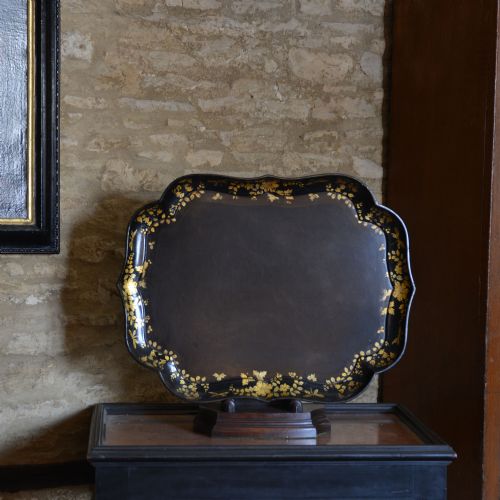
A black chinoiserie tea tray represents a striking intersection of utility and ornamental design, spanning from the Regency and Georgian eras through the Victorian and Edwardian periods. These items frequently survive as serving trays or rest upon custom stands to function as coffee tables and occasional tables.
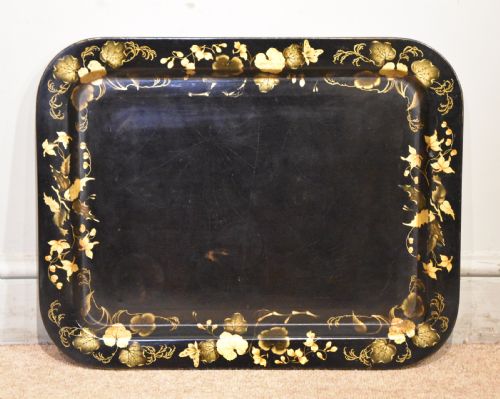
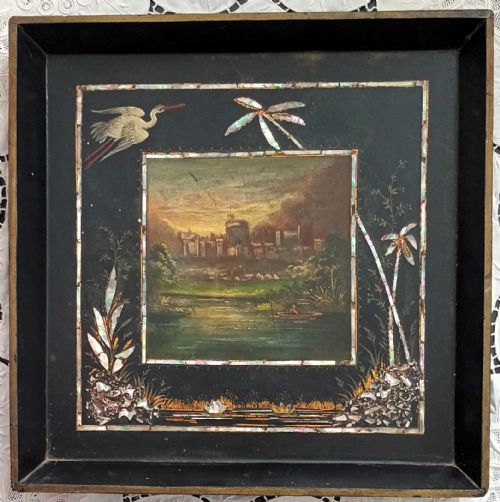
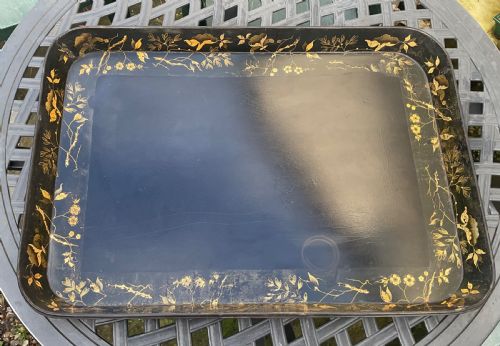
The versions most commonly met on this page include papier-mâché and lacquered wood trays decorated with intricate hand-painted motifs. Many examples from the nineteenth century onward have been adapted into low tables for modern domestic use.
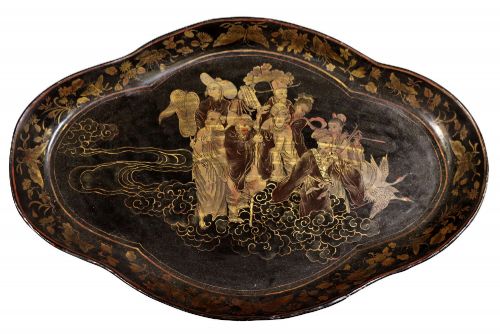
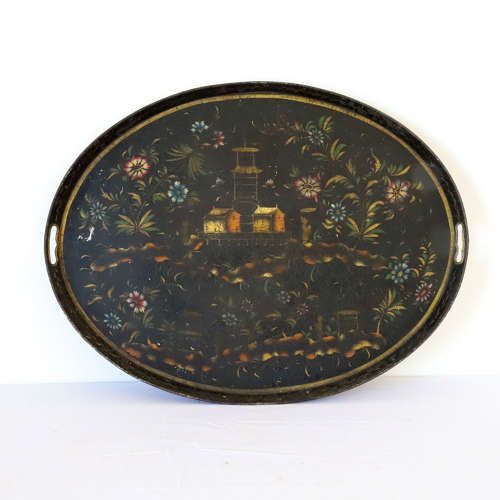
Originating across English and Swedish workshops, these pieces showcase decorative schemes featuring figures, pavilions, and floral patterns in gold and colour. They serve both practical hosting duties and decorative display roles within traditional and contemporary interiors.
How they were made
Makers utilised papier-mâché and lacquered wood as the primary foundations for these trays, building a sturdy base capable of supporting daily use. Layers of paper pulp or wood were pressed, dried, and finished with smooth dark coatings to create a resilient surface.
Surface decoration relied on paint and gold leaf applied by hand to render the characteristic oriental landscapes and floral designs. Gilt highlights and fine brushwork provided the contrast against the ebonised or lacquered background.
Additional hardware such as brass elements occasionally complemented the wooden structures, particularly on pieces designed to mount onto folding or fixed stands.
What varies in quality
The refinement of the hand-painted detail separates standard productions from exceptional examples, with master artists achieving greater depth and precision in their figures and foliage. Superior pieces display intricate gold leaf work that retains its crispness across the entire surface.
The integrity of the underlying papier-mâché or lacquered wood foundation dictates the structural longevity of the tray. Thicker, denser core materials resist warping and maintain a smoother plane over centuries of use.
The harmony between the original tray and any later-added stand influences the overall coherence of the piece. Purpose-built or well-matched nineteenth-century bases maintain the stylistic balance intended by the maker.
Clay
The Black Chinoiserie Tea Tray Glossary
- Papier-mâché
- A composite material made from paper pulp or reinforced sheets of paper mixed with glue and pressed into moulds. This substance formed a remarkably lightweight yet durable base for Regency and Victorian serving trays.
- Chinoiserie
- A European decorative style that imitates Chinese and East Asian artistic traditions. Artists expressed this aesthetic through whimsical landscapes, pavilions, and figures rendered in paint and gold.
- Japaned
- A European technique of applying glossy resin finishes to mimic Asian lacquerware. This process involved multiple layers of dark varnish cured and polished to a deep sheen.
- Toleware
- Metalware finished with lacquer or enamel paints, typically associated with serving trays and household utensils. These items offered a durable alternative to wooden or papier-mâché vessels.
- Gilt
- A thin application of gold leaf or gold paint applied to surfaces to create metallic highlights. This technique illuminated the dark backgrounds of tea trays and decorative furniture.
Black Chinoiserie Tea Tray: Frequently Asked Questions
How were tea trays used historically?
Tea trays served to transport cups, teapots, and vessels from the kitchen to the drawing room during formal social gatherings. Servants used large serving trays to manage multiple items at once.
Once the tea service concluded, the trays were often stored on edge or placed upon low folding stands to display their painted surfaces when not in active use.
Can I use a tray table for daily coffee?
Many of these pieces are sturdy enough to function as everyday coffee tables or occasional surfaces in a modern sitting room. Their elevated rims help contain items placed upon them.
Protective glass tops are occasionally added by owners to shield the delicate hand-painted lacquer from heat rings and moisture during daily use.
How do I distinguish Regency from Victorian trays?
Regency trays often display bolder neoclassical influences combined with early chinoiserie motifs, frequently produced during the early nineteenth century by prominent makers like Clay. Their papier-mâché construction tends to feel dense and substantial.
Victorian and later Edwardian examples lean toward denser floral ornamentation alongside traditional oriental scenes, often incorporating ebonised wooden stands adapted for domestic table use.
What is the difference between lacquer and japaning?
True Asian lacquer utilises natural sap from the lacquer tree, applied in numerous thin coats and cured in humid conditions. This creates a hard, durable surface found on imported oriental wares.
Japaning was the European response, using shellac-based varnishes and paints to replicate the dark glossy appearance of genuine lacquer on domestic papier-mâché and wood.