



Victorian Iron Fire Dogs
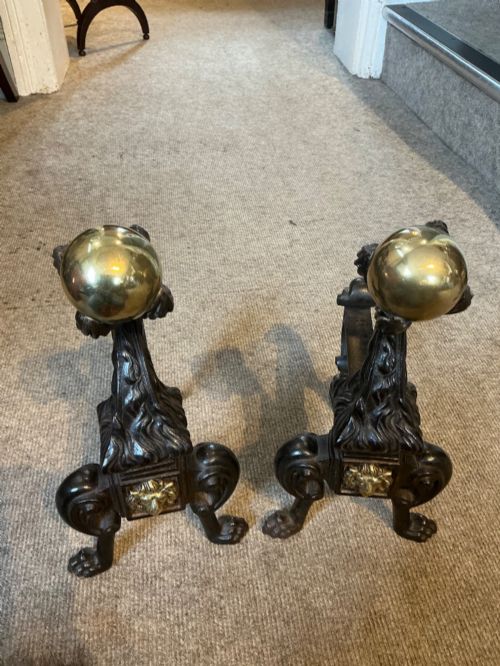
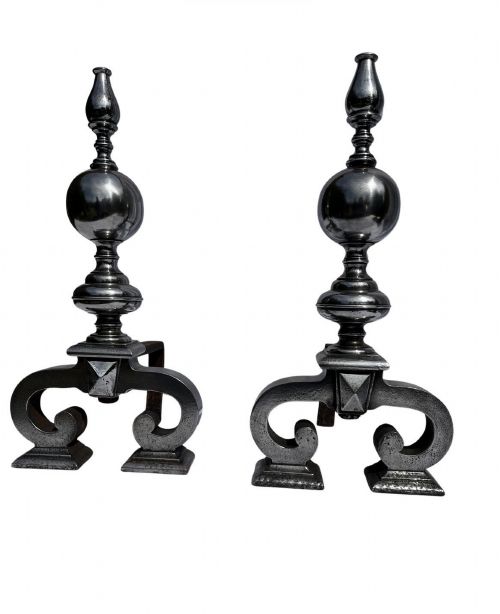
Victorian iron fire dogs anchor the open hearth, supporting heavy logs and bringing functional weight to the fireplace.
Victorian Iron Fire Dogs
Victorian iron fire dogs, frequently termed andirons, are heavy metal supports placed inside an open fireplace to hold logs above the hearth for better airflow. These items emerge from the nineteenth century in various weights and proportions, designed either as standalone pairs or paired with matching fire baskets and grates.
Buyers encounter sturdy utilitarian cast iron examples alongside more ornate pairs incorporating wrought iron, steel, or brass details. Many listings pair them directly with fire irons or companion sets, reflecting how hearth accessories were traditionally supplied together.
Materials and construction
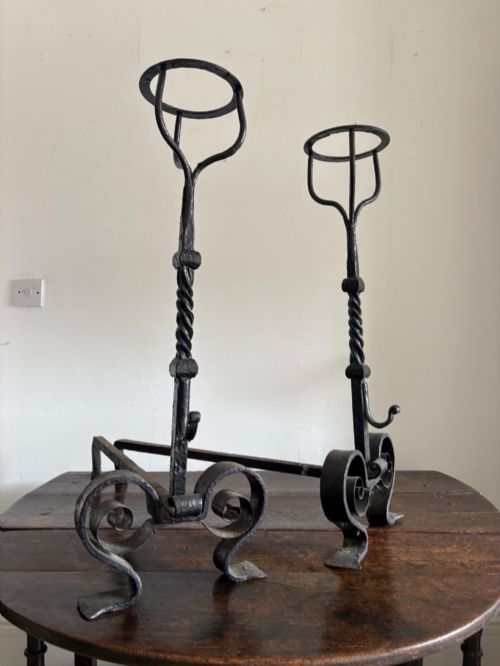
Makers utilised durable casting and hand-forging techniques to produce these hearth supports, turning molten metal into robust shapes capable of withstanding intense heat. Cast iron provided heavy rigidity for the main body and feet, while wrought iron allowed blacksmiths to shape slender bars and scrolls.
Polished steel and applied brass components appear frequently on finer examples, adding reflective surfaces and contrasting textures to the dark metal framework. These mixed-metal constructions combine structural strength with decorative interest.
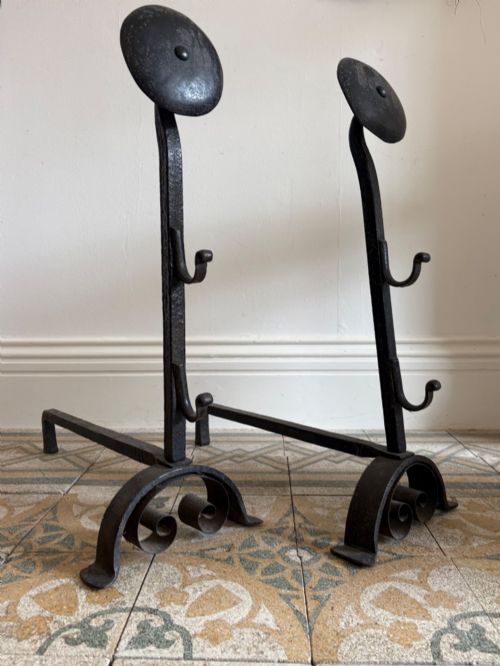
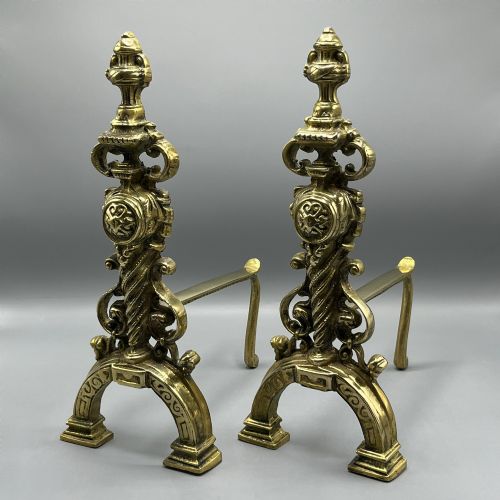
Design styles span from heavy Gothic Revival and Neoclassical to streamlined Arts and Crafts forms.
Judging quality in hearth furniture
The distinction between standard utility items and superior examples lies in the weight of the metal and the crispness of the casting or forging. Heavier pieces offer greater stability on the hearth and demonstrate more substantial gauge ironwork.
Subtlety in stylistic execution, such as clean lines in Arts and Crafts designs or well-defined detailing on Gothic and Neoclassical motifs, separates ordinary production from exceptional workshop output.
James Cartland and Sons·Christopher Dresser
The Victorian Iron Fire Dogs Glossary
- Andiron
- A horizontal support raised on legs, used in pairs to hold logs in an open fireplace. They often feature decorative front standards facing into the room.
- Fire dog
- An alternative term for an andiron, originating from the animal-like or utilitarian shapes historically used to support burning wood. These pieces sit inside the hearth.
- Fire basket
- A metal grate holding fuel above the hearth floor, frequently flanked or supported by matching andirons. They form an integrated unit within the fireplace opening.
- Companion set
- A collection of fireplace tools, including pokers, tongs, and shovels, often sold alongside matching fire dogs and tool rests. They share unified brass or iron mountings.
- Wrought iron
- Iron beaten and shaped by hand while hot, yielding fibrous strength and visible hammer marks. It contrasts with brittle cast iron poured into moulds.
Victorian Iron Fire Dogs: Frequently Asked Questions
How do I use fire dogs?
Fire dogs are placed in pairs inside the open fireplace to elevate logs above the hearth floor. This elevation allows air to circulate underneath the wood for a cleaner burn.
They stand independently or support a fire basket between them, taking the brunt of the heat and protecting the back wall of the hearth.
Are iron fire dogs purely decorative?
While many nineteenth-century examples display intricate Gothic, Arts and Crafts, or Neoclassical styling, their primary purpose is structural support for heavy firewood. Their substantial weight keeps rolling logs safely contained within the hearth opening.
Many sets include integrated tool rests or accompany fire irons, serving an active role in daily fireplace management.
How do I match them to my fireplace?
Measure the width and depth of your hearth opening carefully to ensure the andirons fit comfortably without crowding the space. Consider the scale of the fireplace, as monumental or very large pairs require substantial hearths.
Match the metal finish, whether cast iron, polished steel, or brass, to existing fenders, grates, and fire irons in the room.
What styles were popular in the period?
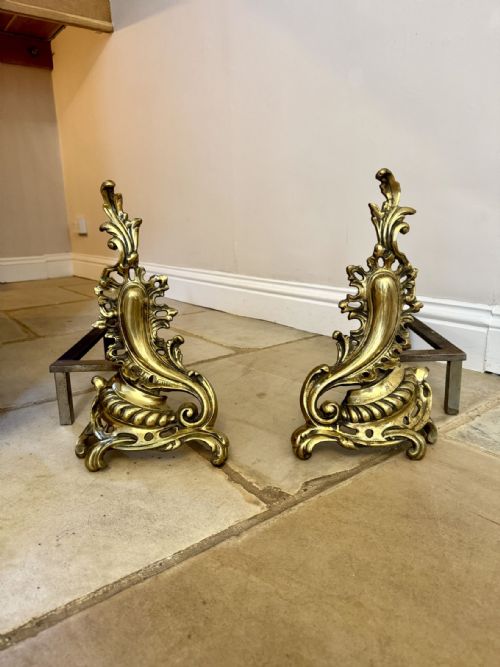
Nineteenth-century designs ranged from severe utilitarian cast iron to elaborate Gothic Revival and French Rococo interpretations. Later decades favoured clean Arts and Crafts or Aesthetic Movement styles with simpler lines.
Makers also produced neoclassical motifs and Art Nouveau designs featuring organic curves and decorative brass highlights.