
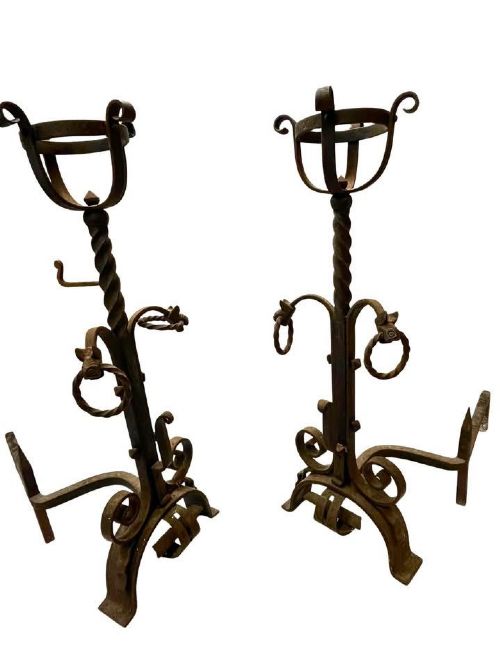


Gothic Wrought Iron Andirons
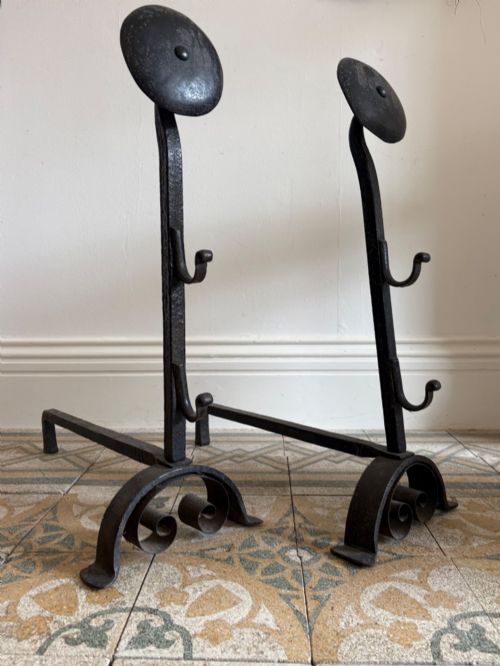
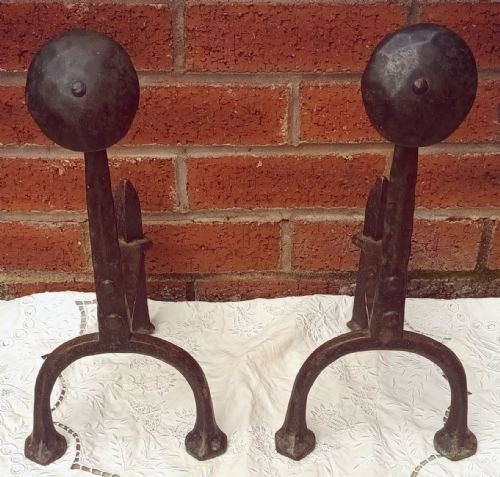
Gothic wrought iron andirons anchor a hearth with striking architectural presence, bringing historic heft and robust forge-work directly to an open fireplace.
Gothic Wrought Iron Andirons
When searching for gothic wrought iron andirons, collectors look at substantial hearth furniture designed to support logs within an open fire. The pieces seen on this page span the Victorian, Edwardian, and nineteenth-century periods, capturing the revival of medieval design forms.
The most common formats include matched pairs of standing fire dogs alongside larger fireplace sets that incorporate fire baskets and grates. Originating primarily from English workshops, these items range from monumental pairs measuring over eighty centimetres tall down to more compact domestic examples.
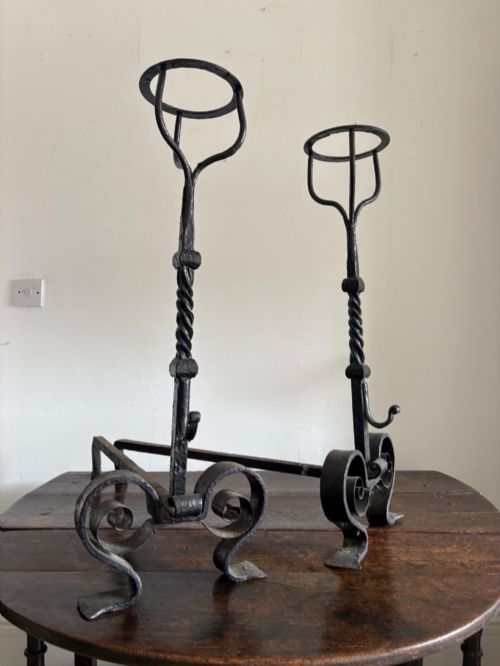
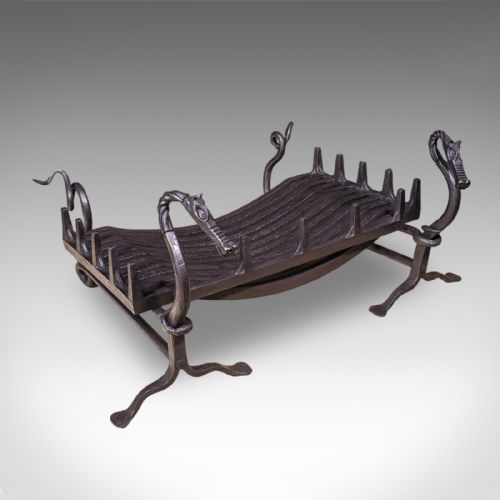
Makers utilised heavy ironwork to evoke medieval ecclesiastical and domestic architecture, often pairing tall standards with dragon motifs or decorative planters. The selection represents enduring hearth accessories shaped by Arts and Crafts sensibilities and Victorian Gothic Revival tastes.
Materials and construction methods
The fabrication relies heavily upon wrought iron, forged iron, and cast iron, chosen for their resilience against intense hearth heat. Blacksmiths shaped the metal while hot, hammering structural uprights and twisting bars into decorative scrolls or architectural finials.
Secondary elements such as brass, copper, and firebrick appear in composite fireplace sets and grates to manage thermal loads and introduce tonal contrast. These materials reflect traditional metalworking techniques combined with nineteenth-century batch production methods.
Several heavy iron andirons double as unexpected indoor planters, proving that Victorian hearths possessed a sense of botanical theatre.
Quality and craftsmanship variations
Quality rests upon the dexterity of the smith and the architectural conviction of the design. Finer examples display deliberate hand-hammered textures and cleanly forged joints that reveal individual craftsmanship rather than industrial uniformity.
Scale and proportion dictate the hierarchy of these objects. Monumental pairs and pieces incorporating specific sculptural elements such as dragon motifs demonstrate greater artistic ambition than standard utility fire irons.
The Gothic Wrought Iron Andirons Glossary
- Andirons
- Supports for logs in an open fireplace, consisting of a horizontal bar on legs with an upright standard at the front. They allow air to circulate beneath the wood for a better burn.
- Fire Dogs
- An alternative term for andirons, often denoting simpler or heavier utilitarian versions used in larger hearths. These form the primary structural supports for burning fuel.
- Gothic Revival
- An architectural and decorative style drawing inspiration from medieval design, prominent during the Victorian and Edwardian eras. It manifests in pointed arches, heavy ironwork, and structural ornamentation.
- Arts and Crafts
- A design movement valuing traditional craftsmanship, visible construction methods, and simple form. In ironwork, this translates to honest hammer marks and purposeful joinery.
- Fire Basket
- A metal container holding coal or wood within a fireplace, frequently paired with andirons or integrated into inglenook sets. It keeps the fuel contained and elevates it above the hearth floor.
Gothic Wrought Iron Andirons: Frequently Asked Questions
How do I clean wrought iron andirons?
Remove surface soot using a soft brush and apply a light coat of paste wax or specific iron grate polish to protect the metal from moisture.
Avoid using water or harsh chemical cleaners, as these can strip the historical patina and encourage surface oxidation.
Are these andirons suitable for a working fireplace?
Most antique examples are forged from durable iron and firebrick, making them fully functional for burning wood or coal in an open hearth.
Verify that the height and weight match your fireplace opening before lighting a fire.
What is an inglenook fire basket?
An inglenook fire basket is a large, integrated hearth accessory designed to heat substantial domestic spaces, often positioned within deep fireplace recesses.
These setups typically include matching andirons and fire irons to service the main hearth.
How do I date a Victorian gothic piece?
Examine the construction marks, weight, and stylistic indicators such as quatrefoil motifs or heavy pointed arches typical of nineteenth-century revivalism.
Reference periods span from the mid-nineteenth century through the Edwardian transition around nineteen hundred.