


Victorian Interior Artwork
Victorian interior artwork captures domestic and social spaces through oil paintings, watercolours and engravings from the nineteenth century.
Victorian Interior Artwork
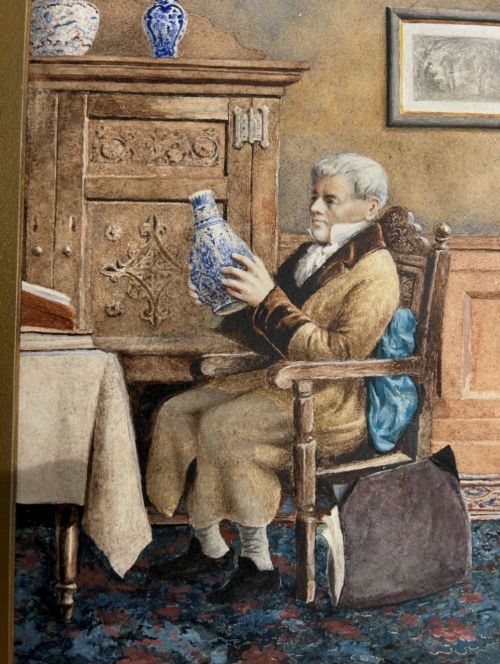
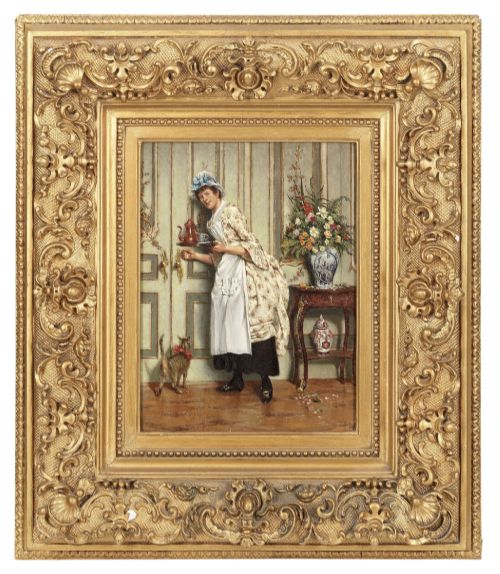
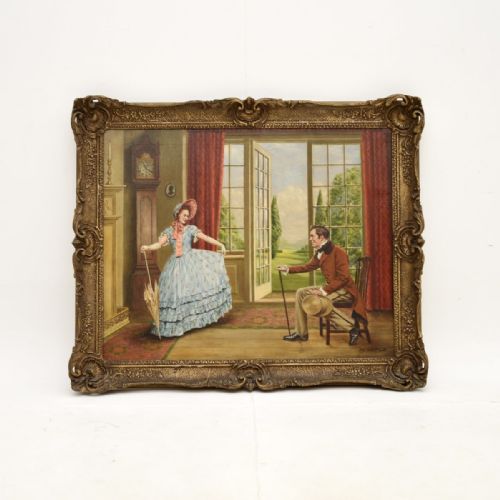
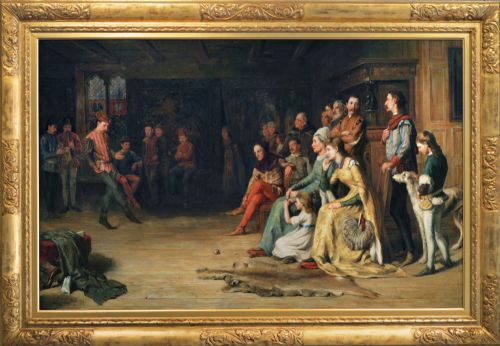
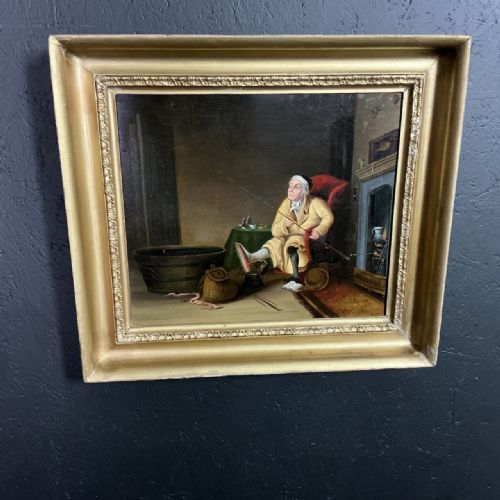
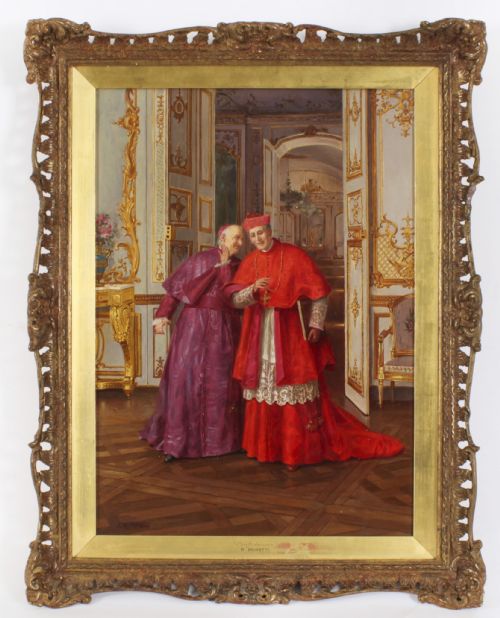
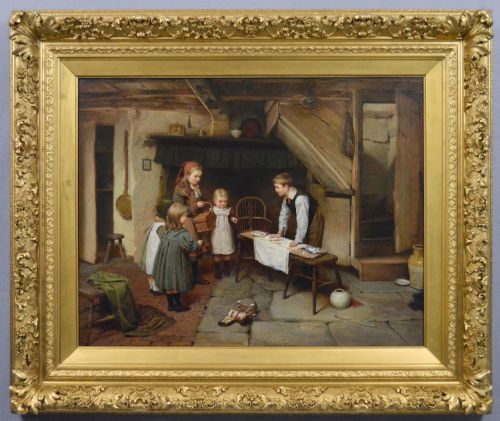
Victorian interior artwork primarily comprises oil paintings, watercolours and engravings depicting domestic scenes, country houses and social settings. These pieces document nineteenth-century life through depictions of figures gathered in parlours, cottages and grand interiors.
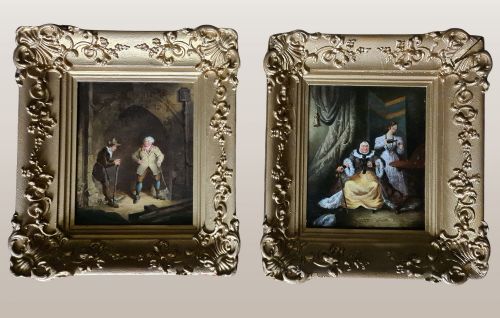
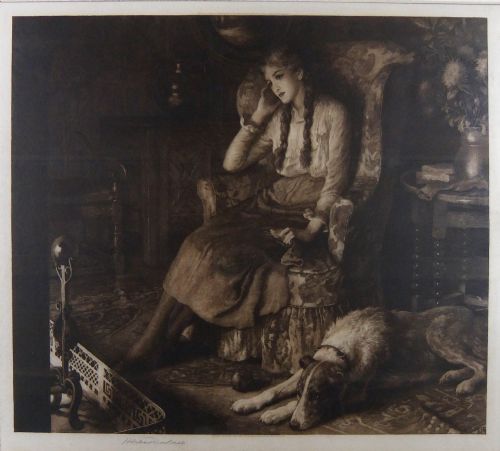
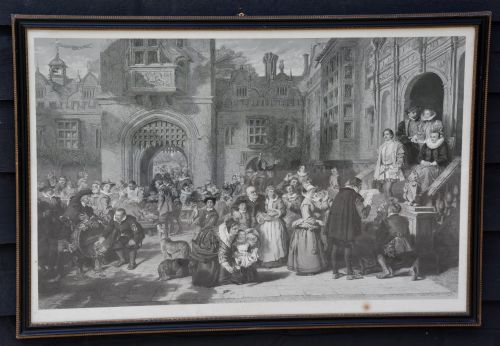
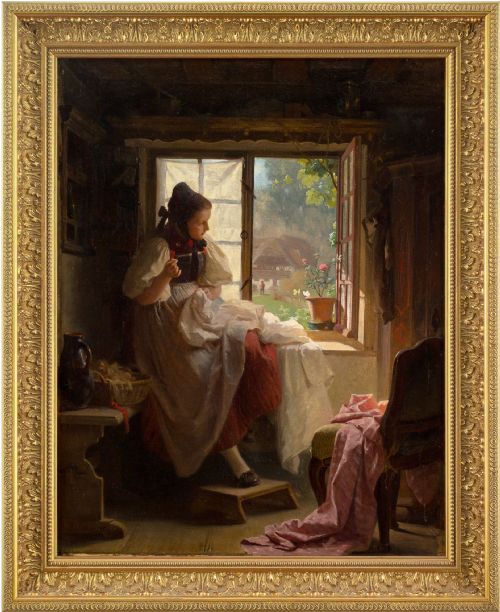
The works appearing here span the broader nineteenth century into the Edwardian era, with periods covering the 1860s, 1880s, 1890s and 1900. Genre paintings and historical scenes dominate the selection, portraying everyday activities such as tea time, sewing and fireside gatherings.
Oil on canvas and watercolour paintings on paper represent the core forms encountered by a buyer. Framing often includes original giltwood, gesso or Hogarth frames that complement the period aesthetic of the artwork.
Materials and technique
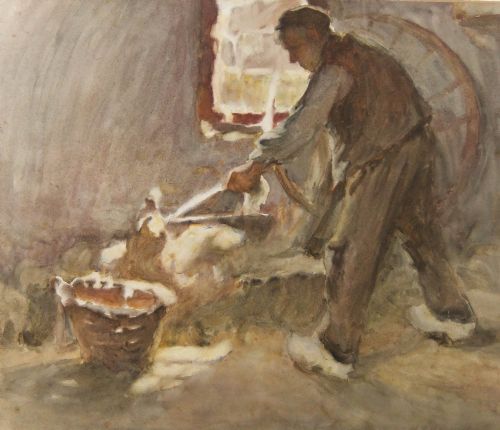
Artists executed these works using oil paint on canvas or panel, alongside watercolours on paper and original etchings or engravings. Canvases received layers of oil paint to build depth in interior lighting and fabric textures.
Gold leaf, gesso and wood were utilised to construct ornate frames that housed the paintings and prints. Many pieces retain their original frames, incorporating carved wood finished with gesso and gilding.
Listings feature oil paintings, watercolours and engravings executed on canvas, panel, board and paper.
Quality variations
The standard of execution in figure drawing, facial expression and handling of interior light defines the upper tier of these works. Skilled brushwork renders fabrics, furnishings and architectural details with convincing realism and atmosphere.
Provenance and documentation influence the standing of a piece, particularly when connected to exhibited artists or identifiable historical settings. The preservation of the original giltwood or Hogarth frame adds contextual integrity to the artwork.
Henry Stacy Marks·Stephen Samuel Lewin·Henry Silkstone Hopwood·Alfred Lyndon Grace·Herbert Dicksee·Max Kaltenmoser·James Hamilton·Renato Moretti·James Hayllar·Harry Brooker·Byam Shaw·George Kilburne·Alexander Rosell·John Arthur Lomax·Albert Clark·John Watkins Chapman·Charles Haigh Wood·Frank Moss Bennett·Haynes King·James Kyd·Edwin Thomas Roberts·Robert Alexander Hillingford·George Smith·Edwin Hughes·William Henry Knight
The Victorian Interior Artwork Glossary
- Genre painting
- Depiction of aspects of everyday life by subjects from ordinary life. These scenes often show domestic interiors with figures engaged in daily tasks.
- Giltwood
- Wood carved and covered with a thin layer of gold leaf. This material is standard for period picture frames.
- Gesso
- A paint mixture consisting of a binder mixed with chalk, gypsum or pigment. It served as a base for moulding ornamental details on picture frames before gilding.
- Etching
- A printmaking process where lines are incised into a metal plate with acid. The plate is then inked and printed onto paper.
- Hogarth frame
- A distinctive wooden picture frame profile characterised by a stepped or ogee shape, frequently finished in dark wood or gilding.
Victorian Interior Artwork: Frequently Asked Questions
What subjects appear in these interior artworks?
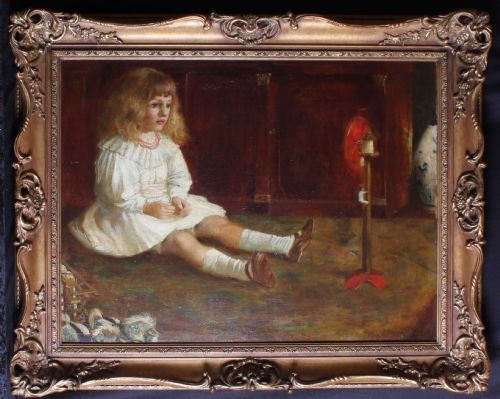
The works depict figures in domestic spaces, country house rooms, cottages and historical interiors. Common activities include tea time, sewing by a window, fireside gatherings and family scenes.
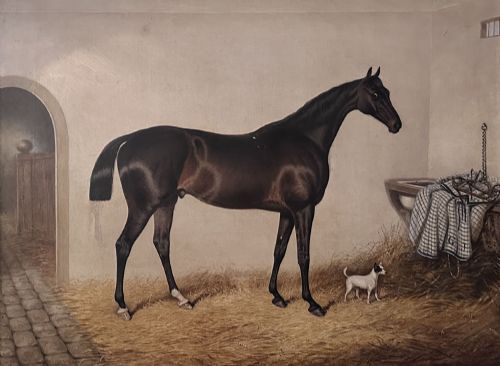
Secondary subjects encompass stable interiors, horse portraits and architectural views of long galleries. Figures range from domestic servants and children to cavaliers and aristocratic diners.
Are the frames original to the paintings?
Many pieces retain period framing, such as original giltwood, gesso or Hogarth frames dating from the nineteenth century. These surrounds match the artistic era of the canvas or paper within.
Framing materials typically consist of carved wood enhanced with gesso and gold leaf. Surviving original frames preserve the complete historical object.
How do I distinguish watercolours from oil paintings?
Watercolours utilise pigment suspended in water-based solution applied to paper, typically displayed under glass. They exhibit a translucent quality and fluid brush application.
Oil paintings use pigments bound in a drying oil applied to canvas, panel or board. Oils present a textured surface with opaque colour layering and greater depth.
What periods do these artworks represent?
The listings span the nineteenth century, including specific decades such as the 1860s, 1870s, 1880s and 1890s. Victorian and Edwardian stylistic influences predominate across the selection.
Dates range from mid-Victorian genre pieces to works executed around 1900 and into the early twentieth century. Realism and Gothic Revival currents also appear in the historical evidence.