
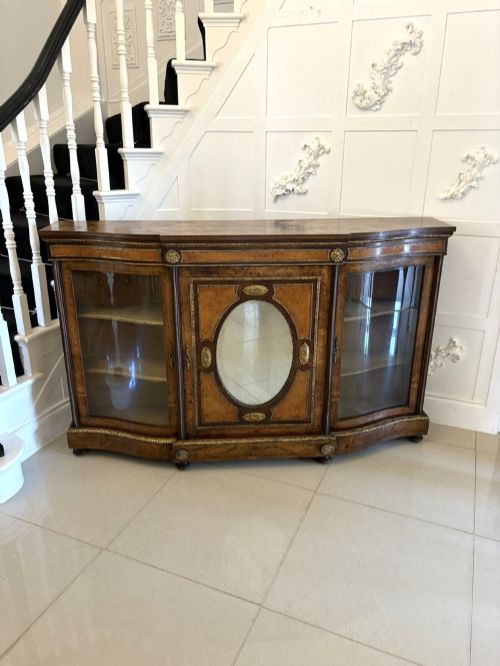
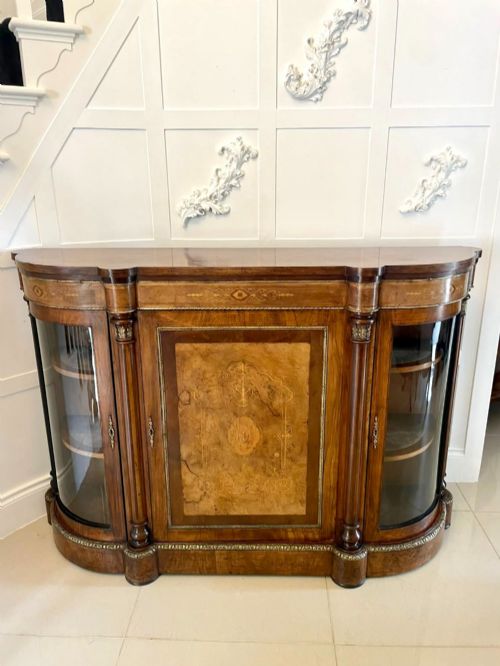
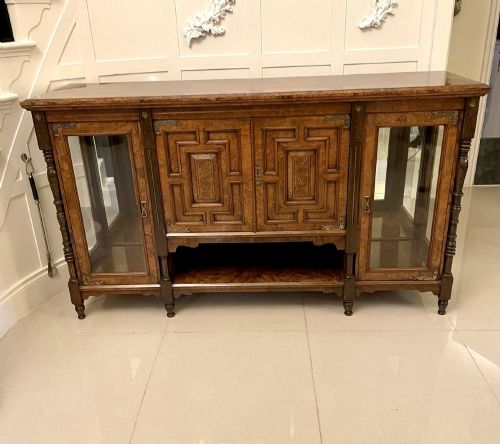
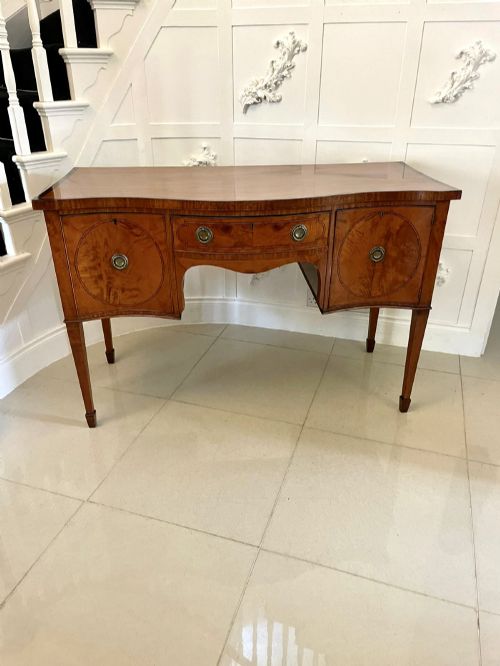


Victorian Inlay Buffet
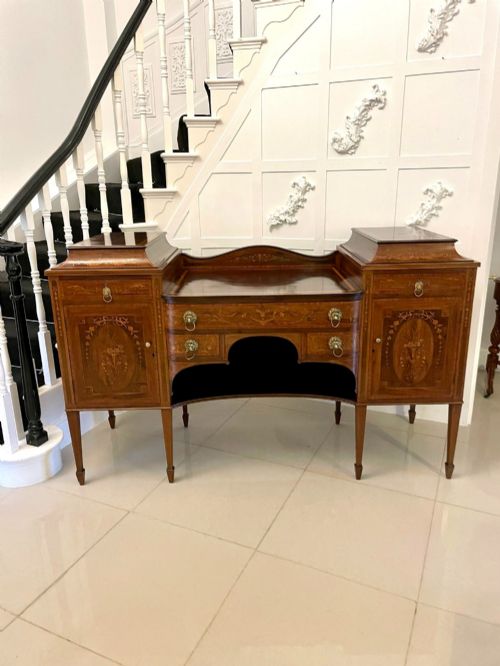
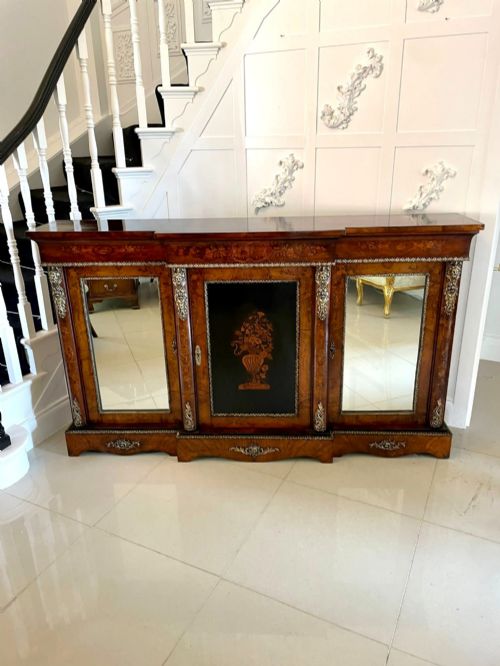
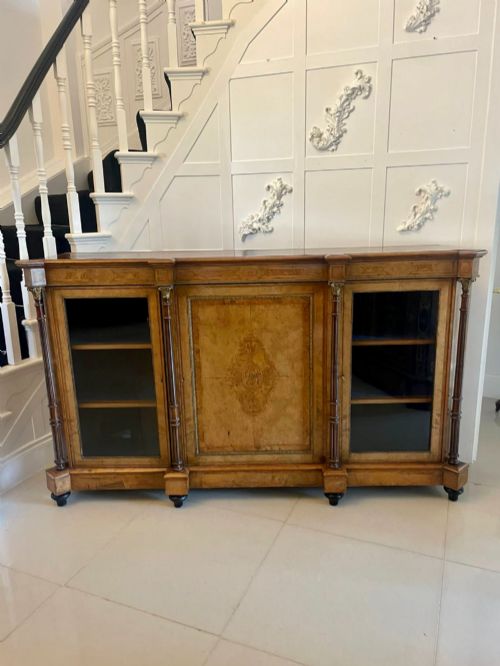
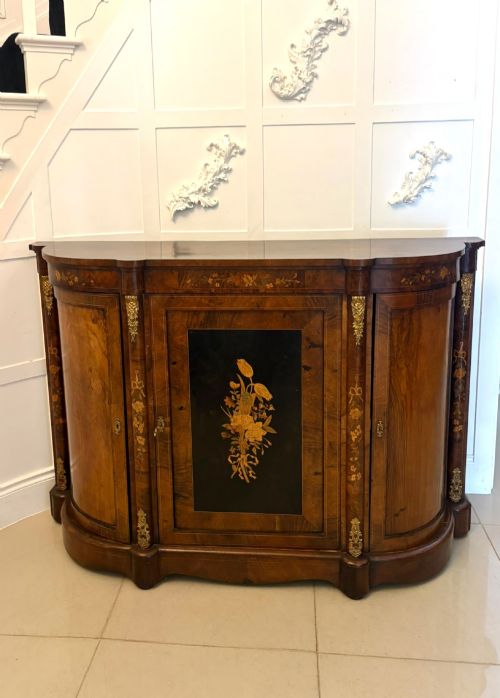
A victorian inlay buffet brings sculptural presence and meticulous marquetry to a room, offering both display surface and enclosed storage.
Victorian Inlay Buffet
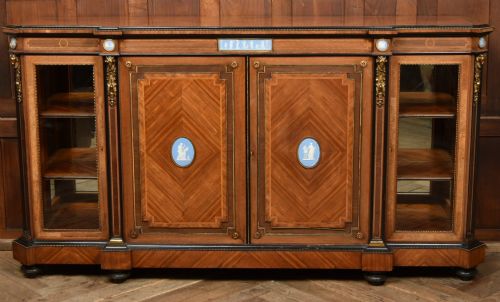
The pieces you are most likely to meet on this page feature burr walnut or figured walnut foundations, embellished with intricate boxwood inlay, floral marquetry, and often ormolu mounts. They range from bow-fronted and serpentine shapes to large four-door exhibition formats.
Materials and Construction
Cabinet makers utilised dense timbers such as walnut, mahogany, and pollard oak, laying fine burr veneers over foundational woods to create rich surface movement. Boxwood, satinwood, and mother of pearl were then hand-cut and fitted into precise recesses for floral and geometric marquetry patterns.
Metalwork played a structural and decorative role, with cast ormolu mounts securing corners and framing door panels. Many credenzas incorporate glazed central and side doors, backed by mirror plates or fitted with Sevres porcelain plaques.
Walnut is the dominant timber across these cabinets, frequently paired with boxwood, satinwood, ormolu, and glass.
Factors of Quality
The distinction between standard production and top-tier workshop execution rests in the depth of the marquetry and the choice of timber. Finer examples display tightly grained burr walnut with crisp, multi-toned floral inlays that sit perfectly flush with the surrounding wood.
Hardware and secondary materials also dictate standing. High-end cabinets incorporate heavy, fire-gilded ormolu mounts, mirrored back panels, and marble tops, whereas simpler versions rely solely on timber and minimal brass stringing.
Hewetsons London·Gillow·Shapland & Petter·Edwards and Roberts·Robson & Sons
The Victorian Inlay Buffet Glossary
- Credenza
- A low cabinet typically enclosed by doors, originating as a side table for holding food. Victorian iterations often feature curved glass side compartments flanking a central cupboard.
- Marquetry
- The art of applying pieces of veneer to a structure to form decorative patterns and pictorial designs. Cabinet makers used contrasting woods like boxwood and satinwood for tonal variation.
- Ormolu
- Gilded bronze mounts applied to furniture edges, feet, and friezes. This technique provided a bright metallic contrast to dark walnut and mahogany surfaces.
- Burr Walnut
- Wood taken from a tree growth or burl, yielding swirling, highly figured grain patterns. It was the favoured timber for high-status Victorian cabinet work.
Victorian Inlay Buffet: Frequently Asked Questions
How do I clean a walnut credenza?
Dust surfaces regularly with a soft, dry cloth to prevent particulate accumulation in the wood grain and marquetry recesses.
Avoid commercial silicone polishes, applying a traditional beeswax sparingly instead to maintain the timber's natural lustre without softening the polish.
Where should I place a side cabinet?
Position these substantial pieces against interior walls away from direct sunlight and heat sources to prevent timber warping and veneer cracking.
Ensure the floor is level so that doors and curved glass panels align properly within their frames.
What is the difference between a credenza and a sideboard?
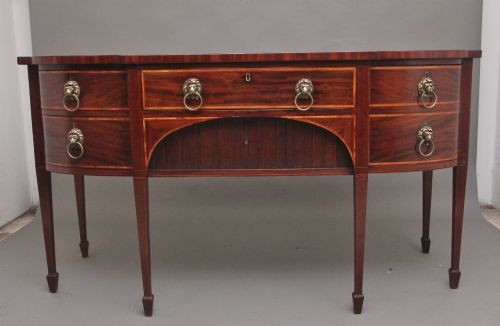
Credenzas generally feature low profiles with enclosed glass or wooden side cabinets, originally designed for display and serving.
Sideboards often incorporate drawers and larger cupboard configurations intended primarily for dining room storage.
How can I date a Victorian inlaid cabinet?
Examine the timber species, carcass construction methods, and the style of the marquetry motifs against known nineteenth-century design phases.
Makers' stamps, brass locks, and paper trade labels found inside drawers provide the most reliable chronological markers.