
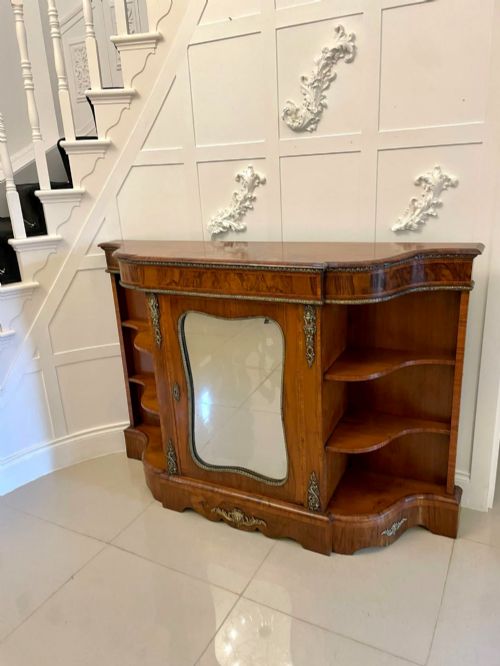
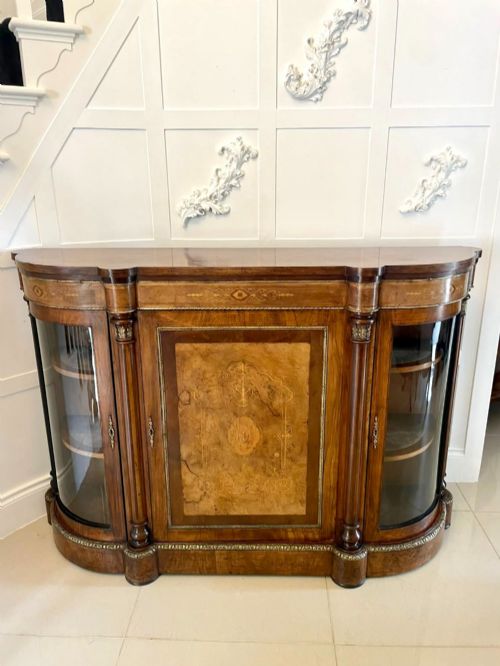

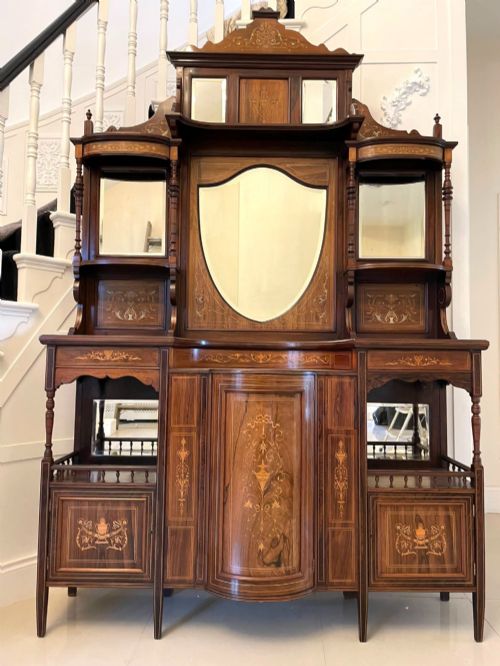
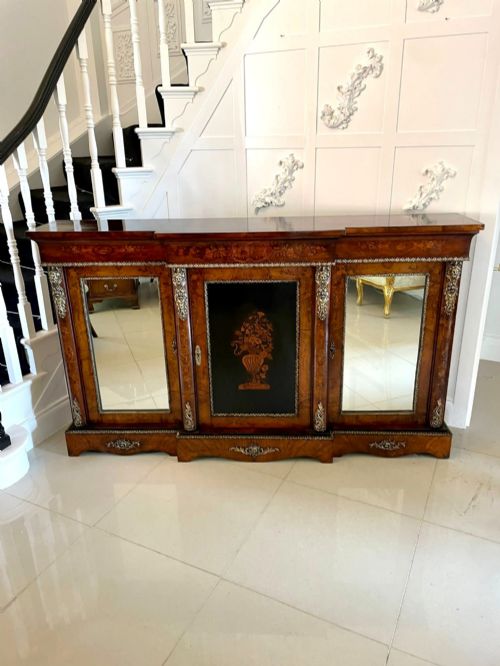
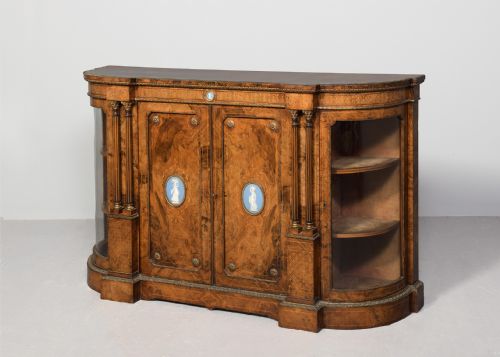

Victorian Parlour Sideboard
A victorian parlour sideboard brings formal nineteenth-century reception rooms to life with figured timbers and glass display doors.
Victorian Parlour Sideboard
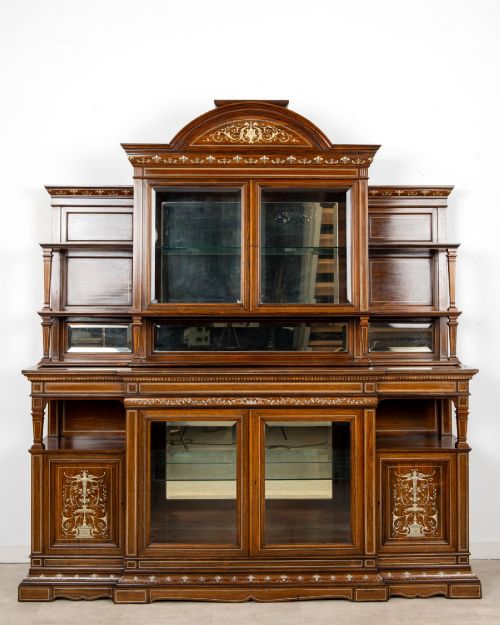
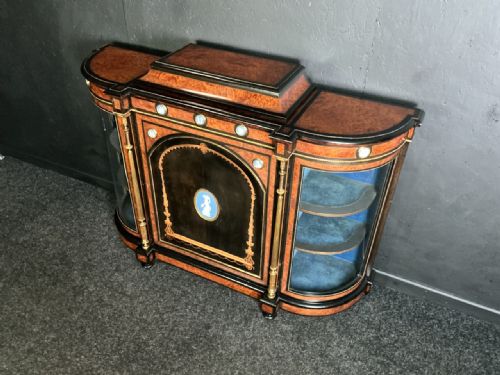
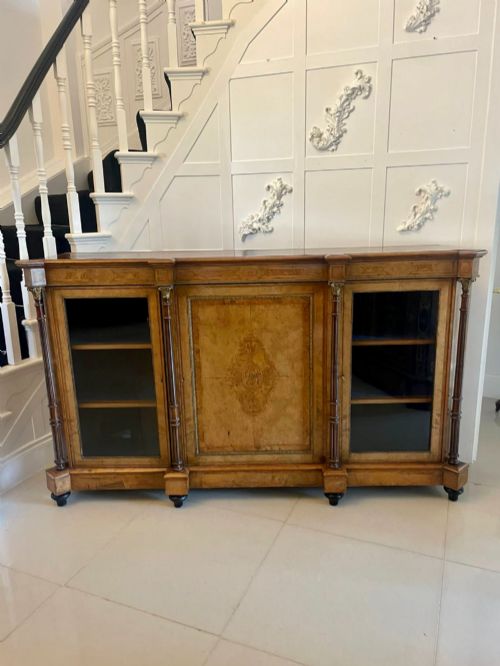
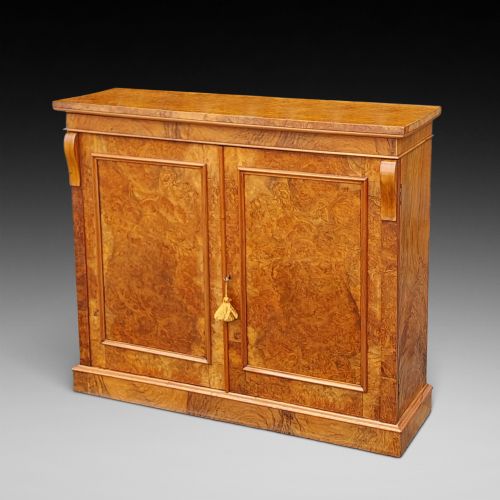
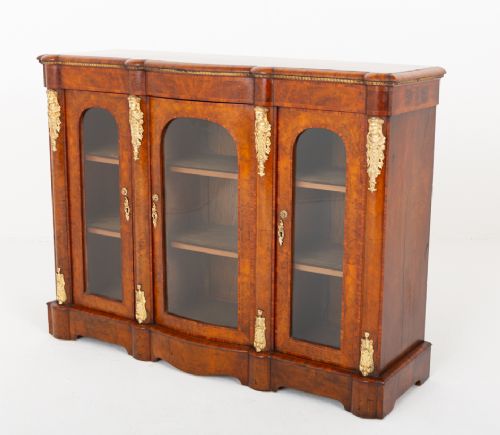
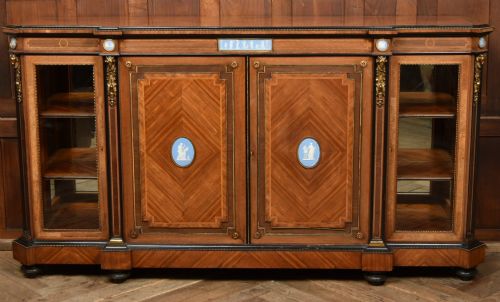
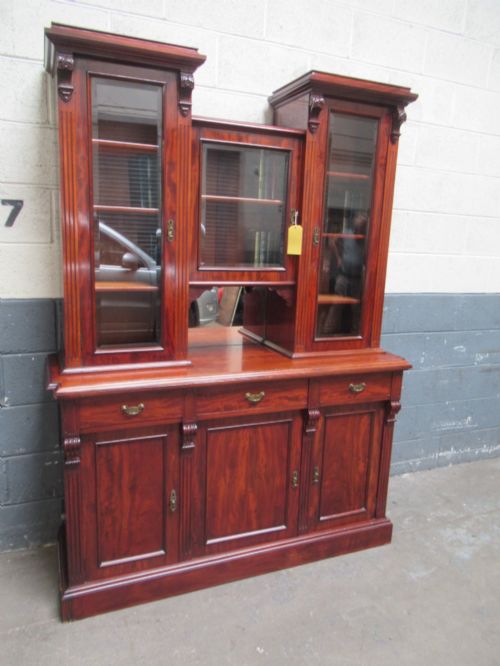
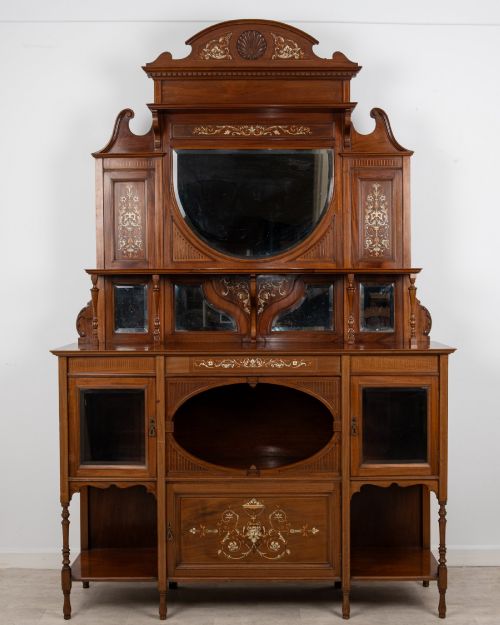
When you search for a victorian parlour sideboard, you encounter low display cabinets, credenzas, and mirrored chiffoniers designed for formal reception rooms. These pieces served to display ornaments behind glass while concealing other items within closed cupboards.
The version you are most likely to meet on this page is constructed from burr walnut or rosewood, frequently shaped with bow fronts or serpentine sides. Makers deployed mirrors and glazed doors to catch the gaslight of a nineteenth-century interior.
Originating across the nineteenth century, these items span mid-Victorian production through to late aesthetic movement and revival styles. Their forms bridge the gap between heavy dining furniture and delicate salon pieces.
Materials and construction
Cabinetmakers selected figured timbers such as burr walnut, mahogany, and rosewood, laying choice veneers over stable carcases. Marquetry inlays and contrasting woods added decorative detail to door panels and friezes.
Ormolu mounts, brass galleries, and glazed panels completed the construction of these elaborate cabinets. Interior fitments occasionally included shelves or specialist writing drawers lined with finer timbers.
Some credenzas hide a secret fitted writing drawer behind the central frieze.
Judging quality and execution
Excellence in these cabinets rests upon the choice of timber figure and the precision of the marquetry inlay. Cabinets designated for exhibition quality display finer cast ormolu mounts and more complex serpentine shaping.
The integration of glass doors, internal mirrors, and functional fitted drawers indicates a higher grade of workshop production. Simpler mahogany and walnut pieces rely on proportion and timber grain rather than elaborate enrichment.
Collinson & Lock·Garnett & Sons
The Victorian Parlour Sideboard Glossary
- Credenza
- A low cabinet enclosed by doors, often featuring glazed central sections and curved side cupboards. This form became a staple of Victorian drawing rooms.
- Marquetry
- Decorative patterns formed by inserting thin pieces of wood, ivory, or metal into a veneered surface. Craftsmen utilised this technique to create floral and geometric motifs.
- Ormolu
- Gilded bronze mounts applied to furniture for decorative enrichment. These mounts frame panels and highlight architectural corners.
- Chiffonier
- A compact sideboard fitted with shelves or a mirrored back. The form evolved during the nineteenth century to store tableware and display decorative objects.
- Aesthetic Movement
- A late nineteenth-century design style emphasising simplicity, Japanese influence, and ebonised finishes. Cabinets from this movement break away from traditional revival decoration.
Victorian Parlour Sideboard: Frequently Asked Questions
What is a credenza?
A credenza is a low cabinet designed for nineteenth-century reception rooms to display ceramics and books behind glass doors.
These pieces typically feature curved ends and central cupboards, standing low enough to place ornaments on top.
How do I date a cabinet?
Dating relies on timber choice, hardware, and stylistic markers such as marquetry patterns or ebonised finishes. Mid-century examples favour burr walnut, while later decades introduce aesthetic movement designs.
Construction methods inside the drawers and the presence of mirror backs also help narrow the decade of manufacture.
Where were these placed?
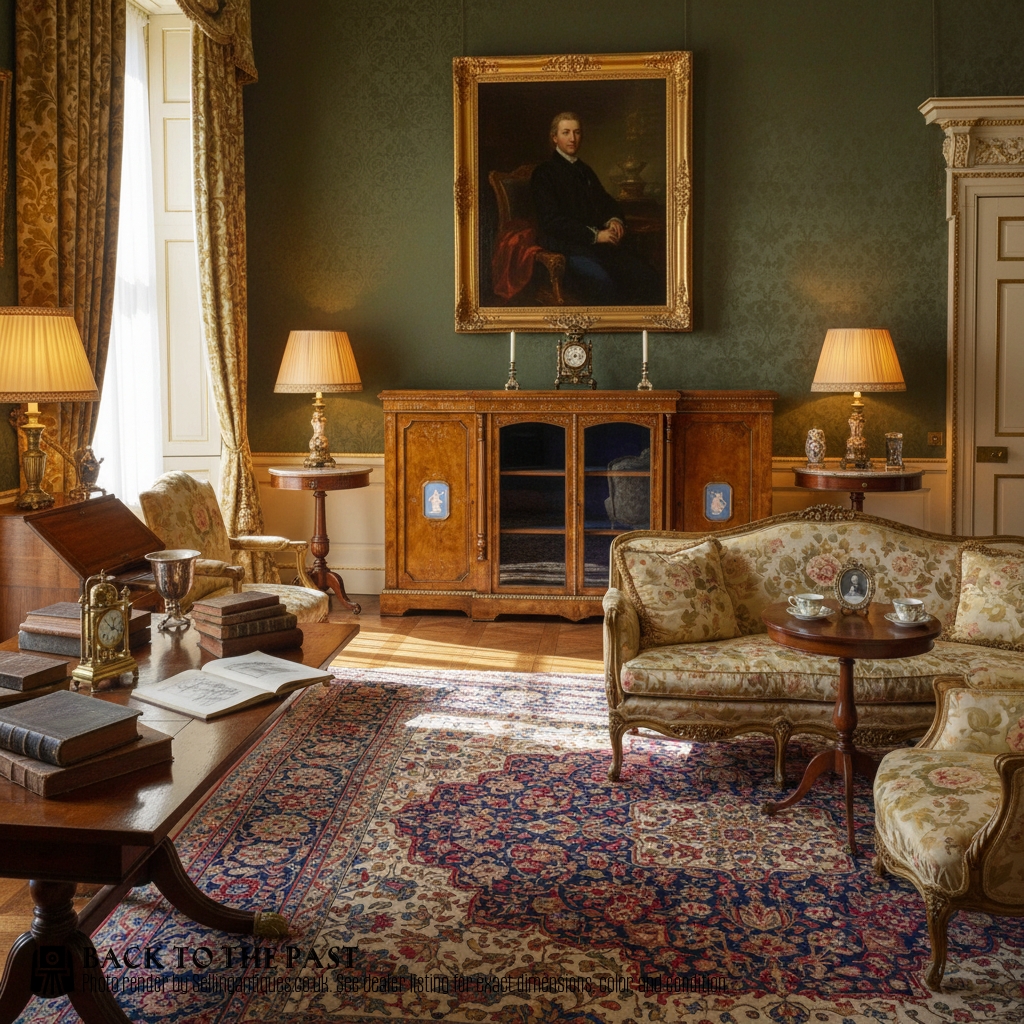
They stood against the main walls of Victorian parlours and drawing rooms to anchor the room's decorative scheme.
The mirrored backs reflected candlelight and gaslight, brightening formal entertaining spaces.
How do I clean burr walnut?
Maintenance requires gentle dusting with a dry cloth and occasional application of appropriate furniture wax to nourish the grain.
Harsh chemical cleaners and excessive moisture must be avoided to protect the delicate veneer and French polished finish.