


Victorian Glazed Display Sideboard
A victorian glazed display sideboard brings warmth and proportion to a room, offering both shelving for display and enclosed storage.
Victorian Glazed Display Sideboard
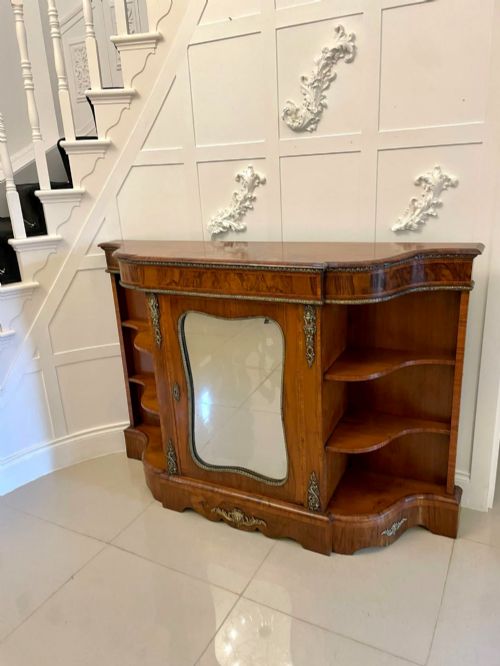
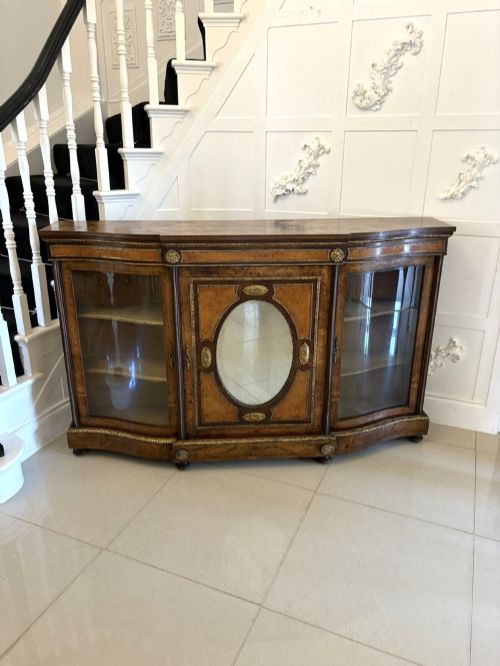
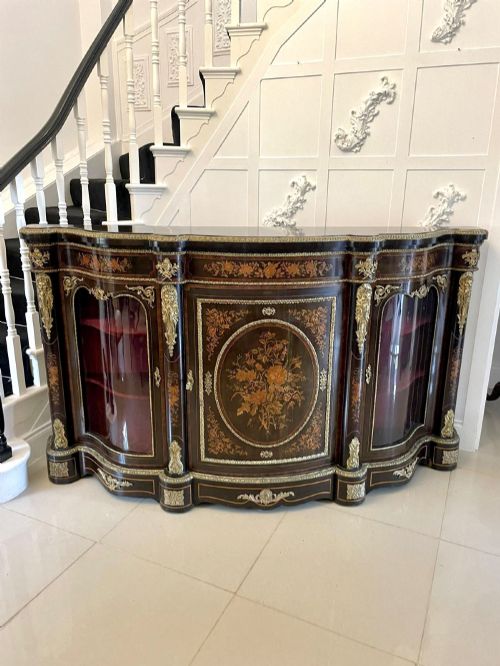
A victorian glazed display sideboard encompasses low credenzas, side cabinets, pier cabinets, and larger bookcase combinations designed to display ceramic or glass objects behind glass doors.
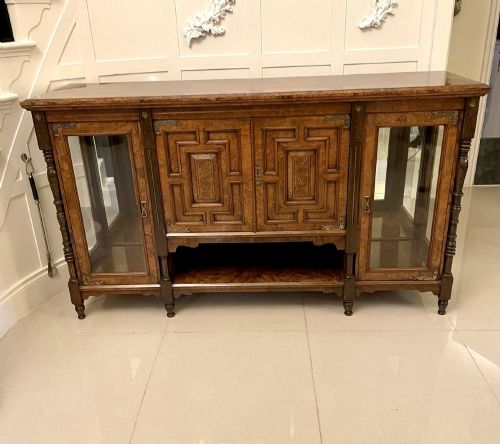
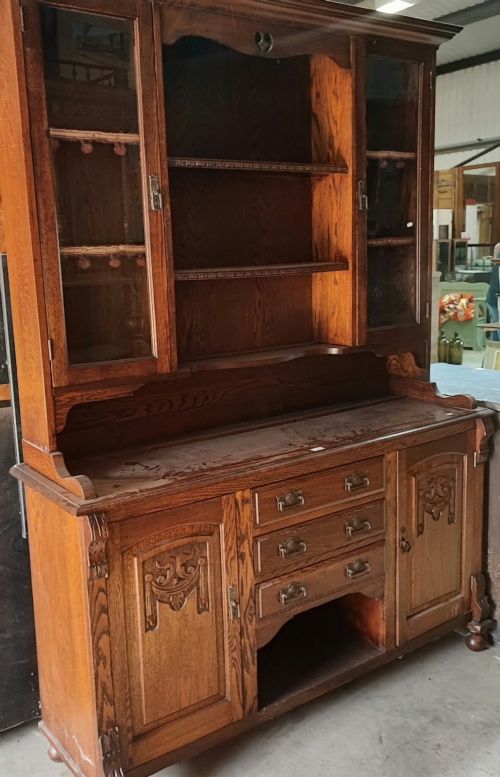
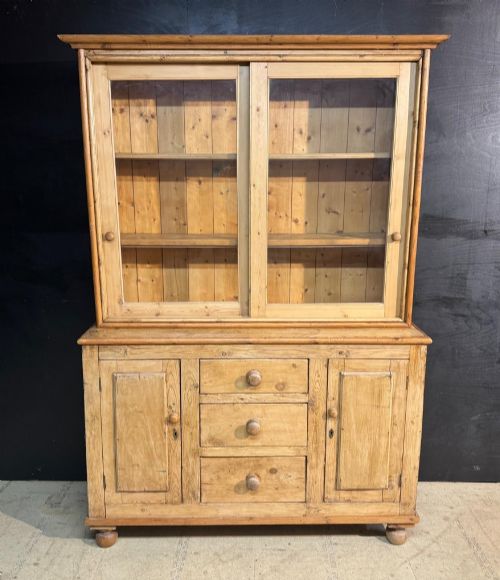
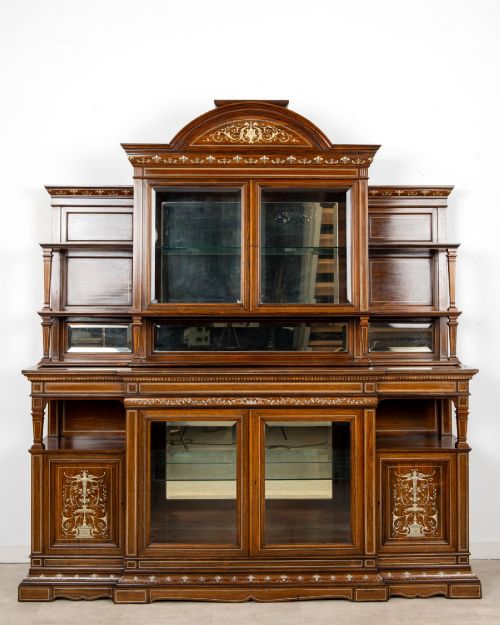
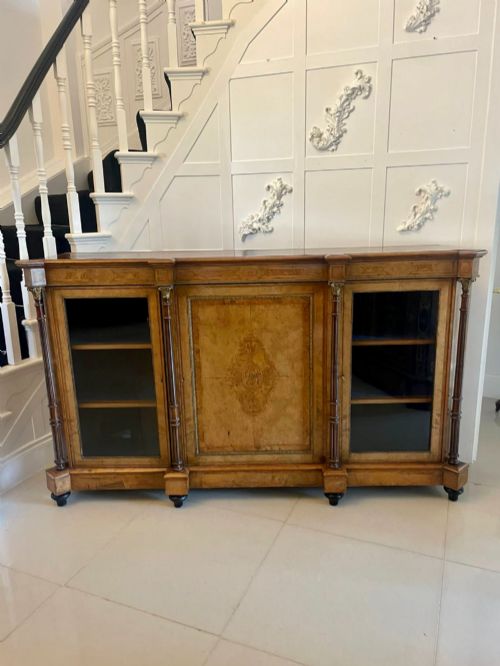
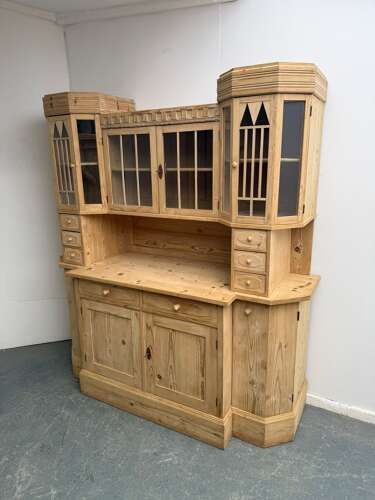
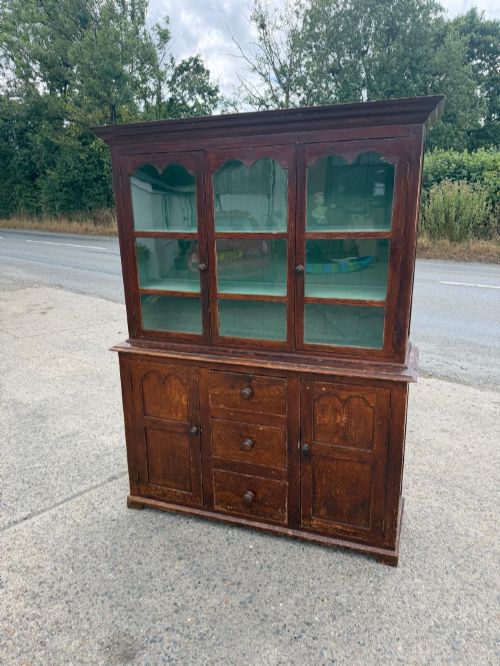
The selections span the nineteenth century, featuring credenzas in burr walnut alongside kitchen dressers in pine and oak.
Makers utilised architectural forms from French Revival, Gothic Revival, and Arts and Crafts movements to ornament these large interior pieces.
Materials and construction
Carpenters built carcasses in mahogany, walnut, oak, and pine, frequently applying burr walnut or satinwood veneers to prominent surfaces.
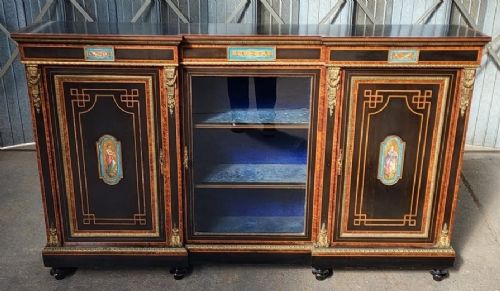
Decorations incorporate brass or ormolu mounts, boxwood and ebony inlay, and porcelain plaques set into the timber frame.
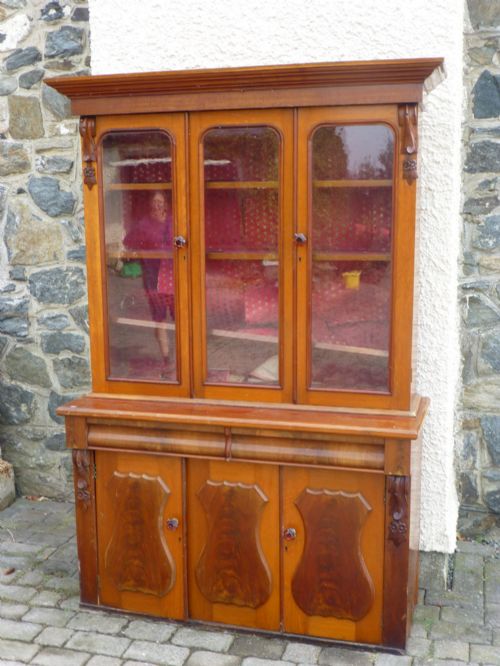
Glass panels are fitted into doors of varying shapes, from serpentine fronts to straight three-door configurations.
Listings feature nineteenth-century woods including mahogany, rosewood, burr walnut, and tiger oak.
Distinctions in quality
Superior examples display careful selection of burr walnut or marquetry veneers, matching grain patterns across doors and panels.
Fine mountings in ormolu and detailed hand-carved mahogany elements separate standard utility items from exhibition pieces.
Collinson & Lock·Edwards & Roberts
The Victorian Glazed Display Sideboard Glossary
- Credenza
- A low cabinet, frequently featuring glazed central or side doors flanked by curved cupboards, used for storage and display. It forms a primary category within these selections.
- Ormolu
- Gilt bronze mounts cast and chased with foliage or scrollwork, applied to cabinet corners and friezes. These enrich the timber surface.
- Marquetry
- Veneered patterns formed by fitting together pieces of coloured woods, boxwood, and ivory to create floral or geometric pictures. It appears on cabinet doors and panels.
- Pier cabinet
- A narrow glass-fronted cabinet designed to stand against the wall space between windows. These display precious items at eye level.
- Breakfront
- A piece of furniture where the central section projects forward from the flanking wings. This creates depth and shadow across the facade.
Victorian Glazed Display Sideboard: Frequently Asked Questions
Where should a credenza be placed?
A credenza suits dining rooms or large sitting rooms where its display capacity and surface area serve practical uses.
Position it against a principal wall away from direct sunlight to protect timber veneers and polished finishes.
How do I clean burr walnut?
Dust timber surfaces regularly with a soft, dry cloth to prevent accumulation in carved or inlaid crevices.
Apply a microcrystalline wax periodically to nourish the grain without building up heavy residues.
What is the difference between a credenza and a dresser?
A credenza is typically a low, formal cabinet featuring glass doors and ormolu mounts designed for sophisticated reception rooms.
In contrast, a kitchen dresser combines a lower cupboard base with open or glazed shelving above for utilitarian storage.
How are nineteenth century woods identified?
Walnut and burr walnut exhibit distinctive swirling grain patterns, while mahogany offers a deeper reddish-brown tone.
Pine and oak appear frequently in vernacular kitchen dressers and country pieces.