
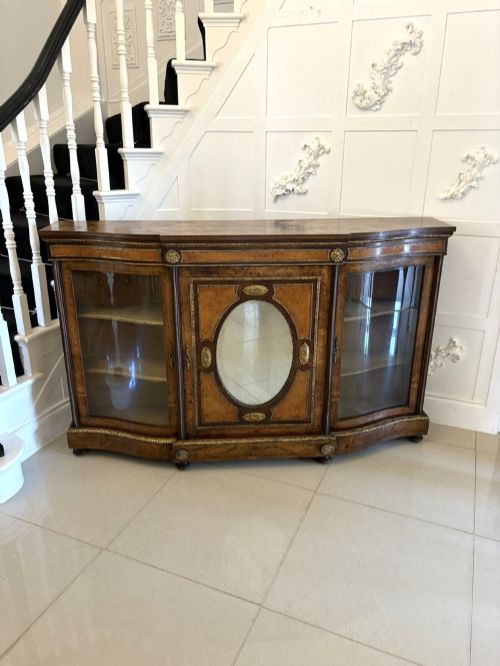
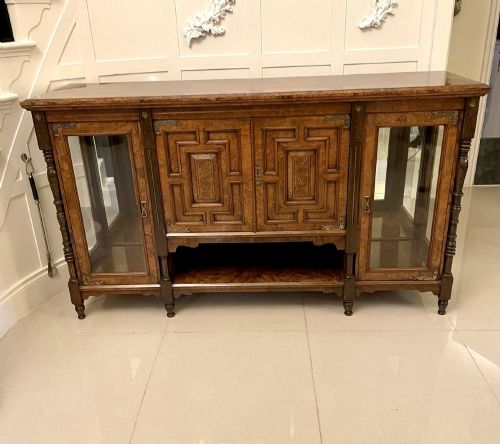
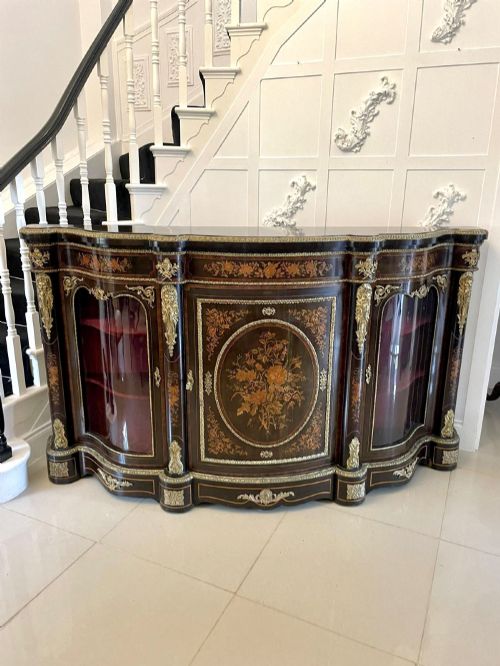
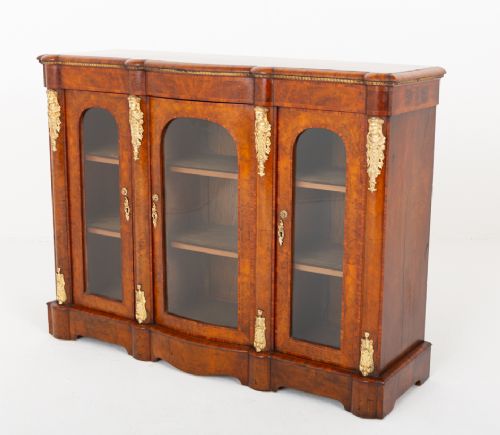


Glass Door Credenza Sideboard
Glass door credenza sideboard pieces are low-slumed display cabinets built to show off valuables while anchoring a formal room.
Glass Door Credenza Sideboard
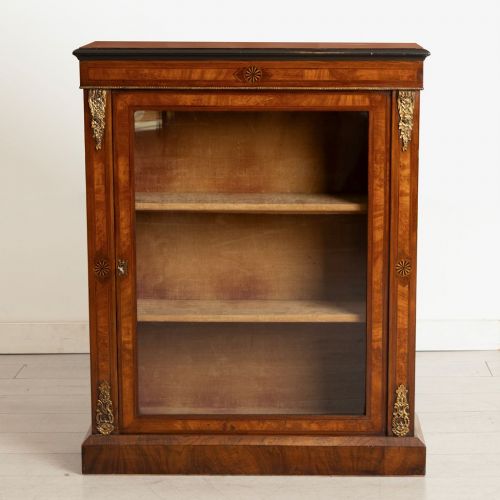
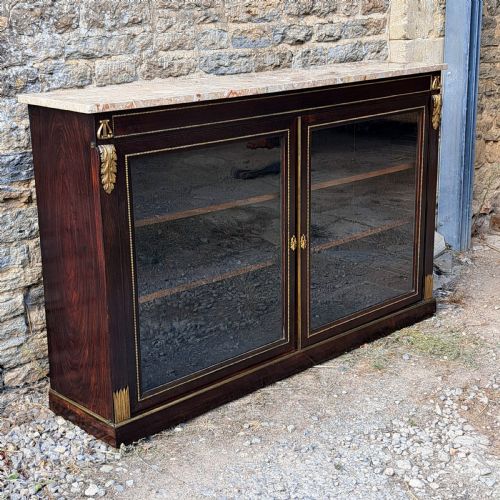
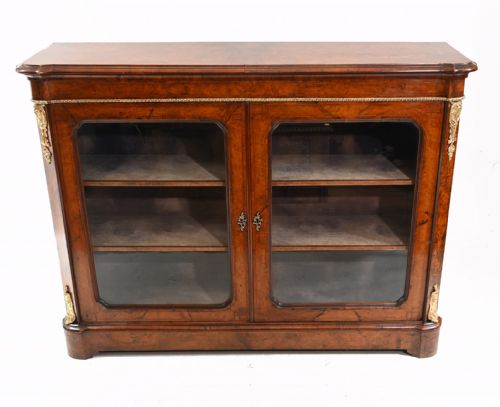
A glass door credenza sideboard brings together low-profile storage and glazed display space, most commonly emerging from Victorian workshops in figured timbers.
The pieces on this page span the nineteenth and early twentieth centuries, drawing heavily on Victorian, Edwardian, and Georgian cabinet-making traditions.
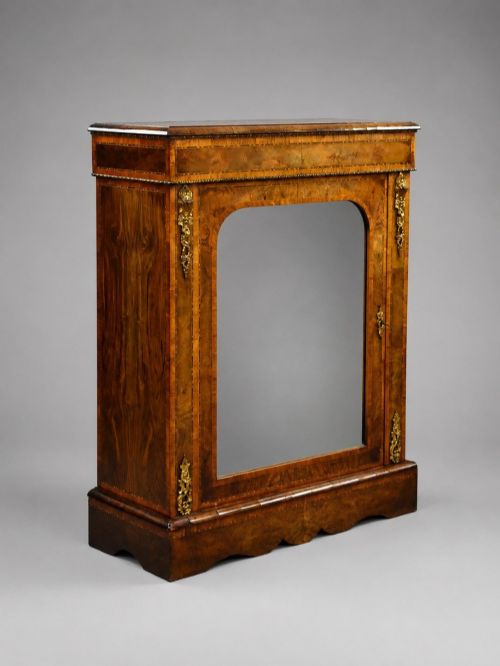
Buyers will frequently encounter burr walnut and rosewood variations shaped with serpentine fronts, mirror backs, and glazed side compartments.
Materials and Technique
Cabinet-makers relied on rich veneers such as burr walnut, rosewood, and amboyna applied over sturdy carcases, often enhanced by intricate floral marquetry inlay.
Gilt bronze or ormolu mounts punctuate the timber surfaces, framing glass doors and highlighting the architectural curves of serpentine and breakfront bodies.
Mirrors set into the backboards bounce light through glazed display chambers, while brass details complete the hardware on nineteenth-century examples.
Burr walnut timbers provide swirling natural patterns so hypnotic that no two cabinet doors share the exact same visual rhythm.
Judging Quality
The refinement of the timber figure and the precision of the marquetry inlay set the finest examples apart from plainer commercial production.
Quality rests equally in the crispness of the cast ormolu mounts and the smooth integration of curved glass doors within serpentine timber frames.
The Glass Door Credenza Sideboard Glossary
- Credenza
- A low cabinet or sideboard designed for display and storage, often featuring glazed central doors flanked by curved side compartments.
- Marquetry
- Decorative patterns formed by fitting together thin slices of various coloured woods and veneers into a prepared surface.
- Ormolu
- Gilded bronze mounts and ornaments applied to furniture frames to provide structural contrast and rich metallic detail.
- Serpentine
- A curved furniture front shaped in a continuous sweeping line that undulates outward and inward.
- Burr Walnut
- Timber taken from walnut tree growths, valued for its swirling, highly figured grain patterns.
Glass Door Credenza Sideboard: Frequently Asked Questions
How were these credenzas used historically?
These low cabinets served in formal dining rooms and parlours to store silver, linen, and glassware while displaying prized porcelain behind glass doors.
Their flat top surfaces also provided a convenient stage for serving food or arranging decorative ornaments during gatherings.
Where should I place a credenza sideboard?
A glass door credenza sideboard suits living rooms, dining spaces, or wide hallways where its low profile allows wall art or mirrors to hang comfortably above.
Because many feature mirrored backs and glazed panels, positioning them near natural light helps illuminate whatever objects you choose to display inside.
How do I identify a Victorian piece?
Nineteenth-century pieces often feature rich burr walnut veneers, intricate marquetry, and cast ormolu mounts fixed around glazed or mirrored components.
They frequently adopt revived classical or rococo forms with serpentine fronts and heavy internal timber construction characteristic of the period.
What is the difference between a credenza and a pier cabinet?
A credenza is typically a long, low sideboard featuring multiple doors, sometimes with curved glazed ends designed to stand against a wide wall.
A pier cabinet is generally a narrower, upright display piece built to fit the narrow wall space between windows.