
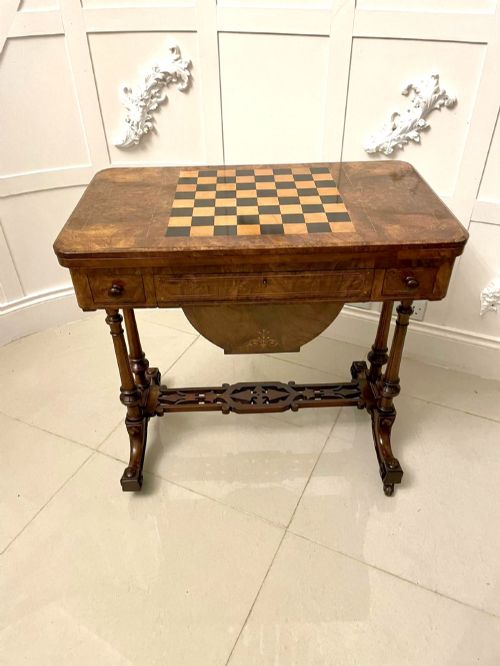
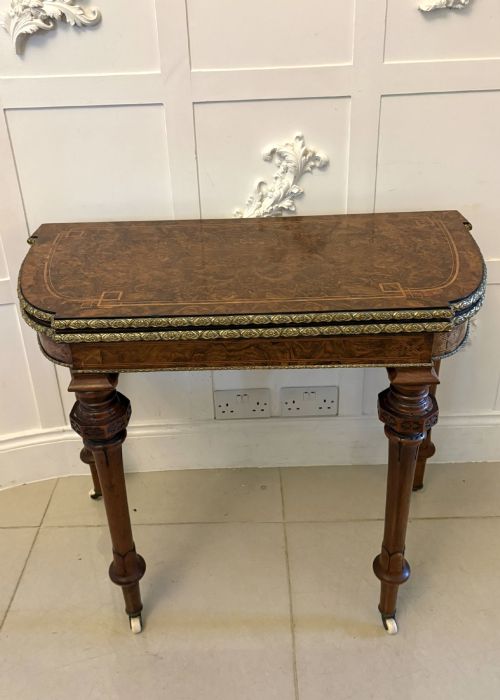
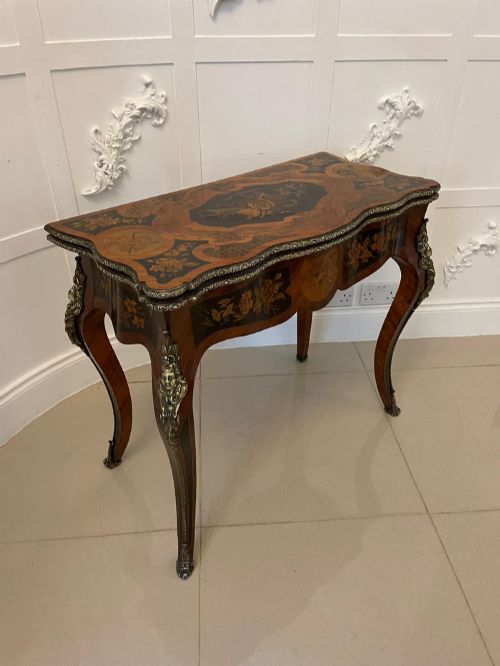


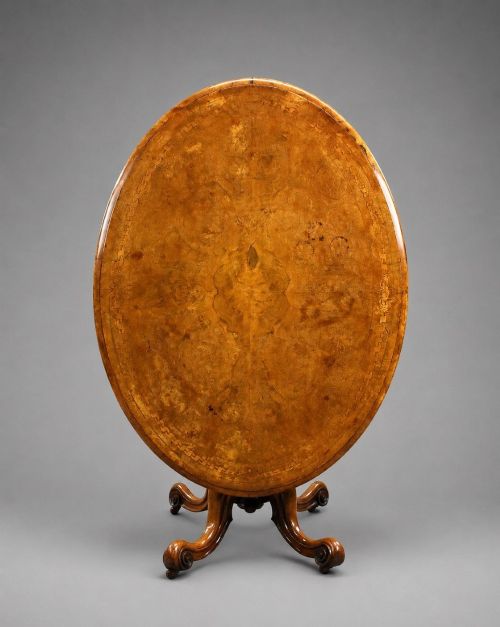
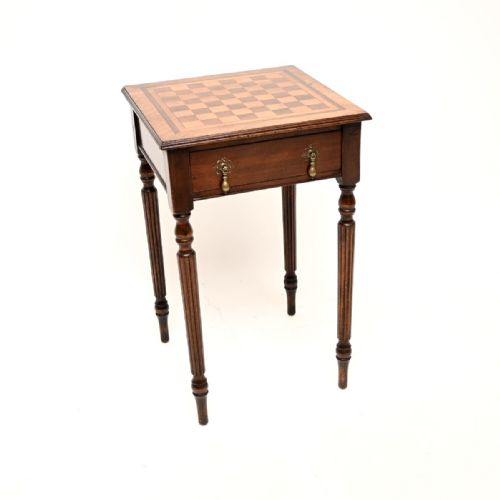
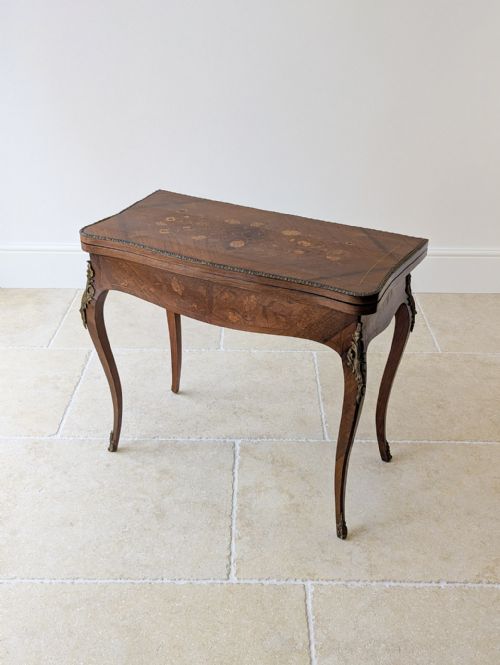

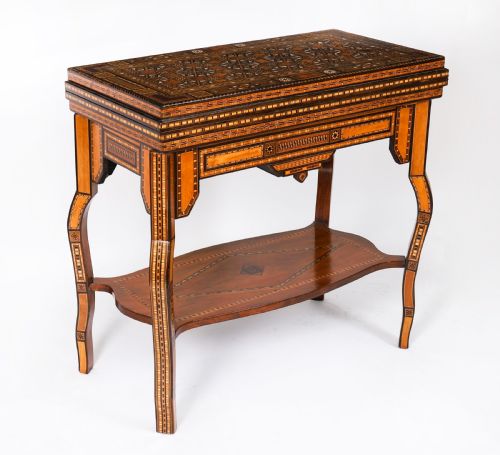
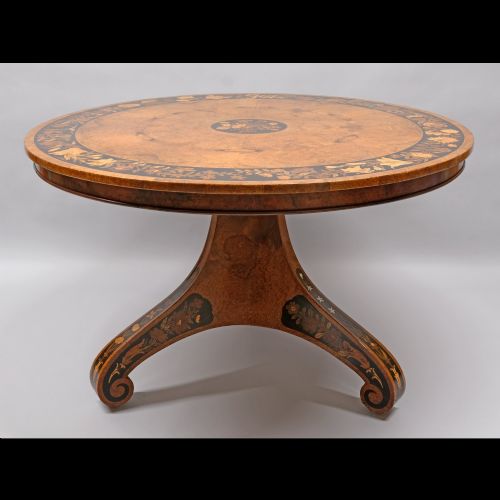
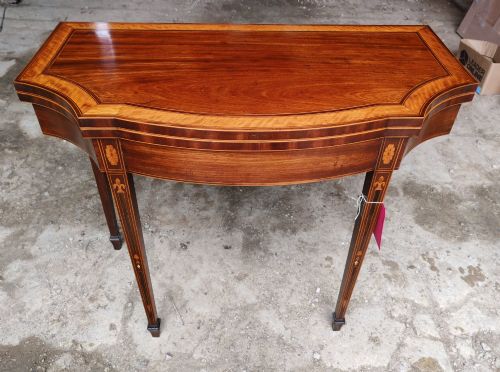
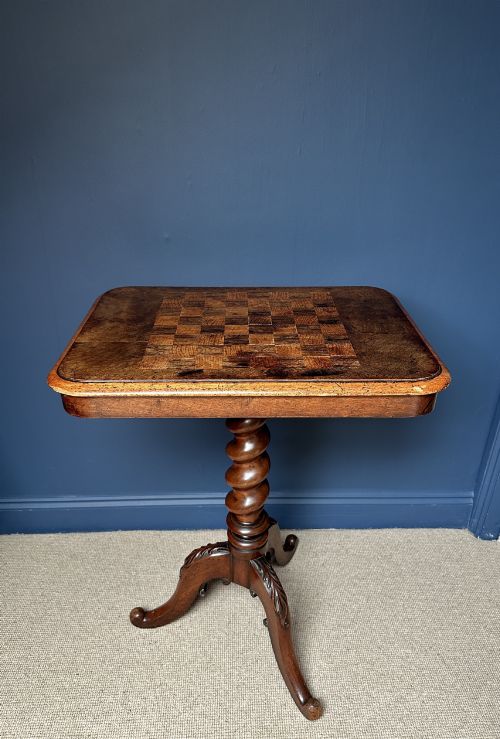
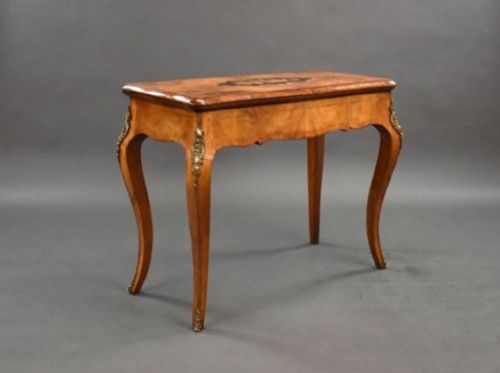


Victorian Inlaid Card Table
A victorian inlaid card table brings ingenious dual-purpose design into a room, offering a polished timber top that opens to reveal a baize-lined surface for cards.
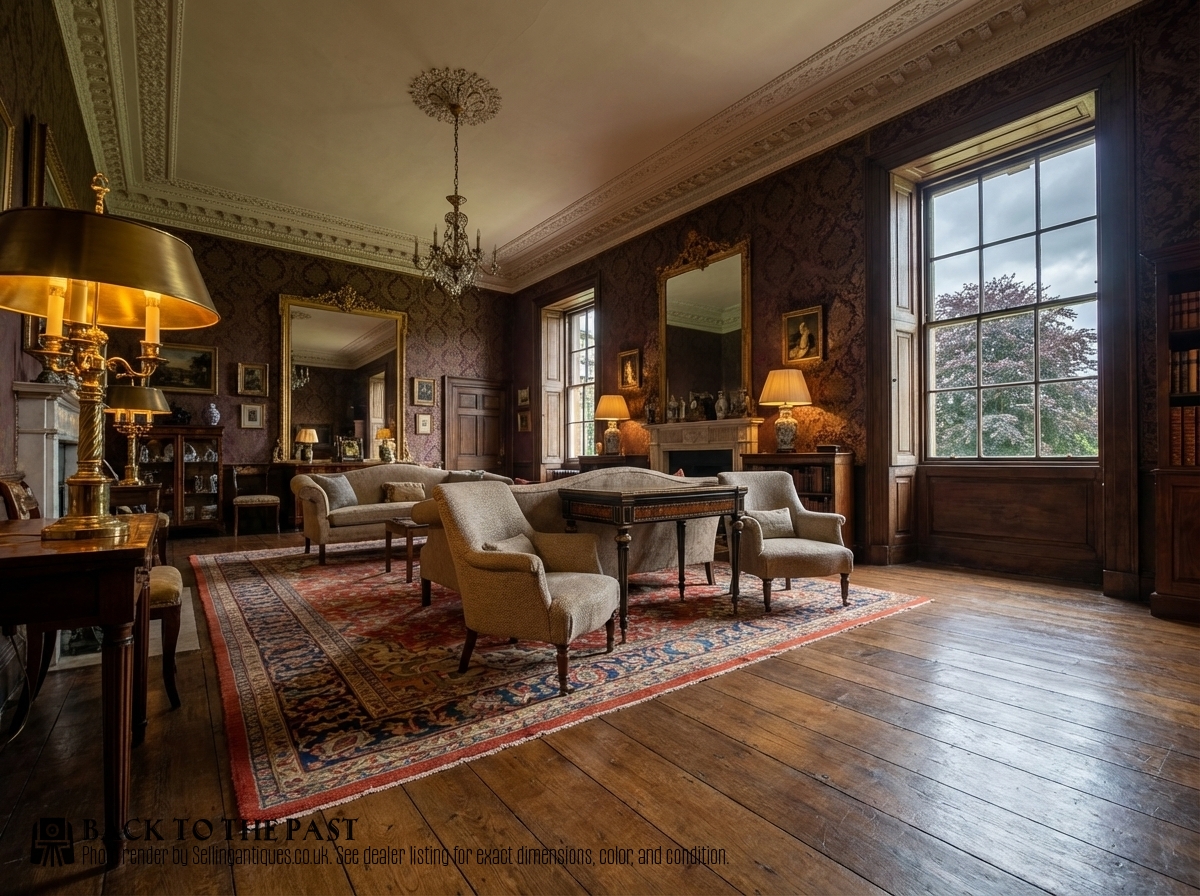
Victorian Inlaid Card Table
A victorian inlaid card table combines functional ingenuity with decorative cabinetmaking, typically designed with a folding, swivel or envelope top that conceals a games surface beneath. These pieces originate predominantly from the nineteenth century, spanning eras from early Victorian walnut examples to later rosewood envelope designs.
The most common formats found here are serpentine or demi-lune console tables that double as occasional furniture when closed. Makers also utilised walnut, burr walnut and mahogany to construct folding game and work tables intended for drawing rooms.
Materials and Technique
Cabinetmakers constructed these tables using solid timber frames faced with decorative veneers such as burr walnut, rosewood, kingwood and mahogany. Wood inlay and floral marquetry decorated the tops and friezes, often incorporating exotic woods alongside satinwood stringing.
Many examples incorporate brass hinges, swivel mechanisms and cast ormolu mounts to frame the timber borders. Ebonised wood and Tunbridge ware details also appear on specific revival and aesthetic movement pieces.
Victorian Inlaid Card Table Retail Price Guide 2026
Typical asking prices for victorian inlaid card table among the pieces listed under this phrase on Sellingantiques today, from the lower quarter to the upper quarter. They describe what is for sale here now, not the wider market.
Card tables often conceal hidden compartments that once stored small ivory counters for keeping score during Victorian parlour games.
Judging the Standard
Quality rests upon the selection of the timber veneers and the precision of the marquetry inlay. Figured burr walnut with rich natural grain patterns and crisp floral motifs distinguishes superior workshop production.
Engineering of the folding action and the stability of the swivel mechanism define the structural standard. High-grade pieces maintain tight joints and flush surfaces whether closed as console tables or opened for play.
Holmes Baldock·Maple and Co·Edwards and Roberts
The Victorian Inlaid Card Table Glossary
- Marquetry
- Decorative patterns formed by fitting together thin slices of wood veneer into timber surfaces. This technique creates complex floral or geometric designs across the folding top.
- Burr Walnut
- Timber taken from a tree growth displaying distorted, highly figured grain patterns. Cabinetmakers prized this material for its rich texture.
- Envelope Top
- A ingenious folding mechanism where four triangular flaps rotate and fold open like an envelope. This design reveals a baize-lined interior.
- Ormolu
- Gilded bronze mounts applied as decorative trim around the edges and friezes. French-influenced pieces frequently utilise these metal ornaments.
- Demi-lune
- Half-moon shape characteristic of console tables designed to sit flush against a wall. These tables open into full circles for card games.
Victorian Inlaid Card Table: Frequently Asked Questions
How do these tables open?
Most variants utilise a swivel-top mechanism that pivots on the base before folding flat to double the surface area. Envelope versions feature four rotating triangular flaps that unfold outwards from the centre.
Supporting legs or concertina frames swing out simultaneously to secure the weight of the open leaf for evening card games.
What is inside the table?
Opening the top typically reveals a recessed compartment lined with green or red baize, felt or leather designed for card playing. Some variations include built-in wells for counters, chips or stationery.
Work and sewing variants often incorporate shallow storage boxes or silk catchment bags beneath the folding lid.
Where should I place it?
These pieces function ideally against a drawing room or living room wall as console or side tables when closed. Their decorative marquetry tops remain fully visible in this position.
Opening the table requires clearance on all sides, making them suitable as occasional centre tables when entertaining guests.
How do I distinguish walnut from rosewood?
Walnut displays warm honey and brown tones with swirling grain patterns and characteristic burr figuring. It forms the basis of most mid-century Victorian examples.
Rosewood presents a heavier, darker reddish-brown appearance with distinct dark streaks, frequently seen on later envelope tables.