

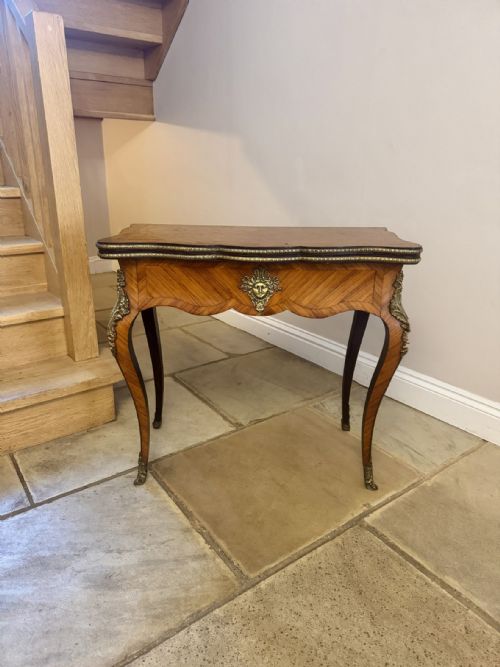
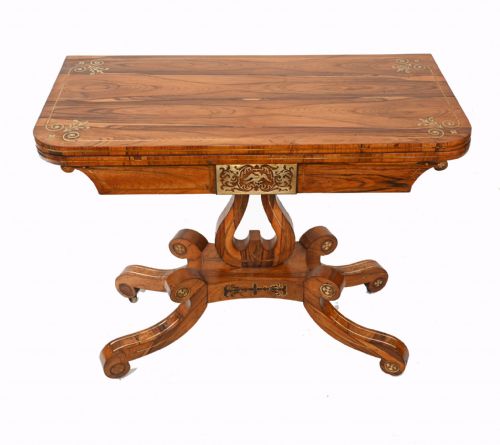
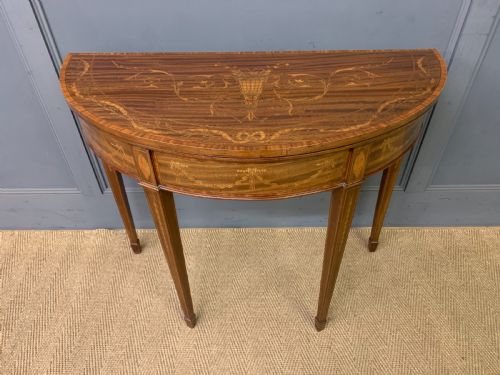


Marquetry Fold Over Table
A marquetry fold over table is a dual-purpose piece that transforms from a compact console into a surface for cards or tea.
Marquetry Fold Over Table
A marquetry fold over table serves as a versatile item of furniture, appearing frequently as a card or games table across this selection. These pieces date across the eighteenth, nineteenth, and early twentieth centuries, spanning periods from George III and Regency to Victorian and Edwardian reigns.
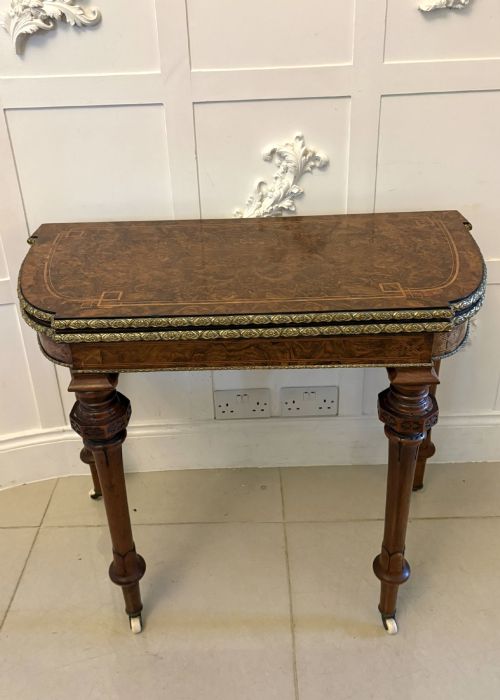
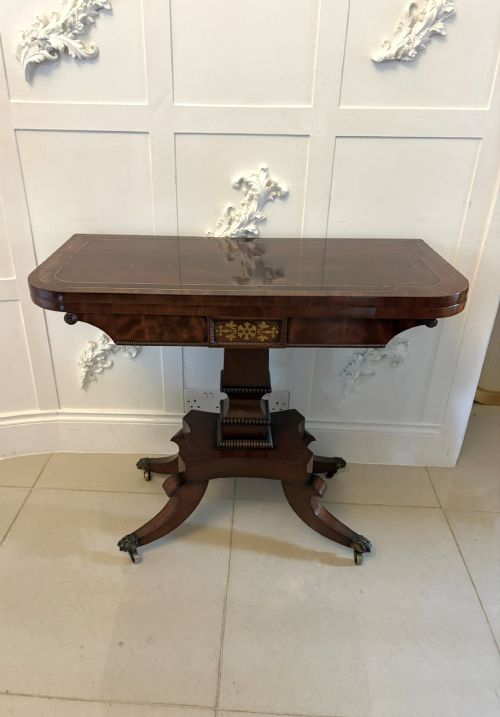
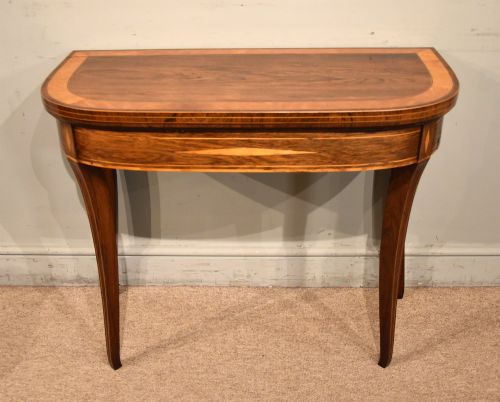
The form relies on a hinged top that rotates and folds outward, doubling the surface area while supported by a swing leg or the pivoting carcase itself. Examples range from English mahogany and rosewood designs to continental Dutch and French variations in walnut, kingwood, and burr walnut.
Makers and workshops constructed these tables for formal reception rooms and drawing rooms, where entertaining guests demanded flexible furniture. The evidence shows styles extending from simple Sheraton and Georgian lines to elaborate French Rococo Revival and Louis XV interpretations.
How They Were Made
Cabinet makers utilised dense native timbers such as mahogany, walnut, and rosewood for the structural carcasses and primary surfaces, often selecting burr or figured veneers for visual depth. Exotic woods including kingwood, satinwood, and amboyna provided contrasting tones for detailed inlay work.
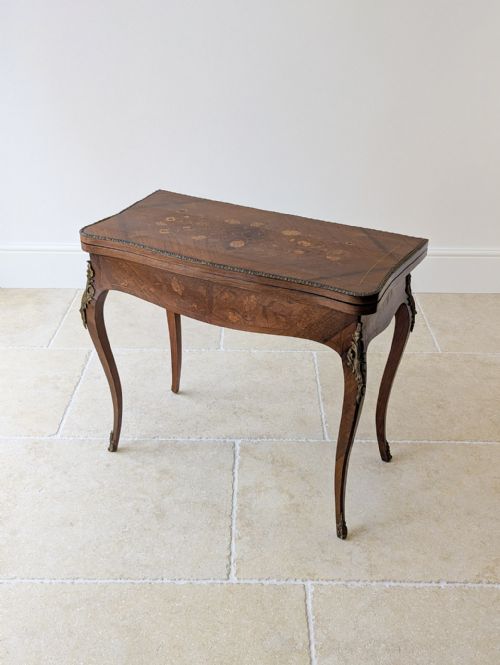
Marquetry and parquetry techniques involved cutting thin veneers of various woods, brass, or mother-of-pearl to form pictorial motifs, floral sprays, or geometric patterns set into the background timber. Gilt bronze or ormolu mounts frequently framed the edges, corners, and apron mounts on high-status French and English pieces.
Several tables manage to hide secret compartments beneath their folding tops, perfect for losing your loose change.
What Varies in Quality
The precision and complexity of the marquetry define the tier of the piece, moving from simple stringing lines to elaborate floral and pictorial compositions executed in multiple exotic timbers. The choice of primary timber also dictates quality, with highly figured burr walnut and rich amboyna marking out superior cabinet work.
Mastery of construction appears in the alignment of the fold-over top, the stability of the pivoting mechanism, and the integration of cast ormolu mounts. Pieces carrying attributions to noted makers such as George Bullock, Edwards & Roberts, or Henry Dasson display exceptional refinement in carving and metalwork.
George Bullock·Edwards & Roberts·Henry Dasson
The Marquetry Fold Over Table Glossary
- Marquetry
- The art of applying decorative veneer pieces to a structure to form pictorial or ornamental designs. Craftsmen assemble these patterns using contrasting woods, metals, or shells.
- Fold over table
- A table with a hinged top that doubles in size when opened out. It functions as a console or side table when closed.
- Ormolu
- Gilt bronze mounts applied to furniture for decoration. This technique gained prominence in French and high-end English cabinet making during the eighteenth and nineteenth centuries.
- Cross banding
- A border of veneer laid around the edge of a tabletop with the grain running perpendicular to the centre panel. It provides a neat framing effect for the main timber.
- Demi-lune
- Half-moon shaped furniture designed to stand flat against a wall. These tables often feature curved folding tops.
Marquetry Fold Over Table: Frequently Asked Questions
How were these tables used?
These pieces functioned primarily as console or pier tables against a drawing room wall during the day. When guests arrived, the top unfolded to reveal a baize-lined surface for card games, social gambling, or tea.
Some variations included internal wells beneath the folding top to store playing cards, counters, or sewing implements. This dual purpose made them essential furnishings for polite society entertaining.
How do I tell periods apart?
Georgian and Regency examples tend to rely on architectural proportions, brass inlay, and rich mahogany or rosewood surfaces. They favour understated classical lines or classical brass stringing.
Victorian pieces often incorporate burr walnut, heavier floral marquetry, or French revival styling with ormolu mounts. Edwardian iterations revisit earlier Sheraton and neoclassical motifs with lighter proportions.
Where should I place one?
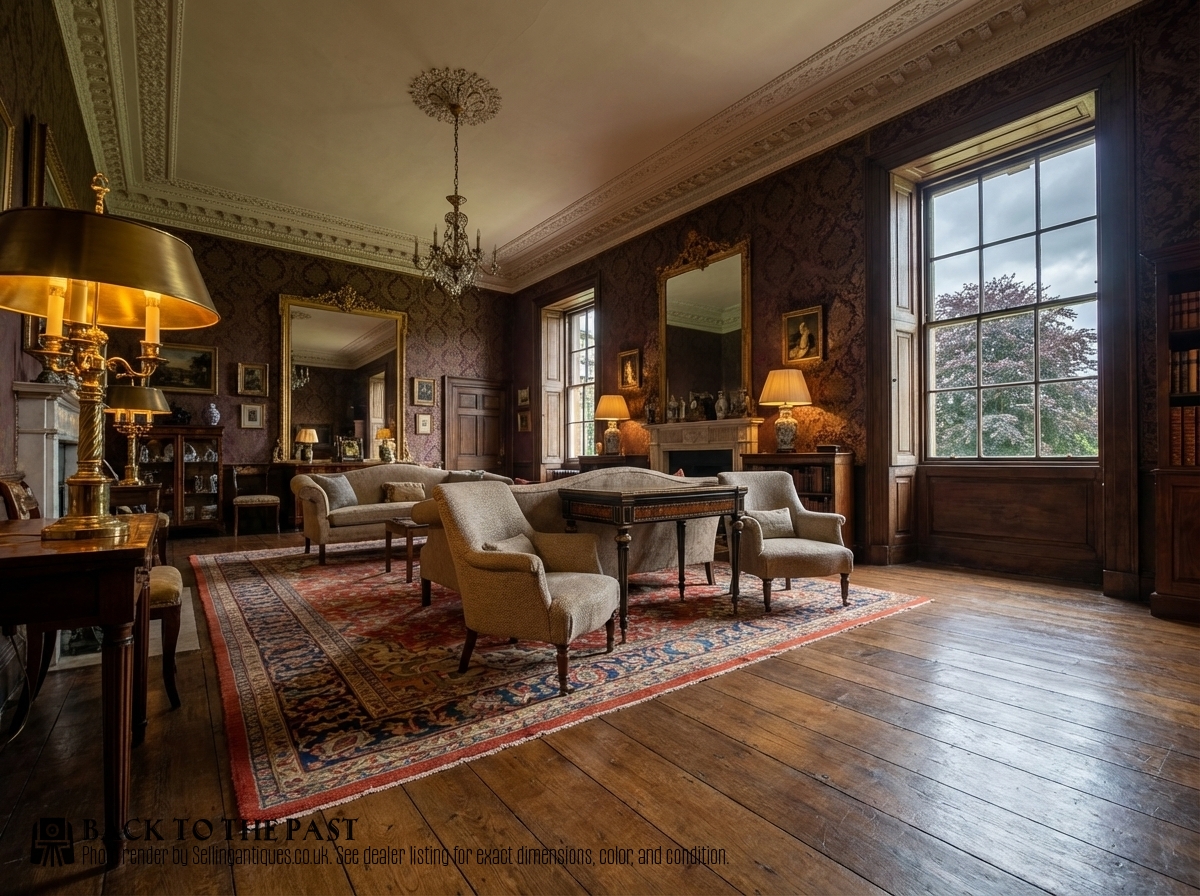
A hallway, landing, or living room suits a folded table best, where it occupies minimal space against a wall. Placing it near a natural light source highlights the grain of the burr walnut or rosewood veneer.
Keep the table away from direct sunlight and heat sources to protect the delicate veneer and historical polish. Opening the top periodically prevents the hinges from seizing over time.