




Edwardian Fold Over Games Table
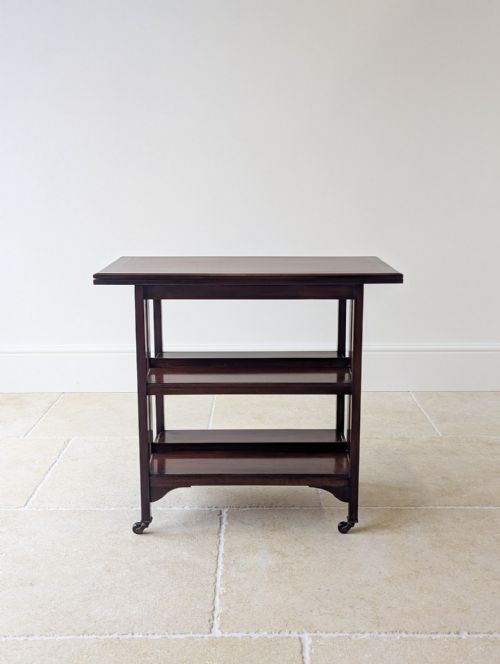
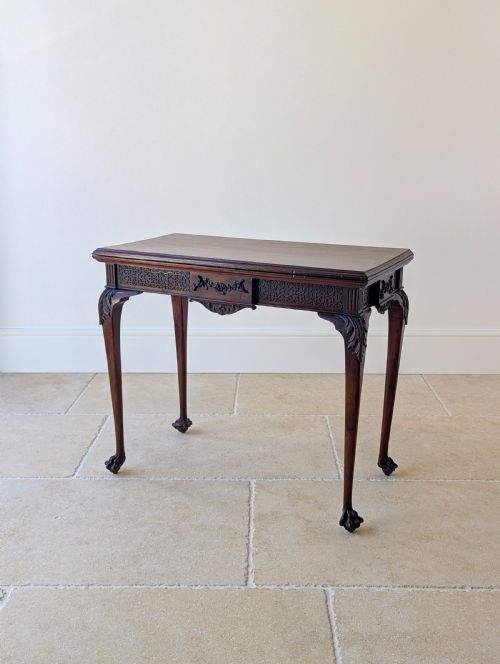
These edwardian fold over games table pieces transform from sleek side furniture into playing surfaces for cards and board games.
Edwardian Fold Over Games Table
An edwardian fold over games table is a dual-purpose item designed to sit against a wall when closed and open up to reveal a baize-lined surface for entertainment. The selection spans the Edwardian period alongside Victorian and Georgian pieces, reflecting enduring domestic habits.
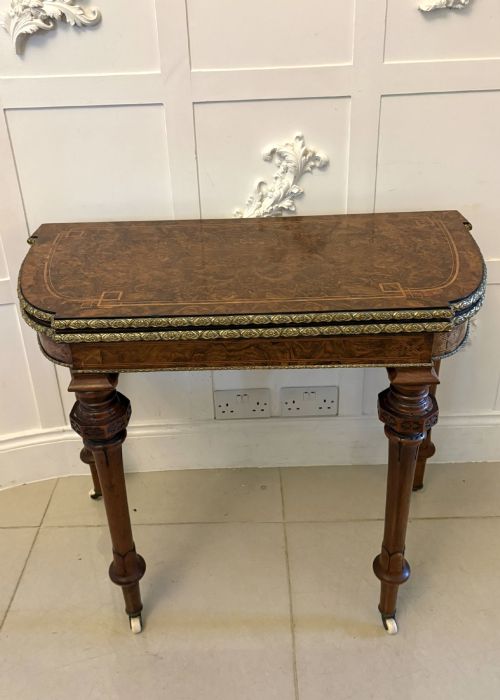
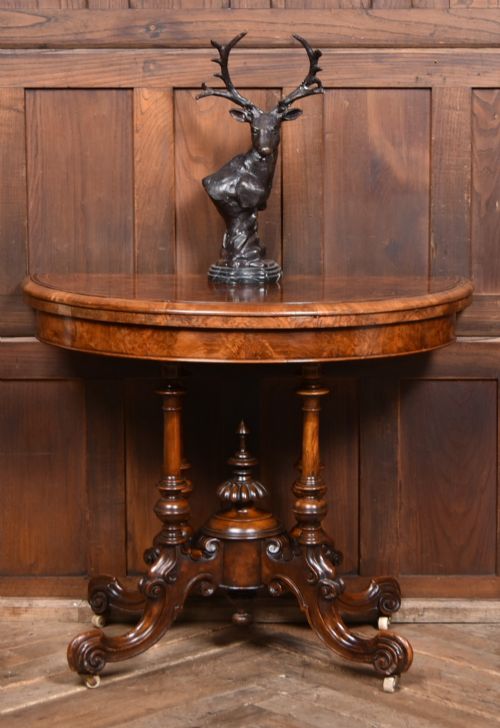
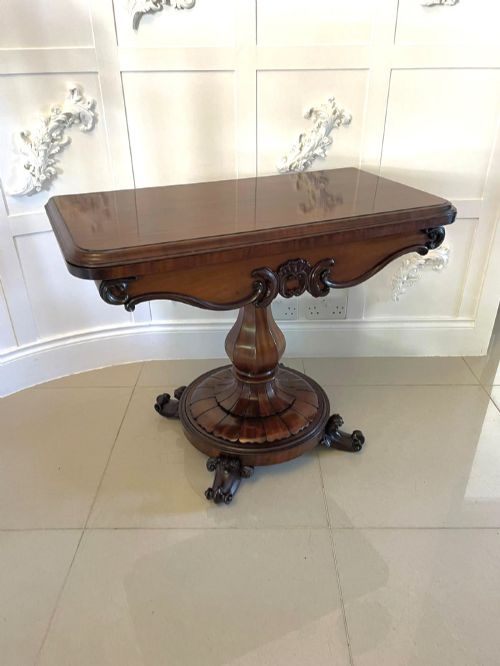
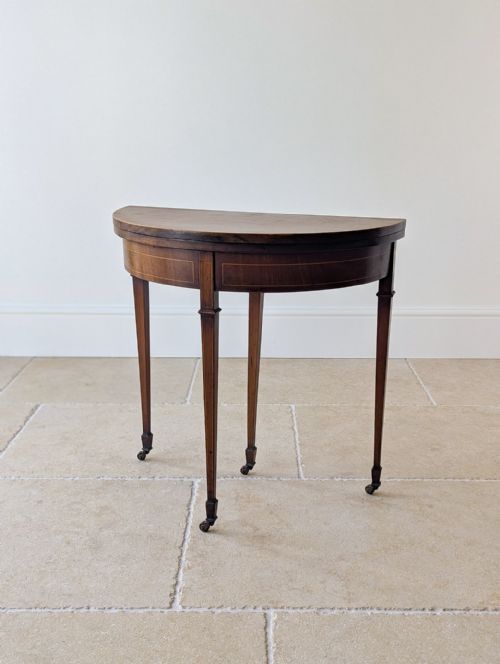
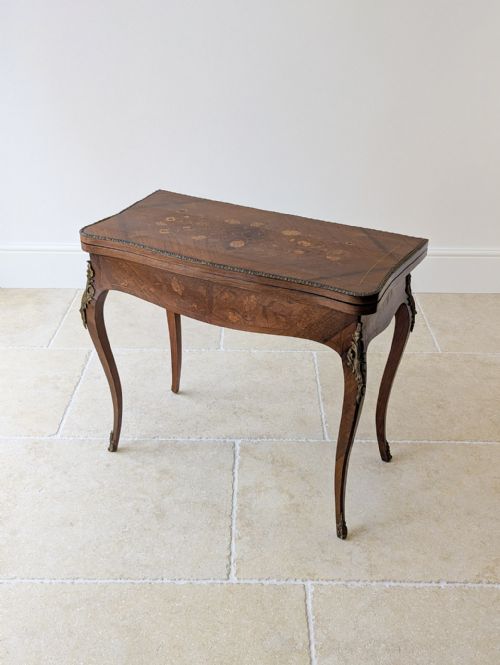
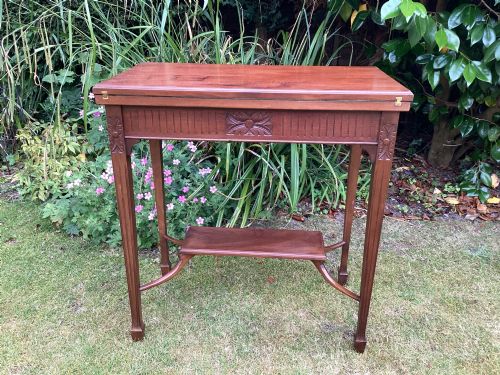
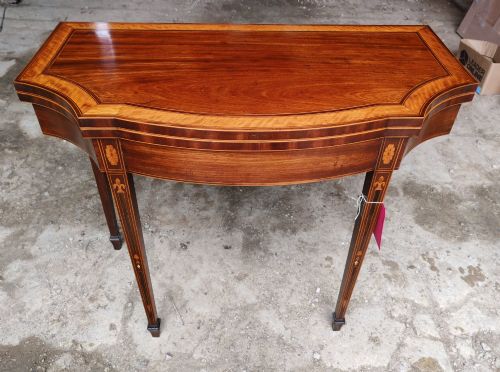
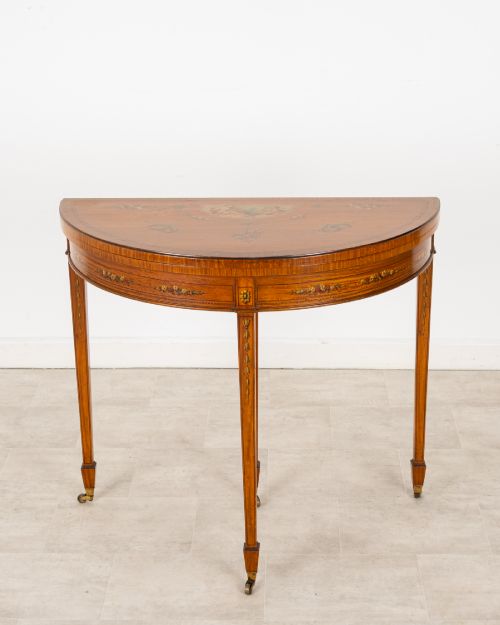
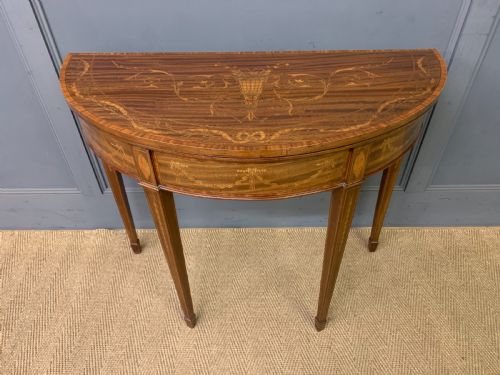
Most examples found here take the form of mahogany or burr walnut tables, often constructed with demilune or rectangular tops. Makers also produced tea tables and console tables that share the hinged mechanism characteristic of the form.
Edwardian interpretations frequently incorporate satinwood inlay, Sheraton style motifs, or painted decoration, whereas Victorian predecessors lean towards serpentine shapes and burr walnut veneers.
How they were made
Cabinetmakers utilised dense timbers such as mahogany, walnut, and rosewood for the structural frames and top surfaces, often applying figured veneers to the exterior. Boxwood and satinwood provide contrasting stringing and decorative inlay across many Edwardian and Georgian revival items.
The defining mechanism relies on hinged leaves supported by a swing leg, a concertina action, or a pivoting top to bear the weight of the unfolded surface. Internal compartments beneath the folding top frequently served to store counters and playing cards.
Listings feature woods such as mahogany, walnut, burr walnut, satinwood, and rosewood across Edwardian, Victorian, and Georgian periods.
What varies in quality
The distinction between standard domestic production and exceptional workshop output lies in the choice of timber figure and the precision of the marquetry. Burr walnut veneers and detailed satinwood inlay demand high levels of joinery skill.
Structural integrity of the folding hinge and the alignment of the top when closed separate refined examples from utilitarian ones. Maker attribution, such as pieces by Edwards and Roberts or Maple and Co, signals high-grade London craftsmanship.
Edwards & Roberts·Maple & Co
The Edwardian Fold Over Games Table Glossary
- Demilune
- Half-moon shape, used to describe tables with a curved front and flat back that sit flush against a wall.
- Fold-over
- A hinged table top that doubles the surface area when opened out flat for dining or gaming.
- Tunbridge ware
- Small wooden items decorated with precise mosaic patterns formed from tiny coloured wood blocks.
- Serpentine
- A gently undulating curved line characteristic of the front edge of certain Victorian table tops.
- Ormolu
- Gilded bronze mounts applied to furniture as decorative ornament during the nineteenth century.
Edwardian Fold Over Games Table: Frequently Asked Questions
How do you open an edwardian fold over games table?
The top leaf lifts and swings backward on its hinges, rotating on the frame to rest upon a pull-out leg or a concertina support.
This movement exposes a recessed interior well, frequently lined with green baize or felt, intended for card playing.
What were these tables used for?
Middle-class and aristocratic households utilised these items for evening entertainment, specifically hosting card games, chess, and backgammon.
When not in use for leisure, the closed top allowed the furniture to function as a side or hall table.
How can you tell Edwardian tables from Victorian ones?
Edwardian examples usually feature lighter satinwood inlay, simpler mahogany framing, and Sheraton or Hepplewhite revival influences.
Victorian versions tend to employ heavier burr walnut veneers, darker rosewood, and shaped serpentine edges with ormolu mounts.
Where should you place a games table in a room?
Position the piece against a wall in its closed demilune or rectangular form, where it functions as an occasional side table.
Ensure sufficient clearance around the furniture if you intend to unfold the top for display or domestic use.