






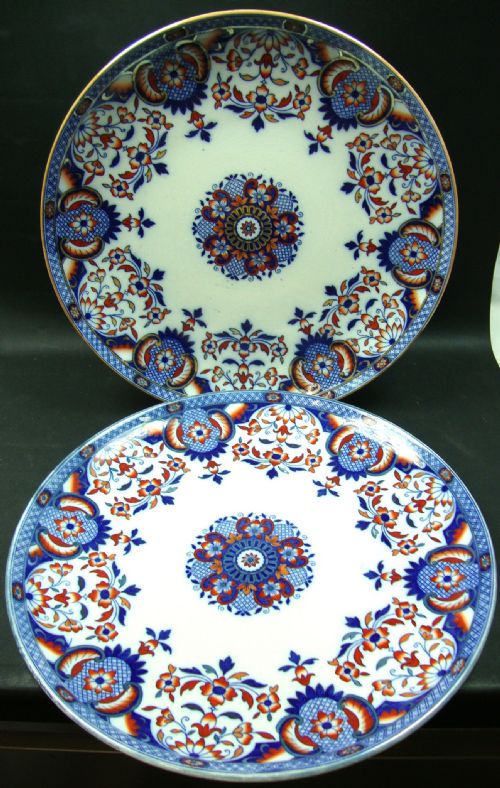


Victorian Imari Porcelain Plate
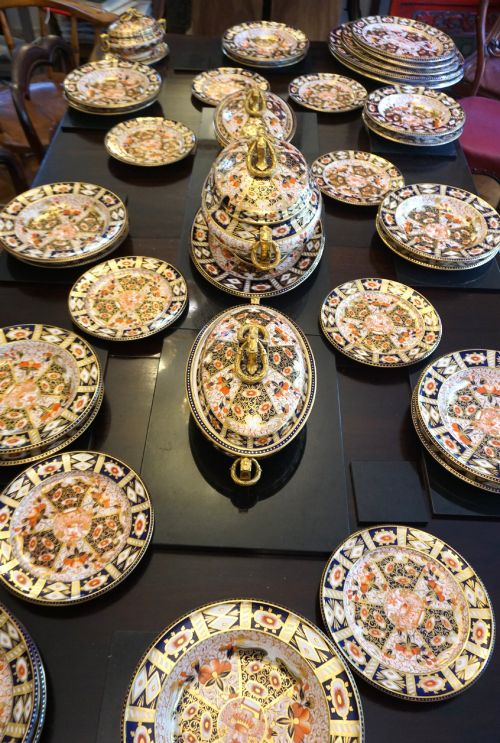
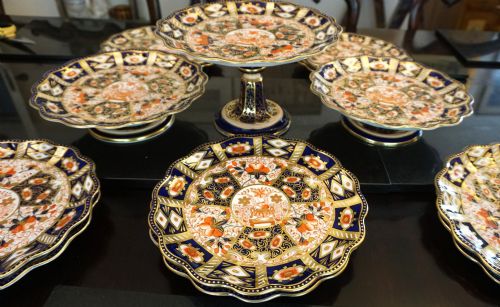
These Victorian imari porcelain plate examples offer rich red and blue palettes inspired by Japanese design, bringing striking colour and historic character to a table.
Victorian Imari Porcelain Plate
A victorian imari porcelain plate bridges British ceramic production and Japanese aesthetic influences from the nineteenth century. These pieces display distinct decorative patterns that borrow heavily from traditional Imari ware.
The selections available here range from large decorative chargers and fruit display plates to complete dessert services and dinnerware sets. Most examples date from the late nineteenth century, spanning the Victorian and Edwardian periods.
Makers adapted the characteristic cobalt blue and iron red motifs onto local ceramic bodies, producing items that function as both tableware and decorative objects. Buyers encounter various forms, including scalloped edges and large round platters.
Materials and construction
Potters utilised porcelain, ironstone, and earthenware as foundational bodies for these items, applying durable glazes before firing. Heavier dinnerware sets often rely on robust ironstone or earthenware to withstand daily use.
The signature decoration relies on vibrant enamel colours and gold leaf applied over or under the glaze to create rich surface patterns. Skilled hands painted the intricate Japanese-inspired motifs onto each ceramic surface before final firing.
Victorian Imari Porcelain Plate Retail Price Guide 2026
Typical asking prices for victorian imari porcelain plate among the pieces listed under this phrase on Sellingantiques today, from the lower quarter to the upper quarter. They describe what is for sale here now, not the wider market.
Listings span the nineteenth century, featuring porcelain, ironstone, and earthenware alongside Japanese Imari and Victorian Aesthetic Movement styles.
Judging the craftsmanship
Quality in a victorian imari porcelain plate rests upon the crispness of the enamel painting and the precision of the gilding. Finer pieces exhibit deeply saturated blues and reds alongside meticulously applied gold leaf that remains sharp.
The weight and purity of the ceramic body also distinguish standard production items from superior service pieces. Well-balanced forms and clean glaze surfaces separate the finest chargers and plates from simpler commercial wares.
Royal Crown Derby·Mintons·Wedgwood·Masons Ironstone
The Victorian Imari Porcelain Plate Glossary
- Imari
- A style of ceramic decoration originating in Japan, characterised by a palette of cobalt blue, iron red, and gold. British potters adopted this aesthetic widely during the Victorian era.
- Ironstone
- A durable type of feldspathic earthenware patented in the nineteenth century. It provides strength and resilience for heavy tableware and dinnerware sets.
- Charger
- A large decorative plate used historically for service or display rather than for eating directly from. These pieces often feature the most elaborate painted schemes.
- Comport
- A raised dish or bowl used for serving fruit or sweetmeats as part of a dessert service. They frequently match the surrounding plates in colour and pattern.
- Enamel
- Opaque glass-like material fused to the ceramic surface during firing to produce vibrant colours. It creates the raised, tactile patterns found on these plates.
Victorian Imari Porcelain Plate: Frequently Asked Questions
How do I clean a Victorian plate?
Wash these pieces by hand using warm water and a mild soap. Avoid soaking them or placing them in a modern dishwashing machine, as harsh detergents and high heat will damage the enamel and gold leaf.
Dry each item thoroughly with a soft cloth to protect the glaze and prevent moisture damage to older ceramic bodies.
Were these plates used for dining?
Many examples formed part of larger dessert services or dinnerware sets intended for formal dining tables. Larger chargers and display platters served a primarily decorative function during meals.
Owners often displayed these colourful plates on sideboards or walls when not in active use for entertaining guests.
Can I hang these plates on the wall?
Wall mounting is a traditional way to display decorative chargers and large plates safely. Utilise coated wire hangers that distribute weight evenly across the rim without putting pressure on a single point.
Ensure the wall fixings are secure before hanging heavier ironstone or porcelain pieces to prevent accidental drops.
What defines the Aesthetic Movement style?
The Victorian Aesthetic Movement embraced Asian design principles, promoting art for art's sake within British households. This philosophy encouraged the adoption of Japanese Imari patterns on local porcelain and earthenware.
Pieces from this movement focus heavily on visual harmony, asymmetric composition, and rich surface decoration.