


Victorian Hearth Fire Dogs
These victorian hearth fire dogs anchor the open grate, bringing structure and ballast to the chimney corner.
Victorian Hearth Fire Dogs
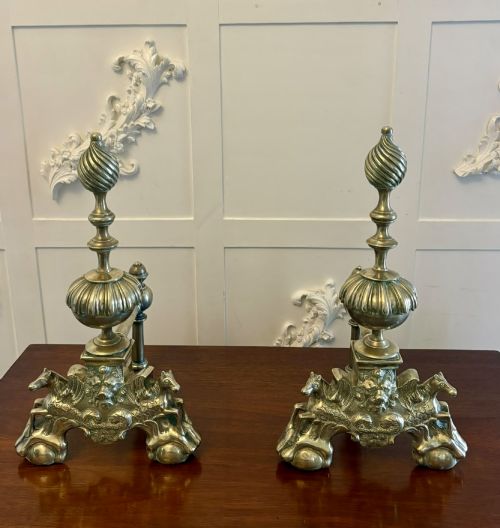
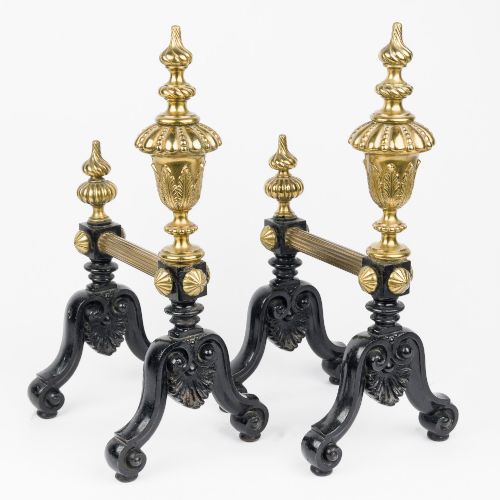
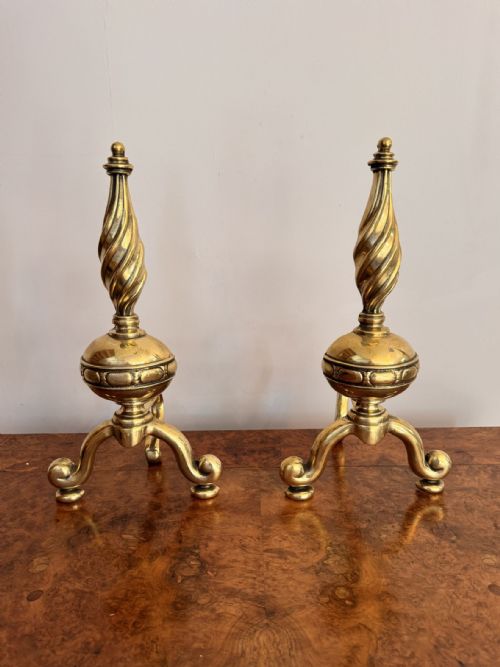
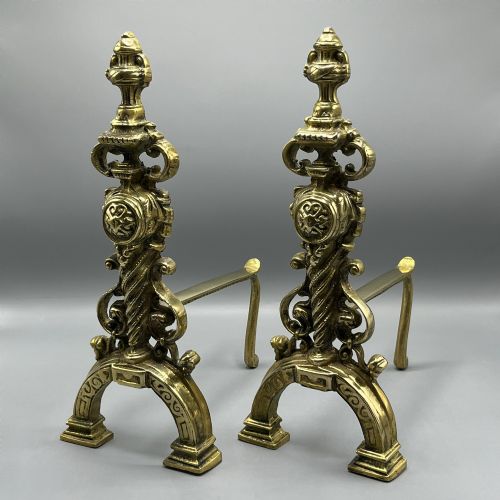
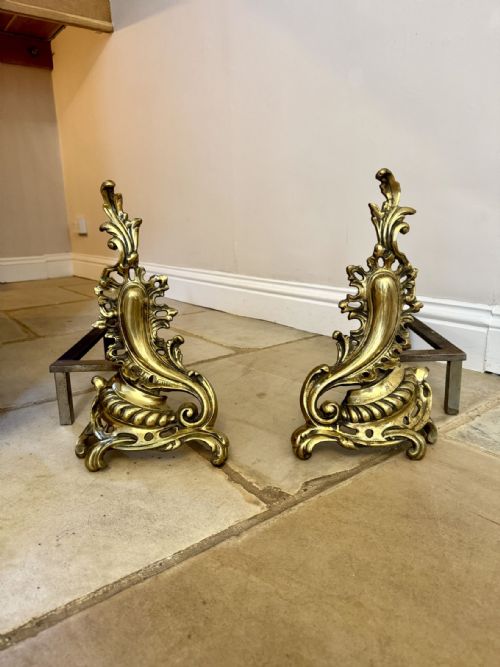
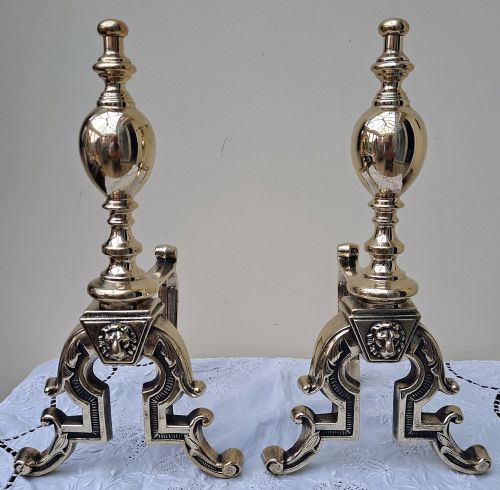
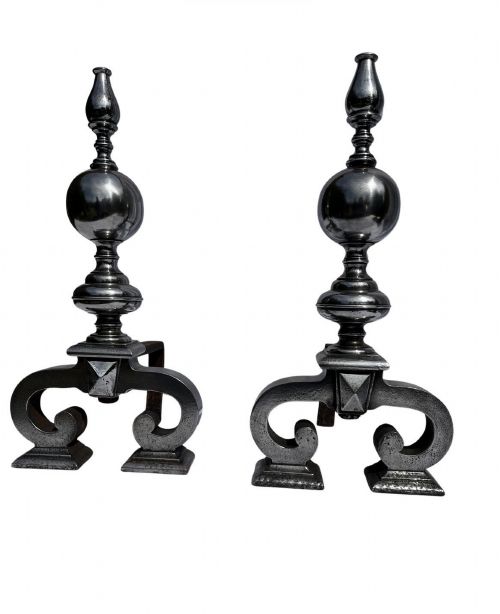
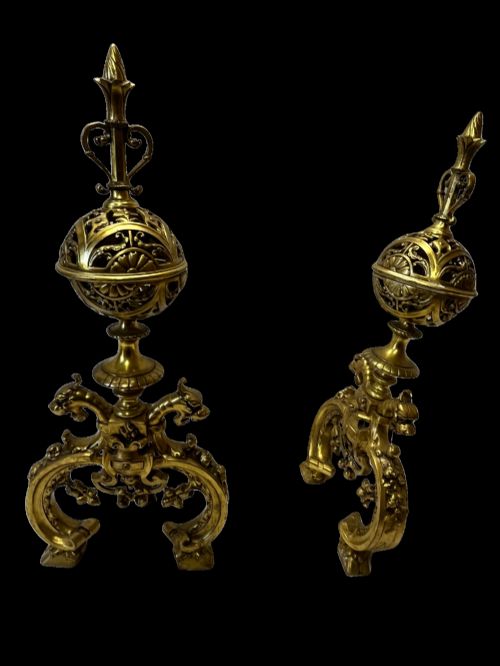
Victorian hearth fire dogs serve as sturdy supports for burning logs within an open fireplace, frequently paired with matching grates or companion sets. When searching for victorian hearth fire dogs, buyers encounter substantial vertical firedogs and andirons designed to hold timber above the hearth floor.
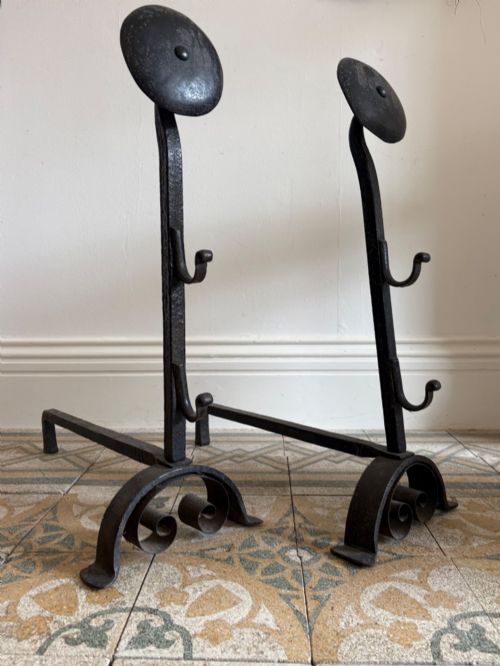
The pieces appearing here span the nineteenth century into the early twentieth century, taking forms from simple utilitarian uprights to elaborate decorative items. English and French origins predominate, alongside distinct stylistic expressions like Gothic Revival, Arts and Crafts, and French Rococo.
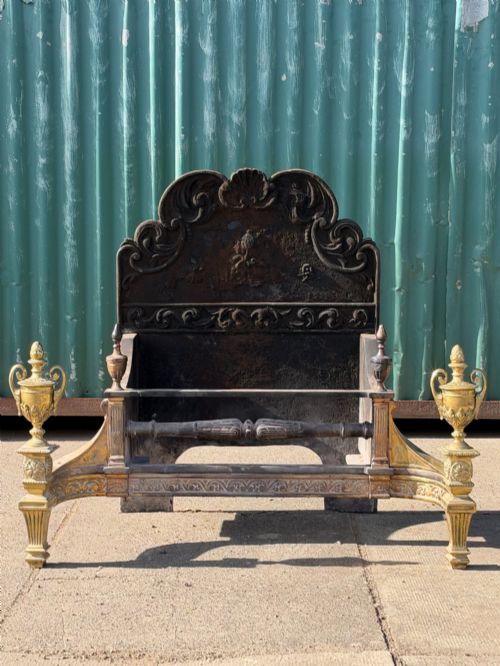
Most entries consist of matched pairs constructed to flank the basket or log grate, sometimes incorporating tool rests for fireside accessories. These functional items reflect the domestic warmth and decorative ambition of the period.
Materials and Construction
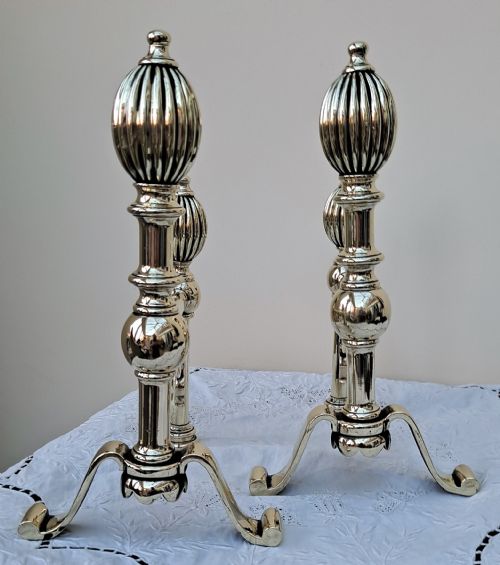
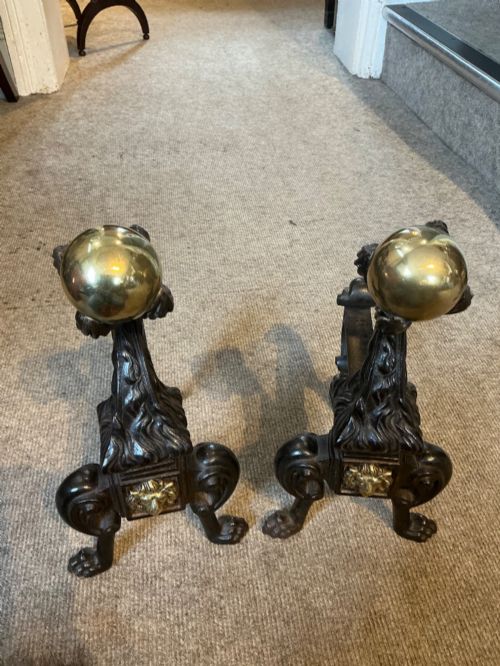
Makers utilised durable metals suited to extreme heat, predominantly casting brass, iron, and steel into solid forms. Cast brass and solid brass dominate the brighter aesthetic, while heavy cast iron, wrought iron, and polished steel provide robust utilitarian strength.
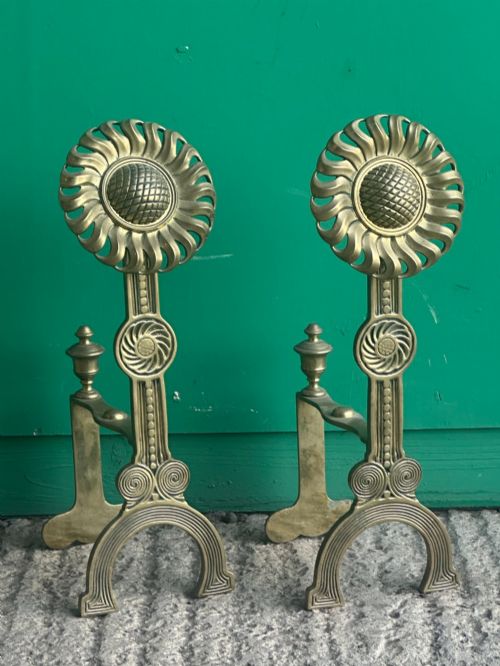
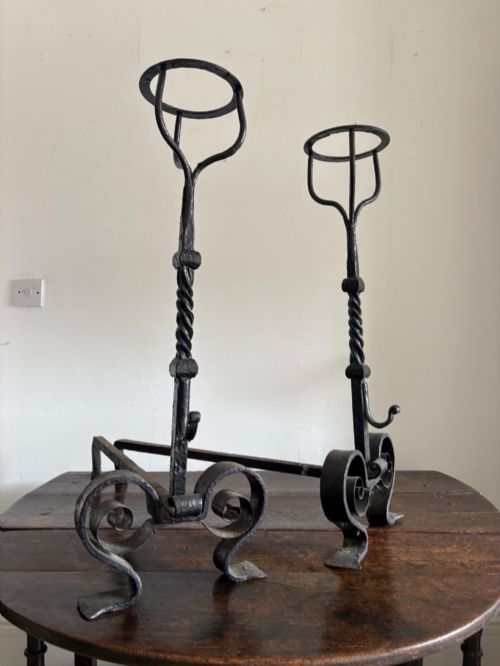
Techniques combined foundry casting with hand-finishing, allowing for crisp surface detail on ornamental motifs like sunflowers and rococo scrolls. Wrought iron and steel elements were forged and shaped to create tall, monumental supports capable of withstanding heavy use.
Listings feature brass, iron, and steel materials across styles from Gothic Revival to Arts and Crafts.
Distinguishing Quality in Design
Quality rests in the weight of the metal and the precision of the casting, separating heavy, substantial examples from lighter production pieces. Finely cast details and crisp ornamentation indicate superior foundry work from the period.
Design attribution also elevates certain pieces, particularly those reflecting the manners of known designers such as Thomas Jeckyll or Christopher Dresser. The integrity of the matching pair and the retention of original surface polishes complete the distinction.
William Tonks·James Cartland & Sons
The Victorian Hearth Fire Dogs Glossary
- Fire dogs
- Support irons placed in a hearth to hold logs off the floor and promote air circulation. They share the same functional purpose as andirons.
- Andirons
- Horizontal bars with decorative vertical uprights used in an open fireplace. They are synonymous with fire dogs.
- Fire grate
- A metal basket or rack that holds coal or wood within the fireplace. These frequently accompany pairs of fire dogs.
- Aesthetic Movement
- A late nineteenth-century design style emphasising visual beauty over narrative subject matter. Pieces from this movement often feature stylised natural motifs like sunflowers.
- Gothic Revival
- An architectural and decorative style drawing on medieval ecclesiastical forms. Items in this style display pointed arches and heavy geometric detailing.
Victorian Hearth Fire Dogs: Frequently Asked Questions
What is the difference between fire dogs and andirons?
The terms are generally used interchangeably to describe the decorative upright supports placed on either side of a hearth. Both serve to hold burning logs off the hearth floor.
Historically, regional vocabulary and maker catalogues might favour one term over the other, but the function remains identical.
How do I know if they fit my fireplace?
Measure the width and depth of your hearth opening before selecting a pair. Height varies significantly, from neat domestic sets to monumental uprights.
Consider the scale of the grate or log basket they must accompany to ensure visual and physical proportion.
Did these come with companion sets originally?
Many pairs were manufactured as part of larger suites that included fire irons, pokers, and tool rests. These matched sets provided a cohesive aesthetic for the Victorian fireplace.
Surviving groups often keep the dogs alongside their original companion tools.
How do I clean brass fire dogs?
Traditional brass items benefit from gentle dusting and occasional cleaning with a mild, appropriate metal polish to maintain their finish. Avoid abrasive pads that scratch the cast surface.
Unpolished or patinated brass should be treated with care to preserve the aged appearance recorded by the period.