
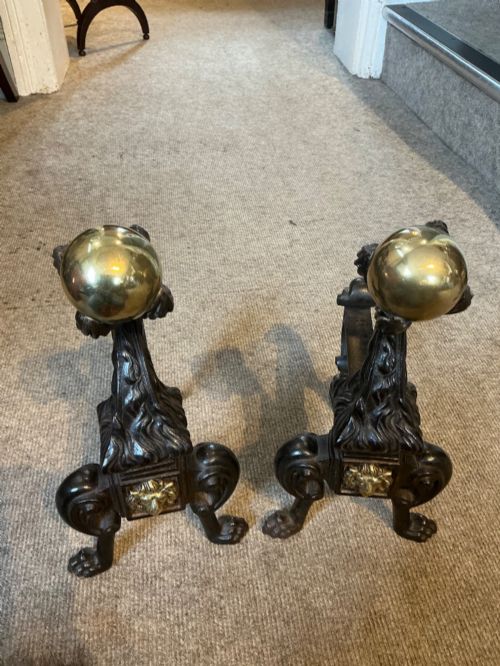


Heavy Brass Andirons Pair
These heavy brass andirons pair selections are robust hearth supports built to hold logs above the hearth floor.
Heavy Brass Andirons Pair
A heavy brass andirons pair consists of two matching metal supports placed inside a fireplace to elevate firewood for better airflow. The pieces available here span the nineteenth century through the early twentieth century, taking the form of traditional fireplace accessories and firedogs.
Most examples combine substantial brass casting with iron components, reflecting Victorian and revival aesthetics. Buyers frequently encounter styles referencing seventeenth-century Baroque designs or Victorian classical revivals alongside plain utilitarian forms.
How they were made
These hearth supports rely heavily on cast brass and cast iron construction techniques. Foundries poured molten metal into sand moulds to create ornate decorative fronts, attaching sturdy iron billet bars designed to withstand intense hearth heat.
Manufacturers also utilised gilt brass finishes on select ornamental models to provide a polished, reflective surface. The structural weight comes from solid metal casting rather than hollow plating, ensuring stability under heavy logs.
Some heavy pairs weigh enough to double as unintended weightlifting equipment for enthusiastic Victorian domestic staff.
What varies in quality
Quality in a heavy brass andirons pair depends upon the crispness of the casting detail and the thickness of the metal used. Finer examples display deeply chased ornamentation and heavy gauge brass, whereas simpler versions rely on plain surfaces and lighter construction.
The integrity of the iron support bars relative to the brass front also dictates overall durability. Pieces featuring robust, integrated iron framing demonstrate superior manufacturing standards compared to purely decorative variants.
The Heavy Brass Andirons Pair Glossary
- Andirons
- Metal supports for holding wood in a fireplace, also known as firedogs or chenets. They keep logs elevated to allow air circulation beneath the fire.
- Firedogs
- An alternative term for andirons, describing the dog-leg shape or animal-inspired motifs often found on early hearth furniture. These objects serve the dual purpose of utility and room decoration.
- Chenets
- French term for andirons, frequently applied to ornate continental fireplace furniture. They typically feature decorative front standards paired with horizontal iron bars.
- Gilt brass
- Brass coated with a thin layer of gold or gold-coloured finish to enhance visual brightness. This treatment resists tarnishing better than bare metal.
Heavy Brass Andirons Pair: Frequently Asked Questions
What is the main purpose of andirons?
Andirons elevate firewood above the hearth floor to improve oxygen circulation beneath the logs, which helps the fire burn more efficiently.
They also prevent burning wood from rolling out of the fireplace opening into the room.
Can these andirons support a real fire?
Most pairs combine a decorative brass front with a sturdy iron or cast iron back bar designed to handle direct heat and heavy logs.
However, the suitability for active burning depends on the thickness of the individual iron bars.
How do I identify Victorian styles?
Victorian pieces often incorporate heavy ornamentation drawing from Gothic, Baroque, or classical revival movements popular during the nineteenth century.
Makers frequently utilised cast brass with elaborate surface detailing during this period.
Are brass and iron used together?
Many hearth supports pair a decorative cast brass front standard with a utilitarian iron log bar.
This combination places the more attractive metal on display while using durable iron for the load-bearing component.