



Victorian Harbour Painting
When you search for a victorian harbour painting, you enter a busy maritime world of moored sailing vessels, bustling quays and coastal shores.
Victorian Harbour Painting
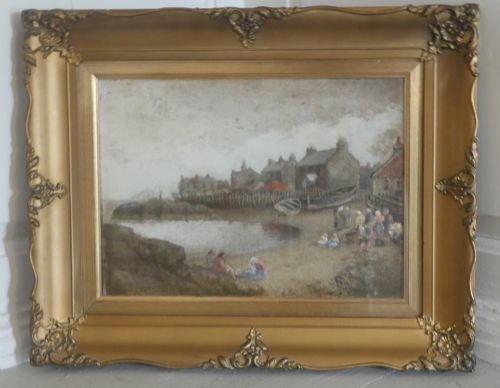
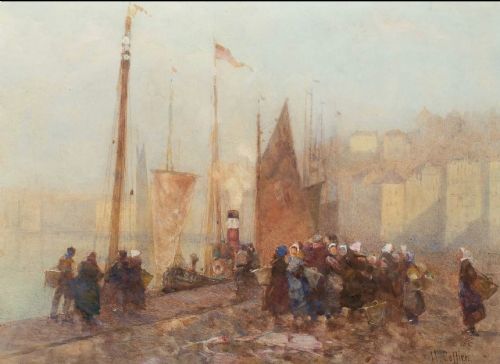
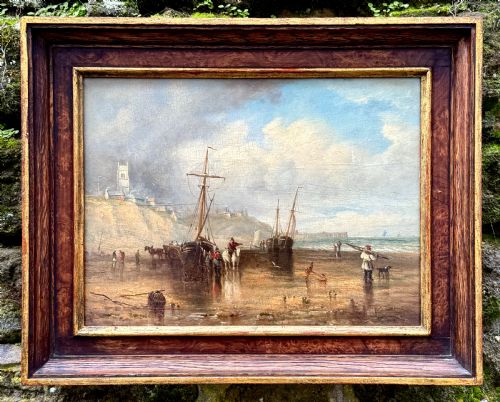
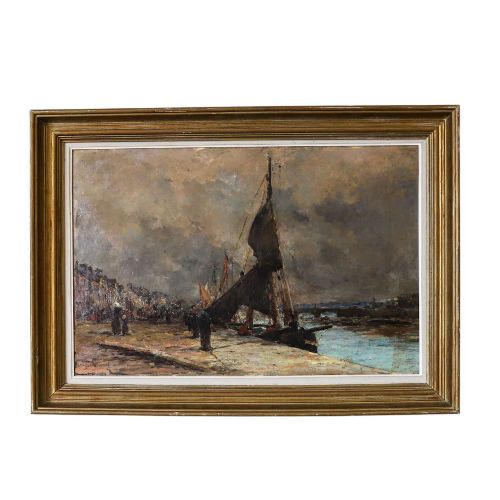
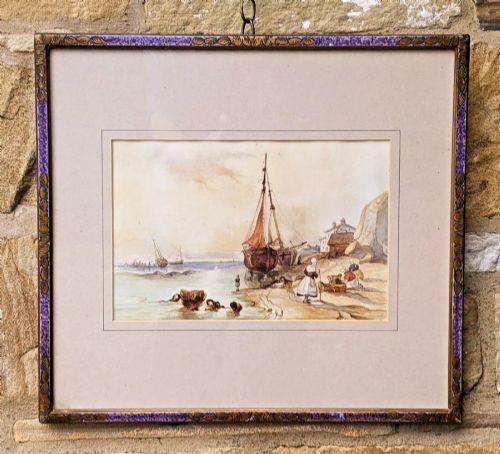
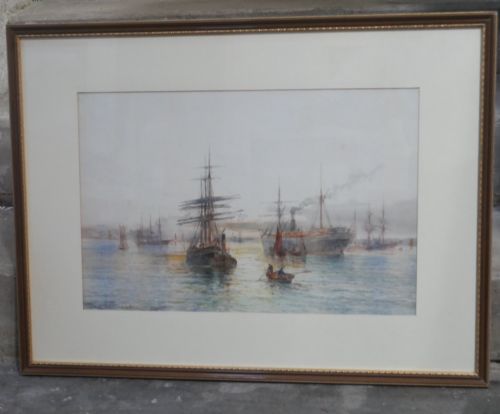
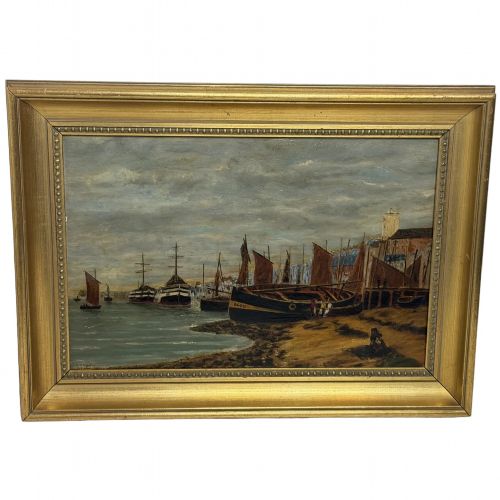
A victorian harbour painting captures the maritime life of nineteenth-century ports, coastal towns and river estuaries. These works record fishing fleets landing their catch, sailing ships at anchor and tidal waters beneath changing skies.
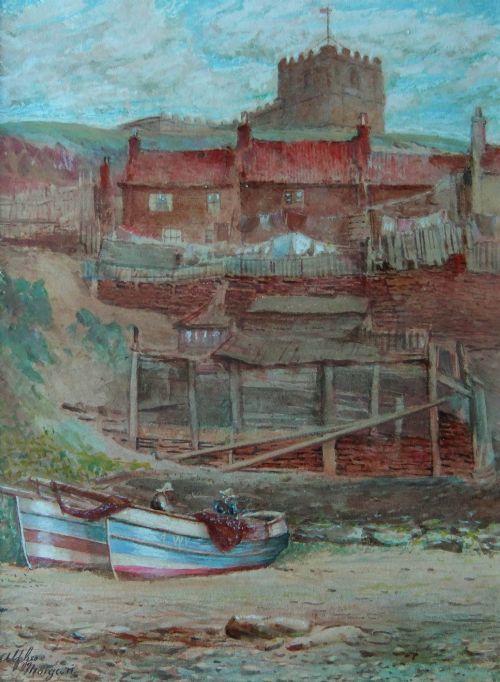
You will most frequently encounter watercolours on paper and oil paintings on canvas depicting specific British locations such as Whitby, St Ives and the River Thames. The subjects range from small regional inlets to busy commercial ports filled with shipping.
The works span the nineteenth century and stretch into the early twentieth century, showing distinct Victorian and Edwardian stylistic approaches. Artists of this era focused closely on the atmospheric light of coastal locations and the daily routines of seafaring communities.
How They Were Made
Artists utilised oil paint on canvas or panel to build rich, textured surfaces that captured the weight of water and the dense atmosphere of coastal mists. Others worked in watercolour pigment on paper, applying fluid washes and fine brushwork to render translucent light on harbour waves.
Finished works were typically housed in wooden frames, frequently featuring ornate giltwood mouldings that added depth and presence to the maritime scene. These frames often complemented the scale of the composition, whether an intimate watercolour or a substantial oil painting.
Victorian Harbour Painting Retail Price Guide 2026
Typical asking prices for victorian harbour painting among the pieces listed under this phrase on Sellingantiques today, from the lower quarter to the upper quarter. They describe what is for sale here now, not the wider market.
Listings feature works created across the nineteenth century, utilising oil paint and watercolour on paper, canvas and wood panels.
What Varies in Quality
Quality rests upon the artist's command of maritime atmosphere, spatial depth and the authentic movement of water and shipping. Stronger works demonstrate a confident handling of light reflecting off tidal surfaces and precise observation of nautical rigging.
The execution of the surrounding architecture and human figures plays a significant role in distinguishing standard topographical records from accomplished artistic compositions. Preserved original framing and good condition of the paper or canvas further elevate the standing of a piece.
Edward Mills·William Banks Fortescue·Hector Caffieri·Thomas Creswick·Alfred G Morgan·Charles William Wyllie·William Edward Webb·Thomas Bush Hardy·Ernest Dade·James Kyd·Stanley Leader·TS Wallis·James Webb·James Thomas Watts·Kate E Booth·Jan van Couver·William Wyld·George Gregory·Alfred Henry Vickers·Sir Edwin Landseer·John Callow·Gustave de Breanski·Ralph Todd·Frank Wasley·Harry Wanless
The Victorian Harbour Painting Glossary
- Seascape
- A work of art depicting the sea, coastal views or marine shipping. These pieces focus heavily on atmospheric weather and tidal conditions.
- Giltwood
- Wood that has been covered with a thin layer of gold leaf or gold paint. This finish was standard for framing significant nineteenth-century paintings.
- Watercolour
- A painting method where fine pigment is suspended in a water-based solution. Artists applied these mixtures to paper to achieve luminous coastal effects.
- Panel
- A flat piece of wood used as a rigid support for oil painting. Painters utilised panels for smaller, stable compositions.
Victorian Harbour Painting: Frequently Asked Questions
What is a harbour painting?
A harbour painting is a maritime artwork depicting ships, quays and coastal towns during the nineteenth and early twentieth centuries. These pieces record the working life of ports and the natural scenery of tidal waters.
Artists focused on capturing specific locations, vessels at anchor, and the atmospheric conditions of the British coastline. These works serve as both historical records and decorative art.
How were these paintings displayed?
These works were framed in wooden surrounds, often finished with giltwood to enhance the visual impact of the canvas or paper within. They hung in domestic interiors to bring views of the coast and sea indoors.
Many retained their original frames, which provide context regarding the period taste and the importance placed on the artwork by contemporary owners.
How do I date a harbour painting?
Dating relies on recorded artist lifespans, stylistic indicators of the Victorian or Edwardian periods, and written signatures or inscriptions on the reverse. Maritime fashions and vessel types also offer clues to the decade of creation.
Examining the materials, such as the type of paper or canvas support, helps narrow down the production era when explicit dates are absent.
Where were these scenes painted?
Painters travelled to active fishing ports, commercial harbours and scenic estuaries around Britain and continental Europe. Popular locations included Yorkshire coastal towns, Cornish fishing villages and the River Thames.
Artists often inscribed the specific location on the front or back of the work, documenting recognizable landmarks like abbeys, piers and local shipping.