





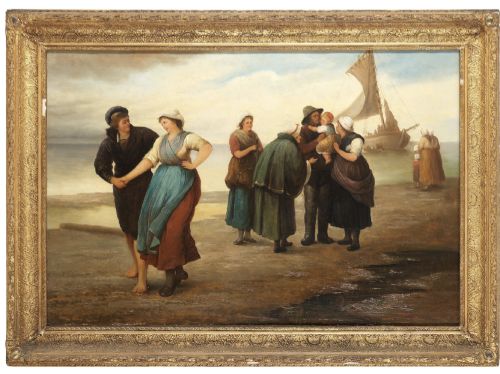
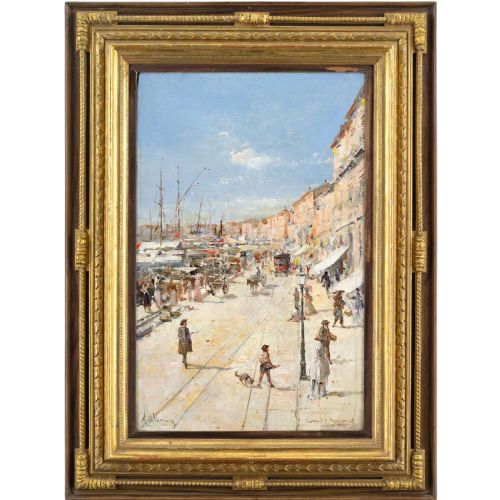
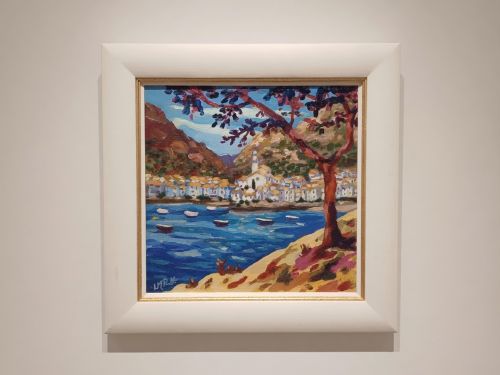
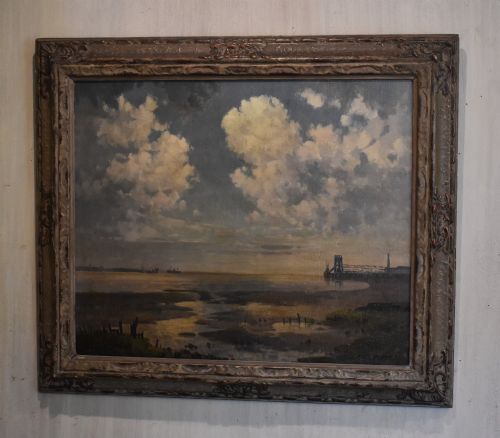

Antique Coastal Scene
An antique coastal scene brings the working shores, harbours and open waters of the nineteenth and early twentieth centuries into a room.
Antique Coastal Scene
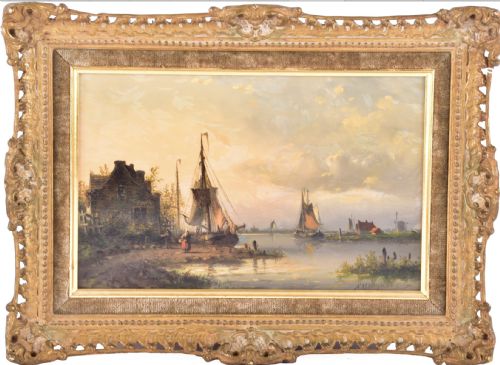
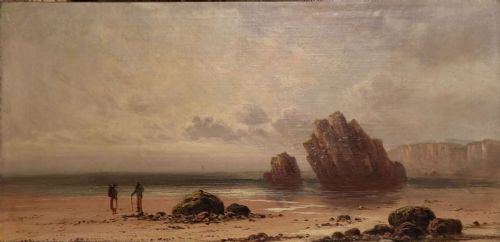
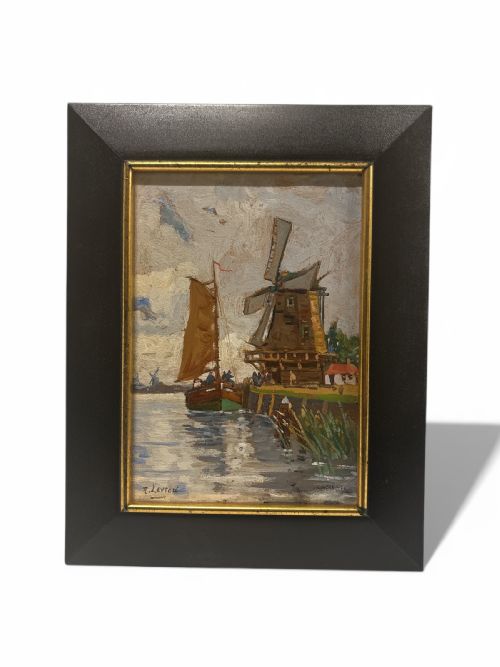
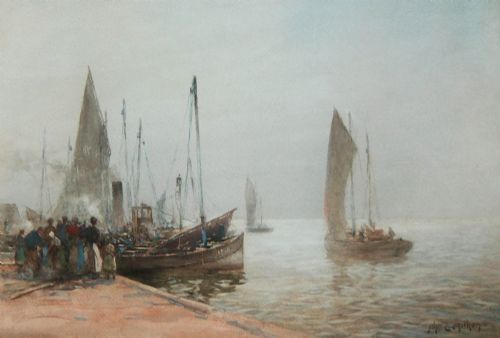
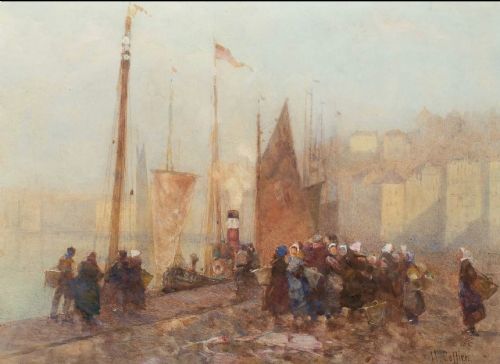
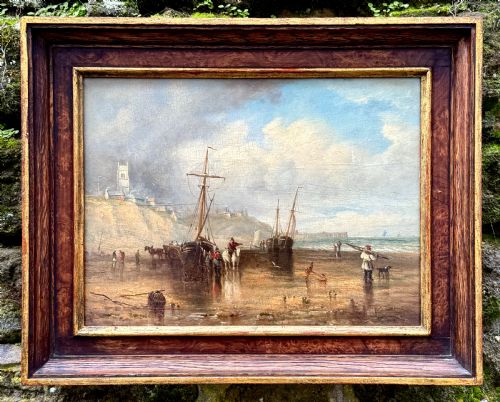
An antique coastal scene captures maritime life, fishing ports, and tidal shores through traditional painting and drawing. These works focus on harbours, coastal paths, and boats resting on sand or battling rough seas.
The selections available range from detailed watercolour studies of Cornish fishing villages to large nineteenth-century oil paintings of bustling British ports. Works span the Victorian and Edwardian eras, extending into early twentieth-century impressions.
Subjects often depict daily coastal labour, including fisherfolk mending nets, gathering seaweed, or launching boats into the surf. The overarching perspective blends topographical record with atmospheric maritime art.
How They Were Made
Artists painted primarily in oil on canvas or panel, or applied watercolour and gouache to paper. Canvases frequently sit within original gilt wood frames that complement the marine subject matter.
Watercolour works utilise pigment washes on paper to capture shifting light over sea and sky, sometimes reinforced with pencil or chalk sketches. Oil paintings build up texture through layered brushwork, rendering the weight of waves and the density of sea mists.
Framing materials recorded in the archive consist primarily of gilt wood and carved wood surrounding canvas and paper supports.
What Varies in Quality
Quality rests upon the artist's ability to handle natural light, atmosphere, and the specific movement of water. Superior examples demonstrate confident brushwork or delicate wash control that suggests moisture in the air and motion in the tide.
Compositional balance and the accurate depiction of maritime architecture, rigging, and vessels distinguish master works from routine topographical records. The survival of the original surface, uncompromised by heavy restoration, maintains the integrity of the piece.
James Orrock·Thomas Creswick·Joseph Farquharson·Abraham Hulk I·Thomas Bush Hardy
The Antique Coastal Scene Glossary
- Seascape
- A work of art depicting the sea, coastal views, ships, and beach activities. These pieces range in focus from calm harbours to stormy open waters.
- Watercolour
- A painting method where fine pigments are suspended in a water-based solution on paper. This medium allows for luminous washes and rapid execution outdoors.
- Gilt Wood
- Wood carved and coated with a thin layer of gold leaf or metallic gilt paint. These frames define the outer boundary of many nineteenth-century paintings.
- Lugger
- A small fishing vessel carrying lug sails set on one or two masts. These boats appear frequently in regional British and European coastal art.
- Provenance
- The documented history of ownership surrounding a work of art. Clear provenance helps verify the attribution and age of nineteenth-century maritime paintings.
Antique Coastal Scene: Frequently Asked Questions
What subjects appear in these scenes?
These works depict harbours, fishing fleets, stormy coastlines, and quiet estuaries. Artists recorded the daily routines of coastal communities alongside shipping traffic and tidal landscapes.
Common motifs include fisherfolk mending nets, sailing vessels anchored in port, and figures walking along cliffs or sandy shores. Each piece captures a specific regional waterway or working sea.
How do I date a maritime painting?
Dating relies on stylistic clues, framing methods, and the costume or vessel types depicted within the scene. Victorian works often feature detailed narrative elements, while later twentieth-century pieces adopt looser brushwork.
Signatures, dates inscribed on the reverse, and artist biographies provide firmer chronological markers. Archival records and exhibition labels attached to the stretcher or frame also clarify the period.
Where were these coastal views painted?
Artists worked across British fishing ports such as St Ives, Whitby, and various Scottish harbours. European locations including Normandy, Brittany, and the Mediterranean also served as frequent subjects.
Painters travelled along these coastlines to capture local light, architecture, and maritime trades. Many works document specific ports before industrial expansion altered their appearance.
How should I display a watercolour?
Watercolours require protection from direct sunlight to prevent fading of sensitive pigments on paper. Framing behind conservation-grade glass filters ultraviolet light and safeguards the delicate surface.
Display these pieces in rooms with stable humidity and temperature levels to avoid paper distortion. Keeping paintings away from heat sources preserves both the paper support and the original frame.