


Stormy Sea Painting
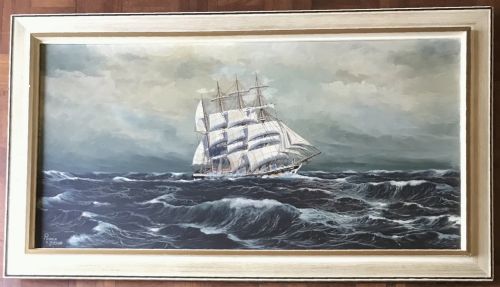
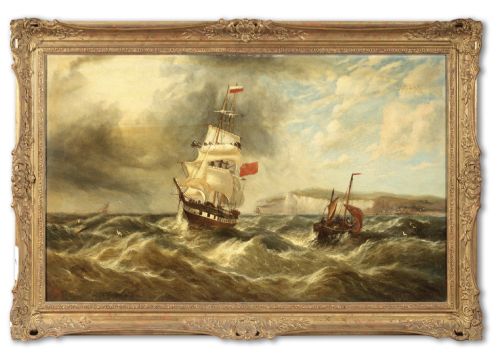
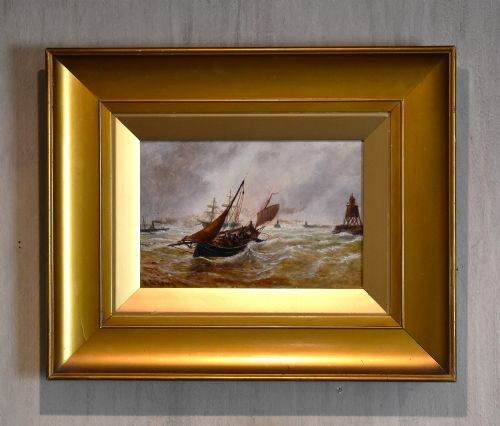
A stormy sea painting captures the raw fury of coastal weather, drawing collectors with dramatic sailing vessels and churning waves.
Stormy Sea Painting
A stormy sea painting depicts vessels in gales, shipwrecks, and rough coastal waters across the seventeenth, nineteenth, and early twentieth centuries. These artworks record maritime drama through oil on canvas, oil on board, card, and watercolour pigment.
Victorian maritime art and nineteenth century marine works dominate the selection, often featuring British and Dutch coastal scenes. Buyers encounter depictions of lighthouses, tall-masted ships, and fishing boats battling heavy weather.
The assortment spans intimate watercolours on paper and large framed oil paintings housed in giltwood frames. Works range from anonymous nineteenth century British school pieces to signed compositions by named painters.
Materials and technique
Artists built these marine scenes primarily using oil paint on canvas, board, or cardboard, building up heavy textures to convey churning water and dark storm clouds. Others utilised watercolour pigment on paper for transparent washes of grey seas and lowering skies.
Frames play a structural role in presentation, with period giltwood mouldings enhancing the dark, dramatic palettes of nineteenth century oils. Signatures appear in paint or pencil, while charcoal provides stark monochromatic line work in select shipwreck studies.
Materials documented across the inventory include oil paint, watercolour pigment, canvas, wood, giltwood, paper, and cardboard.
Factors of quality
Quality rests in the artist's ability to render the weight of water, the stress on rigging, and the atmospheric pressure of a gale. Finer works capture turbulent movement through confident brushwork rather than rigid detail.
Condition of the support and original framing influences desirability, particularly with fragile oil on card or early canvas. Signed pieces by established painters hold distinction over anonymous regional studies.
John Rose Miles·Bonaventura Peeters·Bernard Benedict Hemy·Percy Brooke·William Kay Blacklock·William Boyce·R Thomas·E K Redmore·David Horatio Winder·Henry Redmore·William Daniel Penny
The Stormy Sea Painting Glossary
- Giltwood
- Wood carved and covered with a thin layer of gold leaf or gold paint. These frames define many nineteenth century marine paintings.
- Staithes School
- A group of northern English artists associated with plein air painting of coastal scenes. Their output reflects maritime life and rough northern waters.
- Dutch Golden Age
- A period in seventeenth century Dutch art renowned for realistic marine painting. Works from this era depict domestic and foreign vessels in heavy seas.
- Seascape
- A work of art depicting the sea. This genre encompasses calm harbours as well as violent gales and shipwrecks.
- Watercolour pigment
- Colouring material ground with a water-soluble binder for use on paper. It creates luminous atmospheric effects in marine watercolours.
Stormy Sea Painting: Frequently Asked Questions
How should I hang a framed oil painting?
Heavy oil paintings in giltwood frames require secure wall fixings anchored directly into studs or masonry. Keep them away from direct sunlight and strong heat sources.
Stable indoor humidity prevents the canvas from slackening and protects the wooden support from warping over time.
How do I identify a marine watercolour?
Marine watercolours utilise paper supports under protective glass, showing transparent pigment washes rather than thick oil impasto. They often depict coastal towns, lighthouses, and returning fishing fleets.
Signatures in pencil or brush frequently appear in the lower corners alongside contemporary framing.
What subjects appear besides ships?
Artists frequently include lighthouses, coastal cliffs, sea birds, and harbour entrances alongside vessels in distress. Cornish landmarks and Yorkshire coastal towns also feature prominently.
Scenes range from solitary lighthouses weathering storms to fleets of fishing boats returning to port.