
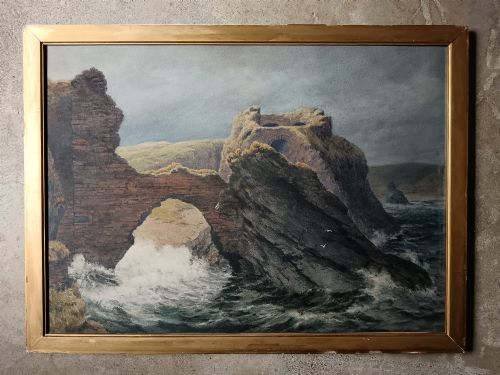


Grey Seascape Painting
When you want a grey seascape painting, you are looking at coastal water and stormy skies captured on canvas, paper or board.
Grey Seascape Painting
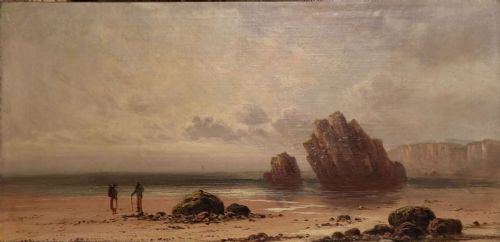
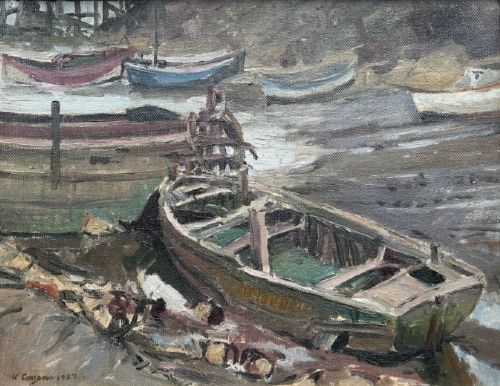
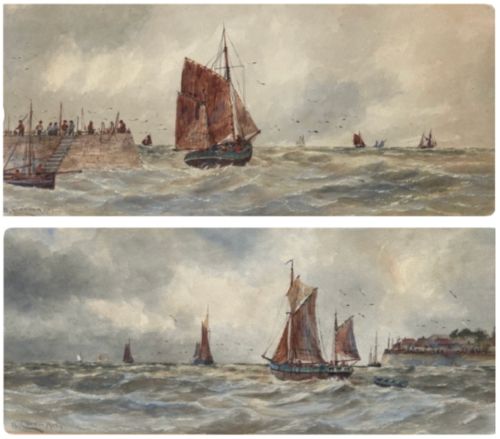
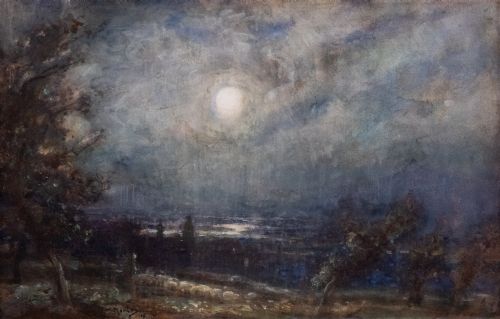
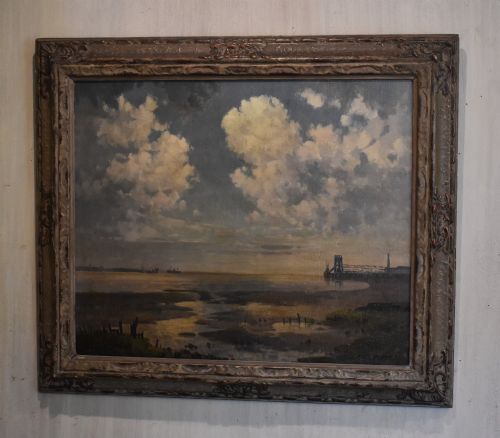
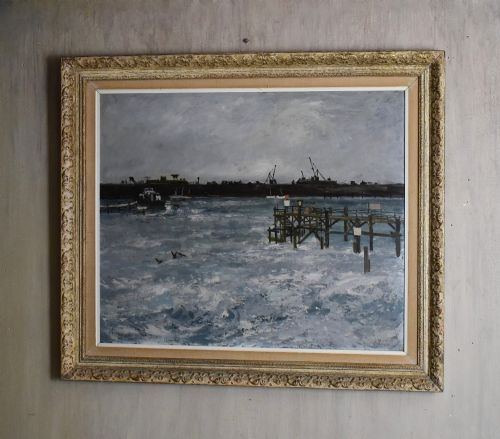
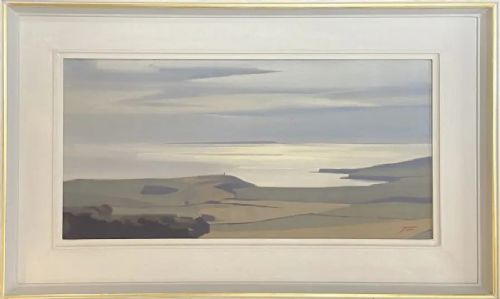
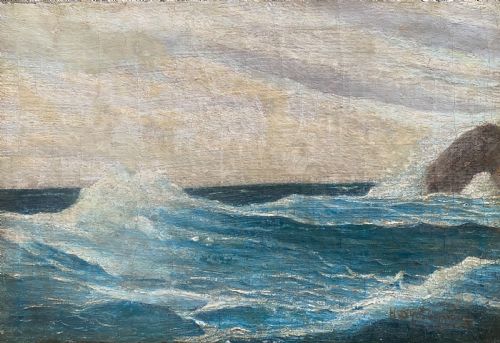
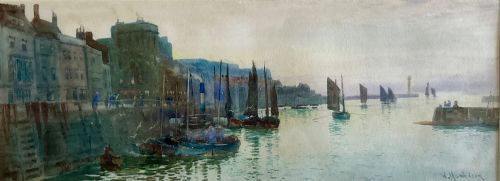
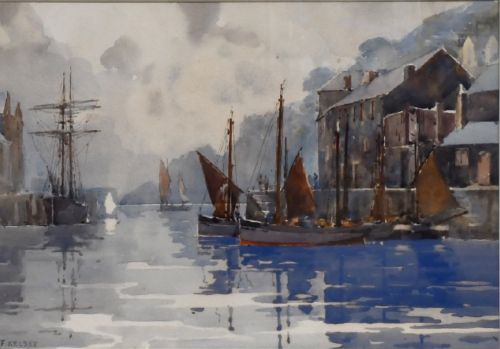
A grey seascape painting captures the muted tones of coastal weather, open water and shoreline shipping across various historic periods. These artworks focus on the atmospheric conditions of the sea, often rendering stormy skies, rolling waves and misty harbours in restrained palettes.
The selections you encounter on this page span from nineteenth-century watercolours to mid-twentieth-century oils. Victorian maritime works sit alongside early twentieth-century British impressions and later modernist interpretations.
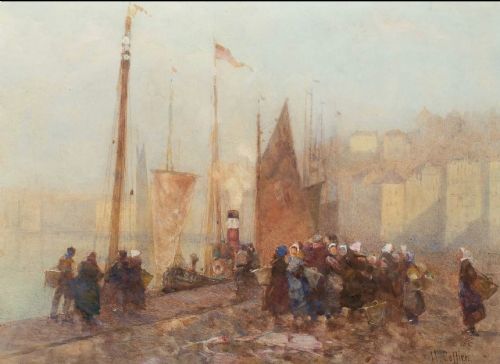
Most examples depict specific coastal regions, fishing ports and naval vessels rendered by regional artists. You will find scenes stretching from Yorkshire fishing villages to French harbours and Scottish castles.
How they were made
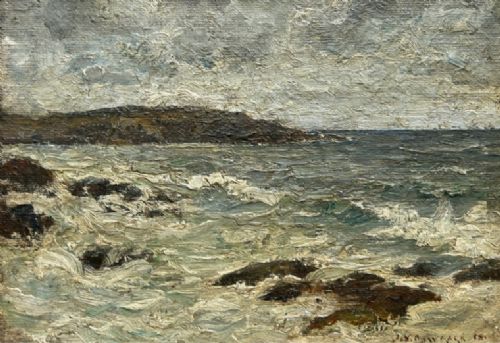
Artists captured these coastal scenes primarily through oil paint on canvas or board, and watercolour pigment on paper. Oil mediums allowed for textured impasto applications that built up the heavy weight of stormy waves, while watercolours achieved the transparent washes needed for sea mists and grey skies.
Support materials varied according to the medium, utilising wooden panels, stretched canvas and heavy watercolour papers. Frames of wood and glass frequently accompanied these works to protect the fragile surfaces from damp coastal environments.
Grey Seascape Painting Retail Price Guide 2026
Typical asking prices for grey seascape painting among the pieces listed under this phrase on Sellingantiques today, from the lower quarter to the upper quarter. They describe what is for sale here now, not the wider market.
Periods represented span from the eighteenth century through Victorian maritime art to mid-twentieth-century modernism.
What varies in quality
The measure of success in a grey seascape painting lies in the handling of atmospheric light and weather. Superior examples demonstrate a confident command of tone where muted shades of grey and silver convey movement, depth and moisture in the air.
Compositional strength also separates accomplished works from ordinary studies. The placement of shipping vessels, sea stacks or figures provides a sense of scale against the vast expanse of open water, anchoring the entire scene.
Kenneth Cozens·William Cannon·Thomas William Morley·Clive Browne·Peter Brannan·Hector Caffieri·James Fry·William Matthison·Frank Kelsey·John Moxon·Charles William Adderton·Vincenzo D’Esposito·Raymond Picque·Thomas Bush Hardy·Ernest Dade·Robert Leslie Howey·Edward Henry Eugene Fletcher·William Greaves·Charles Sim Mottram·Frank H. Mason·Owen Bowen·John Mitchell·Samuel Owen·Ernest F. Hill·Don Wilson
The Grey Seascape Painting Glossary
- Impasto
- Paint applied thickly to a canvas or board, leaving visible brush or palette knife marks. This technique adds tactile dimension to crashing waves and turbulent water.
- Seascape
- A work of art depicting the sea, coastlines and marine vessels. These subjects range from calm shorelines to dramatic shipwrecks.
- Watercolour
- A paint consisting of water-soluble pigments suspended in a water-based solution. It is traditionally applied to paper to create translucent washes.
- Provenance
- The documented history of ownership surrounding an artwork. This record helps confirm the authenticity and origin of the piece.
- Maritime
- Pertaining to the sea, shipping, navigation and naval operations. In these paintings, it often describes scenes featuring working boats and larger vessels.
Grey Seascape Painting: Frequently Asked Questions
What subjects do these paintings show?
These artworks depict coastal scenes, stormy seas, fishing boats, and harbours. Many feature specific British and European locations alongside working vessels.
You will also find depictions of naval ships, sea stacks, and figures on rocky beaches under heavy skies.
How should I frame an antique maritime painting?
Framing choices depend on the period and medium of the artwork. Watercolours traditionally require glass protection and mounts, while oil paintings on canvas sit within wooden frames.
Matching the period of the frame to the date of the painting helps maintain the integrity of the piece.
How do I care for antique paper watercolours?
Watercolours on paper need protection from direct sunlight to prevent the pigments from fading. Keeping them away from damp environments prevents foxing and mould growth.
Displaying them behind conservation glass safeguards the delicate paper surface.
What periods do these artworks come from?
The pieces span from the nineteenth century through the Victorian and Edwardian eras into the mid-twentieth century. You will encounter nineteenth-century coastal studies alongside 1950s and 1960s interpretations.
Each era brings distinct techniques, from traditional maritime watercolours to twentieth-century impressionism.