

Victorian Hall Centre Table
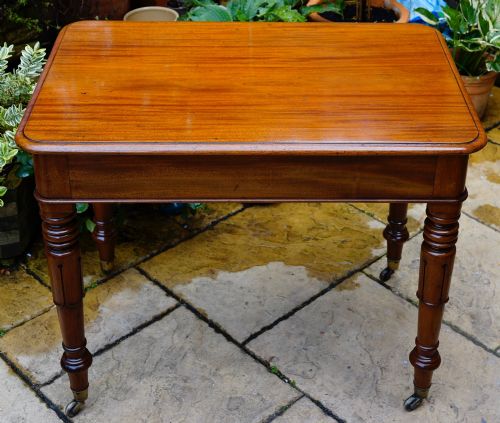
A victorian hall centre table stands ready to anchor a grand entrance with substance, decorative timber and a commanding presence.
Victorian Hall Centre Table
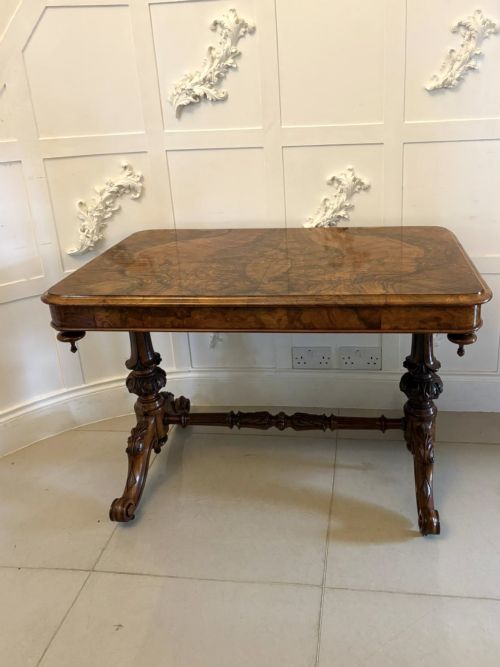
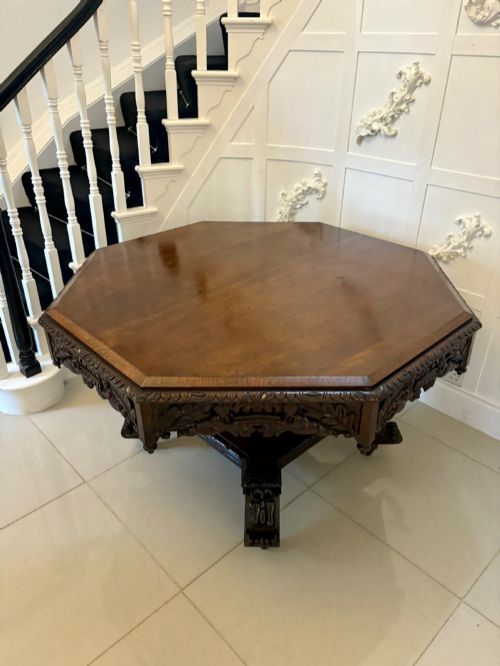
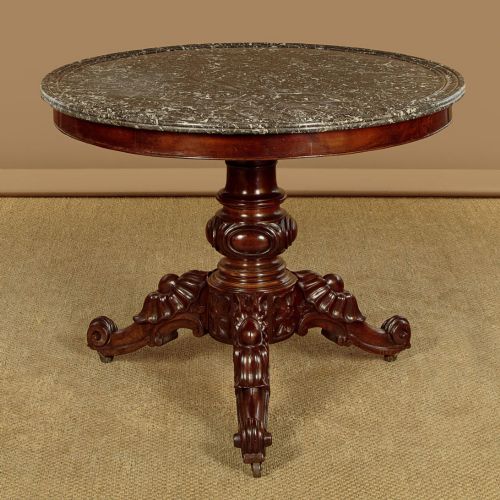
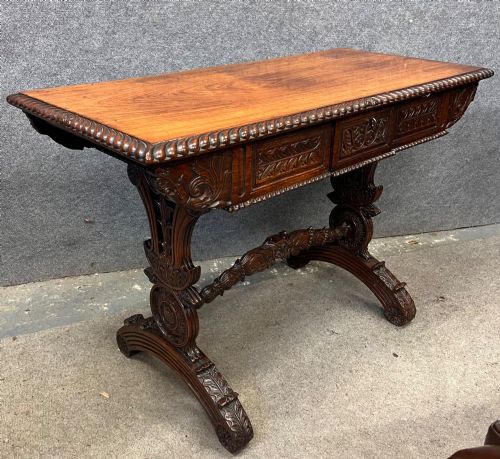
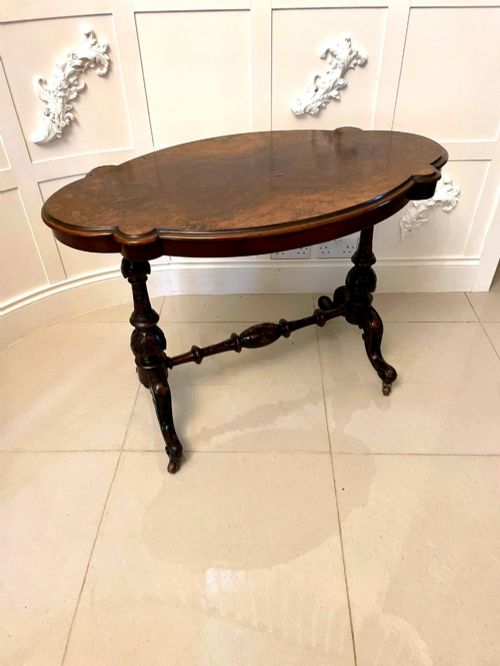
When you search for a victorian hall centre table, you enter a category defined by freestanding timber pieces designed to sit proudly in the middle of a room rather than against a wall. The examples appearing here span the nineteenth century, including specific dates from the eighteen-fifties through to nineteen-twenty, alongside pieces simply attributed to the broader Victorian era.
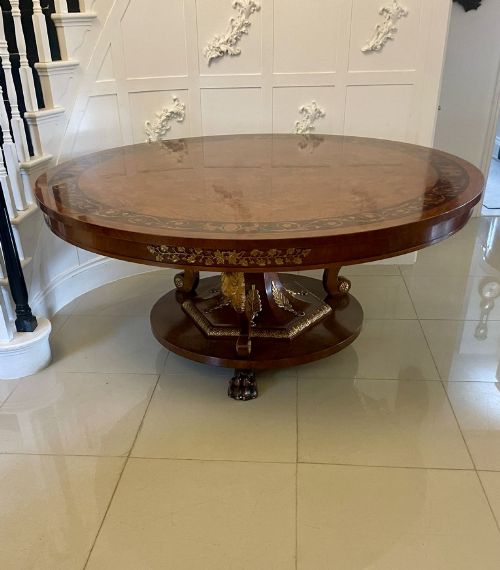
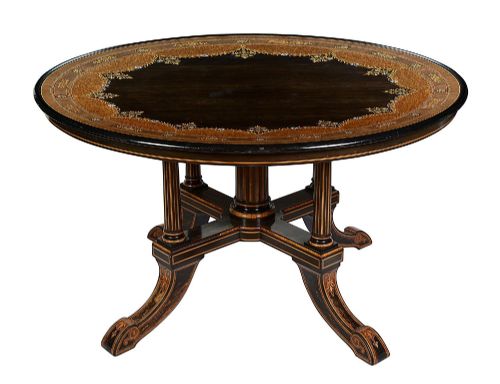
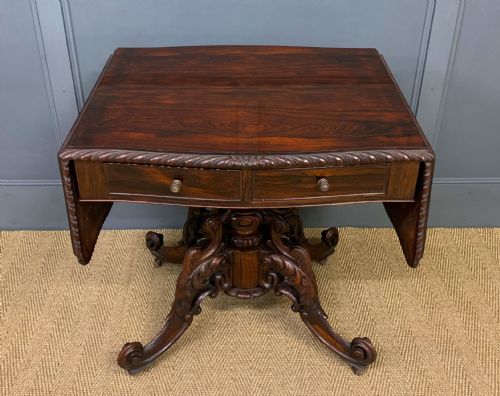
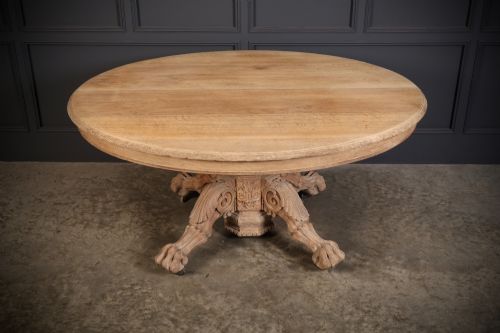
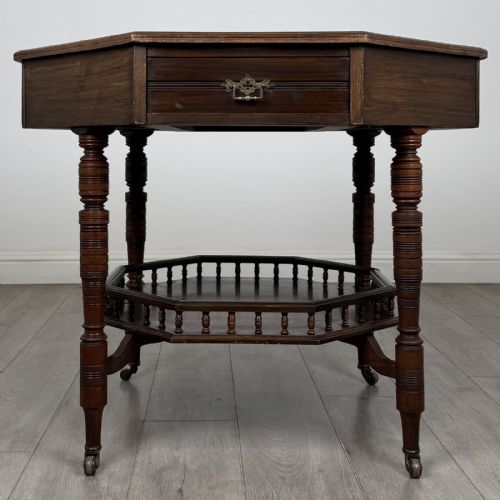
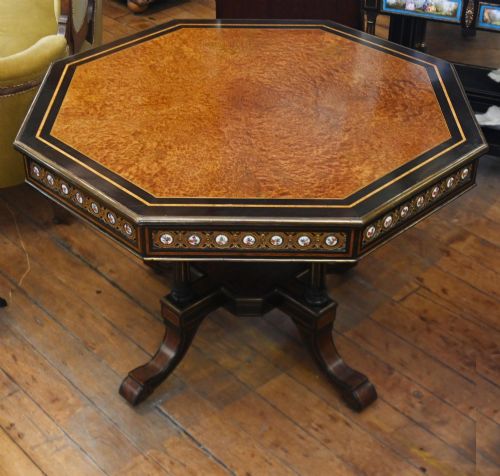
The physical forms vary considerably based on function and origin, ranging from circular dining and lamp tables to octagonal library tables, sofa tables, and oval hall tables. Alongside standard Victorian items, the selection includes pieces influenced by distinct design movements such as Anglo-Indian Colonial, Italianate, Dutch Baroque Revival, William IV, and Victorian Gothic Revival.
Most pieces occupy a central position in domestic circulation spaces, functioning as a surface for lamps, specimen marble displays, or welcoming floral arrangements. Buyers meet everything from large carved oak dining hybrids to compact ebonized pedestals and marquetry inlaid circular designs.
Materials and construction methods
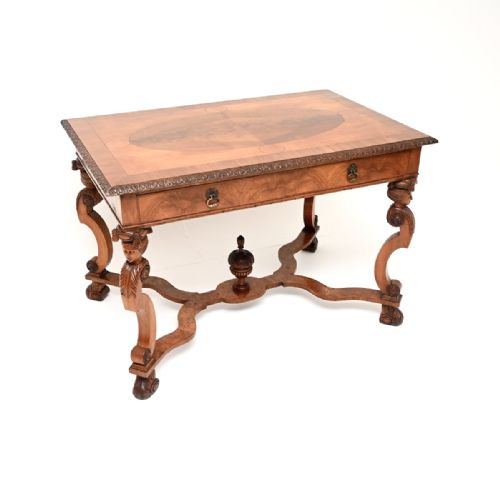
Cabinet makers utilised a rich palette of hardwoods, most notably walnut, burr walnut, mahogany, rosewood, and oak, often elevated by decorative veneers and exotic timbers such as calamander, ebony, zebrawood, and yew wood. Ebonised wood and painted surfaces also appear, offering contrasting dark tones suited to formal interior schemes.
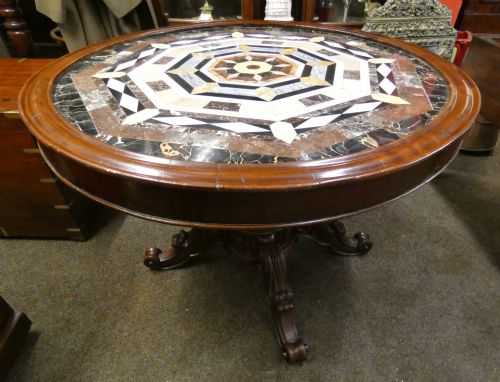
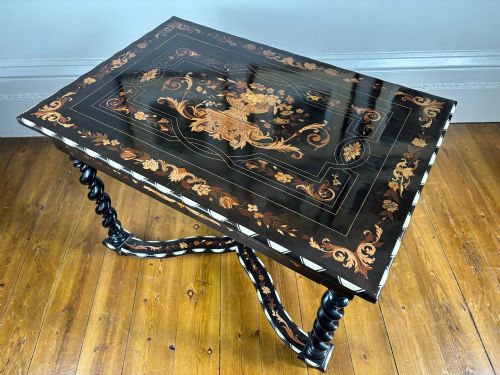
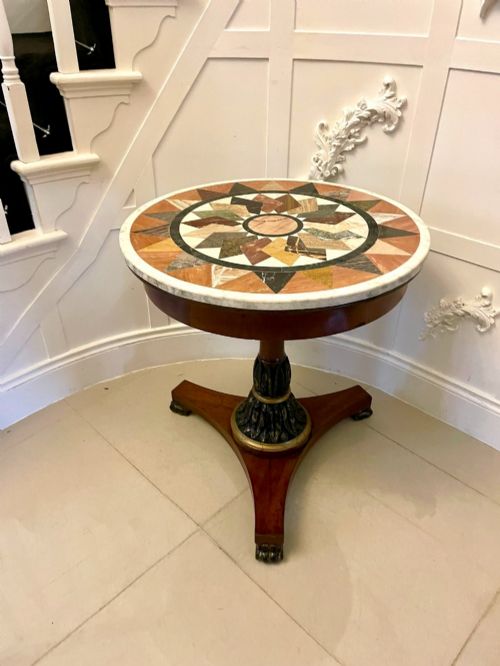
Surface ornamentation involved intricate techniques including marquetry inlay, bone inlay, pietra dura, and gilded decoration, alongside specialised regional craft such as Irish Killarney work. Structural details range from bobbin-turned supports and galleried shelves to heavy carved pedestals mounted on castors for mobility.
Victorian Hall Centre Table Retail Price Guide 2026
Typical asking prices for victorian hall centre table among the pieces listed under this phrase on Sellingantiques today, from the lower quarter to the upper quarter. They describe what is for sale here now, not the wider market.
Distinctions in quality and execution
The standard of execution is visible in the ambition of the timber selection, where highly figured burr walnut, rich calamander, or complex multi-wood marquetry separate standard production from exhibition-grade pieces. Maker attribution also plays a role, with documented workshops demonstrating superior joinery and refined carving details.
The integrity of secondary materials, such as heavy rouge marble or specimen marble tops and precise bone inlay work, dictates the upper tier of the range. Furthermore, structural stability on large circular or octagonal pedestals reflects the original joiner's skill in balancing weight and proportion.
Collinson + Lock·Edward’s And Robert’s·A Hindley & Sons·Holmes Baldock·Egan Workshop
The Victorian Hall Centre Table Glossary
- Marquetry
- Decorative patterns created by fitting thin slices of wood, bone, or shell into a prepared wooden surface. This technique produces intricate geometric or floral designs across table tops.
- Pietra dura
- An inlay technique utilising cut and fitted highly-polished coloured stones to create pictorial images. It appears on select stone table tops within this category.
- Gueridon
- A small decorative stand or table, typically round and supported by a central column or figures. These serve primarily as display surfaces in hallways and drawing rooms.
- Sofa table
- A rectangular domestic table traditionally designed to stand in front of a sofa, featuring drop leaves at either end and twin pedestals or trestle supports.
- Galleried shelf
- A raised protective rim or low railing bordering a lower tier or tabletop shelf. This feature prevents items from sliding off the surface during movement.
Victorian Hall Centre Table: Frequently Asked Questions
Where should a centre table go?
These tables are designed to stand freely in the middle of a hallway, reception room, or large landing rather than pushed against a wall. This placement allows access from all sides and showcases the timber and carved details from every angle.
In daily use, they function well as a permanent station for a heavy table lamp, decorative objects, or incoming post.
How do I care for a marble top?
Marble surfaces require simple maintenance focused on avoiding acidic spills and abrasive cleaners that can etch the polish. Routine dusting with a soft, dry cloth protects the stone and any inset specimen sections.
When placed in a hall, using felt pads beneath heavy decorative objects prevents scratching on both marble and polished timber edges.
What defines a library table?
A library table is a substantial freestanding desk or table historically used for reading, writing, and sorting documents in a private study or library. They often feature robust construction, oak or walnut frames, and generous proportions suited to heavy volumes.
Unlike standard dining tables, their design prioritises stability and a commanding presence appropriate for formal scholarly spaces.