
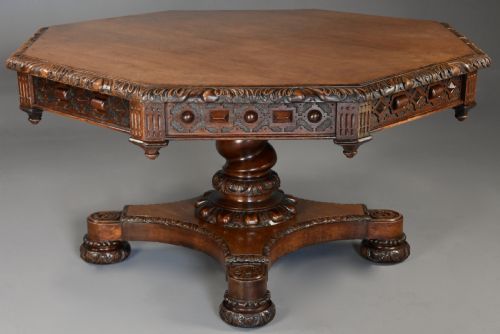
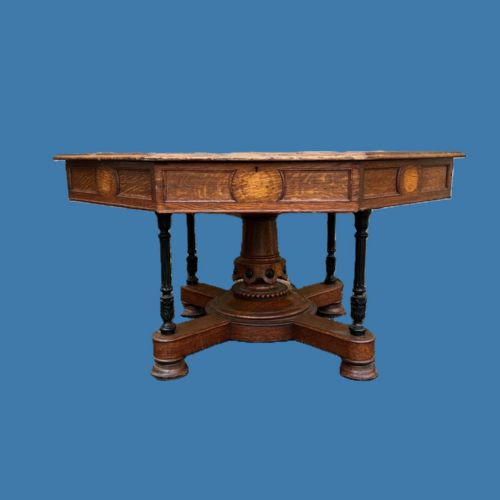


Large Octagonal Centre Table
A large octagonal centre table anchors a grand room with its unusual geometry and presence.
Large Octagonal Centre Table
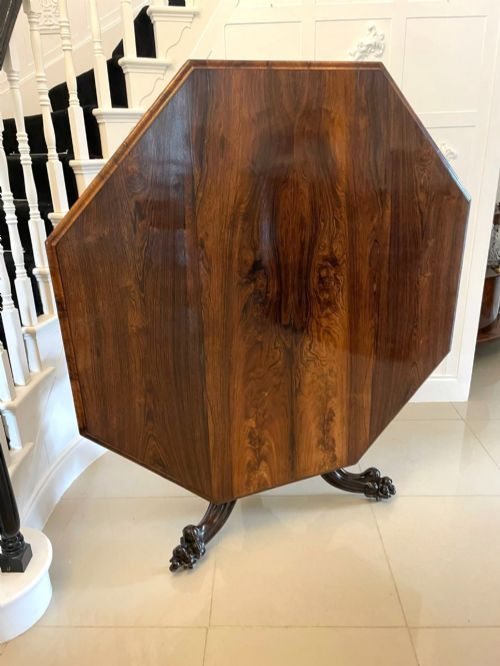
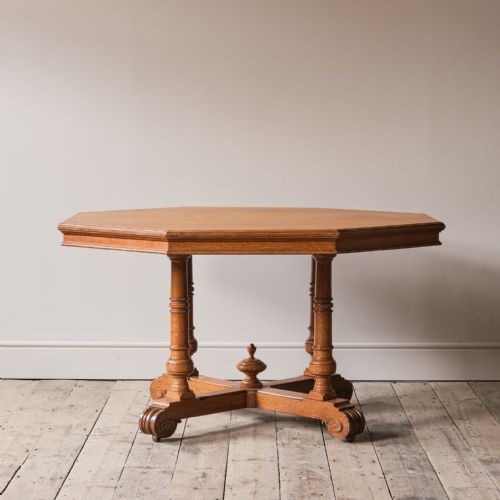
A large octagonal centre table provides a striking surface designed to sit proudly in the middle of a room rather than against a wall. These pieces date predominantly from the nineteenth century, spanning the Victorian era, William IV, and Edwardian periods.
Makers fashioned them as library tables, occasional pieces, or large dining formats suited for spacious interiors. The form accommodates varied revivals and movements, including Gothic, Jacobean, Aesthetic, and Art Nouveau interpretations.
Buyers encounter substantial timbers and architectural shapes that demand considerable floor space to be appreciated properly. The eight-sided top breaks up straight lines in a room, offering multiple sightlines from every angle.
How they were made
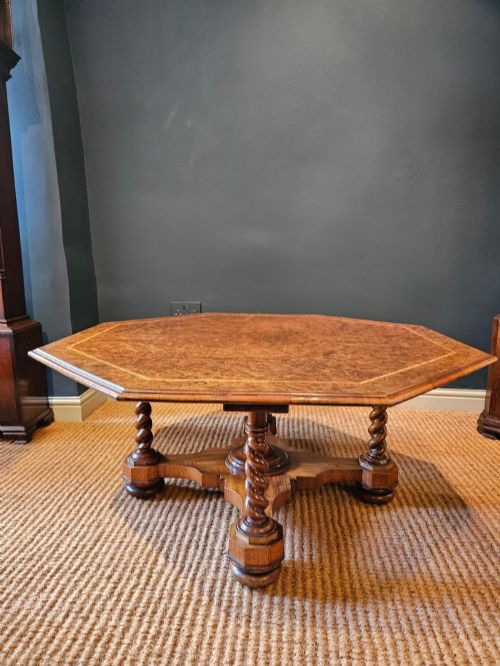
Cabinetmakers utilised dense hardwoods such as oak, mahogany, walnut, and rosewood, often applying burr walnut veneers or ebonised finishes to achieve dramatic surface patterns. Boxwood stringing and brass details frequently accent the primary timber.
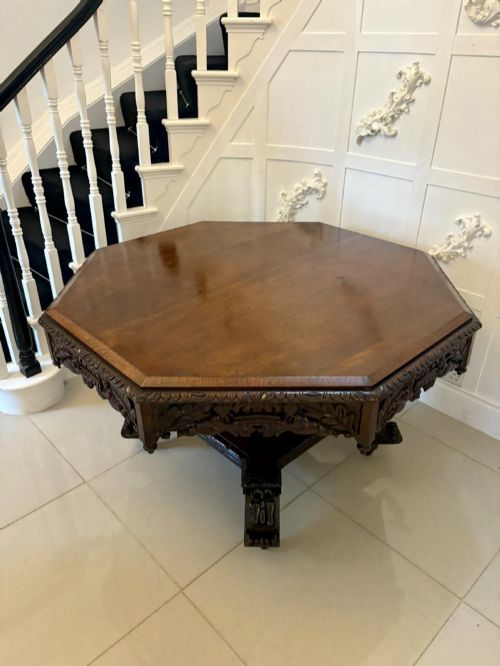
Construction relied on heavy framing to support the eight-sided tops, which sometimes incorporated heavy specimen marble inserts or intricate carved ornament reflecting Gothic, Elizabethan, and Jacobean influences.
Nineteenth-century oak and walnut dominate the surviving record for this form, frequently accompanied by rosewood and mahogany variants.
What varies in quality
The distinction between standard production and exceptional work rests on the choice of timber and the ambition of the carving. Master workshops selected richly figured burr veneers and executed crisp architectural moulding that elevates the entire piece.
Attribution to documented cabinetmakers like Gillows, James Shoolbred, or W.C. Wilkinson elevates the standing of a table significantly. The harmony of the proportions and the integration of secondary woods reveal the maker's discipline.
Gillows·James Shoolbred
The Large Octagonal Centre Table Glossary
- Octagonal
- Having eight sides and eight angles. This geometric plan creates a distinct silhouette compared to standard rectangular or round tables.
- Centre table
- A freestanding piece finished on all sides to stand in the middle of a room. These tables offer access from every direction.
- Burr walnut
- Wood taken from a tree growth or burl that produces complex, swirling grain patterns. Cabinetmakers prized this timber for high-status surfaces.
- Ebonised wood
- Timber treated to resemble ebony, typically through staining or painting. This technique gained popularity during the nineteenth century for dramatic contrast.
- Specimen marble
- Inlaid marble composed of various coloured geological samples arranged in geometric or pictorial designs. It provides a cool, polished surface inset into timber frames.
Large Octagonal Centre Table: Frequently Asked Questions
Where should a large octagonal centre table go?
These tables demand a generous room where people can walk entirely around them without obstruction. They work best in entrance halls, large libraries, or expansive drawing rooms as a central focal point.
Because the design lacks traditional corners, the table draws the eye inwards and helps soften the rigid geometry of square walls.
Can I use an antique centre table for dining?
Certain nineteenth-century examples were constructed specifically as centre and dining tables combined. Their robust frames and substantial dimensions support everyday use.
Check the height from the floor to the underside of the apron to ensure comfortable leg room for seating guests.
How do I identify a Victorian Gothic revival piece?
Gothic revival tables incorporate architectural motifs borrowed from medieval churches, such as pointed arches, trefoils, and heavy carved tracery. Oak is the predominant timber for this style.
The overall aesthetic is solemn, sturdy, and unapologetically heavy compared to lighter Edwardian or Aesthetic movement designs.