


Victorian Glass Urn
When you search for a victorian glass urn, you enter a world of nineteenth-century decorative vessels crafted in lead crystal, coloured glass, and enamel.
Victorian Glass Urn
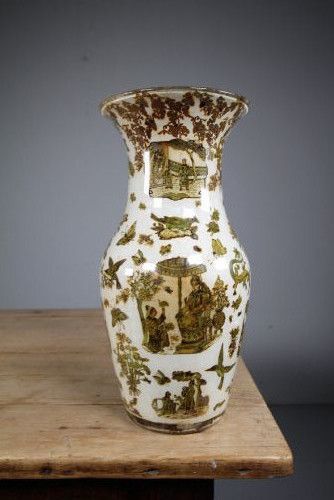
A victorian glass urn encompasses decorative vessels, lidded jars, and vases produced across the nineteenth century in various European workshops. These objects reflect nineteenth-century neoclassical and revivalist tastes, appearing in diverse forms from heavy cut lead crystal to delicate opaline and satin glass.
The pieces on this page span the Victorian era and adjacent nineteenth-century decades, originating from English and continental makers. Buyers encounter monumental table centrepieces alongside cabinet vases, many featuring hand-painted enamel, gilt decoration, or flashed glass overlays.
Vessels take many shapes, including ovoid urns, ewers, and lidded jars designed strictly for ornamental display rather than utility. Their presence in period interiors underlines the Victorian appetite for rich colour and classical form.
How they were made
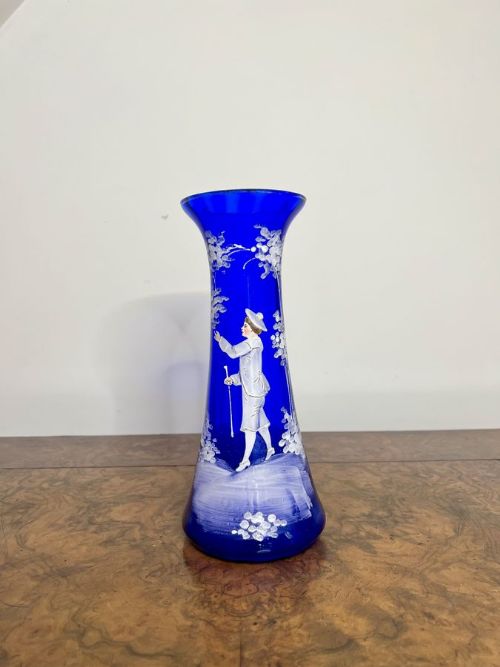
Glassmakers utilised traditional blowing and moulding techniques, shaping lead crystal and coloured metals into heavy, stable vessels. Molten glass received colour through metallic oxides, yielding deep cobalt blues, cranberry reds, and opaque opaline whites.
Decoration relied heavily on surface manipulation, including deep wheel-cutting, acid-etching, and polychromatic enamel painting. Artisans applied gold leaf and fired enamel pigments onto the cooled glass surface, sometimes layering contrasting colours to cut back through to the base metal.
Nineteenth-century glassmakers occasionally hid portraits under layers of coloured glass, waiting for an unsuspecting buyer to tilt the vase against the light.
What varies in quality
Quality rests in the crispness of the glass cutting and the precision of the hand-applied enamel work. Superior pieces display deep, sharp facets in cut crystal or finely detailed, hand-painted figural scenes rather than stencilled transfers.
The weight of the metal and the clarity of the coloured glass distinguish standard production from exceptional studio output. Heavier lead content and unblemished surface finishes mark the upper tier of nineteenth-century glassmaking.
Edwards and Roberts·Henry Bourne·Swaine Bourne·Varnish England
The Victorian Glass Urn Glossary
- Cranberry glass
- A transparent red glass coloured with gold chloride, popular throughout the Victorian period for decorative tableware and vases.
- Opaline glass
- An opaque, pastel-coloured glass developed in France and England, often mimicking porcelain and used for delicate hand-painted vases.
- Cut glass
- Glass decorated by abrading the surface on rotating wheels to create geometric or floral facets that refract light.
- Mary Gregory glass
- Victorian glass decorated with white enamel silhouettes of children playing in garden settings, attributed loosely to various nineteenth-century makers.
- Giltwood
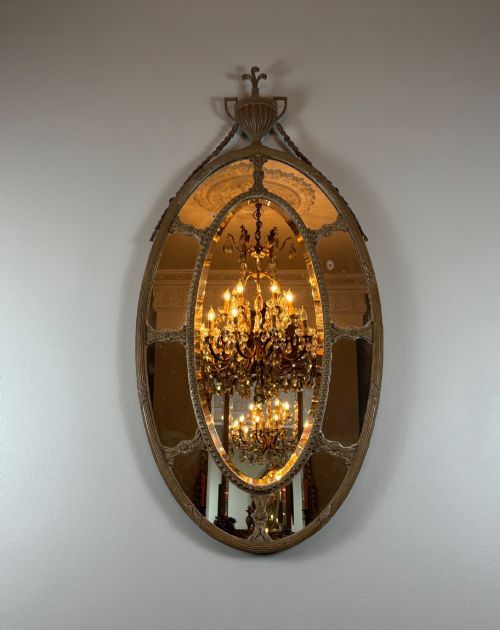
- Timber carved and coated with gold leaf or gold paint, frequently found on the frames and mounts associated with period decorative displays.
Victorian Glass Urn: Frequently Asked Questions
How do I date a Victorian glass urn?
Dating relies on stylistic clues, pontil mark characteristics, and colour palettes typical of specific decades. Mid-century pieces often feature heavy opaline or vibrant enamel, while later examples embrace satin glass and complex overlays.
Examine the base for signs of wear and the manufacturing method of the pontil scar. Ground and polished pontils generally indicate finer quality production.
Were these urns used for flowers?
Most decorative urns from this period served strictly as ornamental centrepieces or mantel garnitures rather than functional vases. Their delicate painted enamel and gilded surfaces meant they were kept dry for display.
Heavier cut crystal lidded jars were occasionally utilised to hold potpourri or sweetmeats, but many survived precisely because they remained untouched on drawing-room tables.
How do I clean antique glass?
Dust gently with a soft, dry cloth to protect fragile enamel work and gold leaf applications. Avoid soaking pieces with gilt or painted surfaces in water.
Harsh chemical detergents can strip nineteenth-century gilding and ruin cold-painted decorations permanently.