


Antique Glass Bonbonniere
An antique glass bonbonniere is a lidded container designed for sweets, offering tactile elegance and period charm to any table setting.
Antique Glass Bonbonniere
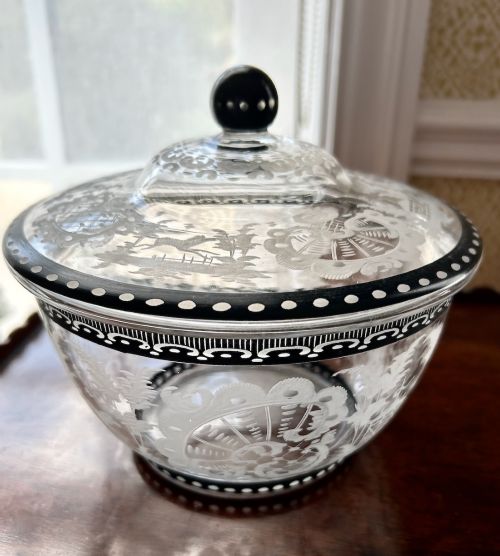
When you search for an antique glass bonbonniere, you encounter covered vessels, jars, sweetmeat containers, and decorative baskets spanning the eighteenth to the early twentieth century. The selection encompasses Georgian enamel patch boxes, Victorian cut glass lidded jars, and Edwardian silver-plated designs.
The most common examples on this page are Victorian cut glass and lead crystal vessels, alongside French and English nineteenth-century pieces. These forms range from pink opaque glass dishes to grand cut crystal covered candy bowls with Dutch silver mounts.
Makers and designers include firms such as W M F, alongside various unidentified English and continental workshops. Styles vary from Georgian and French Rococo Revival to Art Nouveau and Victorian.
Materials and construction
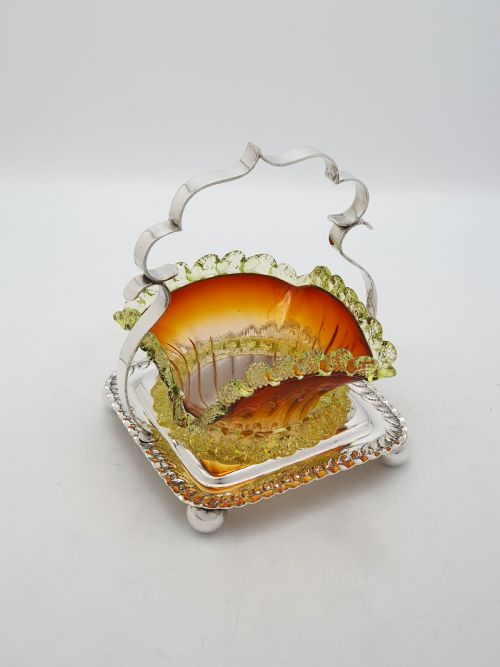
The primary material is glass, frequently seen as cut glass, lead crystal, cranberry glass, amber glass, or pink opaque glass. Artisans shaped these vessels through blowing and pressing, followed by extensive wheel-cutting to create facets and decorative patterns.
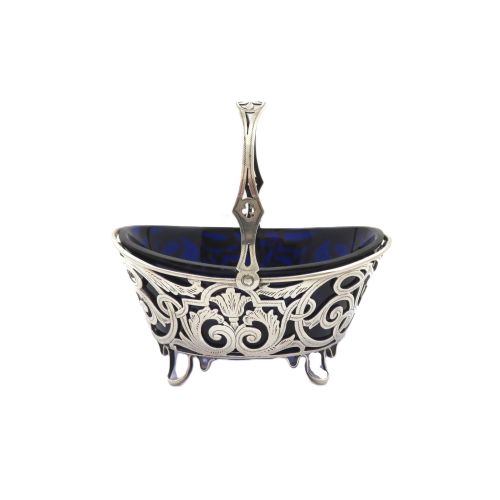
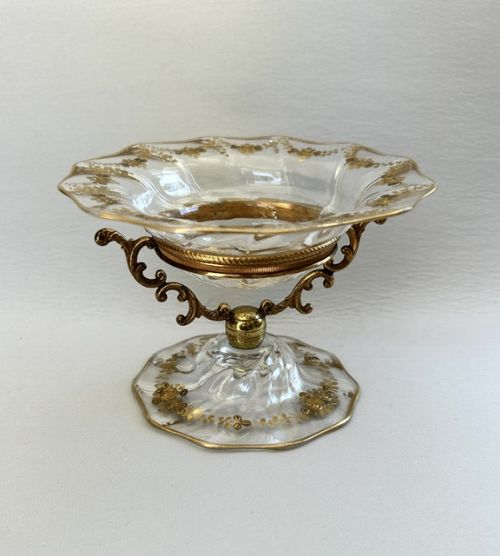
Many examples incorporate metal mounts, such as ormolu, silver plate, sterling silver, Dutch silver, and enamel work. These metal elements provide secure rims, hinged lids, handles, or supporting stands for the glass bowls.
Antique Glass Bonbonniere Retail Price Guide 2026
Typical asking prices for glass bonbonniere among the pieces listed under this phrase on Sellingantiques today, from the lower quarter to the upper quarter. They describe what is for sale here now, not the wider market.
Assessing quality and execution
Quality in an antique glass bonbonniere depends on the clarity and weight of the glass, the crispness of the wheel-cutting, and the integration of any metal mounts. Heavy lead crystal with deep, sharp facet cutting represents the higher end of production compared to simpler moulded vessels.
The sophistication of supplementary materials also dictates overall merit. Pieces featuring finely cast ormolu stands, detailed enamel work, or substantial silver components demonstrate superior craftsmanship from their respective periods.
W M F
The Antique Glass Bonbonniere Glossary
- Bonbonniere
- A small ornamental box or dish specifically made for holding sweets or bonbons.
- Sweetmeat jar
- A covered glass container historically used to serve sweet delicacies, preserves, or candied fruits.
- Ormolu
- Gilded bronze or brass mounts frequently utilised on nineteenth-century decorative containers and stands.
- Patch box
- A small lidded box, often made of enamel or metal, used in the eighteenth century for cosmetic patches.
- Lead crystal
- A high-clarity glass containing lead oxide, known for its refractive brilliance and heavy feel.
Antique Glass Bonbonniere: Frequently Asked Questions
What is a bonbonniere used for?
These vessels were originally manufactured to hold small confectionery items, sugared almonds, or sweetmeats during formal dining occasions and drawing-room gatherings.
Today, they function well on dressing tables for small trinkets or as decorative centrepieces on sideboards and mantelpieces.
How do I date an antique glass bonbonniere?
Dating relies on observing stylistic markers, manufacturing techniques, and the presence of any metal mounts or hallmarks. Georgian and Victorian pieces exhibit different cutting patterns, glass colours, and mounting styles compared to later twentieth-century items.
Examining the base for wear marks and pontil scars also helps establish the age and production method of the glass body.
Are all bonbonnieres made entirely of glass?
Many examples combine a glass bowl or liner with metal elements such as sterling silver, silver plate, or ormolu stands and swing handles.
Some pieces also feature enamel lids or Dutch silver mounts, reflecting the diverse manufacturing practices of European workshops.
How should I clean my glass bonbonniere?
Wash the glass gently in warm, soapy water using a soft cloth, avoiding harsh abrasives that could scratch the surface or damage cut facets. If the piece includes silver, enamel, or ormolu mounts, keep the metal components dry and clean them with appropriate, non-liquid methods to protect the finish.