
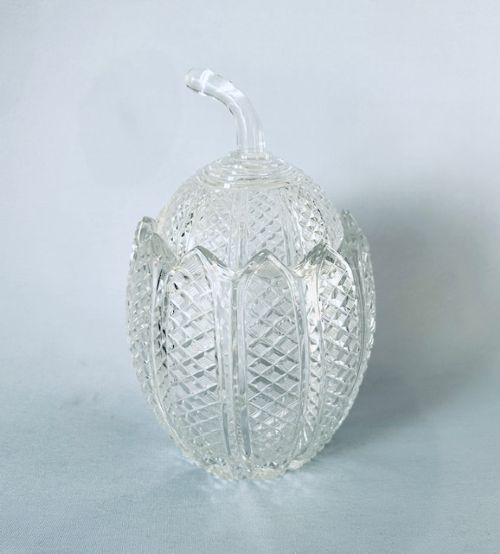


Diamond Cut Jar
These diamond cut jar examples combine heavy lead crystal bodies with silver mounts, spanning Georgian, Victorian, and Edwardian periods.
Diamond Cut Jar
A diamond cut jar encompasses a range of domestic vessels designed for storage and presentation on the dining table or sideboard. These items appear across Georgian, Regency, Victorian, and Edwardian eras in forms such as biscuit barrels, condiment jars, preserve pots, and sweetmeat jars.
The most common version met on this page is the glass biscuit barrel or box, frequently mounted with silver or silver plate and dating from the Victorian and Edwardian periods. Alongside these utilitarian storage pieces, buyers encounter lidded vases, sweetmeat jars, and occasional novelty shapes like melons.
Originating in British dining rooms, these vessels served practical functions for preserved fruits, sweetmeats, tea mixing, and dry biscuits. Their presence reflects the Victorian and Edwardian taste for heavily ornamented glassware that caught the light of gas lamps and chandeliers.
How they were made
Makers produced these vessels through hand-blowing glass into moulds or gathering molten lead crystal to be shaped by hand. Craftsmen then applied wheel-cutting techniques to carve deep geometric patterns across the exterior surface.
Metal components such as mounts, lids, and swing handles utilise sterling silver, Dutch silver, silver plate, and brass. These mounts were fitted securely to the glass rims, often incorporating hinged lids for functional daily use.
A Georgian novelty melon biscuit barrel proves that past diners took their pastry containment very seriously indeed.
What varies in quality
Quality rests upon the crispness and depth of the wheel-cut facets across the crystal surface. Superior examples display sharp, precise geometric cuts that refract light cleanly, whereas lesser pieces feature softer, shallower grinding.
The substance of the metal mounts further separates the range, with substantial sterling silver or Dutch silver mounts indicating a higher tier of production than standard silver plate or brass.
The Diamond Cut Jar Glossary
- Cut glass
- Glass decorated by grinding facets and patterns into the surface using rotating wheels. This technique creates brilliant light refractions across the vessel.
- Lead crystal
- Glass containing metallic lead oxide, which increases weight, clarity, and brilliance. It provides the ideal medium for deep diamond cutting.
- Biscuit barrel
- A covered container used for storing dry biscuits or crackers at the dining table. They frequently feature metal swing handles and lids.
- Sweetmeat jar
- A covered vessel designed for holding sugary confections, sweetmeats, or candied fruits. These often stand on decorative pedestal bases.
- Silver plate
- A thin layer of silver bonded to a base metal core such as copper or brass. It allowed makers to produce ornate mounts at a lower cost than solid silver.
Diamond Cut Jar: Frequently Asked Questions
What were diamond cut jars used for?
These vessels served practical storage roles in nineteenth-century dining rooms, holding biscuits, condiments, preserves, and sweetmeats.
Their heavy construction protected contents from moisture while displaying preserved goods and confections attractively during social gatherings.
How do I date a cut glass jar?
Dating relies on combining the stylistic details of the metal mounts, the shade of the glass, and the cutting patterns.
Georgian and Regency pieces tend to show heavier hand-cut facets and simpler forms, while Victorian and Edwardian examples often incorporate silver-plated or sterling mounts with swing handles.
How do I clean antique cut glass?
Wash the glass gently in lukewarm water using mild detergent and a soft cloth to avoid scratching the surface.
Avoid soaking metal mounts in water, especially if silver-plated, and dry the crystal immediately with a lint-free cloth to preserve its brilliance.
What is the difference between glass and crystal?
Crystal contains lead oxide, which gives the material greater weight, density, and refractive index than standard glass.
This high lead content allows craftsmen to execute sharper, deeper diamond cuts that sparkle intensely under light.