
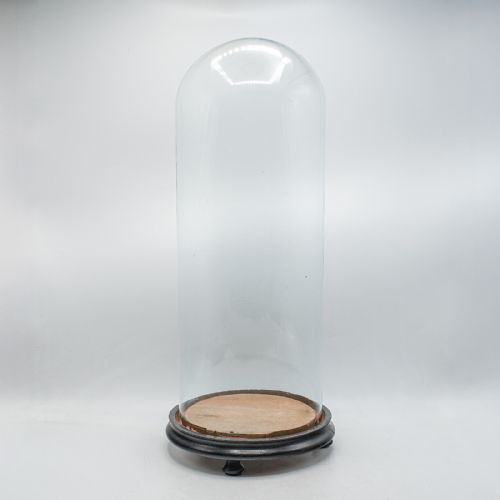
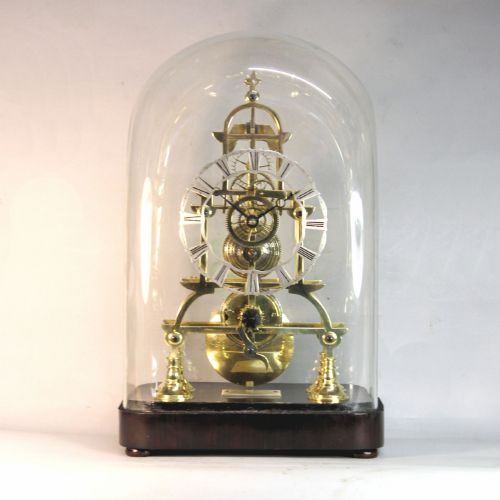
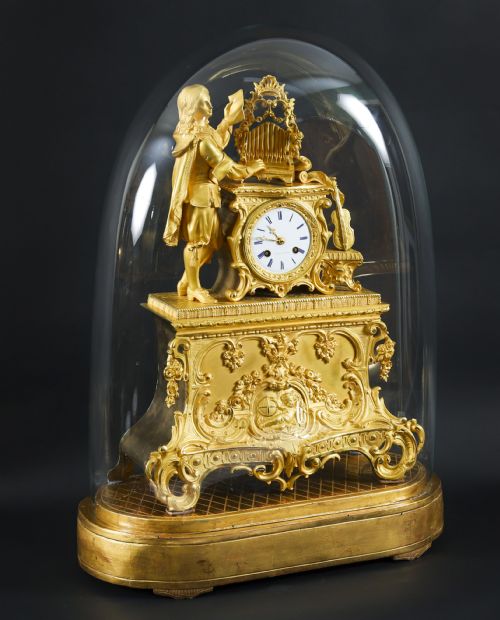


Victorian Glass Dome Clock
A victorian glass dome clock brings together precise horology and protective clear blown glass to shelter intricate movements.
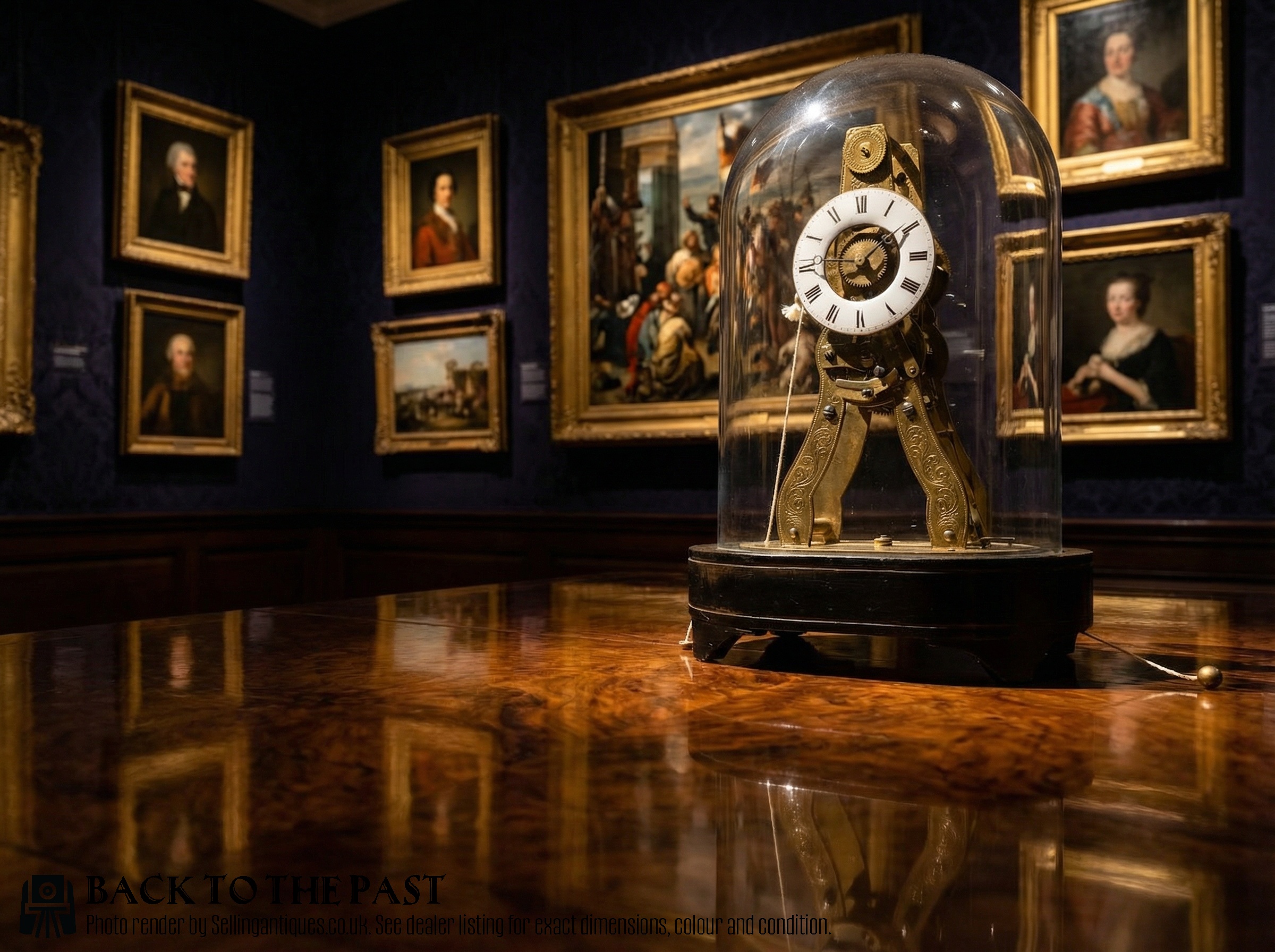
Victorian Glass Dome Clock
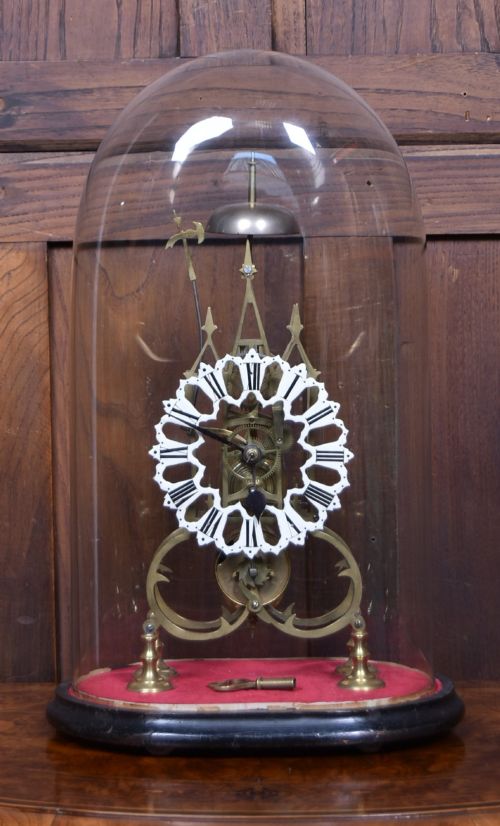
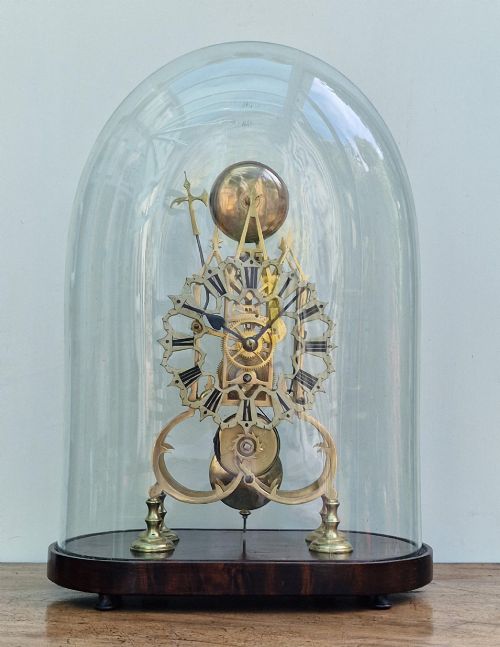
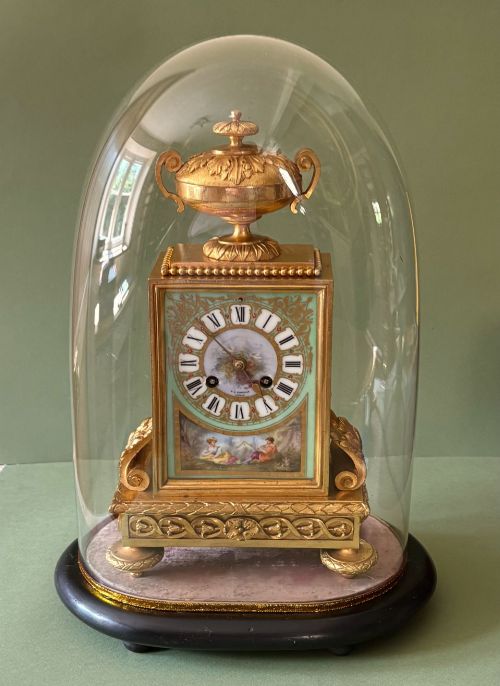
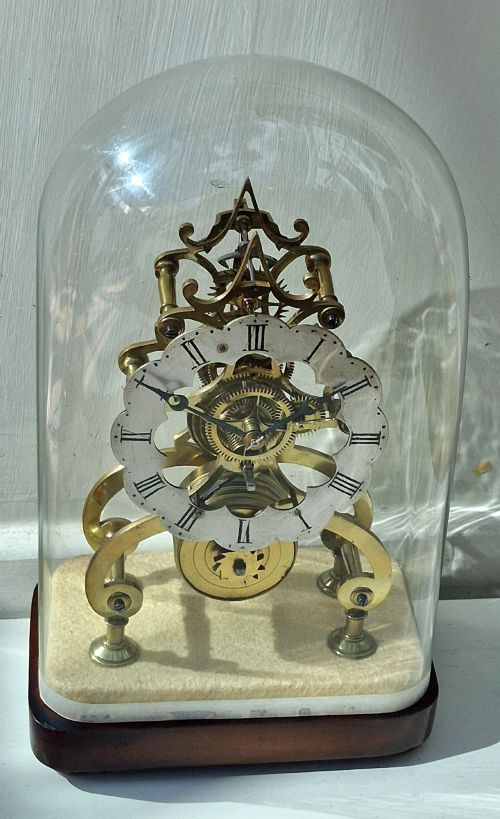
A victorian glass dome clock comprises a mechanical timepiece housed beneath a clear blown glass cover, designed to protect delicate metalwork from dust and disturbance. These objects often take the form of skeleton clocks revealing their gear trains, or ornate mantel pieces featuring porcelain and ormolu.
The selections encountered here span English fusee movements and French portico or mantel clocks, frequently accompanied by wooden or velvet-lined bases. Collectors seek these pieces for their combination of visible mechanical ingenuity and the warm optical distortion of the original glass covers.
Materials and construction
Makers utilised brass and gilt bronze for the clock frames and movements, often mounting porcelain panels or resting the mechanism upon ebonised wood and velvet bases. The protective covers consist of thick, hand-blown glass displaying gentle surface ripples and slight thickness variations inherent to nineteenth-century production.
Skeleton clocks employ open brass wheel work and delicate plates held together by pillars, exposing the escapement and gear trains to view. Ormolu mounts and fine porcelain face dials complete the decorative appearance of the French and English workshop examples.
Victorian Glass Dome Clock Retail Price Guide 2026
Typical asking prices for victorian glass dome clock among the pieces listed under this phrase on Sellingantiques today, from the lower quarter to the upper quarter. They describe what is for sale here now, not the wider market.
Several domes originally served as Victorian taxidermy showcases before finding a second career guarding brass skeleton gears.
Assessing quality and proportion
Quality reveals itself in the crispness of the brass skeleton frame cutting and the complexity of the movement, such as fusee power or passing strike mechanisms. Superior examples retain their original matching hand-blown glass dome and fitted wooden base rather than later replacements.
The refinement of the casting in ormolu mounts and the artistic execution of painted porcelain panels distinguish high-tier workshop output from standard production. Proportion and balance between the height of the glass dome and the mass of the clock below dictate the visual success of the ensemble.
Richard Winter of Chieveley·Leroy Paris·Thwaites of London·Allen Colyer·Ferdinand Barbedienne
The Victorian Glass Dome Clock Glossary
- Fusee
- A conical pulley used in mechanical clocks to maintain an even pull on the gear train as the mainspring unwinds. This mechanism ensures steady timekeeping throughout the duration of the wind.
- Skeleton clock
- A timepiece designed without a traditional solid case, exposing the gear wheels, plates and escapement to direct view. Such pieces are usually displayed beneath a glass dome to prevent dust accumulation.
- Ormolu
- Gilt bronze decorative metalwork produced by applying a gold and mercury amalgam to cast brass or bronze. The technique yields a rich golden surface sheen popular in nineteenth-century mantel clocks.
- Portico clock
- A monumental clock style shaped like a classical architectural portico supported by columns. These movements are frequently housed under tall glass domes.
- Pass strike
- A clock mechanism that sounds a single chime on the half hour without striking the full hour count. It provides a subtle audible marker of time.
Victorian Glass Dome Clock: Frequently Asked Questions
How do I clean the glass dome?
Lift the glass cover using both hands and place it on a stable, flat surface lined with a soft cloth. Clean the interior and exterior gently with a mild glass cleaner and a lint-free cloth.
Avoid applying pressure near the lower rim where historical glass is occasionally thinner or more vulnerable. Ensure the glass is completely dry before placing it back over the clock movement.
Are the glass domes usually original?
Many surviving pieces retain their original hand-blown glass covers, which display subtle bubbles, striations and minor thickness variations. A truly period dome fits the wooden base groove precisely and matches the proportions of the clock.
Replacement glass domes do occur because the fragile nature of blown glass made breakages common over the decades. Inspect the lower edge for signs of modern cutting if authenticity is a priority.
How do skeleton clocks work?
Skeleton clocks operate through a train of brass gears and a mainspring that transfer energy to an escapement controlling the release of time. The open design allows the balance wheel and anchor to be watched directly as they regulate the movement.
Weight-driven or spring-driven power sources turn the hands across an enamelled or skeletonised metal dial. Regular winding keeps the tension balanced across the gear train.
Where should I place my clock?
Position the clock on a sturdy, level surface away from direct sunlight, draughts and sources of heat such as radiators. A stable mantelpiece or dedicated display cabinet protects the mechanism from accidental vibrations.
Keeping the clock level is essential for the escapement to beat evenly and maintain accurate timekeeping. The surrounding glass dome then shields the delicate metalwork from household dust.