
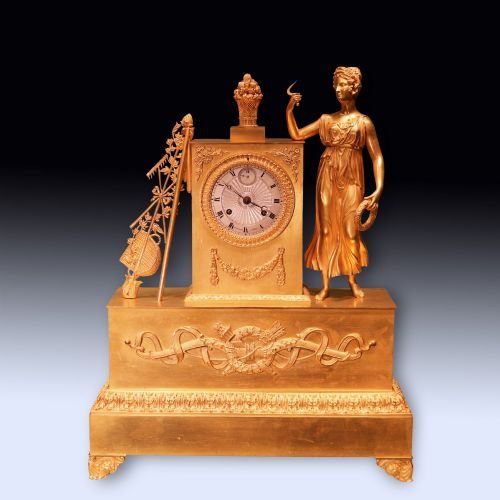


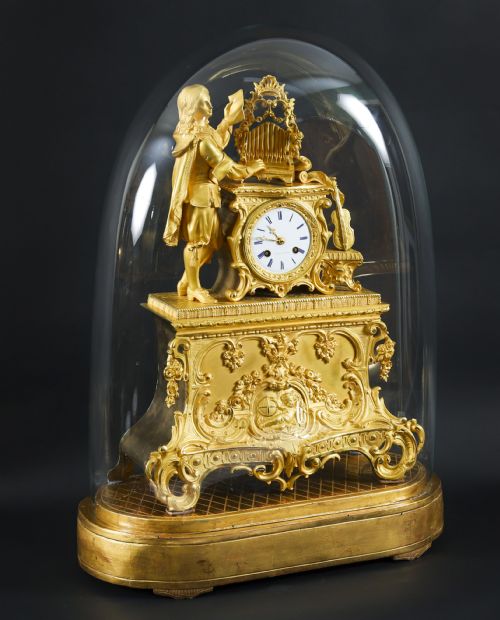


French Figural Mantel Clock
A french figural mantel clock combines sculptural presence with precision timekeeping, bringing classical mythology and romantic allegories directly into the domestic interior.
French Figural Mantel Clock
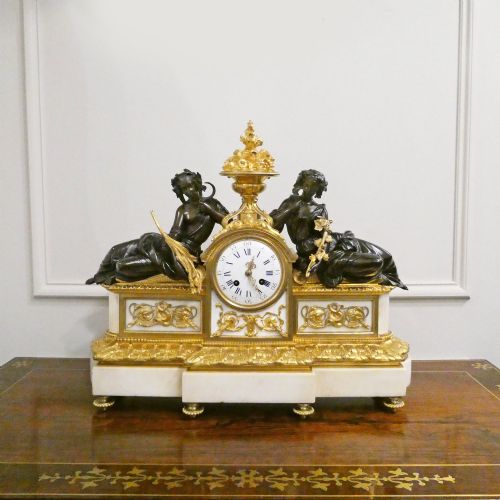
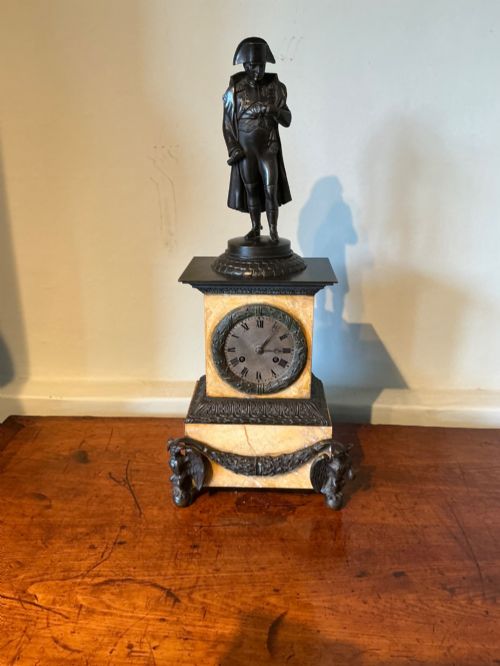
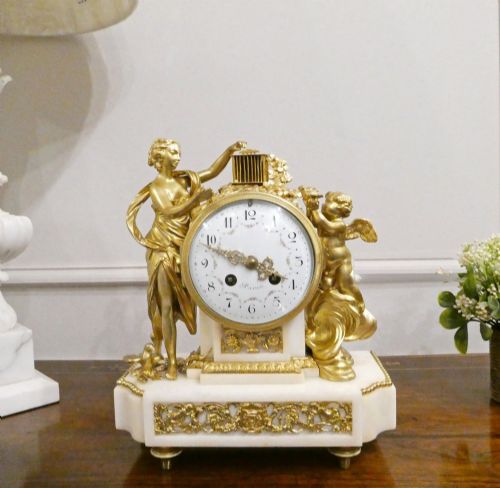
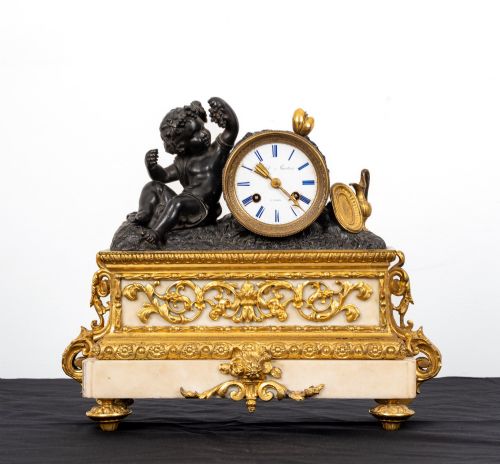
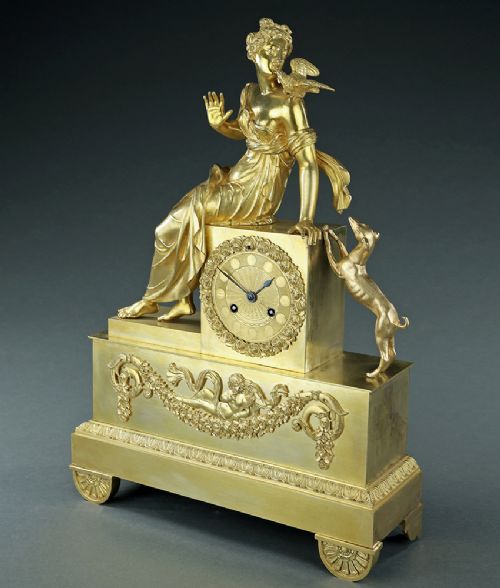
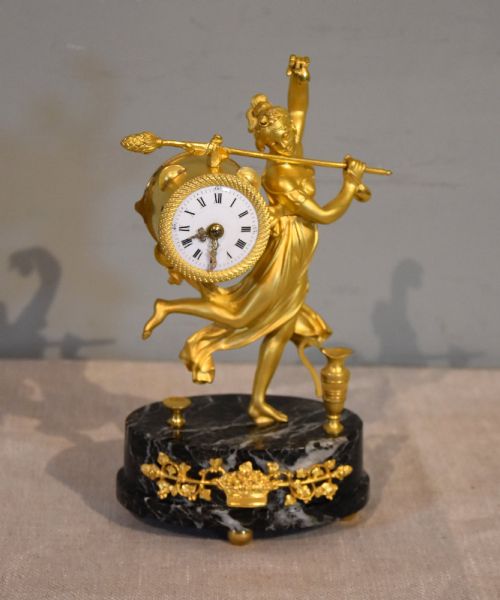
A french figural mantel clock centres on a detailed cast figure, ranging from classical deities and literary characters to allegorical representations like love, fidelity, and astronomy. These pieces frequently appear alongside matching side garnitures or candelabra to form balanced three-piece decorative sets.
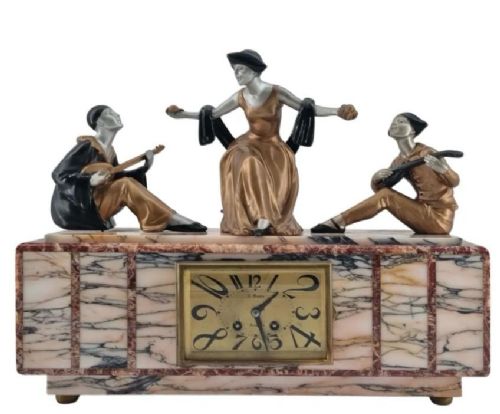
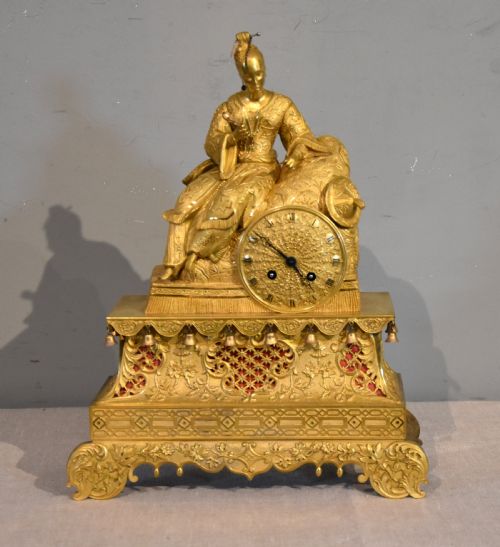
The architectural housing typically takes the form of a polished marble or slate plinth, upon which the sculptural subject and the clock dial rest securely. Examples span from the restrained symmetry of the Louis XVI style and French Empire periods to the elaborate flourishes of the Rococo Revival.
How They Were Made
Maker workshops utilised cast bronze, ormolu, and gilt metal for the structural elements and sculptural figures, often combining them with contrasting green, black, or white marble bases. Gilding was achieved through mercury amalgamation or electrogilding to impart a durable metallic lustre to the bronze components.
Dials were commonly constructed from white enamel or porcelain, featuring hand-painted numerals and delicate brass hands, protected behind curved glassbezels. Movement mechanisms relied on intricate gear trains driven by spring-powered or fusee movements, housed safely within the main body of the clock.
Timekeeping meets celestial navigation when Urania, the muse of astronomy, points directly toward the hours on the dial.
What Varies in Quality
The crispness of the bronze chasing and the depth of the ormolu finish dictate the visual success of the sculptural subject. Superior examples exhibit finely rendered facial expressions, distinct drapery folds, and clean, unblemished marble bases without structural repairs.
Movement architecture and signature attribution elevate certain pieces significantly above standard production. Signed backplates from recognised Parisian foundries indicate superior mechanical execution and sustained timekeeping reliability.
Vincenti·Siffel and Cartier·Canaillor of Paris·Japy Freres·Leroy Paris·Lemerle Charpentier
The French Figural Mantel Clock Glossary
- Ormolu
- Gilded bronze produced through the application of a mercury and gold amalgam onto a cast bronze base, then heated to drive off the mercury. This technique creates a rich, matte golden surface that resists tarnishing.
- Garniture
- A set of matching ornamental objects designed for display together on a mantelpiece or sideboard, typically comprising a central clock flanked by matching candelabra or urns.
- Fusee
- A conical pulley connected to the mainspring by a cord or chain, designed to equalize the torque of the spring as it winds down and ensure consistent timekeeping accuracy.
- Chasing
- The manual post-casting process of refining metal surfaces using small punches and hammers to sharpen details, add texture, and remove casting flaws from bronze figures.
French Figural Mantel Clock: Frequently Asked Questions
How do I wind the clock?
Wind the clock using the appropriate key inserted into the winding arbours on the enamel dial, turning gently until resistance is felt. Care must be taken not to overwind the mainspring.
Ensure the pendulum is secured or removed if the clock needs to be relocated to prevent damage to the delicate suspension spring.
What periods do these clocks cover?
The available pieces predominantly date from the nineteenth century, encompassing Regency, French Empire, Louis XVI style, and Victorian aesthetic movements. Earlier examples from the opening years of the nineteenth century emphasise classical restraint.
Later Victorian and turn-of-the-century variations introduce more eclectic sculptural subjects, drawing on mythology, romantic literature, and allegorical themes.
Are these clocks suitable for daily use?
These timepieces function as reliable daily clocks provided they receive periodic professional servicing and cleaning of the mechanical gear train. Proper setting of the beat is essential for the pendulum to maintain an even tick.
Placement should be on a stable, level mantelpiece away from direct sunlight, excessive heat sources, and damp environments to protect the enamel dial and mercury gilt surfaces.
What is a clock garniture?
A clock garniture is a matched decorative ensemble consisting of a central mantel clock accompanied by two side ornaments, such as urns or candelabra. These sets were designed to create a symmetrical display across a fireplace mantel.
The materials and sculptural motifs of the side pieces directly mirror those of the main clock housing.