


Victorian Ormolu Mantel Clock
A victorian ormolu mantel clock brings gleaming nineteenth-century opulence to a room, combining cast gilt metal with intricate mechanical artistry.
Victorian Ormolu Mantel Clock
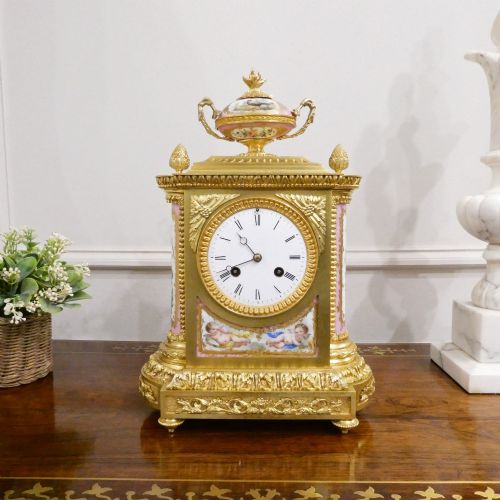
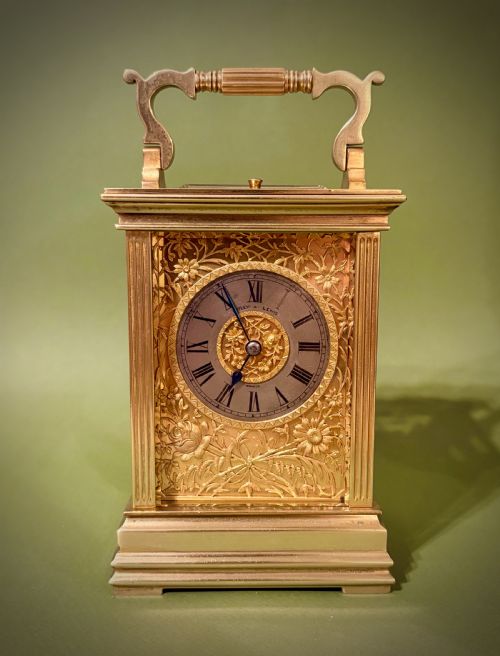
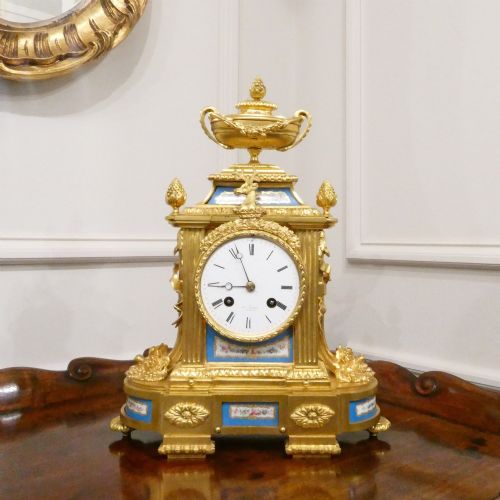
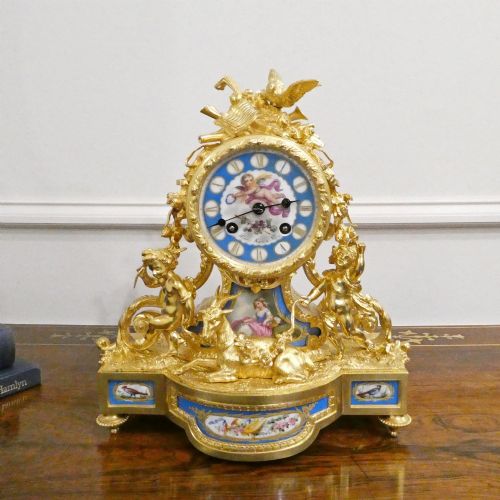
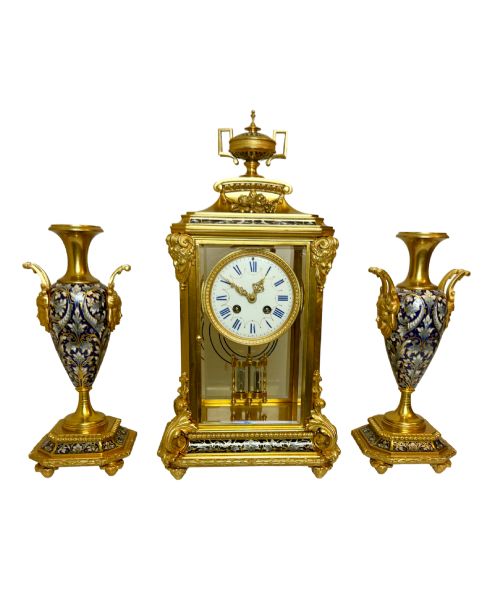
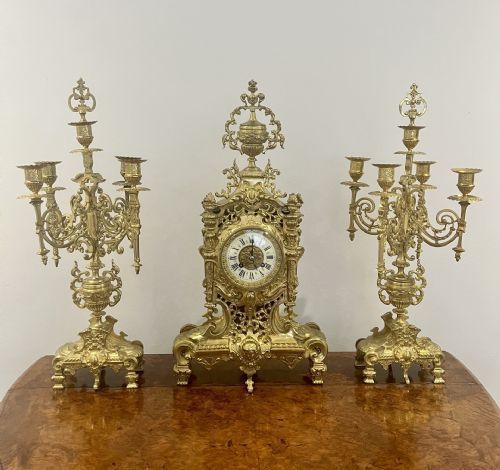
A victorian ormolu mantel clock is typically a nineteenth-century timepiece cast in bronze and gilded, often accompanied by matching side pieces in clock garniture sets. These objects originate predominantly from French workshops adopting rococo revival or louis xvi revival styles, though English and American makers also contributed.
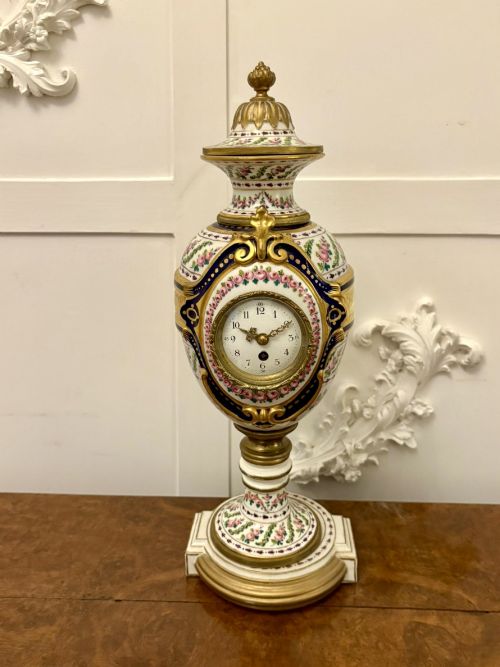
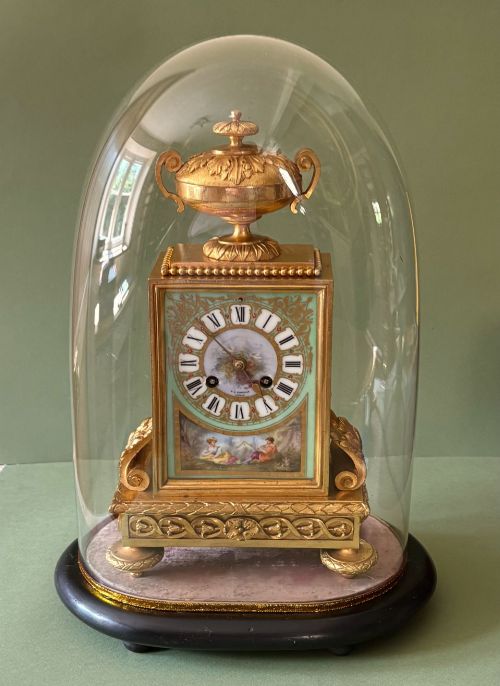
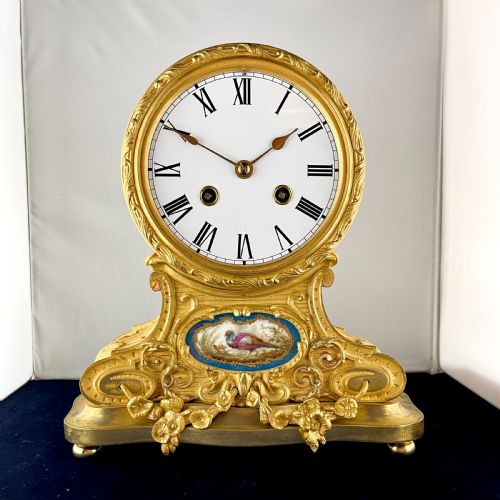
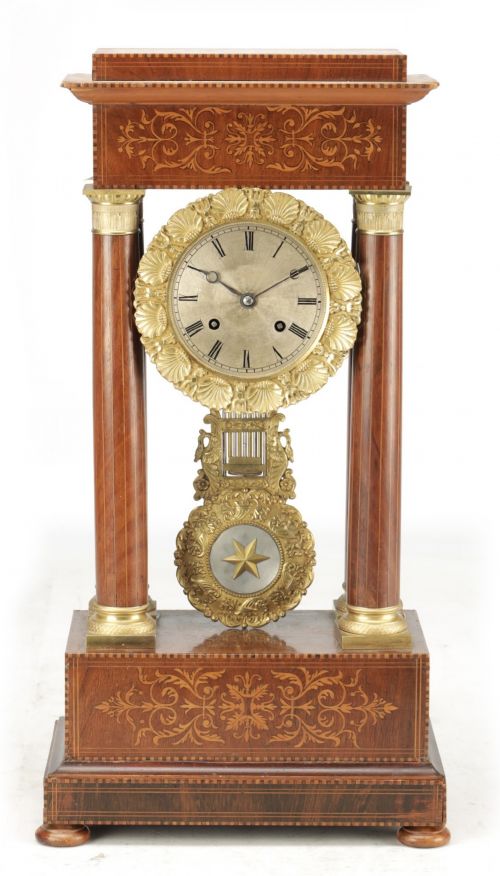
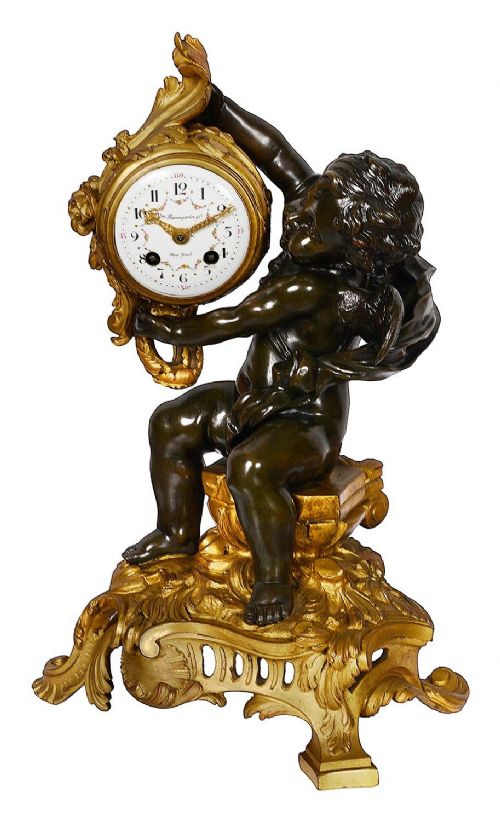
The versions most commonly met on this page are substantial French mantel clocks featuring porcelain dial panels, enamel numerals, and figural or architectural cases. They span periods from the eighteen-sixties through to nineteen-ten, reflecting the ornate tastes of the Victorian era.
Buyers encounter everything from simple drumhead timepieces to large garnitures flanked by urns or candelabra. The overriding presence is nineteenth-century gilt bronze, frequently paired with marble, onyx, or hand-painted porcelain.
Distinctions in Quality
Quality rests significantly on the crispness of the bronze casting and the depth of the subsequent hand-chasing. Lesser examples display soft, blurred decorative details resulting from worn moulds, whereas superior pieces exhibit sharp relief and intricate definition.
The complexity and integration of the movement also dictate standard, with signed French or American movements demonstrating greater precision than unmarked equivalents. Furthermore, the harmonious preservation of original gilding without excessive rubbing or over-cleaning marks the superior specimens.
Jean-Baptiste Delettrez·Henry Marc·Ansonia New York·Schneckenburger·Leroy Paris·PH Mourey·Samuel Marti
The Victorian Ormolu Mantel Clock Glossary
- Ormolu
- A method of applying finely ground gold mercury amalgam to bronze, or a general term for gilded bronze ornaments. It provides the characteristic bright yellow lustre seen on nineteenth-century clock cases.
- Clock Garniture
- A set comprising a central mantel clock accompanied by matching side ornaments such as urns, vases, or candelabra. These matched arrangements were designed to create a balanced display on a fireplace mantel.
- Champlevé
- An enamelling technique where troughs or cells are hollowed out of the metal surface and filled with vitreous enamel before firing. It frequently decorates the dials and bezels of later nineteenth-century clocks.
- Boullework
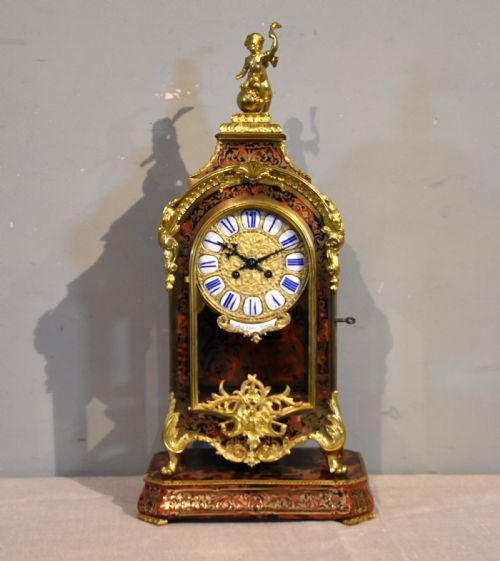
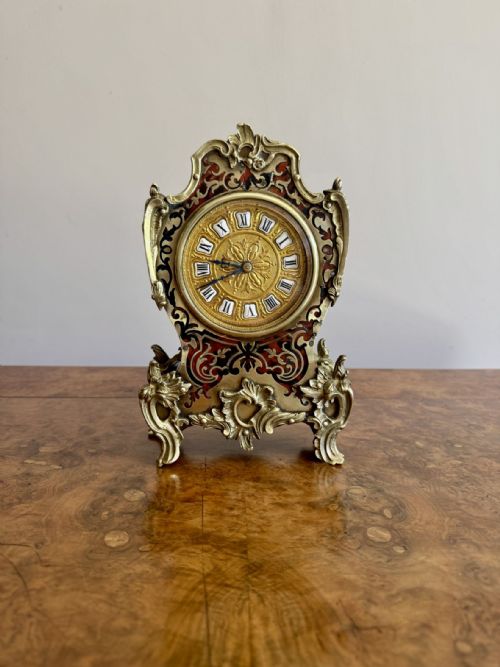
- A style of marquetry using brass and tortoiseshell inlaid in contrasting patterns, named after the cabinetmaker André-Charles Boulle. It appears on several sophisticated nineteenth-century clock cases.
- Crystal Regulator
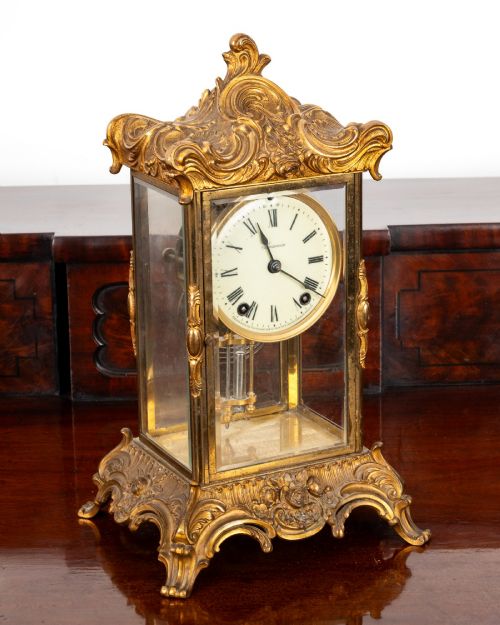
- A clock housed in a brass or gilt bronze frame with bevelled glass panels on all four sides. This design allows light to pass through and exposes the mechanical movement from multiple angles.
Victorian Ormolu Mantel Clock: Frequently Asked Questions
How do I wind a victorian ormolu mantel clock?
Most mechanical clocks of this period require a specialised winding key inserted into the dial holes to tension the spring barrels. Turning the key gently until resistance is felt ensures the movement is fully powered.
Care must be taken not to over-wind the mechanism, as this can damage the internal springs. Different arbours govern the timekeeping and the striking train, requiring separate attention during winding.
Where should I place my clock?
These timepieces suit stable, flat surfaces away from direct sunlight and damp environments. Mantelpieces and sturdy sideboards provide traditional placement options that showcase the gilt bronze decoration.
Because antique movements rely on level positioning to maintain an even beat, using small shims beneath the base may be necessary. Placing the clock away from high-traffic doorways also protects delicate glass panels and protruding ornamentation.
How do I tell different periods apart?
Stylistic cues offer the clearest indicator of a clock's production era within the nineteenth century. Pieces featuring exuberant asymmetry and naturalistic scrolls typically align with rococo revival tastes of the eighteen-sixties and eighteen-eighties.
Symmetrical designs incorporating neoclassical urns, swags, and strict geometry point toward Louis XVI revival aesthetics. Signature stamps and movement serial numbers can also narrow down the specific decade of manufacture.
How do I keep the ormolu clean?
Dusting the gilt bronze surfaces gently with a soft, dry artist's brush prevents the accumulation of grime in recessed crevices. Liquid cleaners and abrasive cloths should be avoided entirely, as they strip the delicate gold layer.
Preserving the original surface requires minimal intervention, relying solely on dry maintenance. Professional conservation is recommended if deeper cleaning becomes necessary.