
Victorian Glass Dish
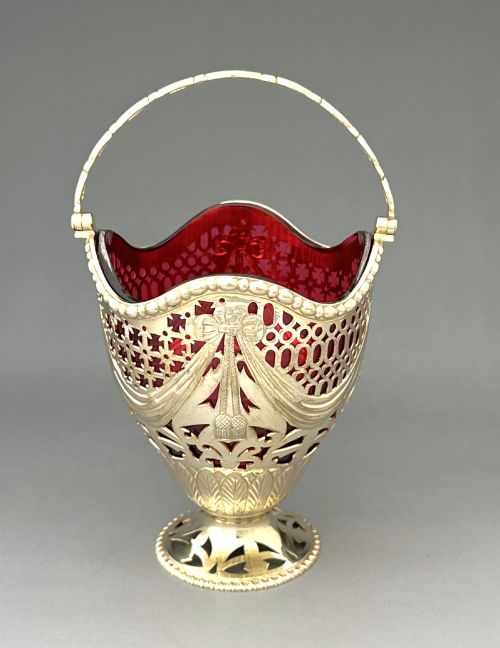
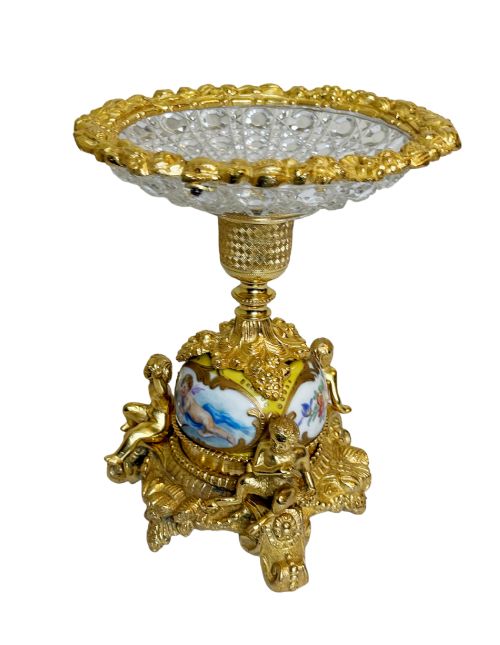
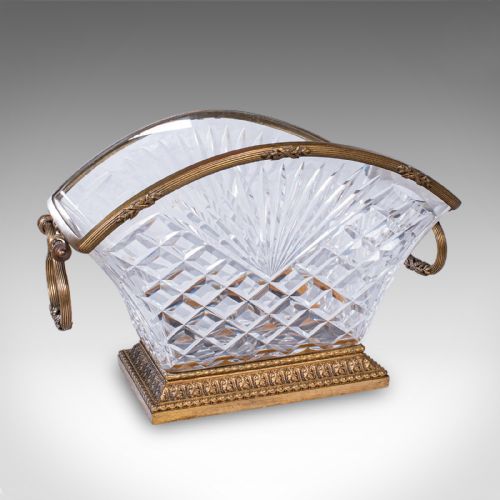
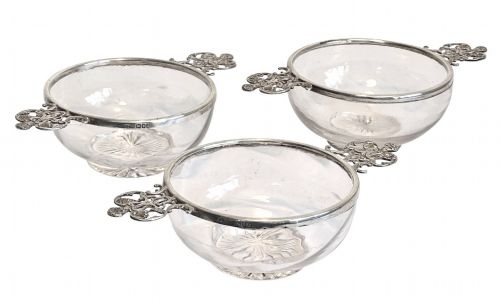
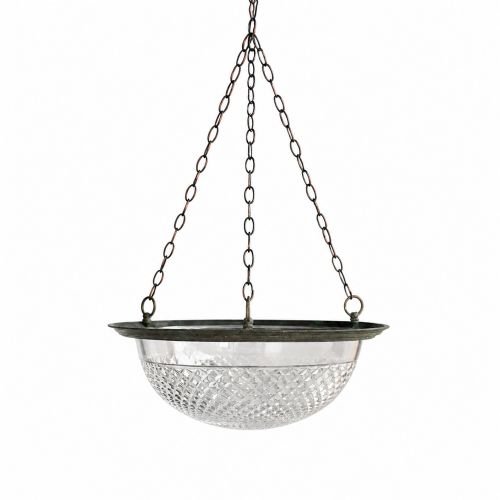
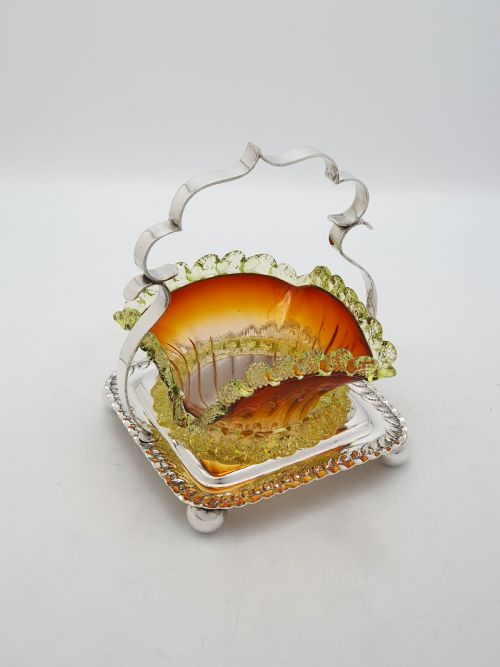
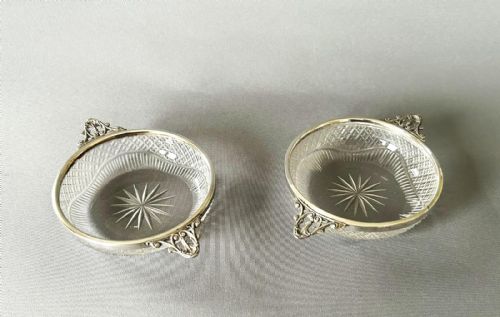
A victorian glass dish brings coloured or cut crystal to the table, mounted in silver plate or sterling silver for serving butter, fruit or sweets.
How they were made
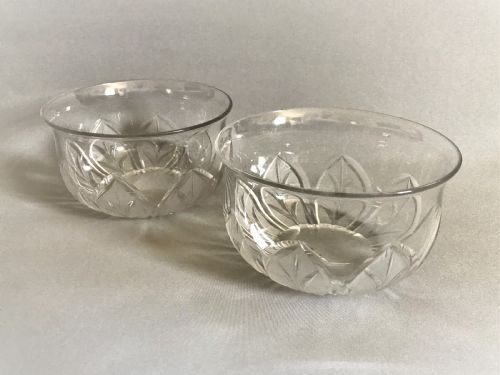
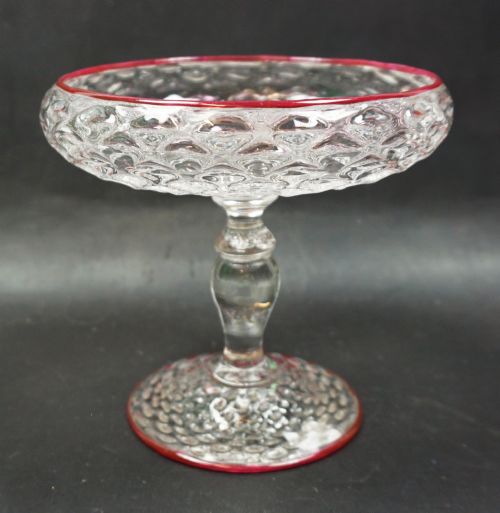
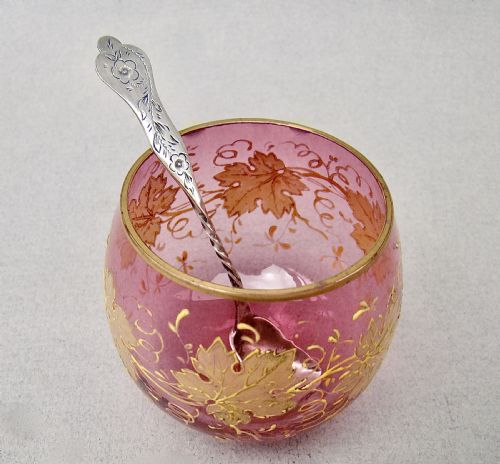
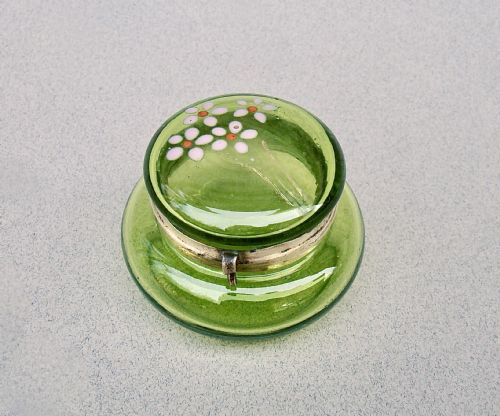
Glass production relied on blowing, moulding, and cutting techniques to achieve heavy crystal forms or delicate coloured vessels. Workers shaped molten material into tazzas, bowls, and liners, sometimes adding applied canes, enamel decoration, or threaded details.
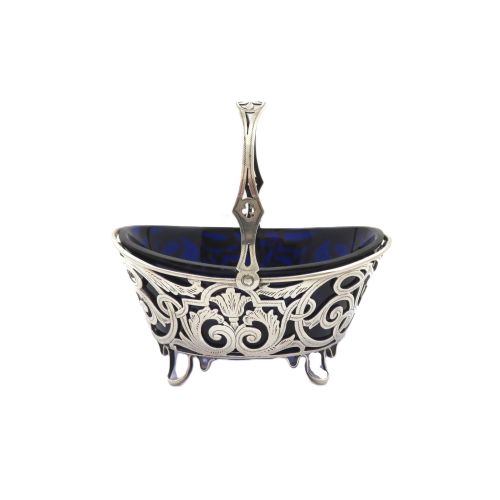
Metal components involved silver plating over base metals, cast sterling silver, or gilt bronze mounts fixed securely to the glass bodies. Piercing, engraving, and chasing decorated the silver handles, rims, and frames that supported the fragile glass inserts.
What varies in quality
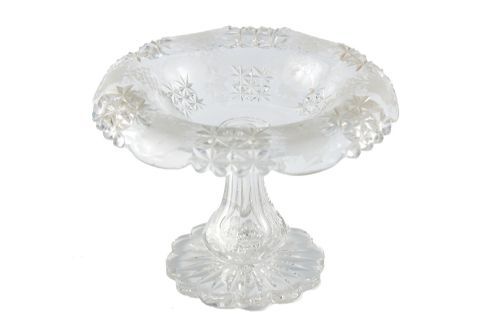
Quality rests upon the crispness of the glass cutting, the weight of the metal mount, and the harmony between the two materials. Deeper wheel-cut facets and heavier crystal bodies demonstrate superior craftsmanship compared to simple pressed glass.
The integration of the metal stand or mount also distinguishes finer pieces, particularly where hallmarked sterling silver or substantial silver plating holds complex glass liners securely. Maker attribution and original matching spoons or underplates elevate the standing of individual examples.
One extraordinary Victorian serving dish reimagines a nautical theme with a cut glass boat hull resting inside a silver-plated rope frame.
William Comyns·Moser·Salviati Venice·Baccarat·WMF·Roberts & Belks·Elkington·Stevens & Williams·Martin Hall
The Victorian Glass Dish Glossary
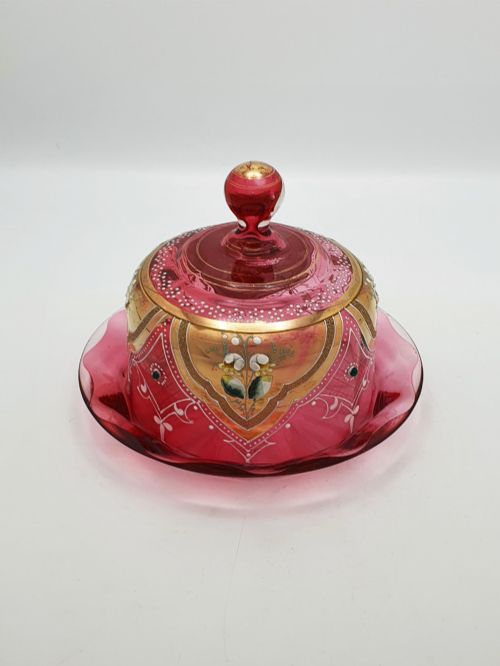
- Cranberry glass
- A transparent red glass coloured with gold chloride during production. It is frequently seen in Victorian tableware and liners.
- Tazza
- An ornamental shallow bowl or plate raised on a stem and foot. Makers used these for serving fruit or sweets on the dining table.
- Vaseline glass
- A transparent or translucent yellow-green glass containing uranium dioxide. It glows brightly under ultraviolet light.
- Salt cellar
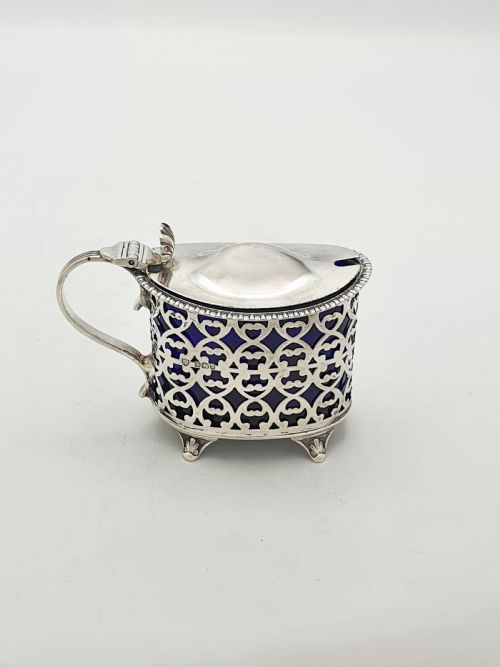
- A small open vessel or dish placed on the table to hold salt. Many examples feature cobalt blue or clear glass liners within silver stands.
- Butter dish
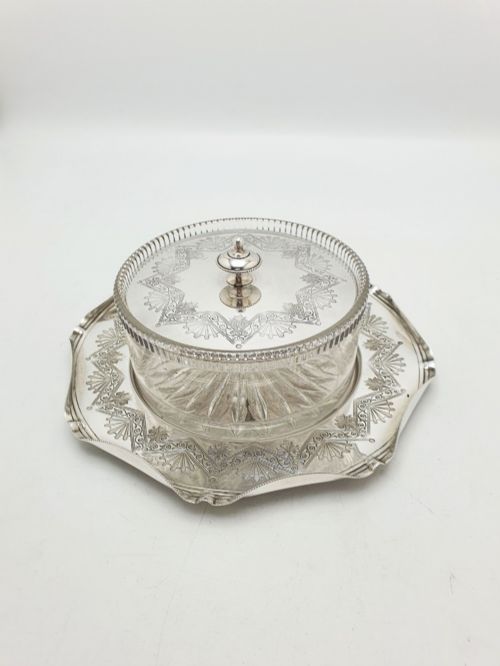
- A covered container designed to keep table butter cool and clean. Victorian versions often pair a cut glass base with a matching lid and silver-plated stand.
- Latticinio
- A glassmaking technique incorporating opaque white or coloured threads into clear glass. Venetian workshops popularised this decorative method.
Victorian Glass Dish: Frequently Asked Questions
What were glass dishes used for on the Victorian table?
These vessels held butter, preserves, sugar, salt, and small confectioneries during formal meals and afternoon tea.
Many featured specialised compartments or matching metal knives and spoons to serve specific foods cleanly.
How do I identify cranberry glass?
Cranberry glass displays a distinct translucent pinkish-red hue derived from gold content in the molten batch.
It appears widely across Victorian tableware, often paired with clear glass edgings or silver-plated frames.
Are silver mounts marked with dates?
Sterling silver components usually bear British hallmarks indicating the assay office, date letter, and maker's mark.
Silver-plated items rely on stylistic evidence and registry marks to determine their exact period of manufacture.
How should I clean antique glass with silver mounts?
Wash the glass gently in warm soapy water, avoiding harsh abrasives that might scratch the surface or damage coloured layers.
Keep silver polish away from the glass itself to prevent staining or chemical residue buildup in cut facets.