




Scottish Art Glass
Scottish art glass brings together striking blown forms and vibrant colours, anchored by the iconic output of Monart and Vasart.
Scottish Art Glass
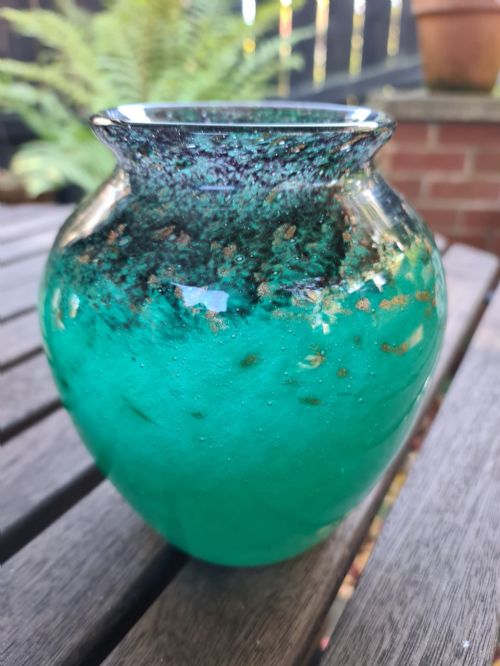
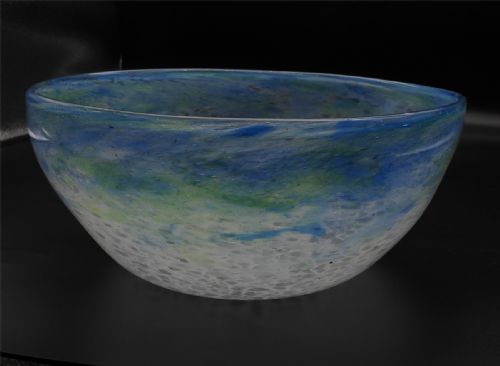
When you search for scottish art glass, you encounter a distinct selection of blown glass vessels, bowls, and vases spanning the early twentieth century and the nineteenth century. These objects emerge predominantly from the Monart and Vasart traditions, showcasing rich experimental colouring and tactile forms.
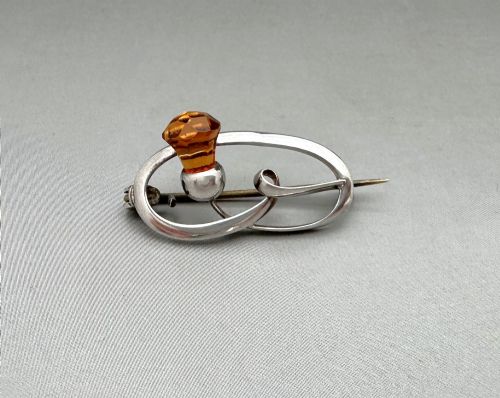
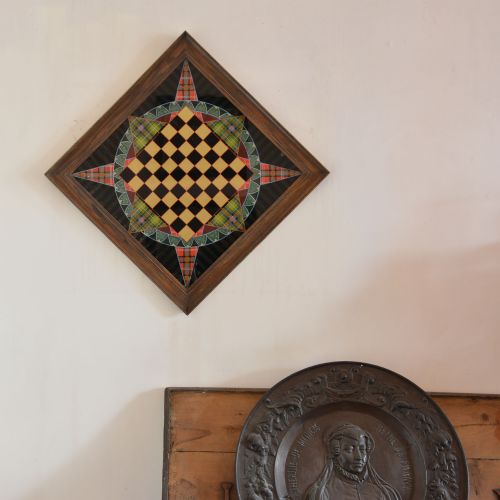
The pieces appearing most frequently on this page take the form of bowls and baluster, goblet, or posy vases dated around 1930. Alongside these blown glass creations, the selection extends to related decorative items including silver-mounted hat pins, brooches, serving dishes, and reverse glass painted games boards.
How they were made
The creation of these works relies on skilled glass blowing techniques, producing substantial vessels and bowls with controlled wall thickness and balanced silhouettes. Makers incorporated aventurine and enamel inclusions directly into the hot metal to achieve mottled patterns and shimmering internal depths.
Metalwork mounts in sterling silver frequently complement the glass components, particularly on smaller wearable items like brooches and hat pins. Cut glass techniques also appear on domestic servingware alongside hand painted details on reverse glass surfaces.
Scottish Art Glass Retail Price Guide 2026
Typical asking prices for scottish art glass among the pieces listed under this phrase on Sellingantiques today, from the lower quarter to the upper quarter. They describe what is for sale here now, not the wider market.
Listings span the nineteenth century up to the 1930s, featuring blown glass, sterling silver, and enamel.
What varies in quality
Visual impact depends heavily on the complexity of the colourway and the successful integration of internal inclusions such as bubbles or aventurine. Pieces exhibiting dense, even distribution of pigment and balanced form represent the stronger examples of the medium.
Condition of the glass surface and the integrity of associated silver components influence the standing of an individual piece. Workmanship on secondary elements, such as silver thistle brooches or lidded serving dishes, determines the overall refinement of the object.
Monart Glass·Vasart Glass·Charles Horner
The Scottish Art Glass Glossary
- Monart
- A style of Scottish art glass initiated by John Moncrieff at the Perth works, known for mottled coloured glass and simple vessel shapes.
- Vasart
- A continuation of Scottish glass production following the Monart tradition, often characterised by frilled rims and inclusion of aventurine.
- Aventurine
- A glass containing metallic particles that produce a glittering effect when suspended within the cooled material.
- Jabot pin
- An ornamental pin historically used to secure a jabot or neck ruffle, frequently executed in silver with decorative glass or enamel.
- Baluster vase
- A vessel form featuring a rounded body tapering to a narrow neck, resembling a architectural baluster.
Scottish Art Glass: Frequently Asked Questions
What is scottish art glass?
Scottish art glass encompasses blown glass vessels, bowls, and decorative items produced primarily during the early twentieth century by workshops such as Monart and Vasart.
These pieces are defined by their distinctive coloured glass formulas, internal inclusions, and hand-finished forms.
How do I identify monart glass?
Monart pieces typically present as heavy, blown glass vessels with mottled colourways, often lacking external decoration to let the internal glass quality dominate.
Many examples feature polished pontil marks on the base and distinct colour gradients unique to the Perth production.
What is aventurine glass?
Aventurine is a specialised glass material containing suspended metallic flakes that create a glittering, spangled appearance within the body.
In Scottish pieces, this technique adds depth and texture to the coloured glass matrix.
How should I display these vases?
Display these vessels in positions where natural light can pass through the glass to reveal the internal colourways and bubble inclusions.
Keep them on stable surfaces away from direct edges due to the substantial weight of the blown glass.