


Victorian Glass Biscuit Barrel
These victorian glass biscuit barrel pieces combine cut glass and silver plate to hold dry biscuits on the dining table.
Victorian Glass Biscuit Barrel
A victorian glass biscuit barrel is a table container designed for dry biscuits, featuring a glass body paired with metal mounts and a fitted lid. The form emerged strongly during the nineteenth century, persisting through the Edwardian era.
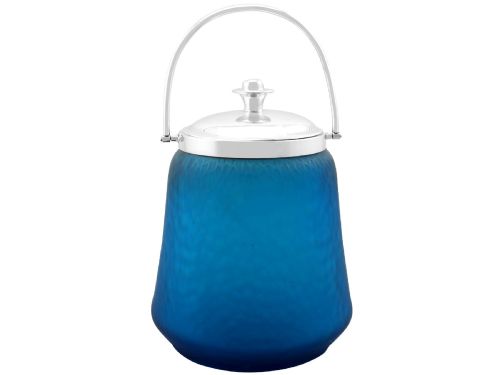
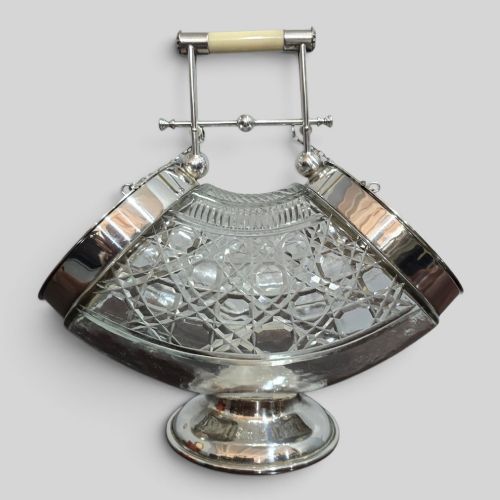
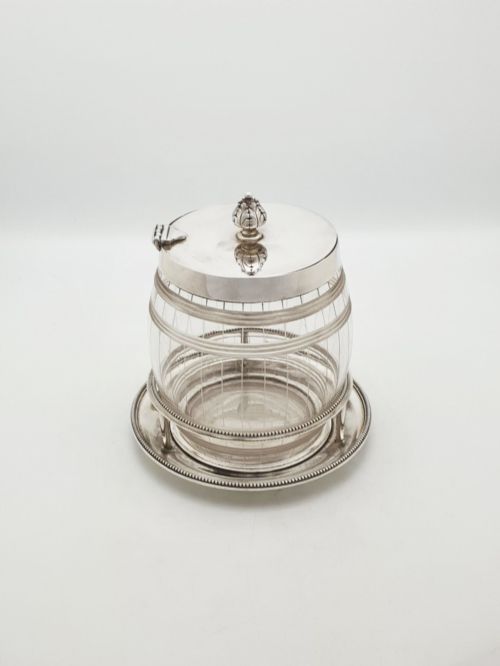
Most examples found here combine moulded, cut or cranberry glass with silver-plated hardware, often resting on a dedicated stand or incorporating handle configurations.
Makers utilised clear cut crystal alongside coloured glass varieties, frequently adding enamel painting, etching or heraldic finials to elevate the presentation.
Materials and construction
The body of a victorian glass biscuit barrel is formed from blown or moulded glass, shaped into cylindrical or panelled vessels and subjected to deep cutting, etching or enamel painting.
Mounts, lids, swing handles and collars are fashioned from silver plate or sterling silver, secured to the glass body with collars and hinges.
Makers combined clear cut crystal and rich cranberry or green glass with electroplated nickel silver or solid silver components, sometimes applying gold leaf highlights.
Listings feature periods spanning from the Victorian era into the Edwardian period, utilising cranberry glass, cut crystal, and silver plate.
Factors influencing quality
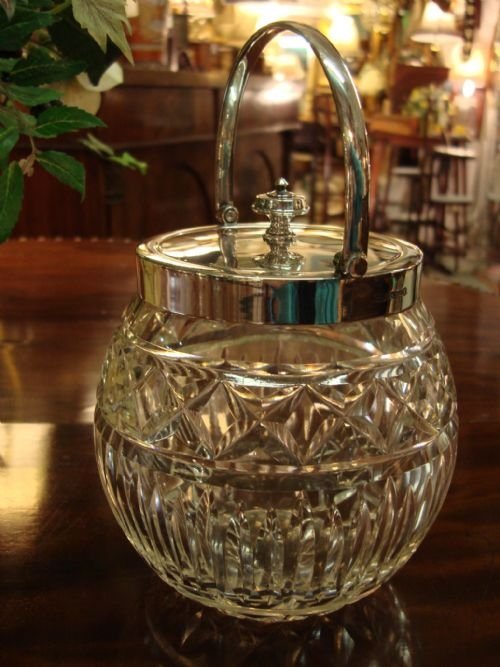
Quality in a victorian glass biscuit barrel is governed by the crispness of the glass cutting and the weight of the metal mounts. Heavy, sharp hobnail or geometric cutting distinguishes superior glass vessels from plain pressed alternatives.
The thickness and stability of the silver plating on the mounts, rims and swing handles indicate the workshop standard. Well-cast finials, such as heraldic dragons, and maker marks from firms like Elkington, Walker and Hall, or James Dixon and Sons mark out better pieces.
Elkington·Walker and Hall·James Dixon and Sons
The Victorian Glass Biscuit Barrel Glossary
- Biscuit barrel
- A covered container used for storing and serving dry biscuits at the dining table. This vessel is also referred to as a biscuit box or cookie jar.
- Cranberry glass
- A transparent pinkish-red glass coloured by the addition of gold chloride during manufacture. It appears frequently in late nineteenth-century tablewares.
- Hobnail cut
- A raised, faceted pattern cut into the surface of glassware resembling the head of a hobnail. This technique creates a textured, light-reflecting finish.
- Silver plate
- A layer of silver fused or electroplated onto a base metal such as copper or nickel silver. Many nineteenth-century tablewares utilise this method for durability and appearance.
Victorian Glass Biscuit Barrel: Frequently Asked Questions
What is a victorian glass biscuit barrel used for?
These vessels were designed to hold dry biscuits and dry goods on the nineteenth-century dining table or sideboard.
The fitted lid and glass body kept contents fresh during tea service or after-dinner entertaining.
How do I clean a glass biscuit barrel?
Wash the glass body gently in warm soapy water using a soft cloth, avoiding abrasive pads that might scratch the surface.
Keep silver-plated mounts dry and polish them sparingly with a suitable metal cloth to preserve the plating.
How can I date a biscuit barrel?
Dating relies on the stylistic clues of the glass cutting, colour choices, and the shape of the silver-plated mounts and handles.
Stamped maker marks on the metal hardware also help establish the decade of production.